
Project delays in Singapore cost developers real money. A single round of BCA resubmission can push your timeline back by weeks, and in a market where financing costs accumulate daily, that translates directly to budget overruns and strained stakeholder relationships. Understanding Singapore’s structural design process from start to finish is not just a technical exercise. It is a strategic advantage. This guide walks project developers and construction firms through every critical stage, from assembling the right team to navigating CORENET X submissions, avoiding common pitfalls, and handling edge cases like PPVC and conserved buildings, so your next approval moves faster and with fewer surprises.
Table of Contents
- Key roles and prerequisites for structural design in Singapore
- Step-by-step guide: Navigating the structural design workflow
- Common pitfalls, inspection requirements, and how to avoid delays
- Special cases: Handling advanced methods and edge scenarios
- The uncomfortable truth: Why speed isn’t everything in Singapore’s structural design
- Accelerate your compliance journey with expert engineering support
- Frequently asked questions
Key Takeaways
| Point | Details |
|---|---|
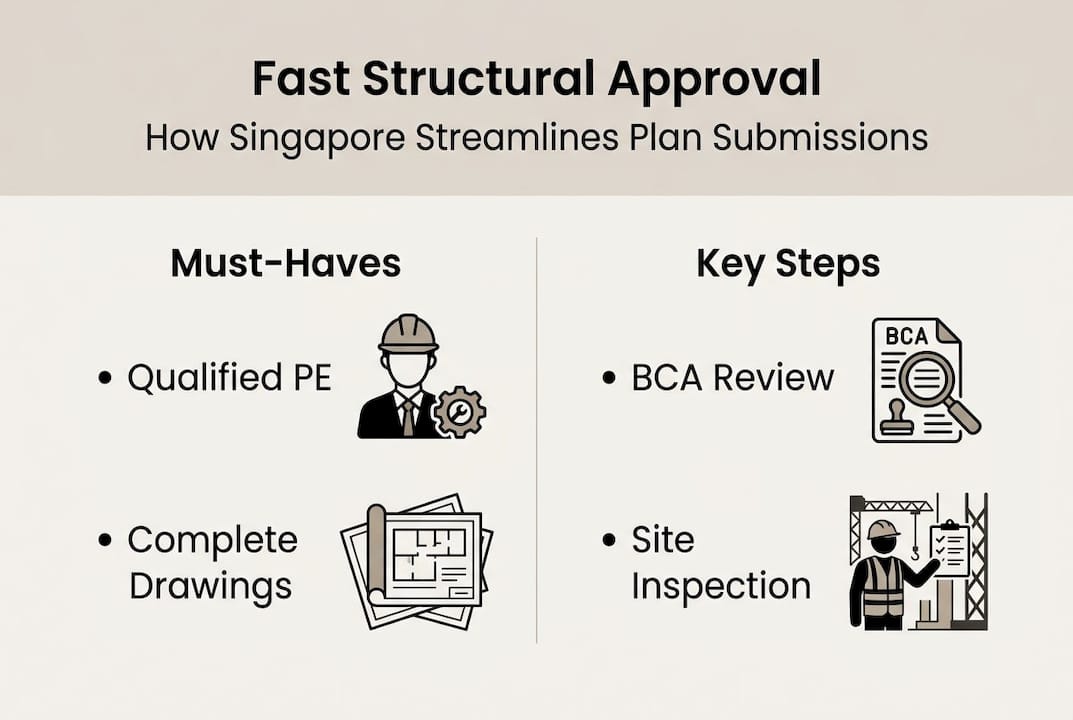
| Qualified PE required | All structural plans must be prepared, certified, and submitted by a Professional Engineer (PE) as a Qualified Person (QP) in Singapore. |
| Follow the structured workflow | Breaking the process into clear steps ensures efficient and compliant submissions to BCA via CORENET X. |
| Watch for edge case risks | Special methods like PPVC and works on conserved buildings have additional approval hurdles and documentation. |
| Durability and inspections matter | Singapore’s climate demands design for durability and periodic structural inspections every 5 years for non-residential buildings. |
| Expert support streamlines approval | Partnering with experienced civil engineering consultants speeds up structural plan approval and mitigates common mistakes. |
Key roles and prerequisites for structural design in Singapore
Having set the stage for why a well-managed design process matters, we begin with the foundational roles and requirements all teams must secure before submitting plans.
Every structural design submission in Singapore depends on having the right professionals in place before a single drawing is produced. Qualified Persons (QP), specifically Professional Engineers (PE) for structural works, prepare, sign, certify, and submit detailed structural plans and calculations via CORENET X to BCA. No submission is valid without this PE involvement. Understanding the role of Professional Engineers in Singapore’s regulatory framework is essential for any developer entering the market.
Beyond the PE, the core project team typically includes an architect registered with the Board of Architects, a geotechnical engineer for foundation-related works, and where applicable, accredited PPVC manufacturers. Regulatory touchpoints span BCA for structural and building plan approvals, URA for planning permission, and additional agencies such as SCDF, PUB, and LTA depending on project scope. Familiarizing your team with the relevant regulatory frameworks early prevents costly scope gaps downstream.
Key documentation required before submission:
- Structural calculations signed and certified by the PE
- Architectural drawings coordinated with structural layout
- Geotechnical reports where foundation design is involved
- PPVC manufacturer accreditation certificates (for modular projects)
- URA written permission (where planning approval is a prerequisite)
- Building information modeling (BIM) files meeting BCA’s current mandate
Comparison of project types and their prerequisite requirements:
| Project type | Key prerequisites | Regulatory bodies involved |
|---|---|---|
| New residential development | PE, architect, geotechnical report | BCA, URA |
| Additions and alterations (A&A) | PE, architect, existing structural records | BCA, URA (conserved buildings) |
| PPVC modular construction | PE, accredited manufacturer, BIM compliance | BCA, URA, manufacturer QA |
| Conserved building works | PE, conservation specialist, URA coordination | BCA, URA |
Pro Tip: Engage your PE at the project inception stage, not after architectural design is finalized. Structural and architectural coordination resolved early reduces drawing revisions and accelerates the BCA review cycle significantly.
Step-by-step guide: Navigating the structural design workflow
Once prerequisites are locked in, your team is ready to proceed through each phase of the workflow, which we break down step by step for smooth navigation.
-
Project scoping with the PE. The PE reviews the architectural intent, site constraints, geotechnical data, and applicable codes. This stage defines the structural system, material specifications, and key design assumptions that will govern all subsequent work.
-
Schematic and preliminary design. The team develops preliminary framing plans, load calculations, and foundation concepts. At this stage, BCA’s structural design requirements under the Building Control Act and its subsidiary legislation are incorporated directly into the design assumptions.
-
Detailed structural calculations and drawings. The PE prepares full structural calculations, reinforcement details, connection drawings, and specifications. All documents must meet BCA’s submission standards. The PE endorsement process formalizes the PE’s certification before submission.
-
BIM coordination and compliance check. For projects subject to BCA’s BIM mandate, coordinated BIM models are prepared and checked for clashes. Reviewing BIM compliance requirements early prevents last-minute model revisions that delay submission.
-
Online submission via CORENET X. The PE submits plans, calculations, and supporting documents through CORENET X. According to BCA ST plan guidelines, the QP is responsible for the completeness and accuracy of all submitted materials.
-
BCA review and response. BCA’s typical processing time varies by project complexity. Simple submissions may receive approval within weeks; complex or first-time PPVC submissions can take longer. Queries from BCA must be addressed promptly to avoid clock resets.
-
Approval and construction commencement. Once BCA issues the structural plan approval, construction can proceed in accordance with the approved drawings. Any design changes during construction require a formal amendment submission.
Typical timeline by project type:
| Project type | Estimated BCA review duration | Key risk factors |
|---|---|---|
| Standard residential | 4 to 8 weeks | Incomplete calculations |
| Commercial or mixed-use | 6 to 12 weeks | Coordination gaps, BIM errors |
| PPVC modular | 8 to 16 weeks | Manufacturer accreditation, tolerances |
| A&A conserved building | 8 to 14 weeks | URA coordination, heritage constraints |
Pro Tip: Integrate the design for safety workflow requirements into your structural design from Stage 1. BCA reviews Design for Safety submissions alongside structural plans, and gaps here are a frequent cause of resubmission requests.
Common pitfalls, inspection requirements, and how to avoid delays
After mapping the standard workflow, it is crucial to recognize where things most commonly go wrong and how inspection requirements can become stumbling blocks if not well-managed.
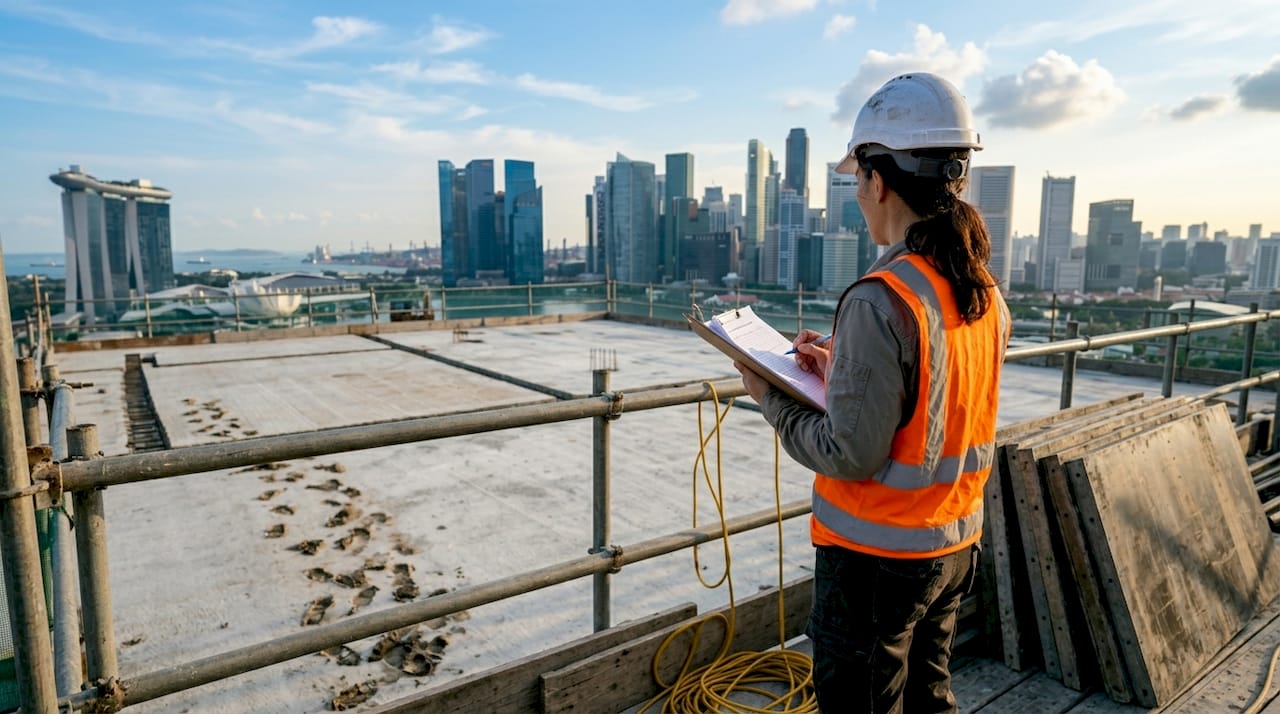
The most frequent causes of submission rejection or BCA queries fall into three categories: documentation gaps, coordination failures, and durability oversights. Each one is avoidable with proper process discipline.
Most common submission mistakes:
- Structural calculations that are incomplete or do not address all load combinations required by the Code of Practice on Buildability
- Missing PE signatures or certifications on individual drawing sheets
- PPVC connection details that do not meet the ±1mm verticality tolerance requirement
- BIM models that are not coordinated with the latest structural drawings
- Geotechnical reports that predate significant site changes
- Failure to include Design for Safety reports as part of the submission package
Beyond the submission stage, Singapore’s inspection framework imposes ongoing compliance obligations. Periodic Structural Inspections (PSI) are required every 5 years for non-residential buildings, and Singapore’s tropical climate is a significant driver of this requirement. High humidity, intense UV exposure, and frequent rainfall accelerate reinforced concrete (RC) corrosion and surface degradation at rates that temperate-climate design standards do not fully account for.
Key insight: Singapore’s tropical environment accelerates material degradation, particularly RC corrosion, making durability planning a compliance issue, not just a design preference. Buildings that meet minimum code at construction but lack robust durability detailing routinely require costly remediation before their first PSI cycle is complete.
Investing in strategies for durability at the design stage, such as specifying higher concrete cover, low water-cement ratios, and corrosion-resistant reinforcement in exposed zones, reduces lifecycle maintenance costs and simplifies future PSI compliance. Teams working with PPVC-specific challenges must also account for joint waterproofing and interface durability as part of their initial design scope.
Special cases: Handling advanced methods and edge scenarios
Beyond standard processes, some scenarios demand special handling. Here is how experienced teams tackle Singapore’s most challenging structural design cases.
Certain project types carry regulatory and technical complexity that standard workflows do not fully address. Recognizing these early and building the right response into your project plan is what separates teams that sail through approvals from those that cycle through multiple resubmissions.
Conserved buildings and A&A works:
- URA coordination is mandatory for any structural intervention in conserved buildings. The conservation guidelines restrict interventions to the facade, structural frame, and key interior elements.
- Existing structural records must be verified against as-built conditions. Discrepancies between original drawings and actual construction are common in older buildings and must be resolved before submission.
- Structural strengthening schemes must be compatible with conservation requirements, which often rules out conventional RC jacketing in favor of less intrusive solutions.
PPVC modular construction:
PPVC projects carry the most demanding prerequisite checklist of any standard project type. PPVC needs MAS-accredited manufacturers, tight tolerances (±1mm verticality), and specific BCA compliance documentation covering manufacturing quality plans, connection details, and on-site assembly procedures. Reviewing the PPVC modular approach in detail before committing to this construction method helps teams anticipate the full scope of compliance requirements.
Uplift in podium construction:
Podium structures with basement levels or large underground footprints face hydrostatic uplift forces that require specific engineering responses. Drainage blankets, ground anchors, and ballast slabs are common solutions, each requiring monitoring plans and documented design assumptions in the BCA submission.
Pro Tip: For PPVC projects, engage the accredited manufacturer during the schematic design phase, not after structural drawings are complete. Manufacturing tolerances and connection geometry must be resolved before drawings are finalized, or you will face costly revisions after BCA submission.
The uncomfortable truth: Why speed isn’t everything in Singapore’s structural design
The industry conversation around structural design in Singapore tends to center on submission speed, approval timelines, and process efficiency. That focus is understandable. But it creates a blind spot that experienced developers eventually learn to avoid at significant cost.
Rushing a submission without adequate upfront durability planning does not save time. It defers cost. PSI requirements every 5 years for non-residential buildings mean that every structural decision made at design stage will be tested repeatedly over the building’s life. RC structures in Singapore’s climate that were designed to minimum code standards routinely show spalling, delamination, and reinforcement corrosion within 10 to 15 years of completion. Remediation costs for these failures routinely exceed the savings achieved by cutting corners on concrete specification or cover depth at the design stage.
The business case for advanced durability solutions is not an engineering argument. It is a financial one. Developers who invest in robust structural detailing upfront reduce their lifecycle maintenance exposure, simplify PSI compliance, and protect asset value over the long term. Speed matters. But speed without quality is a liability that compounds with every inspection cycle.
Accelerate your compliance journey with expert engineering support
Navigating Singapore’s structural design process requires more than technical knowledge. It requires coordinated expertise across PE endorsement, BCA submissions, BIM compliance, and authority coordination, all managed to a project timeline that leaves no room for error.
AEC Technical Advisory provides direct Professional Engineer submission support for structural plan applications, covering everything from preliminary design coordination to CORENET X submission management. Our civil engineering services span the full project lifecycle, and our design for safety consultancy ensures your submission package meets BCA’s current standards from day one. Contact our team to discuss your project requirements and get a clear path to approval.
Frequently asked questions
Who is responsible for structural plan submissions in Singapore?
Qualified Persons (QP), specifically Professional Engineers (PE) for structural works, prepare, sign, certify, and submit plans via CORENET X to BCA. No structural submission is valid without a PE’s certification.
What are the most common mistakes in structural design submissions?
Incomplete structural calculations, missing PE certifications, and failure to meet PPVC tolerance requirements are the most frequent causes of BCA queries and resubmissions in Singapore.
How often are periodic structural inspections required for non-residential buildings?
Periodic Structural Inspections (PSI) are required every 5 years for non-residential structures in Singapore, driven in part by the accelerated material degradation caused by the tropical climate.
What special requirements apply to PPVC structural designs in Singapore?
PPVC projects require MAS-accredited manufacturers, documented tolerances, and strict BCA compliance submissions covering manufacturing quality plans, connection details, and on-site assembly procedures.
Where can I get help with structural plan submissions or compliance in Singapore?
Specialized civil engineering consultancies with registered Professional Engineers provide submission, review, and compliance advisory support tailored to Singapore’s BCA and URA requirements.