
Choosing the right structural repair technique is one of the most consequential decisions a developer or construction firm will make on any Singapore project. A poorly specified repair does not simply fail to fix the problem — it can compromise occupant safety, trigger regulatory non-compliance, and erode long-term asset value in a market where building stock is aging faster than ever. Singapore’s dense urban environment, high humidity, and stringent Building and Construction Authority (BCA) requirements create a set of conditions that demand both technical precision and regulatory fluency. This article presents practical, project-grounded examples to help you evaluate repair options with confidence.
Table of Contents
- Criteria for selecting structural repair methods
- Concrete crack repairs: injection and patching
- Steel structure repairs: welding and reinforcement
- Strengthening aging structures: FRP systems and supplementary supports
- Comparing structural repair options for different project types
- Lessons learned: what actually works for structural repairs in Singapore
- Connect with proven structural repair expertise
- Frequently asked questions
Key Takeaways
| Point | Details |
|---|---|
| Assessment drives outcomes | Accurate diagnosis and criteria-based selection are essential for effective structural repairs. |
| Technique must match context | Concrete, steel, and FRP solutions each suit specific structural problems and site conditions. |
| Compliance is critical | Regulatory requirements in Singapore can determine method choice and project feasibility. |
| Minimize disruption | Selecting fast, low-impact repair methods reduces downtime and tenant impact for most Singapore projects. |
| Expert advice matters | Consulting with local engineering specialists ensures optimal safety and long-term performance. |
Criteria for selecting structural repair methods
Now that we’ve established the importance of practical solutions, let’s clarify what criteria drive the selection of structural repair methods.
Selecting a structural repair approach is not simply a matter of picking the cheapest or fastest option. Several interdependent factors must be weighed simultaneously, and the relative priority of each factor shifts depending on the project type, site constraints, and the severity of the defect. The primary criteria include:
- Safety and structural adequacy: The repair must restore the element to its design load capacity or better.
- Durability: Materials must perform reliably over the intended service life, accounting for Singapore’s tropical climate and high relative humidity.
- Cost: Both direct material and labor costs, as well as indirect costs such as business interruption, must be factored in.
- Speed of execution: Occupied buildings and operational facilities impose tight windows for repair works.
- Disruption to operations: Noise, vibration, dust, and access restrictions all affect repair method selection.
- Regulatory compliance: BCA, URA, and LTA requirements govern what is permissible, and most structural repairs require Professional Engineer (PE) endorsement.
- Sustainability: Material embodied carbon and long-term maintainability are increasingly weighted in procurement decisions.
Local codes and site constraints frequently override theoretical best practices. For example, a repair method that is technically optimal may be impractical in a basement with restricted headroom or in an occupied hospital ward where vibration limits are strict. Understanding concrete technology advancements helps engineers specify materials that meet both performance and code requirements simultaneously.
“The most effective structural repairs begin not at the material specification stage, but at the diagnostic stage — where accurate root cause analysis determines whether a repair is even the right intervention.”
Pro Tip: Engage a qualified structural engineer at the earliest sign of distress. Early diagnosis reduces the scope of repair, lowers cost, and avoids the compounding damage that occurs when defects are left unaddressed.
A consultative approach, where engineers, contractors, and project managers align on criteria before specifying repairs, consistently produces better outcomes than reactive, contractor-driven decisions made under time pressure.
Concrete crack repairs: injection and patching
With criteria in mind, let’s look at concrete crack repair, one of the most frequent structural challenges on Singapore projects.
Concrete cracking is ubiquitous in Singapore’s built environment, driven by thermal cycling, shrinkage, settlement, and overloading. However, not all cracks are equal, and the repair method must match the crack type, activity status, and structural significance.
Epoxy injection is the industry-standard approach for structural cracks, particularly those in columns, beams, and transfer plates where load-carrying capacity must be restored. The process involves sealing the crack surface, installing injection ports at regular intervals, and injecting low-viscosity epoxy resin under controlled pressure. The cured epoxy achieves compressive strengths exceeding the parent concrete, effectively restoring monolithic behavior.
Polymer-modified mortar patching is appropriate for wider, non-structural surface defects, spalled concrete, and areas where corrosion of reinforcement has caused concrete delamination. These mortars bond well to existing concrete, resist chloride ingress, and can be applied in thin layers.
Common project scenarios in Singapore include:
- High-rise residential column cracks caused by differential settlement or construction loading
- Post-tensioned slab repairs in commercial podiums where tendon corrosion has initiated cracking
- Basement retaining wall cracks requiring both structural repair and waterproofing integration
- Precast facade panel repairs where hairline cracks allow moisture ingress
Using durable concrete repair methods that meet SS 544 (Singapore Standard for concrete repair) ensures both technical performance and regulatory acceptance.
| Repair method | Suitable crack width | Typical cost range (SGD/m) | Disruption level | BCA submission required |
|---|---|---|---|---|
| Epoxy injection | 0.1 mm to 5 mm | $80 to $250 | Low | Yes, for structural elements |
| Polyurethane injection | 0.5 mm to 10 mm (active/wet) | $60 to $180 | Low | Conditional |
| Polymer-modified mortar | Greater than 5 mm, surface defects | $120 to $400 | Moderate | Conditional |
| Cementitious grout | Voids and honeycombs | $90 to $300 | Moderate | Yes, for load-bearing elements |
Pro Tip: Always conduct crack mapping and moisture content testing before specifying repair materials. Injecting epoxy into a wet or actively leaking crack will cause adhesion failure. Polyurethane-based systems are better suited for wet conditions.
Steel structure repairs: welding and reinforcement
Concrete is only part of the equation — steel repairs are critical for long-span and high-load structures.
Steel structural elements in Singapore’s industrial, commercial, and infrastructure sectors are subject to fatigue, corrosion, and overloading. Repair options range from in-situ welding to bolted splice plates and composite reinforcement using fiber-reinforced polymers (FRP).
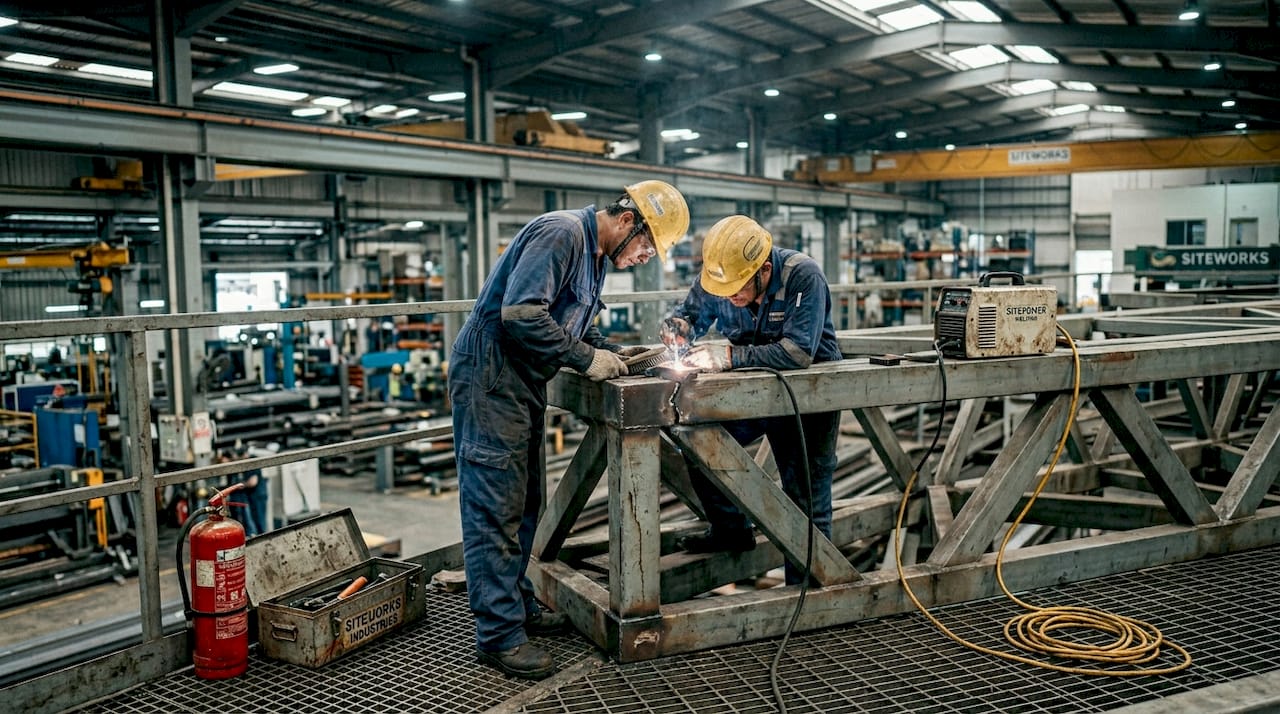
Welding is the most direct method for repairing cracked steel members, particularly in warehouse roof trusses, industrial frames, and bridge girders. Weld repairs must be executed by certified welders to SS 638 standards, with pre-heat and post-weld heat treatment applied where required to prevent hydrogen cracking. Weld quality is verified through non-destructive testing (NDT), including magnetic particle inspection or ultrasonic testing.
Bolted splice plates offer a practical alternative where welding is not feasible due to fire risk, access constraints, or the need to maintain structural continuity during repair. Splice plates are designed to transfer the full design load across the damaged section, and high-strength friction-grip bolts are typically specified.
Supplemental reinforcement using additional steel sections, such as channels or plates welded or bolted to existing members, is common in scenarios where the original section is undersized for revised loading. Understanding steel beam optimization principles helps engineers select the most efficient reinforcement geometry.
Project examples include:
- Industrial warehouse roof truss repair following crane overload, using welded gusset plates and NDT verification
- Commercial building steel frame strengthening for change of use from office to data center, requiring upgraded floor load capacity
- Bridge girder repair using bolted splice plates after fatigue cracking was identified during routine inspection
- Modular structural concepts applied to prefabricated repair components, reducing site installation time significantly
| Repair method | Best application | Relative cost | Execution speed | Key limitation |
|---|---|---|---|---|
| In-situ welding | Cracked members, fatigue damage | Moderate | Moderate | Requires certified welders, fire precautions |
| Bolted splice plates | Access-restricted sites, live structures | Moderate to high | Fast | Requires bolt hole drilling, section loss |
| Composite FRP bonding | Corrosion-weakened sections | High upfront | Fast | Limited fire resistance without protection |
| Section replacement | Severely corroded or fractured members | High | Slow | Requires full shutdown of structural bay |
Pro Tip: For steel members in corrosive environments, such as coastal industrial facilities or food processing plants, consider combining steel reinforcement with FRP wrapping to address both structural deficiency and ongoing corrosion protection in a single intervention.
Strengthening aging structures: FRP systems and supplementary supports
After steel repairs, aging concrete and composite structures require advanced strengthening methods.
Fiber-reinforced polymer (FRP) systems have become a primary tool for strengthening aging structures in Singapore, particularly where access is constrained, shutdown time is limited, or the addition of significant mass is not acceptable. FRP composites, typically carbon fiber (CFRP) or glass fiber (GFRP) bonded with epoxy resin, are applied as externally bonded laminates or wet-layup wraps to beams, columns, and slabs.
The key advantages of FRP strengthening include:
- High strength-to-weight ratio: CFRP has a tensile strength approximately ten times that of structural steel, at one-fifth the weight.
- Corrosion resistance: FRP does not corrode, making it ideal for Singapore’s humid, chloride-rich environment.
- Minimal section increase: FRP adds negligible thickness compared to concrete jacketing or steel plating.
- Rapid installation: Most FRP applications can be completed in days rather than weeks.
- Compatibility with existing finishes: FRP can be concealed behind reinstated finishes with minimal disruption.
Singapore-specific project applications include:
- MRT overpass column wrapping to restore confinement capacity following carbonation-induced cover spalling
- Older school building beam strengthening to meet revised loading requirements under BCA’s structural appraisal framework
- Water tank base slab reinforcement where increased storage capacity required higher flexural strength
- Carpark transfer beam strengthening to accommodate additional floors in an en-bloc redevelopment
For a detailed technical review of how FRP strengthening solutions are specified and installed, the performance data clearly supports their use in extending service life by 20 to 30 years on well-maintained structures.
“When correctly designed and installed, FRP systems can extend the structural service life of aging concrete elements by decades, deferring costly demolition and reconstruction while maintaining full operational continuity.”
Pro Tip: FRP is the preferred solution when access is tight, shutdown time must be minimized, or the structure is in active use. However, always verify fire resistance requirements with your PE, as unprotected FRP may require intumescent coating in occupied buildings.
Comparing structural repair options for different project types
Having explored specific examples, let’s put repair options side by side for major project categories.
The right repair solution is rarely universal. Commercial, residential, and infrastructure projects each carry distinct priorities that influence method selection. A commercial landlord may prioritize speed and minimal tenant disruption above all else. A residential developer may focus on long-term durability and warranty compliance. An infrastructure owner, such as a statutory board managing bridges or tunnels, will weight regulatory compliance and inspection traceability most heavily.
Key deciding factors by project type:
- Commercial buildings: Tenant disruption, business continuity, and aesthetic reinstatement drive decisions. Epoxy injection and FRP are favored for their speed and low visual impact.
- Residential developments: Warranty obligations, BCA submission requirements, and resident safety are paramount. Polymer-modified mortars and epoxy injection are standard, with FRP used for major strengthening.
- Industrial facilities: Operational continuity and load capacity are critical. Welded steel repairs and composite reinforcement are common. Downtime costs often justify higher upfront repair investment.
- Infrastructure assets: Compliance with LTA, PUB, or JTC requirements, combined with long service life expectations, favors FRP and high-performance concrete repair systems.
Understanding structural adaptability principles is increasingly relevant as buildings are repurposed or upgraded, requiring repairs that accommodate future modifications.
| Project type | Primary repair method | Typical timeline | Regulatory body | Key cost driver |
|---|---|---|---|---|
| Commercial high-rise | Epoxy injection, FRP | 1 to 4 weeks per zone | BCA | Tenant disruption mitigation |
| Residential development | Mortar patching, epoxy injection | 2 to 6 weeks | BCA | PE endorsement, warranty compliance |
| Industrial warehouse | Steel welding, splice plates | 3 to 10 days per bay | BCA, JTC | Operational shutdown cost |
| Infrastructure (bridges, tunnels) | FRP wrapping, high-performance concrete | 4 to 12 weeks | LTA, PUB | Inspection and testing requirements |
| Water retaining structures | Crystalline waterproofing, FRP | 2 to 8 weeks | PUB | Waterproofing integrity testing |
Lessons learned: what actually works for structural repairs in Singapore
Let’s step back from the technical details and reflect on what actually delivers measurable results in Singapore projects.
After working through numerous structural repair projects across Singapore’s commercial, residential, and infrastructure sectors, several patterns emerge that are not always captured in technical specifications or code documents.
Cost is rarely the decisive factor. Developers who optimize purely on repair cost frequently encounter higher total project costs when disruption, rework, and regulatory delays are factored in. A repair method that costs 30% more upfront but can be executed without tenant relocation often delivers significantly better financial outcomes. The real cost calculation must include business interruption, temporary works, and the risk of repeat intervention.
Accurate diagnosis is the single most important investment. The most common cause of repair failure is not poor material selection — it is an incomplete understanding of the root cause. Repairs specified without proper structural assessment, including load tracing, material testing, and crack analysis, frequently address symptoms rather than causes. This leads to recurrence and, in some cases, more extensive damage than the original defect.
Singapore’s regulatory environment is a make-or-break factor. BCA submission timelines, PE endorsement requirements, and authority inspection protocols add weeks or months to project programs if not planned from the outset. Firms that treat regulatory compliance as an afterthought consistently experience cost overruns and program delays. Integrating submission planning into the repair design phase is not optional — it is a project management imperative.
Material compatibility is frequently overlooked. Bonding new repair materials to existing concrete or steel requires careful surface preparation and compatibility testing. Mismatched moduli of elasticity, thermal expansion coefficients, or moisture sensitivity between old and new materials can cause interface failure within months of completion. This is particularly relevant when concrete durability best practices are not followed during material selection.
Ongoing monitoring extends repair life and reduces lifecycle cost. Structural repairs are not set-and-forget interventions. Installing crack monitors, strain gauges, or periodic inspection protocols after repair allows early detection of recurrence and informs maintenance planning. Developers who invest in post-repair monitoring consistently report lower lifecycle maintenance costs and fewer emergency interventions.
Pro Tip: Invest in a structured post-repair inspection program at 6 months, 12 months, and annually thereafter. Early detection of repair degradation costs a fraction of the intervention required once failure progresses.
Connect with proven structural repair expertise
If you’re facing structural repair decisions, partnering with specialists can streamline your path to safe, compliant, and resilient results.
AECTechnicalSG provides engineering consultancy services tailored to the specific demands of Singapore’s construction and infrastructure sectors. From initial structural assessment through to PE-endorsed repair specifications and authority submissions, the team brings both technical depth and regulatory fluency to every engagement.
Whether your project involves concrete crack remediation, steel frame strengthening, or FRP retrofitting on aging assets, access to civil engineering consultancy expertise ensures that repair solutions are correctly specified, compliant with BCA and relevant authority requirements, and optimized for your project’s cost and program constraints. To understand the full scope of what specialist advisory delivers, explore the construction consultancy value that structured engineering engagement brings to complex repair projects.
Frequently asked questions
How do I determine which structural repair method is best for my project?
Assess the root cause, severity, and local code requirements through a qualified structural engineer, who can provide a tailored repair specification based on site-specific conditions and regulatory obligations.
Are FRP systems suitable for all concrete repairs?
FRP solutions excel for strengthening and durability enhancement, but they are not appropriate for active cracks, wet substrates, or situations where fire resistance requirements cannot be met without additional protective coatings.
What is the typical timeline for structural crack repairs in high-rise buildings?
Epoxy injection and patching can often be completed in several days per section, though total project duration depends on access arrangements, the extent of cracking, and BCA submission timelines.
Does structural repair work require regulatory submission in Singapore?
Most repairs affecting structural integrity require submission to BCA and PE endorsement before works commence, and some projects involving infrastructure assets will additionally require LTA, PUB, or JTC approvals depending on the asset type and location.