
Choosing the wrong building inspection at the wrong project stage is one of the most common and costly mistakes property owners make. Whether you are managing a new construction, planning a renovation, or preparing a property for sale, understanding the types of building inspections available determines whether your project stays compliant, on schedule, and structurally sound. Different inspections serve different legal, financial, and safety purposes. This guide breaks down every major building inspection type, explains when each one applies, and helps you match the right inspection to your specific situation.
Table of Contents
- Key takeaways
- Types of building inspections: how to evaluate and choose
- 1. Footing and foundation inspection
- 2. Framing and structural shell inspection
- 3. Rough mechanical, electrical, and plumbing (MEP) inspection
- 4. Fire safety and fire-resistive assembly inspection
- 5. Special inspections for high-risk systems
- 6. Energy code compliance inspection
- 7. Elevator and escalator inspection
- 8. Pest and termite inspection
- 9. Facade and external envelope inspection
- 10. Pre-purchase and pre-sale property inspection
- 11. Periodic structural and maintenance inspection
- Comparing building inspection types side by side
- Matching inspections to your specific project scenario
- My perspective on staged inspections and why timing is everything
- Work with Aectechnicalsg to navigate your inspection requirements
- FAQ
Key takeaways
| Point | Details |
|---|---|
| Four core inspection categories | Inspections fall into jurisdictional, special, owner/lender, and third-party categories, each with distinct legal weight. |
| Staged inspections outperform single visits | Multi-stage inspections catch hidden defects before walls close and before fixes become expensive. |
| Inspection timing is legally binding | Missing a required inspection phase can void permits, trigger fines, and halt construction entirely. |
| Commercial properties face frequent inspections | Commercial buildings face four to seven regulatory inspections per year across fire, structural, and energy compliance. |
| Independent inspectors provide better protection | Third-party inspections referencing published standards produce enforceable documentation that developer self-certification cannot match. |
Types of building inspections: how to evaluate and choose
Not every inspection is legally required, and not every required inspection covers the same scope. Before selecting what you need, it helps to understand the four broad categories that all building inspection types fall into.
Construction inspections are classified into four main categories:
- Jurisdictional (Code) inspections: Mandated by local authorities or building control bodies. These are legally required at defined project stages, and work cannot proceed without a passing result. In Singapore, this includes BCA-mandated structural and facade inspections that carry legal enforcement authority.
- Special inspections: Triggered when high-risk construction materials or systems are involved, such as structural steel, high-strength concrete, or deep foundation work. A licensed special inspector, independent of the contractor, must verify compliance with approved plans.
- Owner/Lender inspections: Required by banks or project financiers to verify construction progress before releasing loan drawdowns. Lender-required inspections typically occur at 25%, 50%, 75%, and 100% completion milestones.
- Third-party quality assurance reviews: Commissioned by the property owner to verify workmanship and material quality independent of the contractor. These are not always legally required but provide strong protection in disputes.
The scope of any inspection varies significantly by project type. Residential building inspections focus heavily on structural framing, MEP rough-ins, and final habitability. Commercial property inspections expand to include fire suppression systems, accessibility compliance, energy performance, and occupant load verification.
Pro Tip: Before starting any project, request a full inspection schedule from your local authority. Knowing all required inspection holds in advance prevents costly work stoppages.
1. Footing and foundation inspection
This inspection occurs before concrete is poured into footings or foundation walls. The inspector verifies that excavation depth, soil bearing capacity, formwork placement, and reinforcing steel configuration match the approved structural drawings.
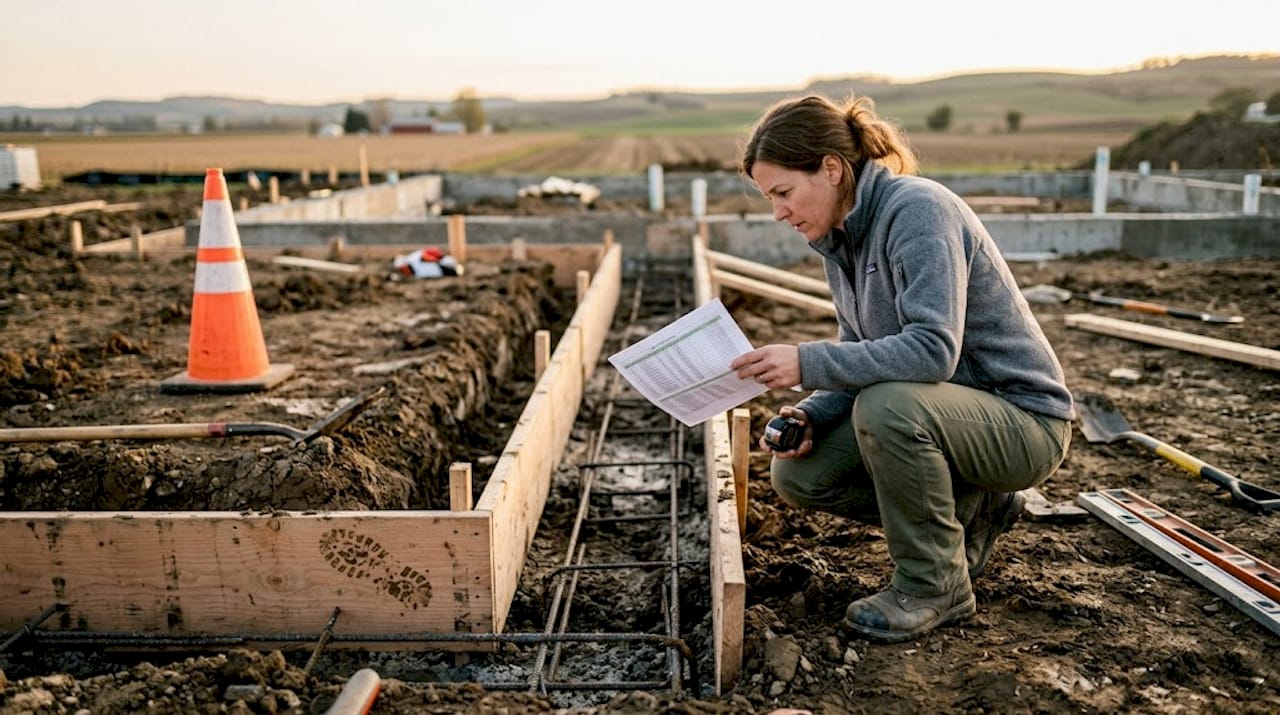
Skipping or rushing this stage creates risks that no subsequent inspection can fully reverse. A misaligned foundation affects every structural element above it. For projects governed by BCA requirements in Singapore, PE-stamped compliance at this stage is a prerequisite before any concrete placement proceeds.
2. Framing and structural shell inspection
Conducted after the structural frame is erected but before exterior cladding or insulation is applied, this inspection verifies that load-bearing walls, beams, columns, and connections conform to the structural design. Inspectors look for improper notching, missing fasteners, incorrect beam bearing lengths, and unauthorized structural modifications.
This is one of the most technically demanding types of building maintenance inspections to get right on timing. Once cladding goes up, access to structural connections is lost without destructive investigation.
3. Rough mechanical, electrical, and plumbing (MEP) inspection
MEP rough-in inspections occur before walls, ceilings, or floors are closed. The inspector checks that pipe diameters, duct sizing, wire gauges, junction box placements, and drain slopes match the approved MEP drawings. Any deviation discovered after drywall is installed requires opening walls, which multiplies labor and material costs significantly.
The pre-drywall stage is critical for catching hidden risks in plumbing, wiring, and HVAC before concealment. Aectechnicalsg treats this stage as non-negotiable in all new residential and commercial advisory engagements.
4. Fire safety and fire-resistive assembly inspection
Fire safety inspections verify that fire-rated walls, floors, doors, and penetration seals are installed correctly during construction. Passive fire protection only works if every element is in place. An unsealed pipe penetration through a fire-rated wall can defeat the entire rated assembly.
Commercial properties face four to seven regulatory inspections per year covering fire safety, structural integrity, accessibility, and energy compliance. SCDF requirements in Singapore add an additional layer of mandatory active fire system commissioning before any Temporary Occupation Permit (TOP) is issued.
5. Special inspections for high-risk systems
Special inspections apply when construction involves materials or assemblies with elevated failure risk. Common triggers include:
- High-strength or post-tensioned concrete placement
- Structural steel welding and bolted connections
- Masonry construction with grouted reinforcing
- Driven piles and deep foundation systems
- Soil compaction for engineered fill
A special inspector must be present continuously or periodically, depending on the activity, and must hold recognized qualifications. These are legally mandated in most jurisdictions and cannot be replaced by contractor quality control. Aectechnicalsg provides BCA structural inspection services covering these high-risk categories for Singapore projects.
6. Energy code compliance inspection
Energy inspections verify that insulation R-values, glazing performance, HVAC efficiency ratings, and air sealing meet the applicable energy code. These inspections have grown in frequency and rigor as jurisdictions tighten carbon performance requirements for buildings.
Failing energy compliance does not just delay the project. It can require expensive re-specification of mechanical equipment or envelope components. For commercial developments, energy compliance documentation is frequently required by both the authority and project lenders before financial close.
7. Elevator and escalator inspection
Elevators require both a pre-operational inspection before first use and periodic statutory inspections throughout their service life. These are among the most regulated types of building statutory inspections because failure consequences are immediate and severe.
In Singapore, the Building and Construction Authority mandates lift inspections by a registered lift inspector at defined intervals. Records must be maintained and available for audit at all times. Gaps in this documentation are a common source of compliance failures during building audits.
8. Pest and termite inspection
A pest inspection, specifically focused on termite activity and timber damage, is legally required in many jurisdictions before property sale or transfer. Structural timber replacement caused by neglected termite infestations can result in repair costs ranging from $20,000 to $80,000.
Distinguishing cosmetic damage from active structural compromise requires a qualified inspector, not a general contractor visual check. Thermal imaging is now frequently used to detect moisture and activity behind finished surfaces without destructive testing.
9. Facade and external envelope inspection
Facade inspections examine cladding systems, glazing, sealant joints, fixings, and external wall finishes for deterioration, cracking, and water ingress risk. In Singapore, the BCA mandates periodic facade inspections for buildings meeting defined height and age thresholds, with non-compliance carrying legal consequences.
This inspection type is particularly relevant for aging commercial buildings and high-rise residential developments where facade failure poses direct public safety risks. Professional engineers conduct close-range visual inspections, often supplemented by drone surveys and rope access or gondola platforms.
10. Pre-purchase and pre-sale property inspection
A pre-purchase inspection gives a buyer an independent assessment of the property’s physical condition before contracts are signed. It covers structural integrity, roof condition, moisture intrusion, electrical safety, plumbing function, and visible defects. This is not a code compliance inspection. It is a risk management tool.
For sellers, a pre-listing inspection allows defects to be addressed before buyer discovery, preserving negotiating position and avoiding last-minute price reductions. Independent third-party inspections consistently outperform developer self-certification by producing enforceable documentation that references recognized published standards.
11. Periodic structural and maintenance inspection
Types of building maintenance inspections are specifically designed for the operational life of a building, not just the construction phase. Professional inspections for commercial buildings by licensed structural engineers cost between $300 and $800 depending on building size and complexity, and are recommended every three to five years or immediately after severe weather events.
These inspections assess concrete spalling, rebar corrosion, connection deterioration, settlement, and any modifications made to the structure without permit. Facilities that treat monthly inspections as annual tasks accumulate documentation gaps that frequently result in regulatory fines and insurance complications.
Comparing building inspection types side by side
The table below summarizes the primary building inspection types by authority, timing, applicable project type, and cost profile.
| Inspection type | Performed by | Project phase | Applicable project | Estimated cost |
|---|---|---|---|---|
| Footing and foundation | Licensed inspector or PE | Pre-pour | All new construction | Included in permit fee |
| Framing/structural shell | Building authority or PE | Pre-cladding | Residential and commercial | Included in permit fee |
| Rough MEP | Building authority | Pre-drywall | All projects with services | Included in permit fee |
| Special inspections | Certified special inspector | During construction | High-risk systems and materials | $500 to $3,000+ depending on scope |
| Fire safety | Fire authority or third party | During and post-construction | Commercial and multifamily | $300 to $1,500 |
| Energy compliance | Third party or authority | Pre-occupancy | Commercial and residential | $200 to $800 |
| Periodic structural | Licensed structural engineer | Every 3 to 5 years | All existing buildings | $300 to $800 |
| Facade inspection | PE or approved inspector | Defined intervals | High-rise and aging buildings | $1,000 to $5,000+ |
| Pre-purchase | Independent inspector | Before sale/purchase | Residential and commercial | $300 to $600 |
| Pest and termite | Licensed pest inspector | Pre-sale or post-event | All property types | $150 to $400 |
Pro Tip: For multifamily acquisitions, request a property condition assessment conducted to ASTM E2018 standards. This standard requires estimates of remaining useful life for all major systems, giving you a defensible basis for price negotiation and capital expenditure planning.
Regulatory vs. owner-driven inspections differ sharply in consequence. Missing a jurisdictional inspection can halt work, void permits, and trigger OSHA-level penalties. OSHA penalties can reach $16,131 per serious violation and up to $161,323 per willful or repeat violation. Owner-driven inspections carry no legal penalty for omission, but the financial exposure from undetected defects often exceeds any inspection cost many times over.
Matching inspections to your specific project scenario
The right combination of inspection types depends on what you are doing with the property. Here is a practical breakdown by scenario:
-
New construction: Schedule staged inspections covering foundation, structural frame, rough MEP, fire-resistive assemblies, energy compliance, and a final pre-occupancy walkthrough. Do not wait for a single end-of-project inspection. Single-visit inspections for new construction regularly miss latent defects that staged inspections would have caught.
-
Renovation or addition: Trigger framing, MEP rough-in, and special inspections as applicable. Any work that alters load-bearing elements requires PE review and authority approval before proceeding.
-
Property purchase: Commission an independent pre-purchase inspection and a pest inspection at minimum. For commercial acquisitions, add a full property condition assessment per ASTM E2018.
-
Multifamily property management: Multi-family inspections require comprehensive assessments of structure, roofing, HVAC, electrical, plumbing, fire safety, and site conditions. Schedule periodic structural inspections every three to five years and fire safety checks annually.
-
Regulatory compliance audit: For buildings subject to BCA, SCDF, or NEA requirements in Singapore, maintain a compliance calendar covering all types of building statutory inspections. Automate reminders to prevent scheduling gaps that lead to enforcement notices.
-
Insurance or lender requirement: When a bank or insurer requires proof of building condition, commission a third-party inspection with a formal written report. Self-certification by the developer or owner is not acceptable to most institutional lenders for this purpose.
My perspective on staged inspections and why timing is everything
I have reviewed enough post-construction defect cases to know that the single biggest mistake property owners make is treating building inspections as a formality rather than a protection mechanism. The inspection happens, the box gets checked, and everyone moves on. But a box-checked inspection conducted at the wrong stage, or by an inspector without the right independence, provides almost no protection when something goes wrong.
What I have found consistently is that the value of an inspection is directly proportional to its timing and the independence of the inspector. An MEP inspection conducted after walls are closed is close to useless. A foundation inspection conducted by someone affiliated with the contractor carries limited credibility in a dispute. These are not theoretical risks. They are patterns that show up repeatedly in claims and disputes.
The technology side has genuinely improved matters. Drone surveys, thermal imaging, and digital documentation with GPS proof have made it significantly harder to falsify or overlook defect evidence. But technology only helps if the inspection program is structured correctly in the first place.
My strongest recommendation: treat your inspection program the same way you treat your structural drawings. Build it from the foundation up, stage by stage, with qualified independent professionals at each critical hold point. The cost is modest relative to the exposure. The documentation it produces is your best defense against contractor disputes, regulatory enforcement, and future liability.
— Aman
Work with Aectechnicalsg to navigate your inspection requirements
Knowing the different building inspections that apply to your project is one thing. Coordinating them correctly, with the right authorities and at the right stages, requires professional support.
Aectechnicalsg provides engineering consultancy services covering structural, geotechnical, M&E, and facade inspection advisory for developers, property owners, and construction firms operating in Singapore. The team manages authority submissions to BCA, SCDF, URA, and other regulatory bodies, handling inspection scheduling, documentation, and compliance reporting. Whether you are planning a new build, conducting a periodic inspection, or responding to a regulatory notice, Aectechnicalsg provides the technical expertise to keep your project compliant and your property protected. Contact the team for a consultancy discussion tailored to your project requirements.
FAQ
What is a building inspection?
A building inspection is a formal assessment of a structure’s condition, materials, or systems conducted by a qualified inspector to verify safety, compliance, and quality at a defined project stage or interval.
How many types of building inspections are there?
The four main categories are jurisdictional code inspections, special inspections, owner or lender inspections, and third-party quality assurance reviews. Within these, inspection types include foundation, framing, MEP, fire safety, energy, facade, pest, and periodic structural, among others.
What are types of building statutory inspections?
Statutory inspections are legally mandated assessments required by building codes or regulatory authorities. In Singapore, these include BCA periodic structural inspections, facade inspections, and SCDF fire system commissioning checks, all of which carry legal deadlines and enforcement consequences.
How often should a commercial building be inspected?
Commercial buildings should receive structural inspections every three to five years, annual fire safety checks, and periodic facade inspections at intervals defined by the applicable building authority, with additional inspections triggered after severe weather or structural modifications.
Why are third-party inspections better than developer self-certification?
Independent third-party inspections produce enforceable documentation referencing published standards, whereas self-certification by a developer carries inherent conflicts of interest and limited legal standing in defect disputes or regulatory proceedings.