
Project submission requirements in Singapore are defined regulatory mandates specifying the documentation, data formats, and digital workflows that construction projects must satisfy to obtain approvals from agencies including BCA, URA, SCDF, PUB, NEA, and HDB. These requirements govern everything from building plan formats to BIM model parameter completeness, and non-compliance causes measurable delays that affect project timelines and costs. The regulatory framework has shifted decisively toward digital submission platforms, with CORENET X now mandatory for large-scale projects and HDB’s APEX system governing renovation permits. Understanding these requirements in precise detail is no longer optional for construction professionals, project developers, or property owners operating in Singapore.
What are the project submission requirements in Singapore?
Singapore’s project submission requirements fall into two primary categories: authority submissions for new construction and major works, and permit applications for renovation and alteration works. Both categories demand specific documentation, qualified signatories, and compliance with agency-specific formats.
For new construction and major development projects, building plan submissions must include architectural plans, civil and structural drawings, and mechanical and electrical (M&E) plans. Each discipline requires its own set of drawings prepared by registered qualified persons (QPs). The architectural drawings must show floor plans, elevations, sections, and site plans at specified scales. Structural drawings must include foundation details, reinforcement schedules, and connection specifications. M&E drawings cover fire protection systems, electrical distribution, plumbing, and ACMV layouts.
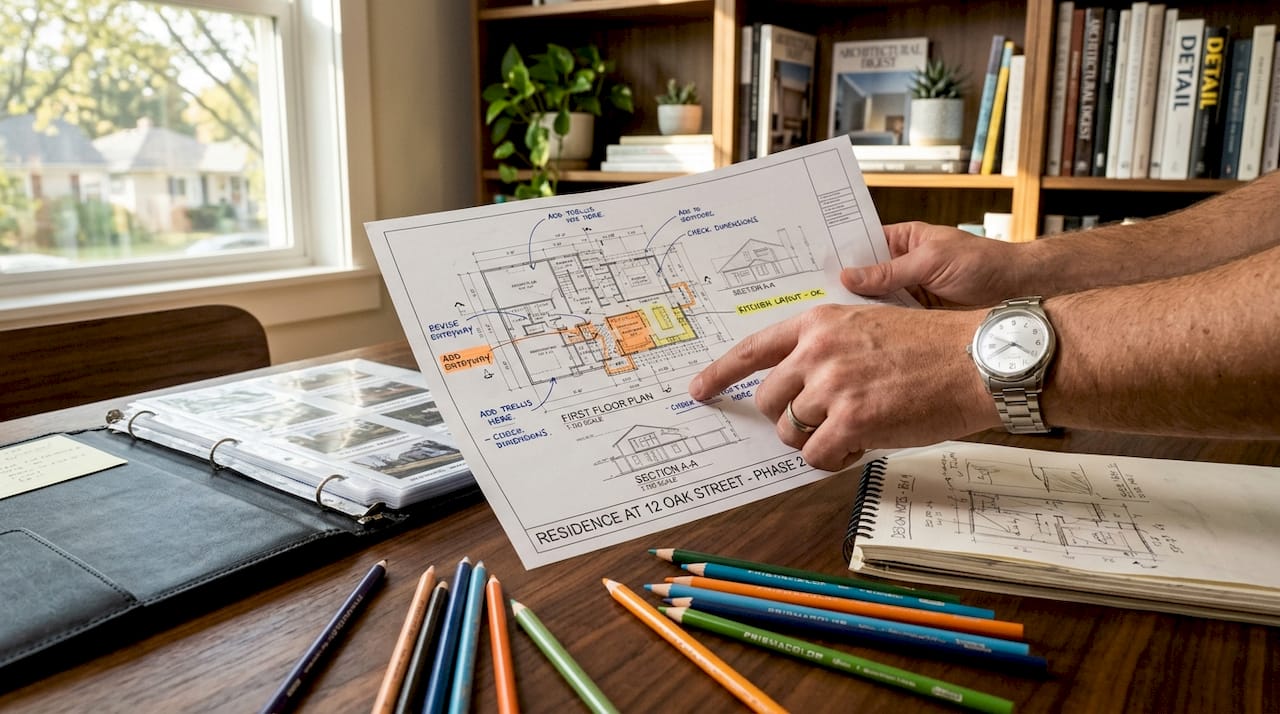
For HDB residential projects, floor plans must follow a color-coding convention that distinguishes existing walls, proposed demolition, and new construction. Submissions must include a QP’s declaration confirming compliance with the Building Control Act and relevant codes. Additional documentation covers demolition schedules, details of power tools to be used, and the names and registration numbers of site supervisors.
Commercial and institutional projects carry additional submission criteria, including environmental impact assessments for NEA, fire safety plans for SCDF, and drainage impact submissions for PUB. Each agency has its own checklist, and a single project may require coordinated submissions across four or more authorities simultaneously.
Pro Tip: Download the official BCA submission checklist and map each item to your project’s document register before engaging any authority. This single step prevents the most common cause of first-submission rejections: missing or incorrectly labeled attachments.
How does the CORENET X digital submission system work?
CORENET X coordinates multi-agency reviews in a single digital workflow, consolidating results from seven agencies including BCA, URA, NParks, LTA, SCDF, PUB, and NEA into one submission portal. This consolidation eliminates the need to file separate applications with each authority and reduces the duplication of documentation that previously added weeks to approval timelines.
The system operates through three distinct submission gateways:
- Design Gateway: Submitted before construction begins, this gateway requires architectural, structural, and M&E BIM models with sufficient design-stage parameters. Agencies review the proposed design for compliance with planning, fire safety, and environmental requirements.
- Construction Gateway: Triggered before site works commence, this gateway demands more complete model data including construction details, material specifications, and coordination between disciplines. Missing parameters at this stage are the most frequent cause of validation failures.
- Completion Gateway: Filed upon project completion, this gateway requires as-built model data confirming that constructed elements match approved designs. It serves as the basis for the Certificate of Statutory Completion (CSC).
CORENET X mandates BIM model submissions in IFC+SG format with complete parameter mapping. The IFC+SG schema is Singapore’s localized extension of the international IFC standard, adding parameters specific to local regulatory requirements. Missing or incorrectly mapped parameters trigger validation failures that halt the review process entirely.
“Compliance readiness depends more on correct BIM data structuring, specifically parameter mapping and classification, than on complex graphical modeling.” This means a visually detailed model with incomplete metadata will fail submission, while a simpler model with accurate parameters will pass.
The Bimeco Validator tool performs pre-submission checks against the IFC+SG schema, identifying missing parameters before the model reaches the agency portal. Teams that skip this validation step routinely face multiple resubmission cycles, each adding days or weeks to the approval timeline. Coordinated federated models, where architectural, structural, and M&E models are aligned to a common origin point, are a technical prerequisite for successful CORENET X submissions.
For a detailed breakdown of how these submission gateways interact with structural design approvals, Aectechnicalsg provides discipline-specific guidance covering each stage.
What are the HDB-specific submission requirements for renovation works?
HDB renovation permits operate under a separate system from CORENET X. Renovation permits are submitted through HDB’s mandatory online APEX system, and in the vast majority of cases, this submission is made by the registered contractor rather than the flat owner. Homeowners retain legal responsibility for compliance, but the submission workflow is contractor-driven.
The following renovation works require a permit before commencement:
- Hacking or removal of walls, including non-structural partitions
- Installation or replacement of windows, which must be carried out by HDB-trained window installers
- Waterproofing works in bathrooms and wet areas
- Electrical rewiring or installation of new circuits
- Installation of air-conditioning systems
- Any structural modifications, which additionally require professional engineer (PE) endorsement
Cosmetic works such as painting, wallpaper installation, and replacement of floor finishes within the same room do not require a permit. The distinction matters because commencing permit-required works without approval exposes the flat owner to enforcement action and potential reinstatement orders.
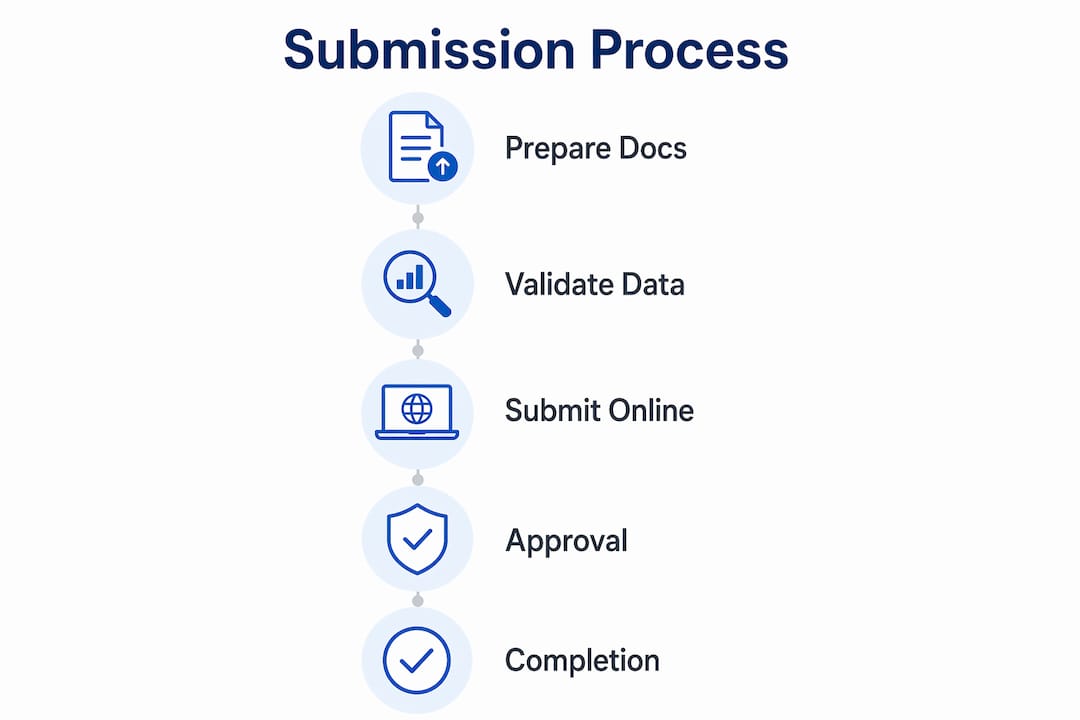
The APEX submission workflow follows a defined sequence. The contractor prepares the floor plan with the required color coding, attaches the relevant declarations, and submits electronically through the APEX portal. HDB reviews the application and issues the permit digitally. BTO permit approvals take approximately 3 to 5 working days for clean applications, while resale flat renovation permits typically require 10 to 14 working days. These timelines directly affect renovation scheduling, particularly for projects with fixed handover dates.
Pro Tip: For resale flat renovations, submit the APEX application immediately after the keys are collected. The 10 to 14 working day approval window means that any delay in submission pushes back the entire renovation program, which affects contractor scheduling and move-in dates.
Structural works in HDB flats require PE endorsement before APEX submission. The PE must inspect the proposed works, confirm structural adequacy, and provide a signed endorsement that accompanies the permit application. PE compliance requirements for HDB and other residential projects are a distinct regulatory layer that contractors and developers must account for in their project timelines.
What common challenges arise during project submissions?
The most frequent cause of submission delays is BIM model data errors. BIM models submitted to CORENET X often contain thousands of parameter errors that prevent validation. These errors typically stem from incorrect IFC+SG property mapping, missing classification codes, or misaligned model origins between disciplines. Each validation failure requires the submitting team to correct the model, re-export the IFC file, and resubmit, a cycle that can repeat multiple times before the model passes.
Common challenges and their causes include:
- Incomplete parameter mapping: BIM authoring tools do not automatically populate all IFC+SG parameters. Teams must manually map project-specific data to the required schema fields.
- Unregistered contractors: Incorrect contractor registration or a mismatch between the contractor’s registered scope and the proposed works causes immediate rejection in both APEX and CORENET X workflows.
- Miscoordinated federated models: When architectural, structural, and M&E models are not aligned to a common survey point, clash detection fails and agency reviewers cannot assess the integrated design.
- Premature gateway submissions: Submitting a Design Gateway model with insufficient construction-stage data, or vice versa, triggers validation failures that require complete model rework.
- Missing agency-specific documents: Each of the seven agencies in CORENET X has its own document checklist. A submission that satisfies BCA requirements but omits a PUB drainage impact assessment will be held pending that agency’s review.
Pro Tip: Assign one team member as the submission coordinator whose sole responsibility is tracking the status of each agency’s review within CORENET X. Agencies review in parallel, but a single outstanding item from one authority holds the consolidated approval.
For a broader view of how these challenges fit within the construction approval workflow in Singapore, Aectechnicalsg’s 2026 guide covers the full multi-agency process from pre-application to CSC.
How to practically prepare for project submissions in Singapore
Preparation for regulatory submissions in Singapore follows a structured sequence that begins well before any documents are filed. The steps below reflect the standard approach for projects subject to CORENET X requirements, with adaptations noted for HDB renovation works.
- Engage qualified persons early. Appoint registered QPs for architecture, structural engineering, and M&E engineering at the project outset. Their registration numbers and declarations are mandatory components of every submission package.
- Establish BIM execution standards. Define the IFC+SG parameter requirements for each discipline at the project kick-off. Use BCA’s official CORENET X BIM guides to set the parameter mapping standards that all modelers must follow. Aectechnicalsg’s resource on BIM mandates provides a practical reference for compliance.
- Coordinate federated models. Set a common survey point and project origin before any discipline begins modeling. Retroactively aligning miscoordinated models is time-consuming and error-prone.
- Run Bimeco Validator checks before submission. Treat the validator as a mandatory pre-submission gate, not an optional quality check. Address all flagged errors before uploading to the CORENET X portal.
- Prepare agency-specific document packages. Map each agency’s checklist requirements to your document register and confirm that every item is complete, signed, and correctly formatted before initiating the submission.
- Monitor application status actively. Log into the CORENET X portal regularly after submission to track each agency’s review status. Respond to queries from agencies within the specified timeframe to avoid automatic deferral.
- Document post-approval compliance. Retain copies of all approved plans, permits, and agency correspondence. Post-approval inspections by BCA or HDB require immediate access to these records.
For M&E-specific submission preparation, Aectechnicalsg’s guide on M&E engineering workflow covers discipline-specific compliance requirements in detail.
Key takeaways
Successful project submissions in Singapore require correct BIM data structuring, registered qualified persons, and coordinated multi-agency documentation prepared before any portal submission begins.
| Point | Details |
|---|---|
| BIM data accuracy is critical | IFC+SG parameter completeness determines validation success more than graphical model detail. |
| CORENET X consolidates seven agencies | A single submission triggers parallel reviews by BCA, URA, SCDF, PUB, NEA, NParks, and LTA. |
| HDB uses APEX, not CORENET X | Renovation permits for HDB flats are submitted by registered contractors through the APEX portal. |
| Approval timelines vary by project type | BTO renovation permits take 3 to 5 working days; resale permits require 10 to 14 working days. |
| Pre-submission validation prevents rework | Running the Bimeco Validator before submission eliminates the most common cause of iterative resubmissions. |
Why the submission process rewards preparation over speed
Having worked through Singapore’s regulatory submission environment across multiple project types, the pattern that stands out most clearly is this: teams that treat submission as a documentation exercise rather than a compliance exercise consistently face the most delays. The distinction matters. A documentation mindset focuses on assembling files. A compliance mindset focuses on whether each file satisfies the specific technical and legal standard the agency applies.
The shift to CORENET X has made this distinction more consequential. Before digital consolidation, a missing NEA document caused a delay with NEA alone. Now, because agencies review in parallel within a single workflow, one incomplete item can hold the entire consolidated approval. I have seen projects where a single incorrectly classified IFC element, something that would have been invisible in a paper submission, triggered a validation failure that delayed the Design Gateway approval by three weeks.
The practical lesson is that BIM compliance is a data management discipline, not a modeling discipline. The teams that succeed are those that build parameter mapping into their BIM execution plan from day one, not those that attempt to retrofit IFC+SG properties onto a completed model the week before submission.
For HDB renovation projects, the equivalent lesson applies to contractor registration. Legal responsibility rests with the flat owner, but the submission mechanism runs through the contractor. Engaging a contractor whose registered scope does not precisely match the proposed works is the single most avoidable cause of APEX rejection. Verify registration scope before signing any renovation contract.
Singapore’s regulatory agencies are accessible and generally responsive when submissions are complete and accurate. The approval process is not adversarial. It rewards preparation.
— Aman
How Aectechnicalsg supports your submission process
Aectechnicalsg provides engineering consultancy services specifically structured around Singapore’s regulatory submission requirements. The firm supports project developers, construction firms, and property owners through every stage of the approval process, from BIM model coordination and IFC+SG compliance checks to PE endorsements and authority submissions across BCA, URA, SCDF, PUB, and NEA.
For developers navigating CORENET X for the first time, Aectechnicalsg’s engineering consultancy services cover the full range of disciplines required for compliant submissions. For projects requiring PE endorsement and formal authority submission support, the firm’s specialist team manages the technical and procedural requirements that most commonly cause delays. Engaging qualified consultancy at the project outset reduces approval risk and keeps construction programs on schedule.
FAQ
What documents are required for a BCA building plan submission?
A BCA building plan submission requires architectural, structural, and M&E drawings prepared by registered QPs, along with a QP declaration, site plan, and any agency-specific documents such as fire safety plans for SCDF or drainage impact assessments for PUB.
Who submits an HDB renovation permit through APEX?
Renovation permits are submitted through HDB’s APEX system by the registered contractor, not the flat owner. The contractor’s registration scope must match the proposed works exactly, or the application will be rejected.
What is the IFC+SG format required by CORENET X?
IFC+SG is Singapore’s localized extension of the international IFC standard, adding mandatory parameters for local regulatory compliance. All BIM models submitted through CORENET X must conform to this schema with complete parameter mapping across all disciplines.
How long does HDB renovation permit approval take?
BTO renovation permit approvals take approximately 3 to 5 working days for complete applications. Resale flat renovation permits typically require 10 to 14 working days, making early submission critical for projects with fixed timelines.
What causes the most delays in CORENET X submissions?
Missing or incorrectly mapped IFC+SG parameters in BIM models are the primary cause of CORENET X submission delays. Running the Bimeco Validator tool before submission identifies these errors and prevents iterative resubmission cycles.