
The Singapore Civil Defence Force (SCDF) is the statutory authority responsible for enforcing fire safety regulations across all construction projects in Singapore under the Fire Safety Act. The role of SCDF in construction extends well beyond site inspections. It governs plan approvals, fire protection system mandates, hot works controls, and the issuance of Fire Safety Certificates that determine whether a building can legally operate. For developers, contractors, and compliance officers, understanding SCDF’s regulatory scope is not optional. It is the difference between a project that proceeds on schedule and one that faces fines up to SGD 200,000, closure orders, or indefinite delays.
What are the key SCDF fire safety regulations impacting construction projects?
The Fire Safety Act forms the legal backbone of SCDF’s authority over construction sites and completed buildings in Singapore. Every construction project that involves a building or structure must satisfy SCDF’s fire safety requirements before receiving project approval, and those requirements are specific, technical, and non-negotiable.
One of the most consequential requirements involves the appointment of a Fire Safety Manager. Buildings exceeding 5,000 sqm or designated for public assembly must appoint a registered Fire Safety Manager under 2026 regulations. This person is responsible for maintaining fire safety systems, conducting drills, and coordinating with SCDF during inspections. Many developers underestimate this requirement until they are already deep into fit-out, at which point sourcing a qualified manager on short notice becomes both costly and time-consuming.
SCDF also mandates specific fire protection systems as a condition of project approval. These include:
- Fire alarm systems with automatic detection and manual call points
- Sprinkler systems calibrated to the building’s occupancy classification
- Fire-rated walls and compartmentation to contain the spread of fire
- Clear and unobstructed exit routes meeting minimum width and travel distance standards
Compliance with these systems is mandatory for project approval, and each system must be independently verified before a Fire Safety Certificate is issued. Verification typically involves third-party testing, commissioning reports, and SCDF inspection sign-off.
The Temporary Change of Use Permit is another frequently overlooked requirement. When a construction site or building space is temporarily repurposed, such as for a show flat, event, or interim commercial use, SCDF requires a formal permit. Applications must be submitted at least 3 working days before the event commences. Submissions received with less lead time are automatically rejected, with no exceptions.
Pro Tip: Schedule Temporary Change of Use Permit applications at least two weeks in advance to allow for document preparation, professional review, and any SCDF clarifications that may arise before the mandatory 3-day cutoff.
How does SCDF regulate hot works and fire risk control during construction?
Hot works, including welding, grinding, and flame cutting, represent one of the highest fire risk activities on any construction site. SCDF’s regulatory framework for hot works is precise, and the consequences of non-compliance are severe. The 2026 joint guidance from SCDF and the Ministry of Manpower (MOM) sets out the following requirements:
- Maintain a minimum 3-meter separation between welding or hot work activities and screening nets, formwork, or other combustible site materials. Where this distance cannot be achieved, non-combustible shielding must be installed as a substitute barrier.
- Use non-combustible materials for hoardings and protective nets wherever hot works are conducted nearby. Polyethylene-based nets, which are common on Singapore construction sites, are not acceptable substitutes.
- Obtain a Hot Work Permit before commencing any welding or flame-cutting activity. This permit must be site-specific and renewed for each work session.
- Assign a fire watch during and after hot work operations. The fire watch must remain on site for at least 30 minutes after work concludes to monitor for smoldering materials.
- Coordinate with a Professional Engineer or Registered Architect when hot works are conducted near structural elements or fire-rated assemblies, as modifications to these elements require formal endorsement before SCDF will accept the submission.
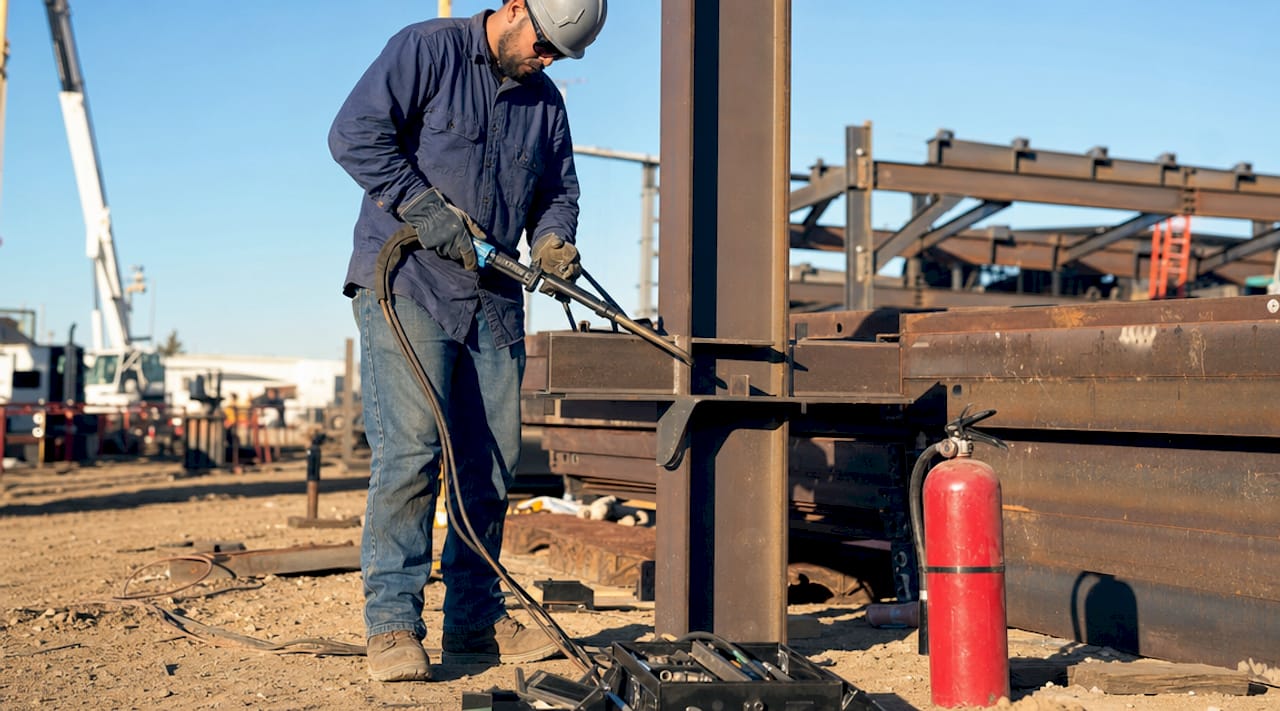
Welding must be kept 3 meters away from screening nets or shielded with non-combustible materials. This requirement emerged from a pattern of construction site fires in Singapore where polyethylene nets caught fire from nearby welding sparks, spreading rapidly up building facades. The regulation is a direct response to documented incidents, not a precautionary abstraction.
Pro Tip: When planning construction schedules, sequence hot works before the installation of screening nets and combustible cladding materials. Reversing this order creates compliance conflicts that are expensive to resolve mid-project.
For projects involving petroleum and flammable materials, additional SCDF regulations apply beyond the standard hot works framework, including storage quantity limits and dedicated fire suppression provisions.
What is the process for SCDF fire safety approvals and compliance monitoring?
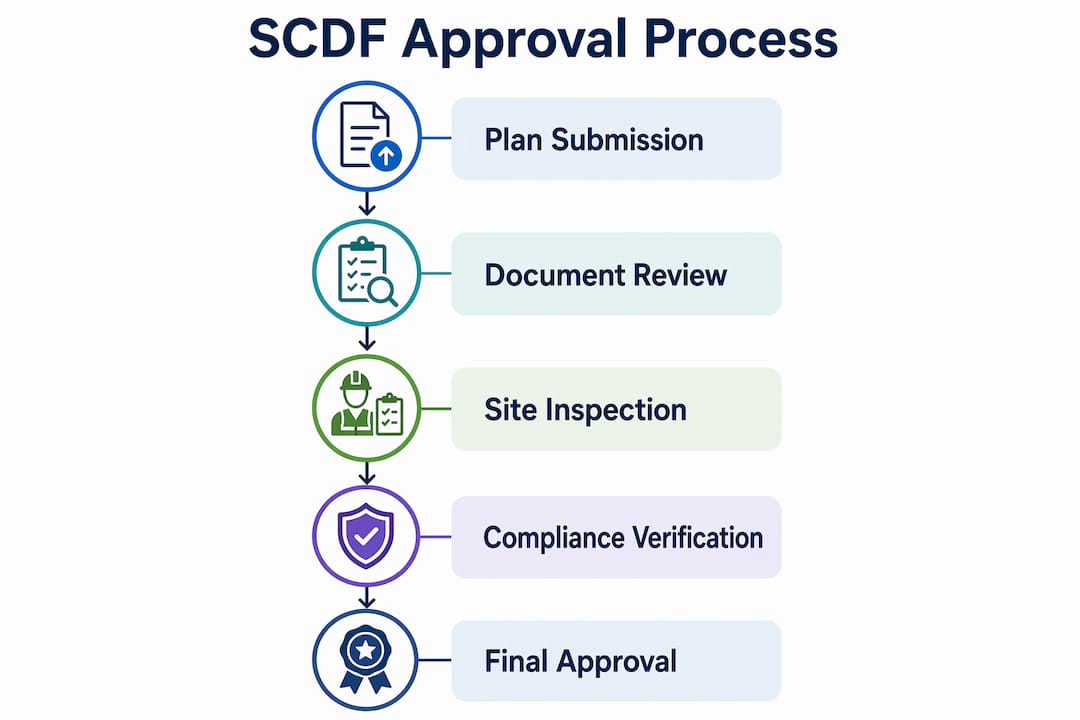
SCDF’s approval process follows a structured sequence that runs parallel to the broader construction approval workflow in Singapore. Understanding each stage prevents the submission errors that cause the most common project delays.
Plan submissions for fire safety must be made through the CORENET system by Qualified Persons, specifically Registered Architects or Professional Engineers. This requirement means that developers cannot submit directly. A licensed professional must prepare, certify, and submit the fire safety plans on the project’s behalf. CORENET submissions are reviewed by SCDF’s Fire Safety and Shelter Department (FSSD), which issues either an approval, a conditional approval, or a rejection with required amendments.
The table below compares the key stages of SCDF compliance monitoring across a typical construction project lifecycle:
| Stage | SCDF Requirement | Consequence of Non-Compliance |
|---|---|---|
| Pre-construction | Fire safety plan submission via CORENET by Qualified Person | Construction cannot legally commence |
| During construction | Hot works permits, site inspections, Fire Safety Manager appointment | Stop-work orders, fines |
| Pre-occupation | Fire protection system commissioning and SCDF inspection | Fire Safety Certificate withheld |
| Post-occupation | Ongoing Fire Safety Manager duties, periodic audits | Fines up to SGD 200,000, closure orders |
| Temporary use | Temporary Change of Use Permit (min. 3 working days notice) | Permit rejection, illegal occupation |
Non-compliance with SCDF requirements can result in fines up to SGD 200,000, imprisonment, or closure orders. These penalties apply to both the building owner and, in some cases, the appointed Qualified Person. This shared liability structure is what makes professional fire safety PE endorsement a practical necessity rather than a formality.
Temporary Fire Permits are issued when renovation or fit-out works affect existing fire protection systems. If a sprinkler zone is isolated for more than a specified duration, or if fire-rated walls are breached during construction, SCDF requires formal notification and a temporary permit before works proceed. Failing to obtain this permit is one of the most common compliance violations recorded during SCDF audits of commercial renovation projects.
For a detailed breakdown of the full construction approval workflow in Singapore, including SCDF touchpoints at each phase, the Aectechnicalsg guide covers the process comprehensively.
How do SCDF requirements integrate with Singapore’s broader regulatory framework?
SCDF does not operate in isolation. Its fire safety mandate intersects with the Building and Construction Authority (BCA), the Ministry of Manpower (MOM), the Urban Redevelopment Authority (URA), and the National Environment Agency (NEA) across different project types and phases. SCDF coordinates with BCA and MOM to manage fire and occupational safety on construction sites, creating a multi-agency regulatory environment that requires careful coordination.
The practical implications of this overlap are significant for developers and compliance officers:
- BCA governs structural and building code compliance, while SCDF governs fire safety. A building can receive BCA approval and still fail SCDF inspection if fire compartmentation or exit route standards are not met.
- MOM regulates workplace safety, including hot works permits and worker safety protocols. SCDF’s hot works requirements layer on top of MOM’s Workplace Safety and Health Act obligations, meaning a single welding operation may require permits from both agencies simultaneously.
- URA controls land use and change of use approvals. A Temporary Change of Use Permit from SCDF does not substitute for URA’s planning permission. Both must be obtained independently.
- NEA regulates exhaust and ventilation systems in food and beverage establishments. For commercial kitchen fit-outs, NEA’s grease trap and exhaust requirements must align with SCDF’s fire suppression system mandates for cooking equipment.
Commercial interior projects face complex SCDF requirements especially for kitchens, exhausts, and fire suppression systems, which are frequently underestimated by developers. A restaurant fit-out, for example, may require SCDF approval for the kitchen hood suppression system, BCA approval for structural modifications, NEA approval for the exhaust discharge point, and URA approval if the use classification changes. Missing any single submission delays all others.
For architects managing these multi-agency submissions, the regulatory compliance guide for architects published by Aectechnicalsg provides a structured reference for coordinating SCDF fire safety compliance within the broader approval matrix. Understanding where SCDF’s authority begins and ends relative to other agencies is the foundation of effective project risk management.
Key takeaways
SCDF’s role in construction is defined by statutory authority, multi-agency coordination, and strict enforcement. Compliance is not a final-stage checklist item. It is a continuous obligation from plan submission through occupation and beyond.
| Point | Details |
|---|---|
| SCDF authority is statutory | The Fire Safety Act gives SCDF binding power over all fire safety approvals in construction. |
| Fire Safety Manager is mandatory | Buildings over 5,000 sqm or used for public assembly must appoint a registered Fire Safety Manager. |
| Hot works require strict controls | A 3-meter separation from combustible materials or non-combustible shielding is required for all welding activities. |
| CORENET submission is non-negotiable | Only Qualified Persons (Registered Architects or Professional Engineers) can submit fire safety plans via CORENET. |
| Multi-agency coordination is required | SCDF approvals must align with BCA, MOM, URA, and NEA requirements across different project phases. |
Why early SCDF engagement is the most undervalued decision in construction planning
From working across Singapore construction and compliance projects, the pattern that causes the most preventable delays is consistent: SCDF is treated as a late-stage approval rather than an early-stage design constraint. Teams finalize architectural layouts, select cladding systems, and lock in kitchen equipment specifications before a single fire safety consultant has reviewed the plans. By the time SCDF’s requirements surface, the cost of redesign is significant.
The developers who move fastest through SCDF approvals are those who appoint a fire safety PE or FSSD-experienced consultant at the schematic design stage, not after design development is complete. This is not about adding cost. It is about front-loading the compliance review so that fire compartmentation, sprinkler zoning, and exit route geometry are baked into the design rather than retrofitted onto it.
The second pattern worth noting is the underestimation of kitchen and exhaust approvals in commercial interior projects. A standard F&B fit-out involving a commercial kitchen will require SCDF sign-off on the suppression system, NEA sign-off on the exhaust, and potentially BCA sign-off on any structural penetrations for ductwork. Each agency has its own timeline. Running these submissions sequentially instead of in parallel adds months to a project that could have been completed on schedule.
The fire safety PE endorsement process is where most of this coordination is formalized. Getting that endorsement right the first time, with complete documentation and a pre-submission review, is the single most effective way to avoid SCDF rejection cycles.
— Aman
How Aectechnicalsg supports SCDF compliance from submission to certificate
Securing SCDF approval requires more than submitting the right forms. It requires a coordinated approach that aligns fire safety design, professional endorsements, and multi-agency submissions into a single managed workflow.
Aectechnicalsg provides SCDF and FSSD submission services covering fire safety plan preparation, PE endorsements, Temporary Change of Use Permit applications, and Fire Safety Certificate coordination. The team works directly with Registered Architects and Professional Engineers to prepare CORENET submissions that meet SCDF’s technical standards on the first submission. For developers managing complex commercial interior projects or multi-agency approval processes, Aectechnicalsg’s engineering consultancy services provide the technical depth and regulatory experience needed to keep projects on schedule and within compliance.
FAQ
What is the role of SCDF in construction projects?
SCDF enforces fire safety regulations under the Fire Safety Act, covering plan approvals, fire protection system mandates, hot works controls, and Fire Safety Certificate issuance. Its approvals are required before construction can commence and before any building can be legally occupied.
What is SCDF approval and when is it required?
SCDF approval is the formal authorization issued after reviewing fire safety plans submitted via the CORENET system by a Qualified Person. It is required before construction begins, before temporary changes of use, and before a building receives its Fire Safety Certificate for occupation.
What are the penalties for SCDF non-compliance in construction?
Non-compliance with SCDF fire safety requirements can result in fines up to SGD 200,000, imprisonment, or closure orders, applying to both building owners and the appointed Qualified Person responsible for the submission.
How far must welding be kept from screening nets on construction sites?
Welding and hot works must maintain a minimum 3-meter distance from screening nets or combustible site materials. Where this distance is not achievable, non-combustible shielding must be installed as a compliant alternative.
What is a Temporary Change of Use Permit from SCDF?
A Temporary Change of Use Permit is required when a building space is temporarily repurposed for events or interim commercial use. Applications must be submitted at least 3 working days before the event, and late submissions are automatically rejected.