
Singapore civil infrastructure projects are defined as publicly or institutionally funded works that build, expand, or maintain the physical systems supporting the city-state’s economy, population, and climate resilience. The Building and Construction Authority reports total construction demand between $47B and $53B for 2026, with civil engineering demand alone reaching $11.6B to $13.4B. That scale reflects a multi-decade supercycle driven by rail expansions, land reclamation, hospital construction, and digital infrastructure planning. For professionals in civil engineering, urban planning, and public policy, understanding the distinct types of Singapore civil infrastructure projects is the foundation for sound project development and decision-making. Agencies such as the Land Transport Authority (LTA), Infrastructure Asia, and the BCA each govern specific project categories with distinct regulatory and technical requirements.
1. What are the main types of transport and mobility infrastructure?
Transport infrastructure is the most technically demanding category of civil engineering projects in Singapore. The LTA plans to expand the rail network to 360 km by the early 2030s, targeting 80% of households within a 10-minute walk of a station. That goal places Singapore’s rail length on par with London and New York City, requiring sustained investment in underground and elevated structures.
Rail projects involve specialized slurry tunnel boring machines (TBMs) mandatory for certain MRT line segments. This requirement restricts contractor eligibility to firms with captive equipment or established technical partnerships. The consequence is a concentrated contractor pool and longer procurement lead times for public agencies.
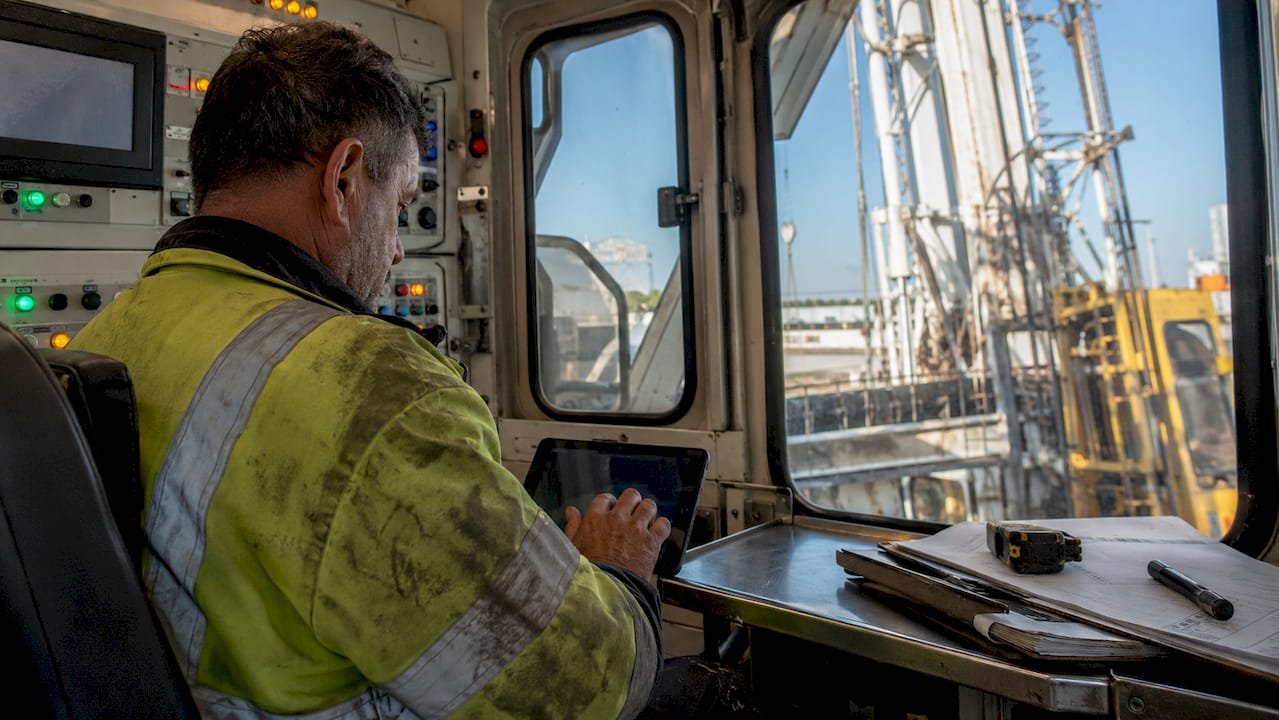
Road infrastructure covers expressway widening, junction upgrades, and bus priority corridors. Bridge and viaduct packages typically use precast segmental construction to maintain schedule and quality control. Mechanical and electrical (M&E) integration across tunnels, stations, and interchanges adds another layer of coordination complexity that many contractors underestimate.
Key transport project types include:
- MRT and LRT line extensions: Underground and elevated rail corridors with TBM tunneling and station fit-out
- Expressway widening and new alignments: Structural earthworks, retaining walls, and pavement works
- Bus interchange and terminal construction: Structural, M&E, and accessibility compliance works
- Bridge and viaduct packages: Precast segmental spans over waterways and road crossings
- Changi Terminal 5 airside infrastructure: Advanced M&E integration and design-and-build contracts for tropical climate durability
Pro Tip: When tendering for LTA rail packages, verify TBM equipment ownership early. Firms without captive slurry TBMs must secure technical partnerships before bid submission, or risk disqualification at the prequalification stage.
2. How does land reclamation and coastal infrastructure shape urban development?
Land reclamation is a defining feature of Singapore’s approach to urban growth and climate adaptation. The Greater Southern Waterfront project plans to reclaim 213 hectares over at least 10 years, complementing an 800-hectare Long Island reclamation project designed to combat sea-level rise. Together, these two projects represent the largest active reclamation program in Singapore’s modern history.
Reclamation works in Singapore face a critical constraint: limited landfill availability. Engineers address this by increasing use of geosynthetics in embankment and soil reinforcement works. Geosynthetic-reinforced structures reduce the volume of fill material required while maintaining structural stability on soft marine clay.
Coastal protection infrastructure runs alongside reclamation. Seawalls, revetments, and tidal barriers are designed to meet long-term sea-level rise projections. Precast segmental construction dominates bridge and viaduct packages within reclamation zones, particularly along the Greater Southern Waterfront corridor.
Key characteristics of reclamation and coastal projects:
- Scale and timeline: Multi-decade programs requiring phased land preparation and infrastructure sequencing
- Geotechnical complexity: Soft marine clay subgrades demand ground improvement before any permanent works
- Sustainability integration: Coastal designs incorporate sustainable drainage systems and water-sensitive planning from the outset
- Climate resilience mandate: All reclaimed land must meet PUB’s minimum platform levels for flood protection
3. What institutional and social infrastructure projects are prominent in Singapore?
Institutional building is the single largest segment of Singapore’s construction market. BCA data shows institutional demand at $13.5B to $15.3B, representing approximately 40% of total 2026 construction demand. That concentration reflects sustained government investment in healthcare, education, and public facilities.
Active examples include the Tengah General Hospital and the National University Hospital redevelopment. Both projects require phased construction to maintain operational continuity, which adds programming complexity beyond a standard greenfield build. Refurbishment and modernization of existing government buildings also form a significant share of this segment.
M&E coordination is the primary technical challenge in institutional projects. Hospitals require redundant power systems, medical gas networks, and infection control-compliant ventilation. Schools and government facilities demand fire safety compliance under SCDF requirements and accessibility standards under BCA’s Code on Accessibility. Professionals working in this segment must coordinate submissions across URA, BCA, SCDF, and NEA simultaneously.
Prominent institutional project types include:
- Hospital construction and redevelopment: High M&E density, infection control design, and phased delivery
- Educational facilities: Structural and M&E works for new campuses and existing school upgrades
- Government and civic buildings: Compliance-driven design with multi-agency submission requirements
- Sports and community facilities: Structural long-span design and public accessibility integration
4. How is digital integration transforming infrastructure project management?
Singapore’s National Infrastructure Plan (NIP) frames infrastructure development over a 15-year horizon, giving agencies and contractors a consistent planning baseline. The NIP underpins two digital platforms that are changing how underground infrastructure is managed: the Utility Survey Submission Portal (USSP) and the Infrastructure Network Planning and Alignment Clearance (INPAC) system.
USSP centralizes utility survey data from multiple agencies into a single 3D mapping environment. INPAC uses that data to detect conflicts between proposed works and existing underground utilities before construction begins. The result is measurable: early conflict detection has saved an estimated $300 million in avoided construction delays and rework costs.
| Platform | Primary Function | Key Benefit |
|---|---|---|
| USSP | Centralized utility survey submission | Single repository for 3D underground data |
| INPAC | Conflict detection and alignment clearance | Prevents clashes before construction starts |
| NIP | 15-year infrastructure planning framework | Consistent baseline for multi-agency coordination |
Multi-agency consultation through INPAC now covers LTA, PUB, SP Group, and Singtel infrastructure corridors. Planners who submit early through INPAC reduce approval cycle times and avoid costly late-stage design changes. The architecture planning guide published by Aectechnicalsg details how these platforms integrate with URA and BCA submission workflows.
Pro Tip: Submit utility conflict clearance through INPAC at the schematic design stage, not after detailed design is complete. Late submissions after detailed design lock-in are the leading cause of avoidable redesign costs on Singapore civil projects.
5. What sustainability and public-private partnership trends influence Singapore’s civil infrastructure?
Sustainability is now a procurement requirement, not a design preference, for Singapore civil infrastructure projects. Infrastructure Asia signed MoUs with the World Bank and regional partners in 2026, with over 50 professionals trained in sustainable infrastructure delivery. These partnerships signal that climate resilience and economic competitiveness are being treated as linked objectives, not competing priorities.
“Sustainable infrastructure is not just about environmental responsibility. It is a foundation for long-term economic competitiveness.” — Minister Indranee Rajah, 2026
Design-and-build contracts are the preferred delivery model for projects where lifecycle maintenance and durability matter most. Design-and-build procurement transfers long-term performance risk to the contractor, incentivizing durable material selection and construction quality from the outset. This model is now standard for major transport and institutional projects in Singapore’s tropical climate.
Public-private partnerships (PPPs) extend beyond financing. Infrastructure Asia facilitates knowledge exchange and regional collaboration that brings international best practices into Singapore’s project pipeline. For civil engineering professionals, this means technical standards and sustainability benchmarks are rising across all project categories.
Key sustainability trends shaping current projects:
- Green Mark compliance: BCA’s Green Mark scheme applies to institutional and civil infrastructure, driving energy and water efficiency targets
- Water-sensitive urban design: PUB mandates WSUD principles for drainage infrastructure in new developments
- Structural health monitoring: Aging infrastructure programs now incorporate sensor-based monitoring for bridges and retaining walls
- Advanced concrete technology: Tropical climate durability requirements drive adoption of high-performance concrete mixes in civil works
Key Takeaways
Singapore’s civil infrastructure market is defined by five distinct project categories, each governed by specific agencies, technical standards, and sustainability requirements that professionals must understand before project entry.
| Point | Details |
|---|---|
| Transport infrastructure dominates complexity | Rail TBM requirements and M&E integration restrict contractor eligibility and extend procurement timelines. |
| Land reclamation is a long-term national strategy | Greater Southern Waterfront and Long Island together represent over 1,000 hectares of planned reclaimed land. |
| Institutional building leads market demand | At $13.5B–$15.3B, hospitals and schools account for roughly 40% of Singapore’s 2026 construction demand. |
| Digital platforms reduce project risk | USSP and INPAC have saved an estimated $300 million by detecting underground utility conflicts before construction. |
| Sustainability is now a procurement standard | Infrastructure Asia’s 2026 MoUs and design-and-build contracts embed climate resilience into project delivery. |
What professionals often miss about Singapore’s infrastructure complexity
Working across Singapore’s civil infrastructure sector, the pattern I see most often is professionals underestimating the regulatory coordination burden. The technical design is rarely the bottleneck. The bottleneck is multi-agency submission sequencing: LTA, PUB, BCA, URA, and SCDF each have distinct submission portals, review timelines, and technical requirements. A project that clears structural design review can still stall for months on a PUB drainage submission or an SCDF fire safety clearance.
The second gap I observe is the treatment of digital platforms like INPAC as a compliance checkbox rather than a planning tool. Teams that engage INPAC at schematic design stage consistently avoid the costly redesigns that hit teams who submit at detailed design stage. The $300 million in documented savings is not theoretical. It reflects real projects where early conflict detection prevented late-stage rework.
The sustainability shift is real and accelerating. Infrastructure Asia’s 2026 partnerships with the World Bank are not ceremonial. They are bringing new technical benchmarks into Singapore’s procurement standards. Professionals who treat Green Mark compliance and water-sensitive design as add-ons will find themselves repricing projects after tender. Those who build these requirements into the design brief from day one will have a structural advantage in both cost certainty and approval speed.
The civil infrastructure sector here rewards preparation and technical specificity. Generic project management skills are not sufficient. The professionals who advance are those who understand the specific technical and regulatory requirements of each project category, from TBM procurement for MRT works to geosynthetic specification for reclamation contracts.
— Aman
How Aectechnicalsg supports Singapore infrastructure projects
Developers and project teams navigating Singapore’s civil infrastructure approvals face a dense web of authority submissions, technical endorsements, and compliance requirements. Aectechnicalsg provides engineering consultancy services covering structural, geotechnical, and M&E engineering for construction and infrastructure projects across Singapore.
The firm handles PE endorsement and authority submissions to BCA, LTA, PUB, URA, SCDF, JTC, and NEA, reducing approval cycle times for developers who lack in-house submission expertise. For teams managing complex civil works, Aectechnicalsg’s 2026 project submission guide outlines the current compliance requirements across all major authority portals. Contact the team to discuss technical advisory support for your next infrastructure project.
FAQ
What are the main types of Singapore civil infrastructure projects?
The main types include transport and mobility infrastructure, land reclamation and coastal works, water management systems, institutional buildings, and integrated urban developments. Each category is governed by distinct agencies such as LTA, PUB, and BCA with specific technical and regulatory requirements.
How large is Singapore’s civil engineering construction market in 2026?
BCA projects total construction demand at $47B to $53B for 2026, with civil engineering demand between $11.6B and $13.4B. Institutional building is the largest single segment at $13.5B to $15.3B.
What is INPAC and why does it matter for infrastructure projects?
INPAC is Singapore’s Infrastructure Network Planning and Alignment Clearance system, used to detect conflicts between proposed works and existing underground utilities. Early use of INPAC has saved an estimated $300 million in avoided construction rework costs.
How far will Singapore’s rail network extend by the early 2030s?
LTA plans to expand the rail network to approximately 360 km by the early 2030s, ensuring 80% of households are within a 10-minute walk of a station. That places Singapore’s network on par with London and New York City in total rail length.
What role do public-private partnerships play in Singapore’s infrastructure development?
Public-private partnerships, facilitated by Infrastructure Asia, drive knowledge exchange, capacity building, and sustainable project delivery across Singapore and the wider region. Infrastructure Asia signed MoUs with the World Bank and regional partners in 2026 to advance climate-resilient infrastructure standards.