
Technical due diligence is defined as the systematic evaluation of a project’s technical foundation to identify risks, verify compliance, and assess operational sustainability before a transaction or construction commitment proceeds. For construction and real estate professionals, this process goes well beyond a code review. It covers structural integrity, regulatory compliance, documentation quality, team capability, and security posture across the entire project ecosystem. Bodies like Singapore’s Building and Construction Authority (BCA) and the Urban Redevelopment Authority (URA) set the compliance benchmarks that technical due diligence must measure against. Understanding this process is not optional for project stakeholders. It is the difference between a well-priced, manageable project and one that surfaces costly surprises after contracts are signed.
What does the technical due diligence process involve in construction and real estate?
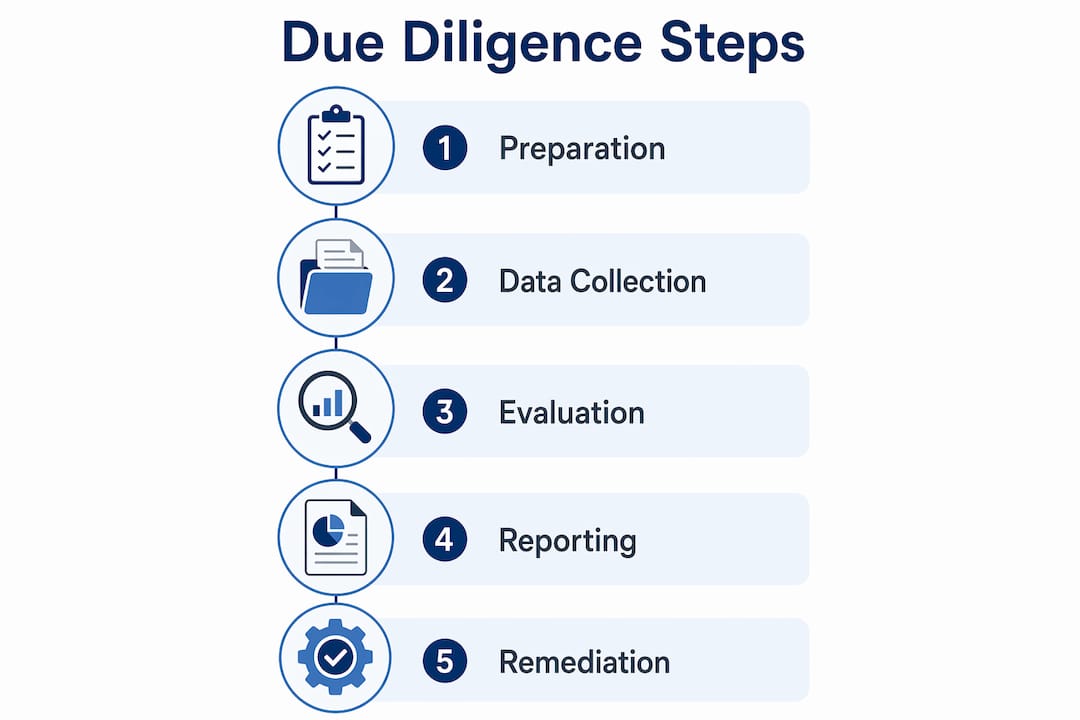
The technical due diligence process follows four structured phases: preparation, data collection, evaluation, and reporting. Each phase builds on the last, and skipping any one of them creates blind spots that cost money later.
-
Preparation. The project team defines the scope, assembles the review panel, and identifies which regulatory frameworks apply. For Singapore projects, this means mapping submissions required by BCA, URA, SCDF, LTA, PUB, and NEA before fieldwork begins.
-
Data collection. Reviewers gather structural drawings, geotechnical reports, mechanical and electrical (M&E) schematics, authority approval records, and maintenance logs. Gaps in this documentation are themselves a finding.
-
Evaluation. The multidisciplinary team assesses structural design against applicable codes such as SS EN 1992-1-1:2024, checks fire safety compliance against SCDF requirements, reviews M&E system condition, and audits authority submission records for completeness.
-
Reporting. Findings are ranked by severity (Low, Medium, High, Critical) and paired with remediation cost estimates to guide deal terms and project planning decisions.
Timeline varies significantly by project scale. A small project audit with three to five engineers typically completes within five to seven business days. Larger, more complex developments with fifteen or more engineers and multiple authority submissions require two to three weeks. That timeline should be built into the project schedule from the start, not treated as an afterthought.
Pro Tip: Engage a multidisciplinary team that includes a structural engineer, an M&E specialist, and a regulatory compliance advisor from day one. A single-discipline review misses cross-system risks that only surface when you look at the full picture together.

How do technical due diligence findings impact project risk management and compliance?

Technical due diligence findings directly shape risk management decisions. A severity-ranked report tells stakeholders not just what is wrong, but how urgently it must be fixed and what it will cost. That specificity is what separates a useful audit from a generic inspection report.
The most common risks identified in construction and real estate due diligence include:
- Person-dependency. Critical person-dependency appears in 78% of technical audits as a major transfer risk. In construction terms, this means a project’s operational continuity depends on one or two key individuals who hold undocumented knowledge about systems, approvals, or site conditions.
- Documentation gaps. Documentation debt is flagged in 94% of audits. Missing as-built drawings, incomplete authority submission records, and undocumented design changes all represent loss of institutional knowledge that degrades project value.
- Roadmap feasibility. Promised project features or phased development plans are frequently overvalued when their technical feasibility has not been independently verified. A due diligence review tests whether the stated construction program is achievable given current site conditions and approvals.
- Security and infrastructure vulnerabilities. Security posture assessment covers application, infrastructure, and third-party risks. In construction, this translates to assessing fire protection systems, access control, and M&E resilience against failure scenarios.
The connection to regulatory compliance is direct. When due diligence uncovers a non-compliant structural element or an incomplete SCDF submission, the project team must remediate before proceeding. Knowing the construction compliance requirements upfront allows stakeholders to price remediation into deal terms rather than absorb it as a post-commitment cost.
What are common challenges and misconceptions in technical due diligence for construction projects?
The most damaging misconception is that technical due diligence is simply a code compliance check. It is not. Technical due diligence assesses the entire technical ecosystem, including team capabilities, documentation quality, process maturity, security posture, and compliance status simultaneously. Treating it as a checklist exercise produces a report that looks thorough but misses the systemic risks that cause projects to fail.
“Documentation and tribal knowledge are critical hidden risks that can degrade a project’s value post-transition or acquisition. When key personnel leave and no written record exists, the project loses institutional memory that cannot be recovered without significant cost.”
A second common error is underestimating security and infrastructure vulnerabilities. Incomplete reviews that assess only visible construction elements miss M&E system interdependencies, fire suppression gaps, and access control weaknesses. Comprehensive due diligence must cover structural, mechanical, electrical, and compliance layers simultaneously, not in isolation.
A third pitfall is failing to connect technical findings to financial and operational consequences. A cracked retaining wall is a structural finding. Its real significance is the remediation cost, the construction delay it causes, and the regulatory submission it triggers. Due diligence findings that are not translated into budget and timeline impacts are findings that stakeholders cannot act on.
Pro Tip: Always require that the due diligence report include a remediation timeline alongside cost estimates. Knowing a fix costs $50,000 is useful. Knowing it requires 18 months of re-engineering work changes the entire project calculus.
How to integrate technical due diligence outcomes into project planning and stakeholder decision-making
Investment decisions informed by technical due diligence reduce the risk of unexpected post-acquisition costs and support realistic project planning. The key is translating the audit report into decisions that technical, legal, and financial teams can all act on.
The integration process works best when structured around these priorities:
- Severity-ranked remediation. Address Critical and High findings before financial close or construction commitment. Medium findings should be scheduled within the first project phase. Low findings enter the standard maintenance program.
- Budget adjustment. Remediation cost estimates from the due diligence report feed directly into project budgets. Technical findings translate into budget and deal term adjustments that financial teams can negotiate.
- Timeline revision. Structural re-engineering, authority resubmissions, or M&E upgrades each carry lead times. The project schedule must reflect these before construction mobilization.
- Regulatory submission alignment. Findings that trigger BCA, SCDF, or PUB submissions must be assigned to a qualified professional engineer (PE) for endorsement. The role of SCDF in construction compliance is particularly significant for fire safety remediation items.
- Stakeholder communication. The due diligence report should be presented in a format that non-technical stakeholders can read. Severity ratings and cost estimates serve this purpose. Technical jargon without financial context loses the audience.
| Integration Step | Purpose |
|---|---|
| Severity-ranked remediation plan | Prioritizes which findings require action before project commitment |
| Budget adjustment from cost estimates | Ensures remediation costs are priced into deal terms or project budgets |
| Timeline revision for re-engineering | Prevents schedule overruns caused by unplanned compliance work |
| PE endorsement for authority submissions | Satisfies BCA, SCDF, and PUB regulatory requirements post-audit |
| Cross-team report presentation | Aligns technical, legal, and financial stakeholders on risk and cost |
The supervision of construction projects during the remediation phase is equally critical. Findings do not close themselves. Assigning a qualified supervisor to track remediation completion against the due diligence report ensures that identified risks are actually resolved, not just acknowledged.
Key Takeaways
Technical due diligence is the most reliable method for identifying project risks before they become contractual obligations, and its findings must be integrated into budget, timeline, and regulatory submission decisions to be effective.
| Point | Details |
|---|---|
| Four-phase process | Preparation, data collection, evaluation, and reporting form the complete due diligence structure. |
| Documentation debt is pervasive | Flagged in 94% of audits, missing records represent institutional knowledge that cannot be recovered cheaply. |
| Severity ranking drives decisions | Reports must rate findings as Low, Medium, High, or Critical and pair each with remediation cost estimates. |
| Person-dependency is a transfer risk | 78% of audits identify critical reliance on individuals, which threatens operational continuity post-transition. |
| Regulatory integration is mandatory | Due diligence findings that trigger BCA, SCDF, or PUB submissions require PE endorsement to close. |
The real value of technical due diligence is what it prevents
After working across construction and real estate projects in Singapore, the pattern I see most often is this: stakeholders treat technical due diligence as a formality rather than a decision-making tool. They commission the audit, receive the report, and then proceed with the project largely unchanged. That approach defeats the purpose entirely.
The projects that benefit most from due diligence are the ones where the findings actually change something. A severity-ranked report that causes a developer to renegotiate a contract price, delay mobilization pending a BCA resubmission, or replace an undocumented M&E system before handover. Those are the outcomes that justify the cost of the audit.
The future of this process points toward digital integration. Building Information Modeling (BIM) data, digital twin platforms, and real-time compliance tracking tools are beginning to make due diligence faster and more complete. But the analytical judgment required to interpret findings and connect them to project decisions remains a human function. Technology accelerates the data collection phase. It does not replace the expertise needed to assess what the data means for a specific project in a specific regulatory context.
The professionals who will get the most value from technical due diligence in the years ahead are those who treat it as a continuous process, not a one-time pre-transaction event.
— Aman
How Aectechnicalsg supports technical due diligence for Singapore projects
Aectechnicalsg provides engineering consultancy services specifically structured for construction and real estate projects requiring technical due diligence and regulatory compliance support in Singapore.
The firm’s services cover structural and geotechnical engineering assessments, M&E system reviews, and authority submission management across BCA, SCDF, URA, LTA, PUB, and NEA. For project stakeholders who need findings translated into actionable compliance steps, Aectechnicalsg provides PE endorsement and authority submissions that satisfy regulatory requirements post-audit. Developers and construction firms seeking a full picture of available engineering consultancy options for their projects can review the firm’s service catalog to identify the right technical advisory scope for their needs.
FAQ
What is technical due diligence in construction?
Technical due diligence in construction is the structured evaluation of a project’s structural, mechanical, electrical, and compliance condition before a transaction or commitment is finalized. It identifies risks, quantifies remediation costs, and verifies regulatory compliance against standards set by bodies like BCA and SCDF.
How long does a technical due diligence audit take?
A small project audit with three to five engineers typically completes within five to seven business days. Larger developments with fifteen or more engineers and multiple authority submissions require two to three weeks.
What is the most commonly overlooked risk in technical due diligence?
Documentation debt is flagged in 94% of audits and is the most frequently overlooked risk. Missing as-built drawings and undocumented design changes represent institutional knowledge that cannot be recovered without significant cost once key personnel leave.
How do due diligence findings connect to regulatory submissions in Singapore?
Findings that identify non-compliant structural elements, fire safety gaps, or M&E deficiencies trigger mandatory submissions to BCA, SCDF, or PUB. These submissions require PE endorsement and must be completed before the project can proceed to the next phase.
What is the difference between technical due diligence and a standard inspection?
A standard inspection assesses visible physical condition at a point in time. Technical due diligence assesses the entire technical ecosystem, including team capabilities, documentation quality, regulatory compliance status, and security posture, to determine operational sustainability and risk exposure.