
Pub drainage requirements in Singapore are defined by PUB, the national water agency, through the Code of Practice on Surface Water Drainage (Seventh Edition, December 2018, with Addendum No. 3 dated april 2025). Explaining pub drainage requirements means understanding two distinct systems: surface water drainage, which handles stormwater runoff, and sanitary drainage, which manages foul water and trade effluent from kitchen and bar operations. Both systems carry separate design standards, submission obligations, and maintenance duties under Singapore law. Non-compliance exposes pub owners and managers to enforcement action under the Sewerage and Drainage Act, including stop-work orders and financial penalties.
What are the key drainage requirements for pubs under PUB codes?
PUB’s Code of Practice on Surface Water Drainage is the primary technical reference for all drainage design in Singapore. The April 2025 addendum introduced updated criteria that affect drain sizing, gradient calculations, and Drainage Reserve management. Any pub renovation or new construction must reference this latest edition. Designs assessed under older code versions risk rejection during PUB review.

Surface water drainage standards
Surface water drainage for pub premises must meet specific hydraulic performance criteria. Drain sizing follows peak flow calculations based on catchment area and rainfall intensity data prescribed by PUB. Gradients must maintain self-cleansing velocities to prevent sediment buildup, which is a common cause of blockages in commercial premises.
Key design requirements include:
- Drain sizing: Calculated using PUB-prescribed rainfall intensity values for the relevant return period.
- Gradients: Minimum self-cleansing gradient of 1:200 for covered drains; steeper gradients apply for smaller pipe diameters.
- Drainage Reserves: Drainage Reserves must remain unobstructed and accessible for PUB inspection and maintenance at all times.
- Pipe materials: Reinforced concrete, uPVC, or ductile iron pipes are standard, selected based on depth, load, and chemical exposure.
- Inlet design: Gully traps and gratings must meet PUB standard drawings to prevent debris ingress.
| Design Parameter | PUB Requirement |
|---|---|
| Rainfall return period | As specified in Code of Practice, Seventh Edition |
| Minimum drain gradient | 1:200 for covered drains |
| Drainage Reserve access | Must remain clear of structures and storage |
| Pipe material standard | PUB-approved materials per Standard Drawings |
| Grease trap requirement | Mandatory for food and beverage operations |
Sanitary and trade effluent drainage
Sanitary drainage for pubs handles foul water from toilets, basins, and kitchen sinks. Trade effluent, which includes grease-laden wastewater from kitchen operations, requires separate treatment before discharge. Connecting surface water to foul sewers is a statutory offense that creates hydraulic overload and contamination risks. PUB mandates strict separation of these two systems on all commercial premises.
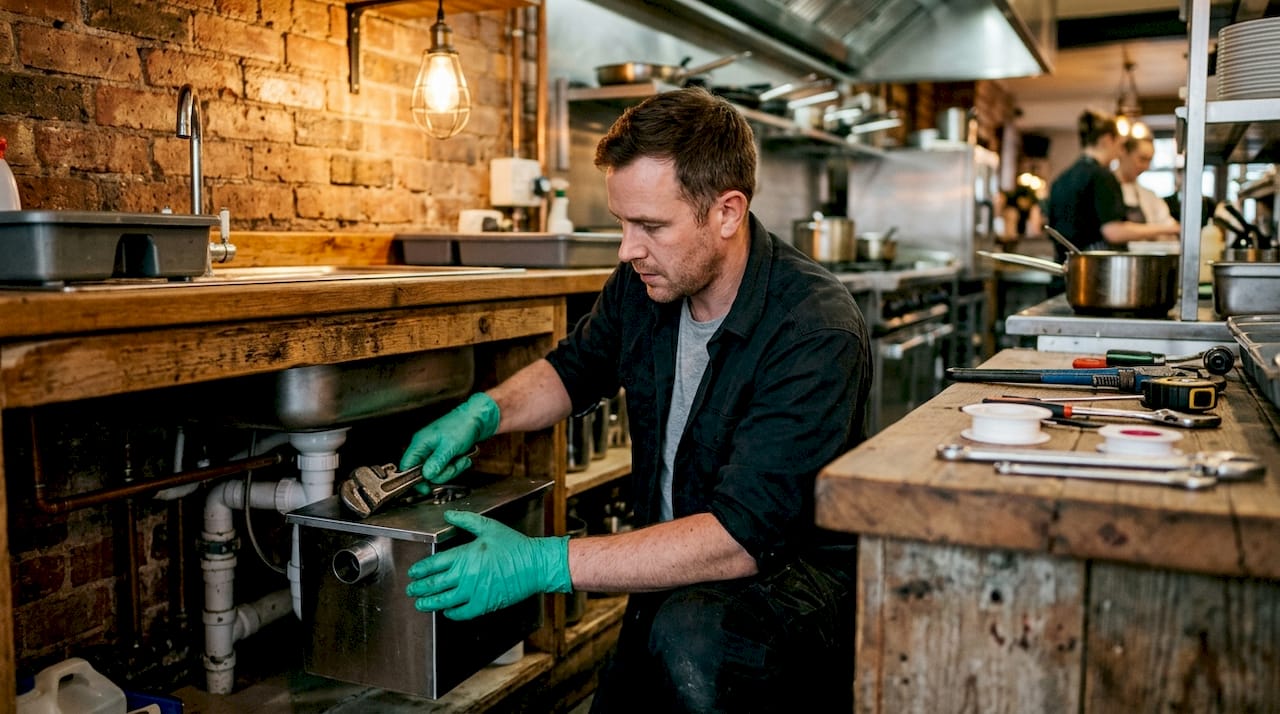
Drainage design for food and beverage operations must account for peak effluent flow rates from kitchen equipment, bar sinks, and glasswashers. Grease traps are mandatory for pub kitchens and must be sized to handle the maximum anticipated grease load. Undersized grease traps are one of the most frequent compliance failures identified during PUB inspections.
Pro Tip: Size your grease trap at a minimum of 1.5 times the calculated peak flow rate. This buffer prevents overflow during busy service periods and reduces the frequency of pump-out cycles.
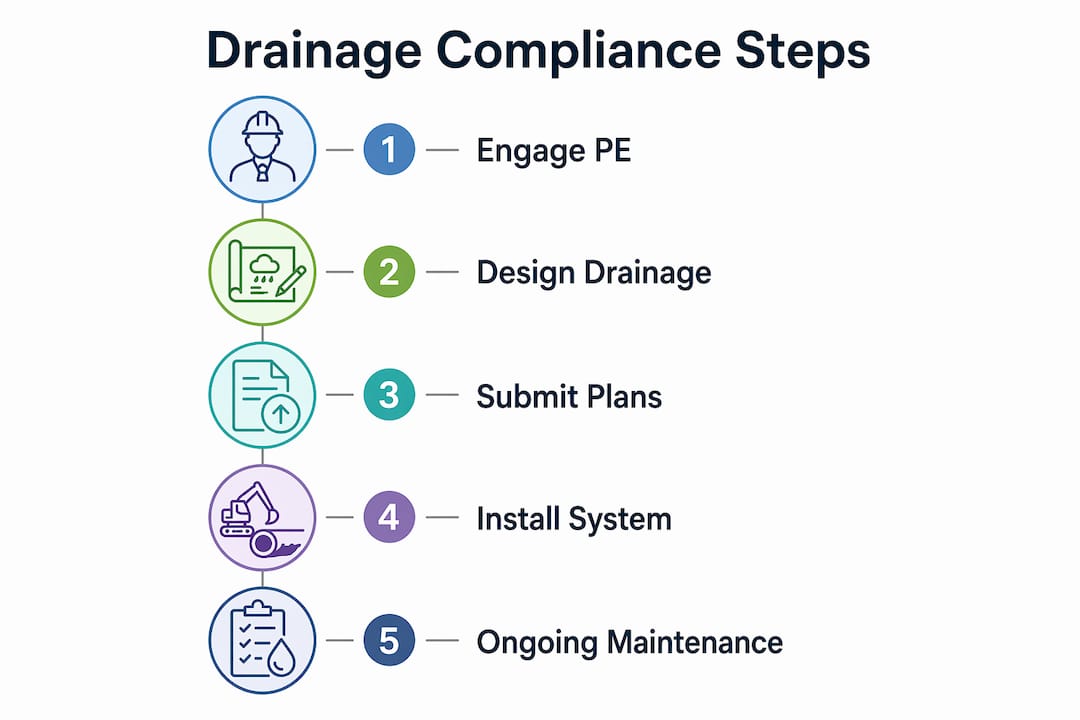
How to ensure ongoing compliance through drainage maintenance
Maintenance failures cause more PUB enforcement actions than design faults. PUB’s flood-proofing guidance states that building owners must regularly inspect drainage systems to confirm they are well-maintained and free from blockages. This expectation applies directly to pub owners and managers as operators of commercial premises with high effluent loads.
A structured maintenance program covers the following steps:
- Weekly inspection of gully traps and gratings. Remove debris and check for damage after every busy weekend. Blocked inlets are the leading cause of localized flooding during heavy rain.
- Monthly grease trap pump-out. Grease accumulation accelerates beyond design capacity in active pub kitchens. Monthly pump-out cycles prevent overflow into the surface water system.
- Quarterly inspection of underground drain runs. Use CCTV drain surveys or manual rodding to confirm pipe integrity and flow capacity.
- Biannual review of drainage layouts. Confirm that no new structures, storage, or equipment have encroached on Drainage Reserves or access points.
- Annual documentation update. Maintain a written maintenance log with dates, findings, and corrective actions. PUB inspectors request this record during site visits.
Operational neglect rather than design faults drives most drainage-related complaints and enforcement notices. This means a well-designed system can still fail compliance if maintenance records are absent or inspection cycles are skipped. Pub owners and managers should integrate drainage checks into their standard operating procedures alongside food hygiene and fire safety routines.
Pro Tip: Photograph every inspection. A timestamped photo record of clean gully traps and clear drain runs is the fastest way to demonstrate compliance during an unannounced PUB site visit.
What are the procedural steps for PUB drainage submissions?
PUB drainage submissions follow a defined process under the Sewerage and Drainage Act. The submission requirements include longitudinal and cross-section drawings, backwater analysis, hydraulic calculations, and detailed drainage layout plans. All documents must demonstrate compliance with the current Code of Practice edition, including the April 2025 addendum. Submissions referencing outdated code versions are returned for revision, which delays project timelines.
The submission process involves these core requirements:
- Hydraulic calculations: Flow rate analysis, pipe sizing, and gradient verification for all drain runs.
- Drainage layout plans: Scaled drawings showing drain alignments, invert levels, manhole positions, and connection points to public sewers.
- Backwater analysis: Confirmation that upstream drainage will not cause flooding at the pub premises during design storm events.
- Grease trap design: Sizing calculations and installation details for kitchen trade effluent management.
- PE endorsement: All drainage plans submitted to PUB require endorsement by a qualified Professional Engineer registered with the Professional Engineers Board Singapore.
Coordination with other authorities is often required. Pub renovations in shophouse conservation areas may need URA clearance before PUB will process drainage submissions. Projects near LTA infrastructure require separate clearance for any works affecting road drainage. The role of PUB in construction projects extends beyond drainage design to include site supervision and as-built verification.
| Submission Stage | Key Requirement |
|---|---|
| Pre-submission | Engage a PE; confirm applicable code edition |
| Plan preparation | Hydraulic calculations, layout drawings, backwater analysis |
| PE endorsement | Mandatory before submission to PUB |
| Authority coordination | URA, LTA, or BCA clearance where applicable |
| As-built submission | Verified drawings after construction completion |
Systems designed under older standards face rejection if reviewed under the April 2025 addendum criteria. This is a costly outcome that pub owners and managers can avoid by engaging a consultant who works with the current code from the start of planning.
Examples of pub drainage setups that meet PUB guidelines
A typical pub in a Singapore shophouse operates two completely separate drainage systems. The surface water system collects rainwater from the roof and open courtyard areas, directing it through gully traps and covered drains to the public stormwater network. The sanitary system collects foul water from toilets and basins, routing it to the public sewer via a separate connection. These two systems never share pipework or connection points.
Common drainage configurations for pub premises include:
- Shophouse pub with rear kitchen: Surface water drains run along the rear lane. Kitchen trade effluent passes through a below-ground grease trap before connecting to the foul sewer. Bar sink drainage connects to the sanitary system, not the surface water drain.
- Standalone pub with outdoor seating: A perimeter channel drain collects surface runoff from the outdoor area. The channel connects to the stormwater network via a silt trap to prevent debris entering the public drain.
- Pub in a mixed-use development: Drainage systems are shared with the building’s central infrastructure. The pub operator is responsible for the grease trap serving its kitchen, while the building management handles the main drain runs.
| Drainage System | Function | Key Feature |
|---|---|---|
| Surface water drain | Stormwater runoff from roof and paved areas | Gully traps, silt traps, covered channels |
| Sanitary drain | Foul water from toilets and basins | Separate connection to public sewer |
| Trade effluent drain | Kitchen and bar wastewater | Grease trap mandatory before sewer connection |
| Drainage Reserve | PUB access corridor for public drains | Must remain clear of all structures |
Drainage Reserves cannot be obstructed by outdoor furniture, storage, or any permanent structure. Pub owners and managers who place beer kegs, refuse bins, or signage over a Drainage Reserve create an immediate compliance violation. PUB can issue a notice requiring removal at the owner’s cost. Reviewing the sustainable drainage design principles applicable to commercial premises helps pub operators understand how Drainage Reserves fit within the broader stormwater management framework.
Key Takeaways
Pub drainage compliance in Singapore requires correct design under PUB’s April 2025 code addendum, strict separation of surface water and sanitary systems, and documented maintenance routines that satisfy PUB inspection standards.
| Point | Details |
|---|---|
| Reference the current code | Use the Seventh Edition with April 2025 addendum for all drainage design and submissions. |
| Separate drainage systems | Surface water and foul water must never share pipework or connection points. |
| Grease trap is mandatory | Size the grease trap for peak kitchen flow; pump it out monthly to stay compliant. |
| Maintain documentation | Keep timestamped inspection records; PUB inspectors request these during site visits. |
| Engage a PE early | All PUB drainage submissions require Professional Engineer endorsement before review. |
What I’ve learned from working with PUB drainage compliance for pubs
The most consistent mistake I see is treating drainage as a construction-phase issue rather than an operational one. Pub owners and managers invest in a well-designed system, pass the initial PUB submission, and then let maintenance lapse within the first year. That is when enforcement notices arrive.
The April 2025 addendum to the Code of Practice is not a minor update. It changes assessment criteria in ways that affect existing drainage layouts, not just new builds. Pub owners and managers planning any renovation should confirm with their consultant whether the existing drainage design still meets current standards before submitting plans. Discovering a non-compliance during PUB review adds weeks to the approval timeline and often requires costly redesign.
The grease trap is the single most neglected component in pub drainage systems. A grease trap that is not pumped out on schedule becomes a source of odor, blockage, and trade effluent overflow into the stormwater network. That overflow is an offense under the Sewerage and Drainage Act, and PUB treats it seriously. Monthly pump-out is not optional for an active pub kitchen. Build it into the maintenance contract from day one.
Professional consultancy is not a luxury for this process. The construction compliance requirements for drainage submissions are detailed, and PUB’s review process has no tolerance for incomplete documentation. A qualified consultant who knows the current code edition will save more time and money than the fee costs.
— Aman
Drainage compliance support for Singapore pub operators
Pub owners and managers who need to navigate PUB drainage submissions, PE endorsements, or drainage system design for a new fit-out or renovation can rely on Aectechnicalsg for end-to-end technical support.
Aectechnicalsg provides engineering consultancy services covering drainage system design, hydraulic calculations, and full PUB submission packages. The team handles PE endorsement, authority coordination, and as-built verification to keep your project on schedule. For pub operators managing a renovation or change of use, Aectechnicalsg also supports PUB submission compliance from pre-submission planning through to final approval. Contact Aectechnicalsg to confirm your drainage design meets the April 2025 code requirements before work begins.
FAQ
What authority regulates pub drainage in Singapore?
PUB, Singapore’s national water agency, regulates drainage through the Code of Practice on Surface Water Drainage and the Sewerage and Drainage Act. All drainage submissions for commercial premises, including pubs, require PUB approval.
Does a pub need separate drainage systems for stormwater and kitchen waste?
Yes. Surface water and foul water drainage must be completely separate systems. Connecting kitchen trade effluent to the stormwater drain is a statutory offense under Singapore law.
Is a grease trap required for a pub in Singapore?
A grease trap is mandatory for any pub with kitchen or food preparation operations. It must be sized for peak effluent flow and pumped out regularly to prevent overflow into the public sewer.
What documents are needed for a PUB drainage submission?
Submissions must include hydraulic calculations, drainage layout plans, backwater analysis, and a PE-endorsed set of drawings. All documents must reference the current Code of Practice edition, including the April 2025 addendum.
How often should a pub inspect its drainage system?
PUB’s flood-proofing guidance requires regular inspection to confirm systems are free from blockages. Weekly gully trap checks, monthly grease trap pump-outs, and quarterly drain surveys are the minimum standard for an active pub operation.