
Appoint a registered Professional Engineer now and follow the Building and Construction Authority’s periodic structural inspection (PSI) regime: non-residential buildings require a PSI at regular multi-year intervals, while residential buildings require a PSI less frequently, starting from a building’s 13th year. Verify the engineer’s registration and practising status through the Professional Engineers Board before signing anything. Gather your structural drawings, prior reports, and site access now. Engaging a consultancy like AEC TechnicalSG can shorten this process considerably.
Key Takeaways
A compliant periodic structural inspection depends on hiring a registered PE, following BCA’s frequency rules, and preparing documentation before the site visit.
| Point | Details |
|---|---|
| PSI frequency is fixed by BCA | Non-residential buildings need a PSI every 5 years, residential every 10, from year 13 onward. |
| Verify the PE before engaging | Check registration and practising status through the Professional Engineers Board. |
| Checklist organization prevents delays | Group inspection items by area and tag each defect to a photo and site plan reference. |
| Non-compliance carries enforcement risk | Missed deadlines can trigger BCA notices requiring documented remedial follow-up. |
| AEC TechnicalSG manages the full cycle | The consultancy handles inspection, reporting, remedial supervision, and BCA submission. |
Table of Contents
- Building a Periodic Structural Inspection Checklist That Actually Works
- How Often Does a Building Need a Periodic Structural Inspection?
- Who Is Responsible for What During a PSI?
- What Are the Steps in the PSI Process?
- What Does a Structural Engineer Actually Inspect?
- How Should Owners Prepare Before the Inspection?
- How Much Does a PSI Cost and How Long Does It Take?
- What Happens If an Owner Misses a PSI Deadline?
- How Does AEC TechnicalSG Approach a PSI?
- A Practitioner’s View on What Actually Slows PSI Down
- Get Your PSI Handled Without the Back-and-Forth
- Where to Verify PSI Requirements and Find a PE
- Sources
Building a Periodic Structural Inspection Checklist That Actually Works
A usable periodic structural inspection checklist is organized by area, not by ambition; for detailed plumbing items often found in inspections, refer to this commercial building plumbing code checklist for Arizona. Owners who hand the engineer a scattered stack of photos and half-remembered repair dates waste inspection hours the PE should be spending on structure, not paperwork triage. Group your checklist the way a structured template does: exterior and site, foundations, load-bearing elements, roof and envelope, internal floors and walls, retaining walls and slopes, parapets and railings, and service penetrations.
For each area, record a condition rating, crack type and location, spalling, corrosion, settlement signs, and water ingress. Note a photo reference and mark the location on a site plan for every defect logged.
- Exterior and site: drainage patterns, ground settlement, boundary walls
- Foundations: visible cracking, differential settlement, water pooling near footings
- Load-bearing elements: columns, beams, and slabs for deflection or spalling
- Roof and envelope: flashing, waterproofing membrane condition, ponding
- Internal structure: wall cracking patterns, ceiling deflection, floor tilt
- Retaining walls and slopes: bulging, drainage weep holes, erosion
- Parapets and railings: corrosion, loose fixings, impact damage
- Service penetrations: cracking around pipe and cable openings
Bring structural drawings, previous PSI or Periodic Façade Inspection (PFI) reports, maintenance records, and any Addition & Alteration (A&A) permits. Missing documentation is one of the most common reasons a site visit runs long.
Pro Tip: Photograph each defect twice: one close-up with a scale reference (a coin or ruler works), and one wider context shot showing where it sits on the wall or slab. Number both shots to match your site plan so the engineer isn’t guessing which crack is which months later.
| Point | Details |
|---|---|
| Group by building area | Organize checklist items into exterior, foundation, structural, envelope, and service categories. |
| Record location with every entry | Tag each defect to a photo reference and a marked site plan. |
| Prepare documents before the visit | Have drawings, past reports, and A&A permits ready to avoid delays. |
How Often Does a Building Need a Periodic Structural Inspection?
The BCA’s PSI schedule is fixed by building type and age. Non-residential buildings require a PSI every 5 years; residential buildings, every 10 years. The obligation starts once a building reaches its 13th year, not before.
- Non-residential: PSI due every 5 years from year 13 onward
- Residential: PSI due every 10 years from year 13 onward
- Detached houses and certain temporary structures may fall under different or exempted arrangements, so confirm applicability with a registered PE rather than assuming
A typical timeline: a building turns 13, the owner receives (or should anticipate) a PSI obligation, engages a PE within a reasonable window, and completes the inspection and submission before the next due date creeps up. Waiting until the deadline is close leaves no room for a Stage 2 investigation if one turns out to be necessary.
Who Is Responsible for What During a PSI?
Owners appoint the PE, provide site access and documents, implement recommended remedial works, and ensure the report reaches BCA on time. The PE inspects the structure, assesses its condition, recommends action, prepares the report, and signs the required certification.
- Owner: appoints PE, grants access, supplies records, funds and completes remedial works
- PE: inspects, assesses, reports, certifies, and submits to BCA
- Both: coordinate timelines so submission deadlines aren’t missed
Before signing an engagement letter, confirm registration and practising status through the Professional Engineers Board, and check the government’s shortlist of PSI-experienced PEs if you’re starting from scratch.
Pro Tip: Ask three questions before engaging any PE: Have you inspected this building type before? Can you show a sample PSI report you’ve submitted to BCA? Are you available for remedial supervision after the report, not just the inspection itself?
What Are the Steps in the PSI Process?
The workflow runs in a predictable sequence, though timing varies with building complexity.
- Appointment — owner engages a registered PE, often formalized through Form D2
- Document review and site access — PE reviews drawings and prior reports, then schedules a walk
- Visual inspection — PE examines structural elements area by area
- Targeted investigation — if defects warrant it, further testing is recommended
- Reporting and certification — PE compiles findings into a sealed, signed report
- BCA submission — report is filed within the required window
- Remedial follow-up and supervision — repairs proceed under PE oversight, sometimes closed out with Form D7
- Site walk: typically a single day for smaller buildings, longer for complex ones
- Reporting: usually several weeks depending on findings
- Remedial works: lead time depends on scope, from straightforward patching to structural strengthening
A Stage 2 investigation, involving material testing or deeper structural analysis, gets triggered when visual findings alone can’t confirm severity. That step adds weeks, not days, to the overall timeline.
What Does a Structural Engineer Actually Inspect?
The PE’s primary focus sits on foundations, columns, beams, slabs, load-bearing walls, stair cores, roofs, and long-span structural elements. Secondary items matter too: heavy A&A loadings added after original construction, and retaining structures holding back soil or slopes.
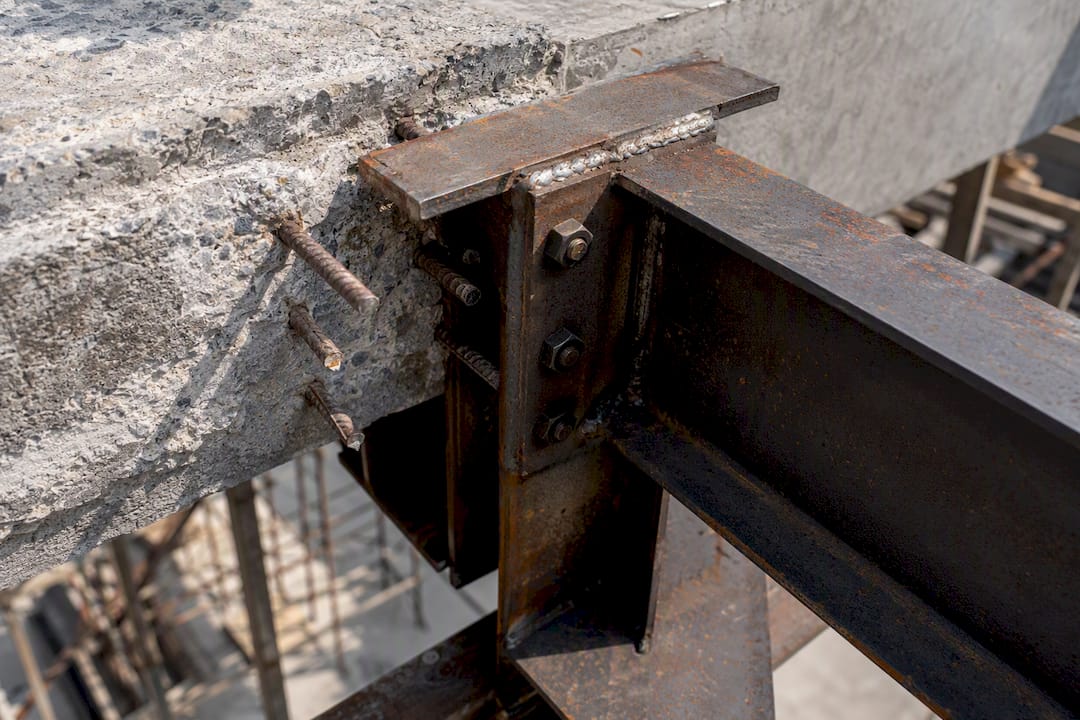
Common defects include diagonal cracking at corners, longitudinal cracking along beams or slabs, spalling concrete with exposed rebar, visible deflection, settlement or tilt, bearing failures at connections, corrosion of reinforcement, and signs the structure is carrying more load than it was designed for.
Not every crack means trouble. Hairline surface cracking from shrinkage is usually flagged as having no structural significance.pdf), while diagonal cracking through load paths, active spalling with exposed steel, or measurable deflection typically pushes the PE toward recommending full investigation.
- Capture a close-up shot of the defect itself
- Capture a wider context shot showing its location on the element
- Reference both against your site plan
Pro Tip: If you spot cracking before the PE’s visit, resist the urge to patch it first. A patched crack hides the evidence the engineer needs to judge severity and cause.
How Should Owners Prepare Before the Inspection?
Preparation determines whether a PSI takes one visit or three. Build a document pack: structural drawings and calculations, past PSI or PFI reports, maintenance and repair records, A&A permits, and any record of tenancy, usage, or occupancy changes that might affect loading.
- Confirm safe access to roof, basement, service voids, void decks, and confined spaces
- Have keys, gate codes, and a site contact ready for the visit day
- Clear obstructions from areas the PE needs to examine
- Mark recent repairs so they aren’t mistaken for unresolved defects
- Provide as-built sketches wherever original drawings are missing or outdated
Pro Tip: A ten-minute walk-through the day before the PE arrives, checking that stairwells, roof hatches, and service risers are actually reachable, saves far more time than it costs.
How Much Does a PSI Cost and How Long Does It Take?
Cost depends on building size and type, how accessible the structure is, and whether material testing or deeper structural analysis is needed. Urgent or staged investigations add cost too.
- Small, straightforward buildings: fewer inspection hours, lighter reporting
- Larger or older buildings: more time on site, higher likelihood of targeted testing
- Buildings with limited access (confined spaces, occupied units): added coordination cost
A structured, documented checklist approach reduces the odds that a minor defect goes unnoticed until it becomes an expensive repair. Expect several weeks between scheduling the site visit and receiving the finished report, with remedial works procurement adding further time depending on scope.
What Happens If an Owner Misses a PSI Deadline?
Non-compliance with BCA’s PSI requirements can trigger formal notices with deadlines attached, and continued non-response carries enforcement consequences under building safety regulations.
- Remedial works get prioritized by severity, with urgent structural risks addressed first
- BCA typically expects documentation after repairs: visual inspection certificates, structural certification, and supervision sign-offs where applicable
- Aligning remedial works with other scheduled maintenance, repainting, waterproofing renewal, façade work, cuts both downtime and total cost
How Does AEC TechnicalSG Approach a PSI?
AEC TechnicalSG structures a PSI around a pre-site records review, targeted visual inspection, non-destructive testing where warranted, and risk-based recommendations, with staged reporting when urgent items surface before the full report is ready.
- Sealed PSI report with annotated drawings and a photo log tied to location references
- Recommended remedial scope, prioritized by severity, with rough cost guidance
- Submission-ready documentation aligned with BCA’s PSI forms
Pro Tip: Ask any consultancy whether they supervise remedial works after the report, not just deliver it. Coordination between inspection and repair execution is what prevents rework and keeps BCA submissions clean.
A Practitioner’s View on What Actually Slows PSI Down
Most delays in a PSI cycle come from paperwork gaps, not structural complexity. Buildings with organized drawing sets and maintenance logs move through inspection and reporting far faster than those without.
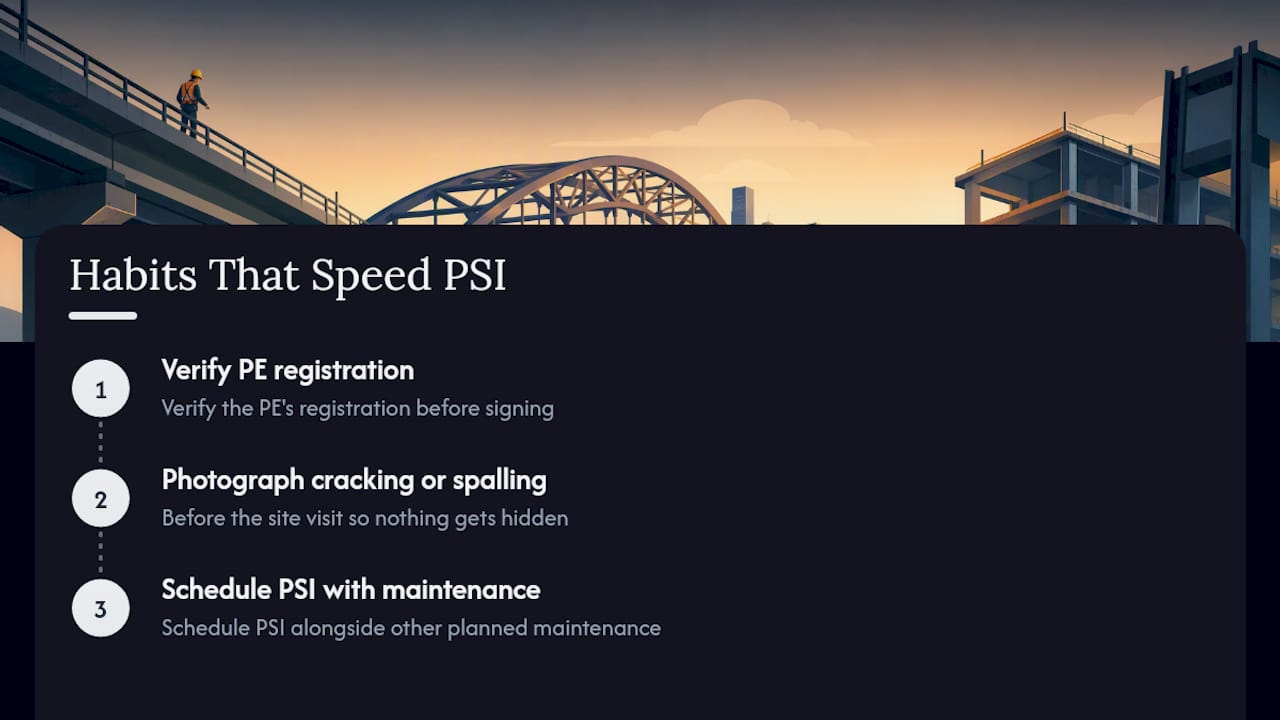
Three habits pay off every time: verify the PE’s registration before you sign anything, photograph suspect cracking or spalling before the site visit so nothing gets hidden by weather or patching, and schedule the PSI alongside other planned maintenance rather than as a standalone event. Small steps, but they consistently save owners both time and money.
Get Your PSI Handled Without the Back-and-Forth
Chasing down a registered PE, tracking BCA forms, and managing remedial supervision on top of running a building eats up time most owners don’t have. AEC TechnicalSG runs the full cycle for you, PSI inspection, PFI support, remedial oversight, and BCA submission management, so you’re not juggling three separate vendors to close out one compliance requirement.

Our engineers prepare submission-ready reports and stay involved through the remedial phase, which keeps repairs aligned with what BCA actually expects to see certified. If your building is approaching its PSI window, explore engineering consultancy options or reach out directly to arrange a site assessment and get the appointment process started.
Where to Verify PSI Requirements and Find a PE
- BCA’s periodic structural inspection page for frequency rules and forms
- PEB’s find-a-PE directory and the government’s PSI PE shortlist
- ScamShield reminds owners that officials never request money or bank details by phone
Sources
- Periodic Structural Inspection (PSI) | Building and Construction Authority
- Find a Professional Engineer | Professional Engineers Board
- Go
- Building Inspection Checklist: Comprehensive Template 2026 | Oxmaint