
Most consultancies bill through one of three models: fixed-fee for small, well-defined jobs, stage-based fixed fees tied to design milestones, or hourly rates for ad-hoc advisory work. PE endorsement for authority submissions is usually a separate line item on top of design fees.
TL;DR:
- Hourly rates are mainly used for advisory work and can become costly if the project scope expands unexpectedly.
- Fixed-lump fees suit small, well-defined jobs but depend on accurate disclosures of site conditions to avoid extra charges.
- Stage-based fixed fees are typical for full design projects and usually involve payment milestones, with additional fees for scope changes or extra site visits.
- Accurate quotes require detailed scope, existing documentation, and clear assumptions; vague requests lead to widely varying estimates.
- Experience with Singapore’s authorities and previous successful submissions can significantly influence the consultation’s fee and potential delays.
Table of Contents
- How Much Does a Structural Engineer Cost? Fee Models Explained
- What Do Structural Engineer Services Typically Cost in Singapore?
- What Factors Push a Structural Engineer’s Quote Up or Down?
- How Do I Get an Accurate Structural Engineer Quote?
- Why Local Authority-Submission Experience Changes the Estimate
- A Consultant’s Honest Take on Budgeting for This
- Get a Firm Quote for Your Structural Engineering Project
- Further Reading on Structural Design and Approvals
- FAQ
How Much Does a Structural Engineer Cost? Fee Models Explained
The fee structure you get quoted usually tells you more about the scope than the dollar figure does. A consultancy that proposes an hourly rate is signaling that the work is uncertain or open ended. A firm quoting a fixed lump sum has already sized the job and knows exactly what deliverables it owes you.
Hourly or day rates show up mostly in ad-hoc advisory work: a quick site visit to sanity check a contractor’s proposal, a phone consultation before a purchase, or extra work that falls outside an original scope. Singapore-based structural consultants commonly bill hourly rates that vary depending on seniority, with site supervision typically charged at higher day rates. This model protects the engineer against scope creep, but it leaves you exposed if the job runs longer than expected.
Fixed-lump fees dominate small, bounded jobs: a single beam repair, a small addition, or a straightforward inspection with a written report. You know the total cost before work starts, which makes budgeting easy, but the quote only holds if the site conditions match what was disclosed.
Stage-based fixed fees are the norm for full design projects. A typical Singapore structural design engagement breaks into stages that mirror the structural design process:
- Preliminary design and feasibility, including concept structural scheme
- Detailed design and calculations, producing drawings for tender
- Authority submission and PE endorsement to BCA, URA, or other agencies
- Construction-stage supervision and site inspections
Each stage typically triggers a payment milestone, so you are only billed as design progresses. Confirm what falls outside the stage boundaries. Site meetings beyond an agreed number, resubmission after an authority rejection, or variation works midway through construction often carry additional charges that a lump-sum quote won’t automatically cover.
What Do Structural Engineer Services Typically Cost in Singapore?
Numbers help more than percentages here, because most readers are trying to match a real project against a real budget. These ranges reflect typical Singapore market pricing for common service types, though every quote should be verified against your specific scope.
Typical fees for structural engineering services vary widely depending on project type and complexity, ranging from inspections and minor repairs for smaller projects to comprehensive design and multi-agency submissions for larger developments, with fees increasing accordingly.
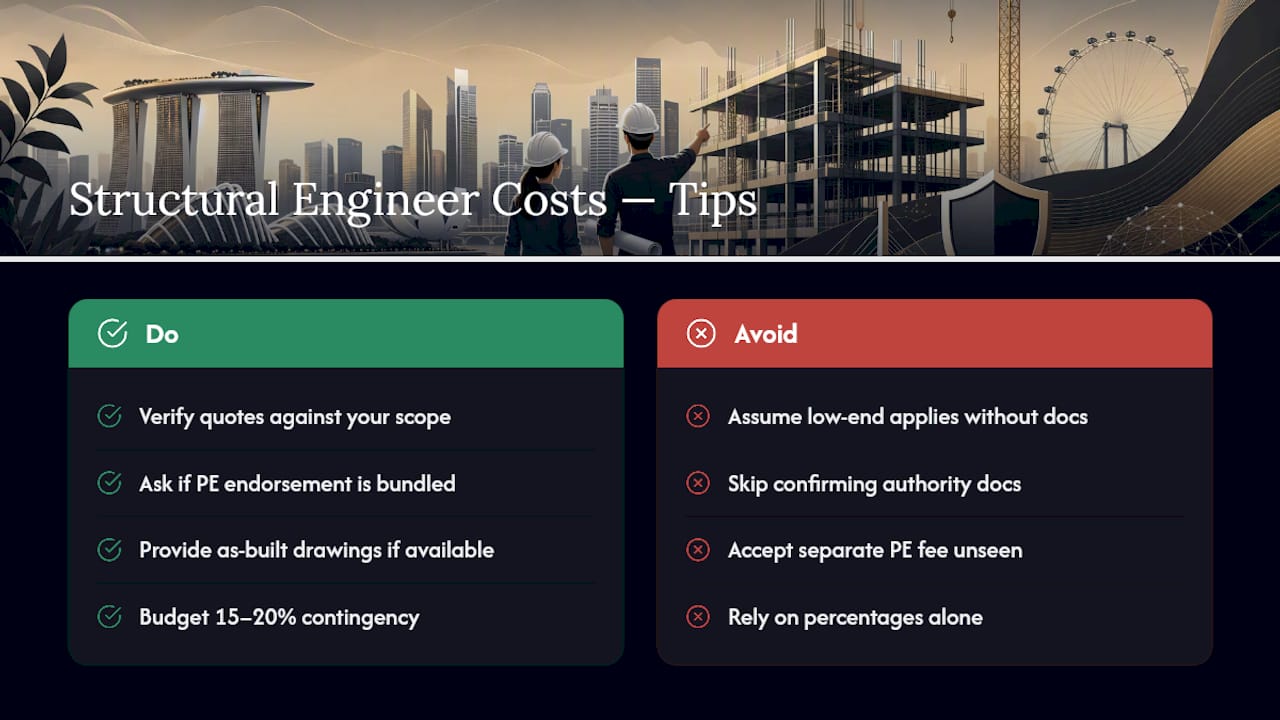
Pro Tip: PE endorsement is frequently quoted as a separate fee from the design work itself, sometimes ranging from a few hundred to a few thousand dollars per submission depending on the authority and document set. Ask upfront whether it’s bundled or billed separately.
Bigger picture: the gap between the low end and high end of any of these ranges usually comes down to one thing, existing documentation. A project with clean as-built drawings and a recent survey lands near the bottom of its range. A project without them starts with reconstruction work before design can even begin.
What Factors Push a Structural Engineer’s Quote Up or Down?
A quote is a reflection of risk and unknowns as much as it is a reflection of size. Five factors move the number more than anything else:
- Scope complexity and unknowns. A building with no as-built records, unclear soil conditions, or a history of unpermitted alterations forces the engineer to budget for investigation before design work even starts.
- Site access and constraints. Tight urban sites, occupied buildings, or structures requiring temporary works design during construction add supervision hours that a simple new-build doesn’t need.
- Quality of information provided upfront. Existing structural drawings, previous inspection reports, and geotechnical data reduce the investigative work a consultant has to price into the fee.
- Regulatory scope. A project requiring submissions to only one authority costs less to manage than one spanning URA, BCA, SCDF, and PUB simultaneously, since each agency has its own document format and review cycle.
- Schedule compression. Asking for a two-week turnaround on a submission that normally takes six weeks usually means paying a premium for reprioritized staff time and expedited coordination.
Pro Tip: If your quote comes back higher than expected, ask which of these five factors is driving it before negotiating the number down. Cutting the fee without addressing the underlying driver often means the missing scope resurfaces later as a change order.
How Do I Get an Accurate Structural Engineer Quote?
The single biggest lever you control in this whole process is the quality of your request for quotation. A vague RFQ produces vague, incomparable quotes. A tight one produces numbers you can actually stack against each other.
Before contacting consultancies, assemble:
- Site address and existing building plans or as-built drawings, if available
- A clear scope statement (repair, new design, inspection, submission-only)
- Target project timeline and any authority approval deadlines
- Any prior structural reports, geotechnical surveys, or condition assessments
When quotes come back, compare more than the headline number.
| What to check | Why it matters |
|---|---|
| Deliverables list | Confirms drawings, calculations, and reports match what you actually need |
| Assumptions and exclusions | Reveals what will trigger a change order later |
| Number of site visits included | A common source of hidden extra billing |
| Revision rounds | Determines how many free redesigns follow authority feedback |
| PE endorsement inclusion | Clarifies whether submission fees are bundled or separate |
Ask shortlisted consultancies directly about their track record with BCA and URA submissions, whether they carry professional indemnity insurance, and whether they can share a sample deliverable. If your site has any ambiguity in its existing condition, commissioning a short preliminary survey before requesting full quotes almost always tightens the range you get back and prevents mid-project scope disputes. The structural engineering guide for Singapore developers walks through what a complete deliverable set should include at each design stage.
Why Local Authority-Submission Experience Changes the Estimate
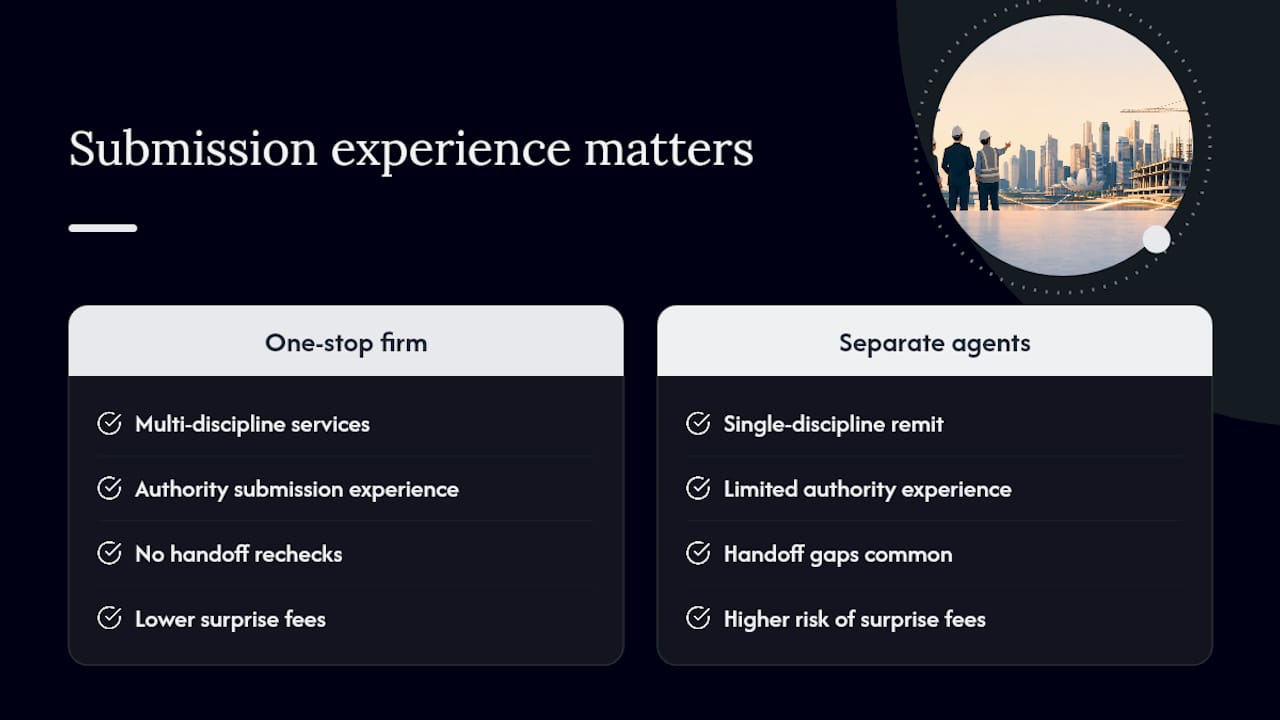
A firm’s history with Singapore’s regulatory bodies affects your quote more than most clients realize. Some consultancies offer structural and geotechnical engineering, architectural planning, and M&E consultancy, with submission experience across multiple Singapore authorities. That range matters because a consultancy handling design and submissions under one roof avoids the handoff gaps that generate surprise fees when a separate submission agent has to re-verify someone else’s drawings. The practical guide to structural engineering for Singapore projects covers case examples and common pitfalls in more detail. Ask for sample deliverables or portfolio references when comparing firms.
A Consultant’s Honest Take on Budgeting for This
The most common mistake I see is treating the low end of a fee range as the expected cost, then getting blindsided when existing conditions turn out messier than assumed. Build in a contingency, generally 15% to 20% on top of the quoted design fee, for unknowns tied to older buildings or incomplete records. The cheapest proposal on your desk is often the one missing deliverables, not the one that priced the job correctly. When you’re unsure which quote reflects reality, a short condition survey settles the question faster than a round of email negotiations.
— Aman
Get a Firm Quote for Your Structural Engineering Project
Getting an accurate number for your project means starting with a real scope conversation rather than a generic estimate. Consultancies work directly with developers, contractors, and building owners to scope structural design, inspections, repairs, and authority submissions before issuing a fixed-fee proposal, which means fewer surprise line items once work begins.
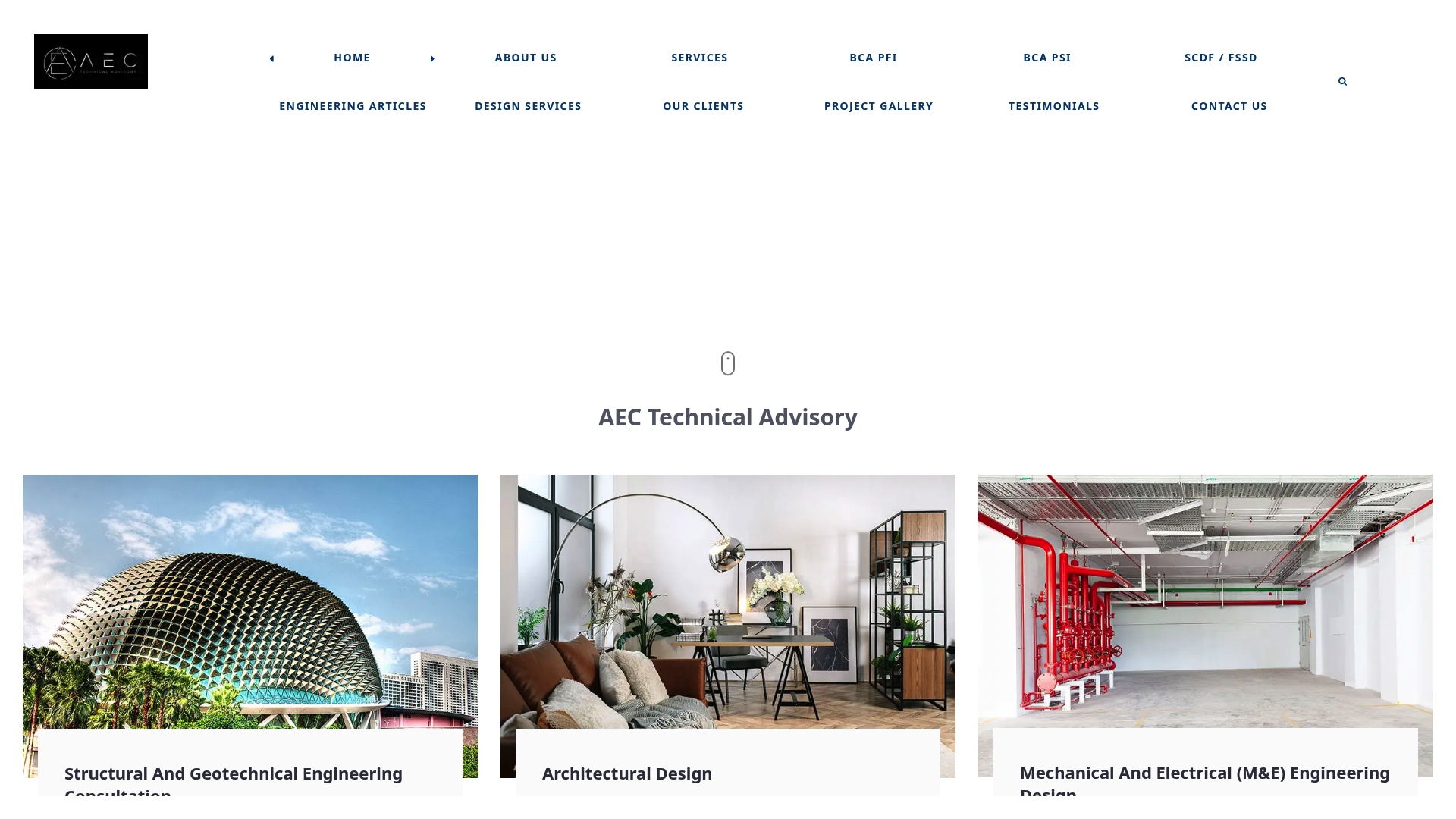
Reach out through the engineering consultancy services overview to describe your project, or go straight to the PE endorsement and authority submission page if submissions are your main concern. After initial contact, expect a scope review, a site visit where relevant, and a quotation typically within a few business days.
Further Reading on Structural Design and Approvals
- Structural design process for Singapore developers
- Speeding up Singapore’s structural approval process
- Bathroom renovation cost planning guide
FAQ
Does a structural engineer’s quote usually include GST?
Most Singapore consultancy quotes state fees exclusive of GST, so confirm this explicitly before comparing proposals, since a 9%/specific-business-sectors/consultancy-and-professional-services) difference changes the comparison materially.
Is PE endorsement always a separate fee?
Not always, but it’s common practice to itemize PE endorsement separately from design fees, particularly when submissions span multiple authorities like BCA and URA.
How long is a structural engineering quote valid?
Most fixed-fee quotes stay valid for a limited time, after which site conditions, material costs, or regulatory requirements may have shifted enough to warrant re-quoting.
What’s the cheapest way to get an accurate estimate?
Sending a complete RFQ with existing drawings, a clear scope statement, and any prior reports upfront produces tighter, more comparable quotes than a vague inquiry, without costing you anything extra.
Does a structural engineering consultancy handle both design and authority submissions?
Many consultancies provide integrated structural design and authority-submission support across agencies including URA, BCA, SCDF, JTC, LTA, PUB, and NEA, which can reduce coordination gaps between design and approval stages.