
A Periodic Structural Inspection in Singapore can vary widely in cost depending on the size and complexity of the building, with smaller residential blocks costing less and large high-rise or multi-block commercial developments costing significantly more. PSI must be carried out by a registered Structural Engineer who submits findings directly to the Building and Construction Authority (BCA). The immediate next step for any owner facing a PSI deadline is to commission a structural condition survey and request itemized quotes from a licensed Structural Engineer before comparing prices.
TL;DR:
- Smaller residential buildings typically incur lower inspection costs, while large high-rise or complex commercial buildings can cost significantly more due to access and scope.
- Base PSI fees generally cover visual inspections, defect logging, and the final report, but adding non-destructive testing or extensive analysis can substantially increase the total price.
- Quotes vary based on access difficulty, inspection extent, testing needs, report detail, and mandatory in-person attendance by a licensed Structural Engineer, with remote inspections being non-compliant.
- The BCA requires PSI every 5 or 10 years depending on building use and age, with strict guidelines on inspection scope and timely submission to avoid enforcement.
- Expect remedial costs to range from minor repairs to major structural works, often seasonally staged and influenced by the defect severity and scope of repairs.
Table of Contents
- What Does PSI Cost Look Like Across Building Types?
- What Drives PSI Prices Up or Down?
- What Does BCA Actually Require, and On What Timeline?
- How Should You Budget and Procure a PSI?
- What Happens After the PSI, and What Should You Budget For?
- Why Fair PSI Pricing Reflects Real Engineering Time
- How AECTechnicalSG Supports Your PSI and BCA Compliance
- Sources
- FAQ
What Does PSI Cost Look Like Across Building Types?
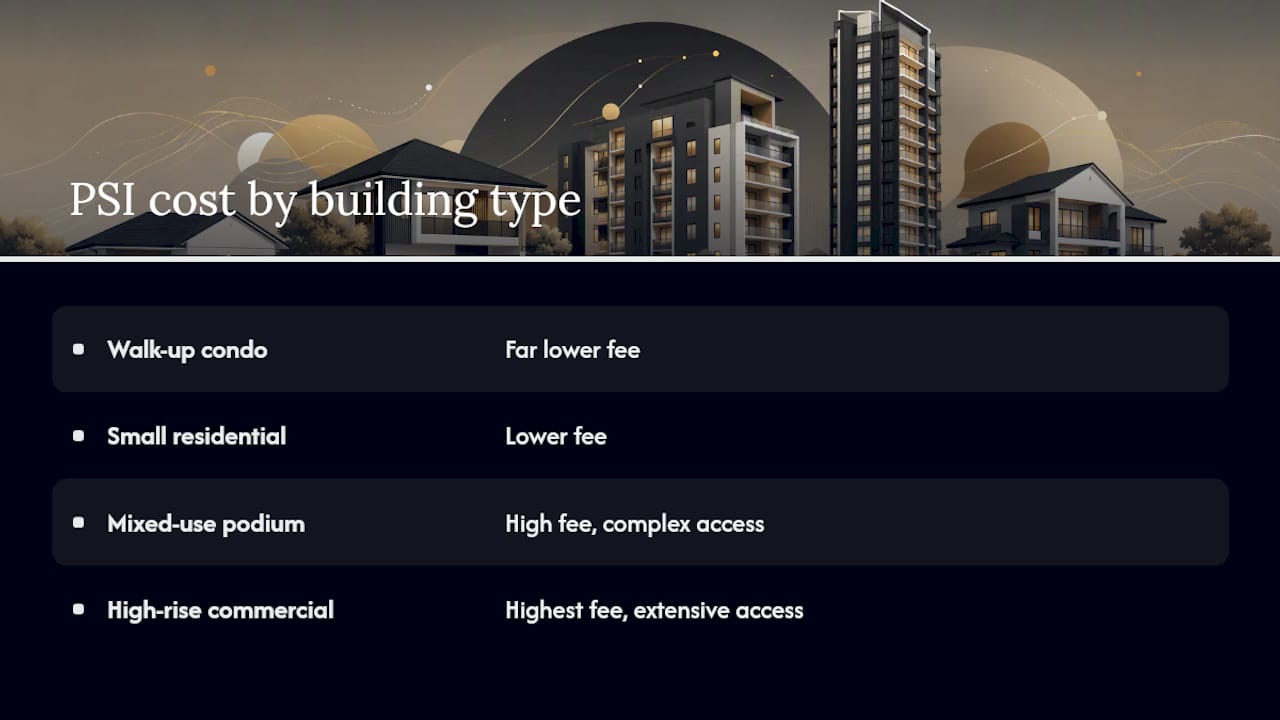
PSI pricing scales with floor area, structural complexity, and how much of the building envelope requires close-up access. A single-block walk-up condominium costs far less to inspect than a mixed-use podium tower with basement carparks and a full glazed façade, and quotes reflect that difference directly.
Costs can generally be categorized by building type and complexity, with smaller residential blocks incurring lower inspection fees than commercial, mixed-use, or large high-rise developments, reflecting the greater scope and access challenges involved.
A base PSI fee generally covers the site visit, a visual inspection of accessible structural elements, a defect log, and the final report with BCA submission. It typically excludes laboratory testing, scaffolding or rope access rigging, and any detailed structural analysis beyond visual assessment.
Add-ons such as non-destructive testing and concrete coring can significantly increase costs beyond the base fee, depending on the extent of testing required and the number of samples collected. Owners planning a structural condition survey alongside PSI should ask upfront whether these tests are bundled or billed separately.
What Drives PSI Prices Up or Down?
Every quote reflects a handful of variables, and understanding them is the fastest way to tell a fair price from an underpriced one that will cut corners.
- Access complexity. A high-rise façade that needs scaffolding or rope access adds both equipment cost and additional man-hours, since the inspector cannot simply walk the perimeter.
- Extent of inspection. A full visual survey of every unit and structural bay costs more than a sample-based inspection covering representative zones, though sampling is only appropriate where the regulations and the building’s condition allow it.
- Specialized testing needs. NDT, coring, and strain monitoring require subcontracted specialists and lab turnaround time, both of which get folded into the final invoice.
- Deliverable granularity. A report with detailed remediation cost estimates, bills of quantities, or marked-up drawings takes considerably longer to produce than a standard defect list, and consultants price that extra time accordingly.
- Mandatory PE attendance. The Structural Engineer must physically attend the inspection under Singapore’s regulations. Any quote built around a remote or desktop-only review is not just cheaper, it is non-compliant.
What Does BCA Actually Require, and On What Timeline?
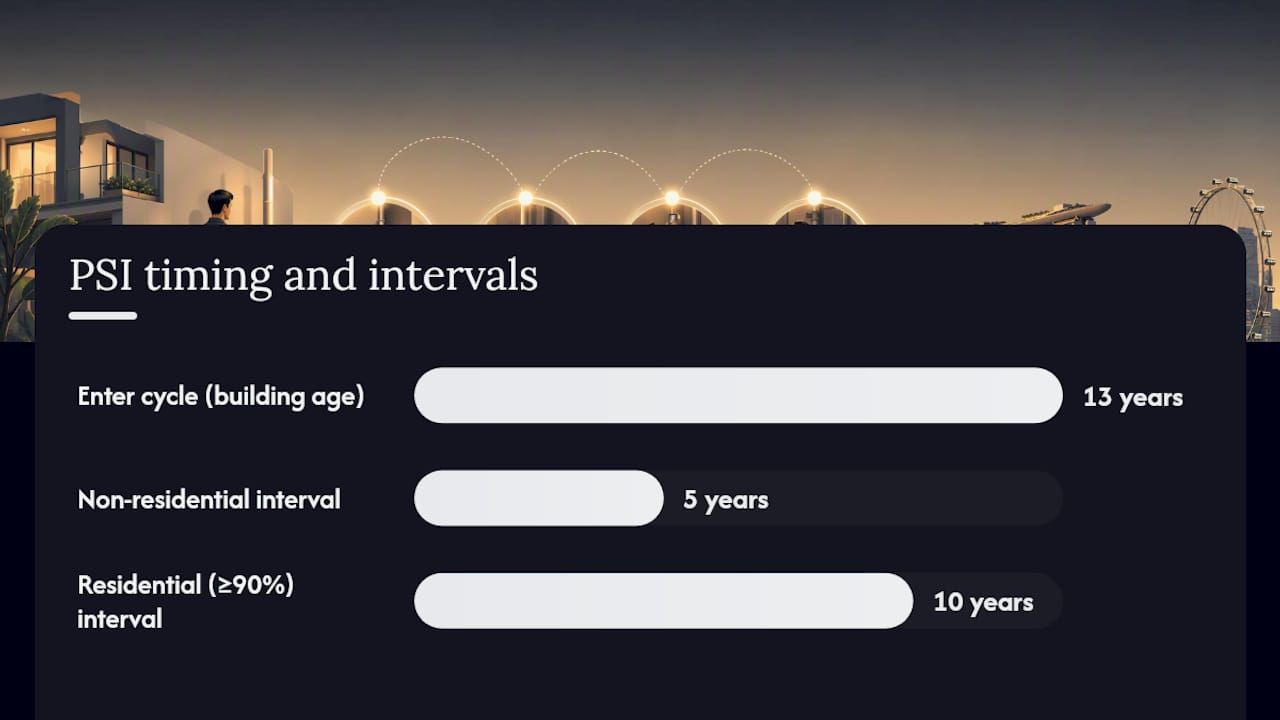
BCA mandates PSI once every 5 years for non-residential buildings and once every 10 years for residential buildings where residential use covers 90% or more of the floor area, and buildings only enter this cycle once they reach 13 years of age. Owners must then submit the completed inspection report to BCA within the stipulated timeframe.
The Building Control (Periodic Inspection of Buildings and Building Façades) Regulations 2021, in force since January 2022, spell out exactly how the appointed Structural Engineer must conduct the inspection, including the conditions under which a full structural investigation becomes necessary rather than a standard visual check.
A compliant process generally moves through these stages, as exemplified in this workflow de revisión preventiva de edificio, and cost typically attaches to each one:
- Instruction and scoping: the owner briefs the SE on building history, prior reports, and access constraints.
- Site inspection: the PE attends in person, inspecting structural elements and logging defects.
- Interim report (if triggered): issued when initial findings suggest deeper investigation is warranted.
- Final report and BCA submission: the SE compiles findings, recommendations, and submits to BCA on the owner’s behalf.
A BCA circular has specifically reminded Structural Engineers that on-site attendance and adequate time allocation are non-negotiable, warning that remote-only, low-cost inspections fall short of expectations and can trigger enforcement action against the engineer involved.
How Should You Budget and Procure a PSI?
Getting comparable quotes starts with a scope brief the bidder can’t misread. Build yours around these items:
- Extent of inspection required (full versus sample-based, and why).
- Expected deliverables, including whether BCA submission is handled by the consultant.
- Timeline expectations from instruction to final report.
- Who is responsible for arranging access, such as scaffolding or building management coordination.
Once quotes come in, ask each bidder directly whether the PE will personally attend the site, which tests (if any) are included in the base price, who arranges scaffolding or rope access, and whether they carry professional indemnity insurance. Request a sample report from a past project. Comparing quotes line by line, rather than just the bottom-line figure, is the only reliable way to know you’re comparing the same scope. AECTechnicalSG’s PSI checklist is a useful reference for what a complete brief should include.
Pro Tip: Set aside 15% to 20% of your PSI budget as a contingency for likely remedial recommendations. Almost every inspection turns up at least minor findings, and having funds earmarked avoids a scramble later.
What Happens After the PSI, and What Should You Budget For?
The inspection report often triggers follow-on work, and the range is wide. Minor concrete spalling repairs sit at the low end of the cost spectrum. Local strengthening of beams or columns and façade patching fall in the medium range. Recladding or major structural strengthening works sit at the high end, sometimes rivaling the cost of the PSI itself many times over.
- Low cost: spot repairs to concrete cover, minor crack sealing, localized patching.
- Medium cost: beam or column strengthening, partial façade remediation, corrosion treatment on reinforcement.
- High cost: full recladding, major structural retrofitting, or works requiring temporary propping and extended site access.
Each phase, remedial design, tendering, and physical works, adds its own timeline, so a report flagging significant defects can extend total project time by months rather than weeks. Prioritize urgent safety findings for immediate action and phase lower-priority items into a longer-term plan. Strata-managed properties often draw on sinking funds for these drawdowns, while developers and larger owners tend to stage budgets across financial years. Getting a preliminary structural condition survey early, even ahead of the mandatory PSI cycle, gives owners a head start on remedial cost estimates instead of waiting for a report deadline to force the issue.
Why Fair PSI Pricing Reflects Real Engineering Time
Thorough PSI work costs what it costs because a licensed Structural Engineer’s on-site hours, testing subcontracts, and detailed reporting all take real time to produce properly. Watch for red flags: desktop-only “inspections,” vague scopes with no itemized deliverables, or any quote where the PE’s attendance isn’t explicitly confirmed. A price far below market for your building type usually means something in the scope has been quietly dropped, not that you found a bargain.
— Aman
How AECTechnicalSG Supports Your PSI and BCA Compliance
AECTechnicalSG is the practical alternative to piecing together your own inspection team and submission paperwork separately. Instead of coordinating a Structural Engineer, a testing lab, and a BCA submission consultant as three separate hires, you get PSI, structural condition surveys, and BCA submission handled under one engagement.
A typical engagement covers the site inspection, a defect report with photographic evidence, a preliminary budget estimate for any remedial work identified, and submission assistance to BCA. Owners exploring broader regulatory obligations alongside PSI can also review AECTechnicalSG’s guidance on regulatory compliance in construction.
To request a quote, have your building’s IBP or BP number, any prior inspection reports, and a rough sense of desired scope ready. From there, a consultancy team can scope the inspection and return an itemized estimate. Start by reviewing the types of engineering consultancy available to Singapore developers and requesting a scoped quote for your specific building.
Sources
- Periodic Structural Inspection (PSI) | Building and Construction Authority
- Building Control (Periodic Inspection of Buildings and Building Façades) Regulations 2021 – Singapore Statutes Online
- Circular on reminder on proper conduct of PSI and expectations of structural engineers (BCA/CORENET)
FAQ
How much does a PSI cost for a typical condo in Singapore?
A single-block condominium usually costs less for a standard PSI, though façade complexity and basement structures can push costs higher.
Who is legally allowed to conduct a PSI in Singapore?
Only a registered Structural Engineer can conduct a PSI, and BCA regulations require that engineer to attend the site in person rather than review conditions remotely.
What happens if I skip a PSI deadline?
Missing a PSI deadline puts the building out of compliance with BCA regulations, which can lead to enforcement action against the owner and complications with future property transactions or approvals.
Can I get an accurate PSI quote without an on-site visit?
No reputable Structural Engineer will quote a firm PSI price without understanding your building’s specific access conditions and structural layout, and any provider offering a remote-only inspection is not meeting BCA’s compliance expectations.