
Every Singapore building owner carries a defined set of statutory duties under the Building Control Act and the Fire Safety Act. The core building owner legal obligations list is as follows:
- Appoint a Structural Engineer (SE) or Competent Person (CP) within the statutory window after receiving a Periodic Structural Inspection notice; failure to appoint carries fines on conviction under the Building Control (Periodic Inspection) Regulations 2021.
- Complete Periodic Structural Inspections (PSI): non-residential buildings every five years; residential buildings every ten years. The appointed SE must be personally present during inspections — BCA monitors report quality and pursues enforcement for inadequate assessments.
- Complete Periodic Façade Inspections (PFI): buildings over 20 years old and taller than 13 metres must undergo PFI every seven years.
- Submit plans to the Commissioner of Building Control (BCA) before carrying out any additions and alterations (A&A) or building works.
- Maintain fire-safety systems and file required Fire Emergency Plans or Fire Safety Engineering Reports with SCDF when works or building use triggers that obligation.
- Keep records current for cross-agency submissions involving URA, JTC, LTA, PUB, and NEA as applicable to the building type and works scope.
Legal responsibility rests with the owner as defined under the Building Control Act: any person having charge, management, or control of the building. Where strata title applies, the MCST bears responsibility for common property. Appointing an SE or management agent does not transfer that liability. If any inspection cycle or A&A submission is outstanding, commission a compliance audit immediately.
Table of Contents
- Aectechnicalsg handles your compliance from audit to submission
- Key Takeaways
- Why most owners get caught out — and how to avoid it
- Authoritative sources and where to file each submission
- The compliance gap most owners don’t see until it’s too late
Aectechnicalsg handles your compliance from audit to submission
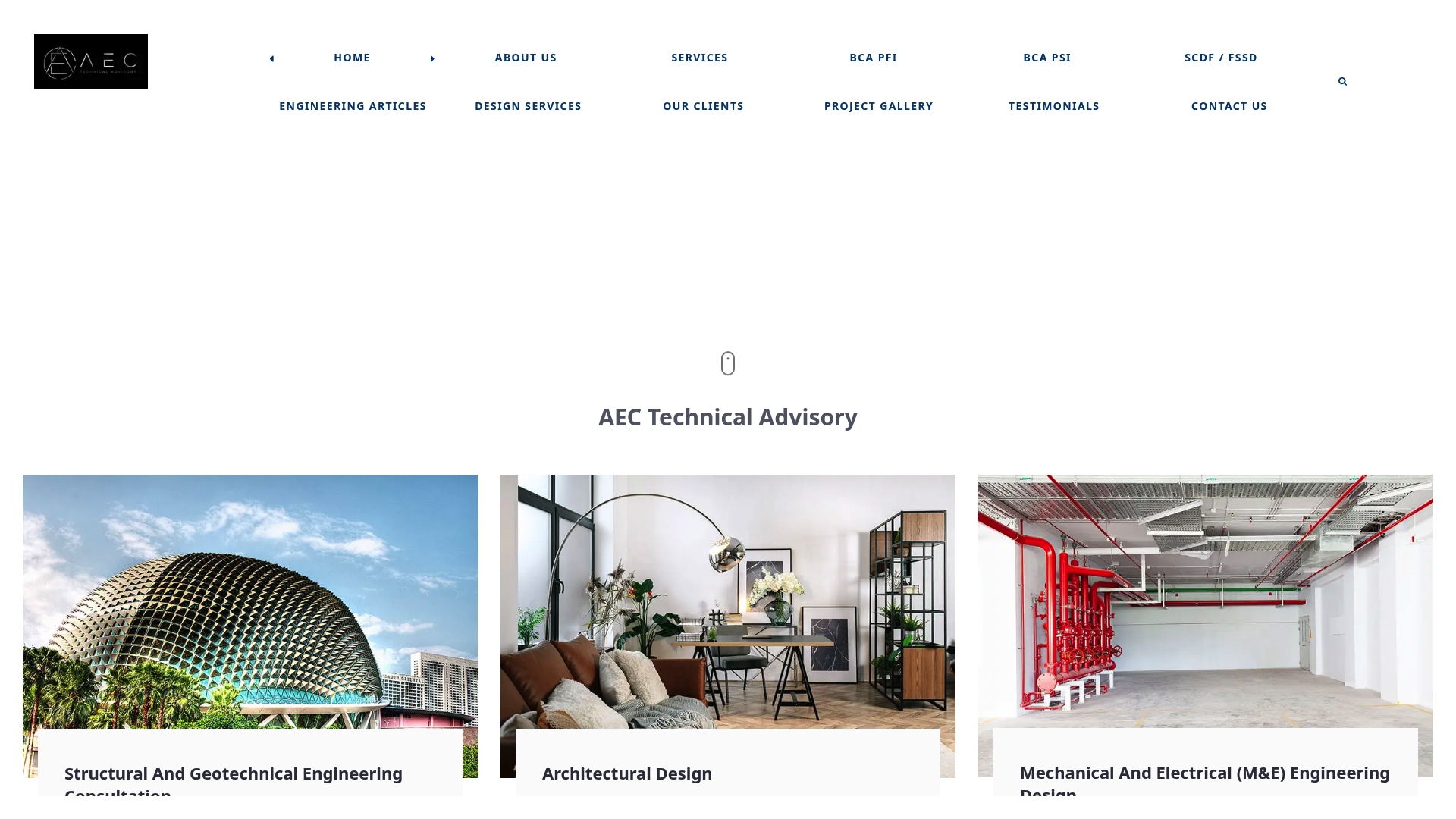
Aectechnicalsg delivers end-to-end regulatory compliance for Singapore building owners: gap audits against current PSI/PFI cycles, appointment and supervision of Structural Engineers and Qualified Persons, and full authority submission management across BCA, SCDF, URA, JTC, LTA, PUB, and NEA. The team pre-populates BCA and SCDF e-forms, verifies corporate profiles on submission portals to prevent notice misdelivery, and coordinates cross-agency timelines when A&A works trigger multiple filings simultaneously.

For owners who need SCDF fire-safety submissions or PE endorsement, Aectechnicalsg manages the full process, including Fire Emergency Plan preparation and Fire Safety Engineering Report commissioning. To request a compliance review, prepare your building’s age, height, existing inspection records, and any recent A&A works history, then contact Aectechnicalsg directly through the engineering consultancy services page.
Key Takeaways
Singapore building owners who integrate PSI, PFI, and authority submissions into regular asset maintenance avoid the majority of enforcement actions and emergency repair costs.
| Point | Details |
|---|---|
| Owner liability is non-delegable | Appointing an SE or agent does not transfer statutory responsibility; the owner remains accountable for commissioning inspections on time. |
| PSI cycles by building type | Non-residential buildings require PSI every five years; residential buildings require it every ten years. |
| PFI triggers at 13m and 20 years | Buildings over 20 years old and taller than 13 metres must complete façade inspections every seven years; run a height-and-age audit if your building is near either threshold. |
| A&A works trigger cross-agency filings | Plan submissions to BCA early; works touching fire safety, utilities, or land use will require parallel SCDF, PUB, URA, or JTC coordination. |
| Aectechnicalsg covers the full cycle | From compliance gap audit through SE appointment, PSI/PFI delivery, and multi-agency submission management. |
Why most owners get caught out — and how to avoid it
Owners who schedule PSI, PFI, and A&A submissions as fixed line items in their maintenance calendar avoid the majority of enforcement notices. Those who wait for BCA or SCDF to issue a notice typically face compressed timelines, higher professional fees, and the risk of fines.
Three patterns account for most compliance failures. First, owners assume that appointing an SE discharges their legal duty; it does not. Second, they underestimate how long it takes to engage a qualified SE or CP — two months is the statutory window, but procurement, scope agreement, and portal registration can consume most of that time. Third, they fail to verify that the appointed SE will be physically present during the inspection, which BCA requires and monitors.
Pro Tip: Bundle façade access works with other planned maintenance — scaffolding or gondola costs are shared, and the PFI can be completed without a separate mobilization.
For buildings near the 13-metre height or 20-year age thresholds, run a quick audit now. Buildings over 20 years old and taller than 13 metres must complete PFI every seven years. The PFI threshold is an absolute height measurement, not a floor count. When A&A works span structural changes and fire-safety modifications, a single consultant team coordinating cross-agency submissions reduces rework significantly. Budget SE and CP professional fees as a recurring asset management cost, not a one-time expense.
Authoritative sources and where to file each submission
The table below maps each authority to its typical trigger and the owner’s practical next step.
| Authority | Typical trigger | Next step |
|---|---|---|
| BCA | PSI/PFI cycle due; A&A or building works planned | Appoint SE/CP; submit plans via BCA’s e-submission portal using the relevant e-form |
| SCDF | Fire-safety system changes; change of use; A&A affecting means of escape | Prepare Fire Emergency Plan or Fire Safety Engineering Report; route submission through SCDF’s fire-safety portal |
| URA | Change of use; development works requiring planning permission | Submit development application; coordinate with BCA A&A timeline |
| JTC | Works on JTC-managed industrial premises | Obtain JTC’s written approval before BCA plan submission |
| LTA | Works affecting roads, drains, or transport infrastructure | Submit to LTA concurrently with BCA; allow additional lead time |
| PUB | Works affecting water supply, sewerage, or drainage | File PUB submission; coordinate with structural and M&E consultants |
| NEA | Works affecting air quality, water discharge, or hazardous materials | Submit NEA BP/DC forms; confirm QECP requirements if applicable |
Key legal references and filing resources:
- Fire Safety (Building Fire Safety) Regulations — fire-safety system maintenance obligations and report triggers
This article provides general regulatory information for Singapore building owners and does not constitute legal or professional advice. Confirm current requirements with BCA, SCDF, or a qualified professional before acting.
The compliance gap most owners don’t see until it’s too late
The conventional view is that building compliance is a documentation exercise: get the inspection done, file the report, move on. That framing misses the real risk. The most costly compliance failures in Singapore’s built environment don’t come from owners who ignored the rules entirely. They come from owners who thought they had delegated the problem.
Appointing an SE is necessary but not sufficient. The owner must verify that the SE will attend in person, that the corporate profile on BCA’s portal is current, and that the inspection report meets BCA’s quality threshold. A report rejected for inadequate assessment restarts the clock while the statutory deadline continues to run. The same logic applies to cross-agency works: an A&A project that triggers both structural changes and fire-safety modifications needs coordinated submissions, not sequential ones. Sequential filing adds weeks of delay and often requires rework when one agency’s approval conditions affect another’s scope.
The practical implication is that compliance should be treated as a project management function, not an administrative one. Owners who build inspection cycles and submission windows into their asset maintenance schedules, and who appoint consultants with multi-agency submission experience, consistently avoid the enforcement notices that arrive when deadlines are missed by weeks rather than months.