
If your building sits within a gazetted conservation area, Conservation Permission from URA is mandatory before any conservation works or Additions & Alterations begin. The next move depends on scope: engage a Registered Architect as your Qualified Person for anything touching key heritage elements, or use the Category 3 e-service for minor repairs. Starting work first is the single costliest mistake owners make.
TL;DR:
- Permitting conservation works before starting and appointing a Registered Architect as your Qualified Person significantly reduces delays and avoids costly re-categorization.
- Category 1 projects, affecting key heritage elements, require detailed submissions with structural reports and engineer endorsement, often taking around 20 working days for approval.
- Minor repairs under Category 3 can be approved within two weeks via URA’s free e-service, provided all photos, authorization, and documentation are complete and accurate.
- Most submission delays result from missing or incomplete documentation, such as inadequate photos or lack of engineer sign-off, rather than URA’s review process itself.
- Coordinating engineering documentation early and engaging specialists to prepare thorough reports before filing helps ensure faster project approval.
Table of Contents
- What Conservation Works Approval Covers and Why URA Requires It
- Which Works Category Applies to Your Project?
- How to Submit Category 1 and 2 Applications Through CORENET
- Applying for Category 3 Works: The Fast, Free Route
- What Documents URA Expects, and Who Signs Off
- How Long Approval Takes and What Comes After
- Common Mistakes That Delay or Derail Approval
- Your Pre-Submission Checklist
- How AECTechnicalSG Approaches URA Conservation Submissions
- Get Your Conservation Submission Engineered Right the First Time
- Sources
What Conservation Works Approval Covers and Why URA Requires It
A conserved building in Singapore is one URA has gazetted for its architectural, historical, or streetscape value, sitting inside a defined conservation area such as a shophouse row or a historic district. The rule exists to protect a specific set of external features, roof forms, facades, five-foot ways, ornamental details, without freezing the building’s usefulness.
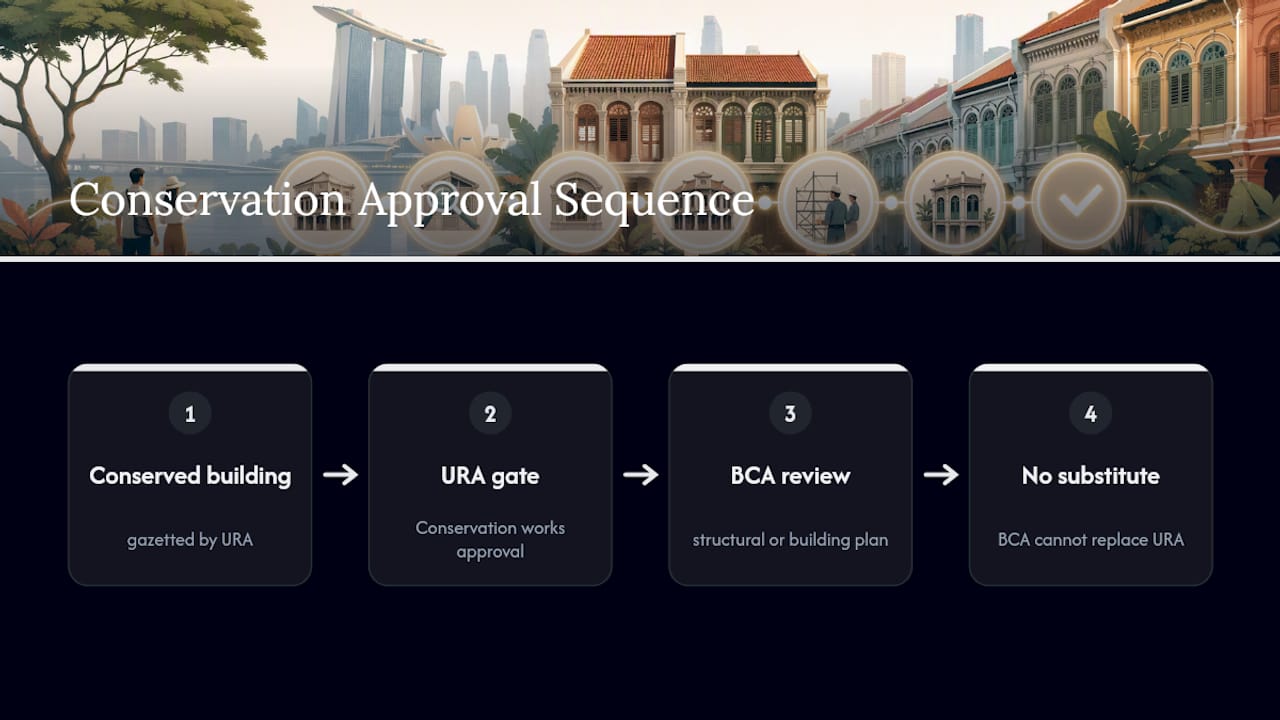
URA’s own guidance treats conservation and development as complementary rather than opposed: owners can modernize internal layouts and building systems while the street-facing heritage character stays intact. That is why conservation works approval sits apart from ordinary building approvals. It is a gatekeeping step that must be cleared before BCA reviews your structural or Building Plan submission; it is not a parallel track you can substitute with a BCA approval alone.
Which Works Category Applies to Your Project?
URA sorts conservation works into three categories based on how much they touch the building’s protected character. Getting the category right from day one is what separates a smooth submission from a re-categorized, delayed one.
- Category 1: Works affecting key elements and the overall architectural character, facade alterations, roof changes, removal or modification of protected features. These require submission by a Qualified Person, meaning a Registered Architect, and typically involve structural engineering input as well.
- Category 2: Works with a noticeable but lesser impact, internal reconfiguration near protected elements, new openings, service upgrades that touch the building envelope. These usually still need QP coordination, particularly where structural changes are involved.
- Category 3: Minor repair and maintenance works, repainting in approved colors, replacing like-for-like fittings, small non-structural repairs. Owners or contractors can submit these directly through URA’s e-service without engaging a QP.
Examples help more than definitions here. Re-roofing a shophouse in original materials sits in Category 1. Adding a rear extension that doesn’t touch the street facade often lands in Category 2. Patching plaster or repainting a shopfront in its approved palette is textbook Category 3.
How to Submit Category 1 and 2 Applications Through CORENET
Category 1 and 2 projects follow a sequence that rewards early preparation. Skipping steps almost always costs more time than it saves.
Start by appointing a Registered Architect as your QP and bringing a structural engineer on board at the same time, not after drawings are drafted. The engineer conducts a structural investigation, photographs existing conditions, and flags anything that could affect the method of work before it becomes a URA query.
Your submission package needs several pieces working together:
- Detailed architectural drawings showing existing and proposed conditions
- A structural investigation report with photographic evidence
- A method statement and protection plan endorsed by a professional engineer
- The QP’s formal submission lodged through CORENET, Singapore’s electronic system for statutory building submissions
URA reviews the CORENET submission and issues either Conservation Permission or a set of queries. Responding to queries with detailed drawings and engineering justification, rather than partial fixes, is what keeps the project on its original timeline instead of sliding into a re-submission cycle. Once URA grants permission, the project moves to BCA for Building Plan approval, and eventually to Temporary Occupation Permit or Certificate of Statutory Completion once works are done according to the approved plans. If your scope also touches fire safety, environmental discharge, or water systems, sequence SCDF, NEA, or PUB submissions after URA and BCA sign off on the core scope, so you’re not revising engineering documents twice for the same change.
Pro Tip: Bring your structural engineer into the first site walk-through, not after the architect finishes concept drawings. Method statements written after the fact tend to trigger more URA queries than ones developed alongside the design.
Applying for Category 3 Works: The Fast, Free Route
Minor repairs don’t need a QP or a lengthy submission package. URA built the Category 3 e-service specifically to keep small-scale maintenance moving quickly.
- Submit through URA’s Apply for Category 3 Works e-Service, attaching JPEG photos of existing and proposed conditions or scaled floor drawings where photos alone won’t show the change clearly.
- Include a signed Letter of Owner’s Authorisation if you’re a contractor or agent submitting on the owner’s behalf.
- Wait for approval before touching anything. The service is free of charge and generally takes about two weeks to process when the submission is complete on the first try.
- After completing the work, submit photos of the finished result to obtain a Letter for Endorsement of Completed Works, which closes out the file officially.
Two weeks sounds generous until you’ve had a submission bounced back for a missing photo angle or an unsigned authorization letter. Complete paperwork the first time is the only real lever you control over that timeline.
What Documents URA Expects, and Who Signs Off
Missing documentation is the single biggest reason submissions get returned or re-categorized. Knowing exactly what belongs in the package before you start drafting saves a full review cycle.
For Category 1 and 2 submissions, the essentials are non-negotiable:
- Scaled architectural drawings covering existing and proposed conditions
- A structural investigation report with photographic documentation of current conditions
- A method statement and protection plan, both endorsed by a professional engineer
- The QP’s formal submission through CORENET
Category 3 submissions ask for far less: photos or small-scale drawings, the owner’s authorization, and contractor contact details. Minimal as that sounds, it still has to comply with URA’s conservation guidelines on materials, colors, and approved methods for the specific building type.
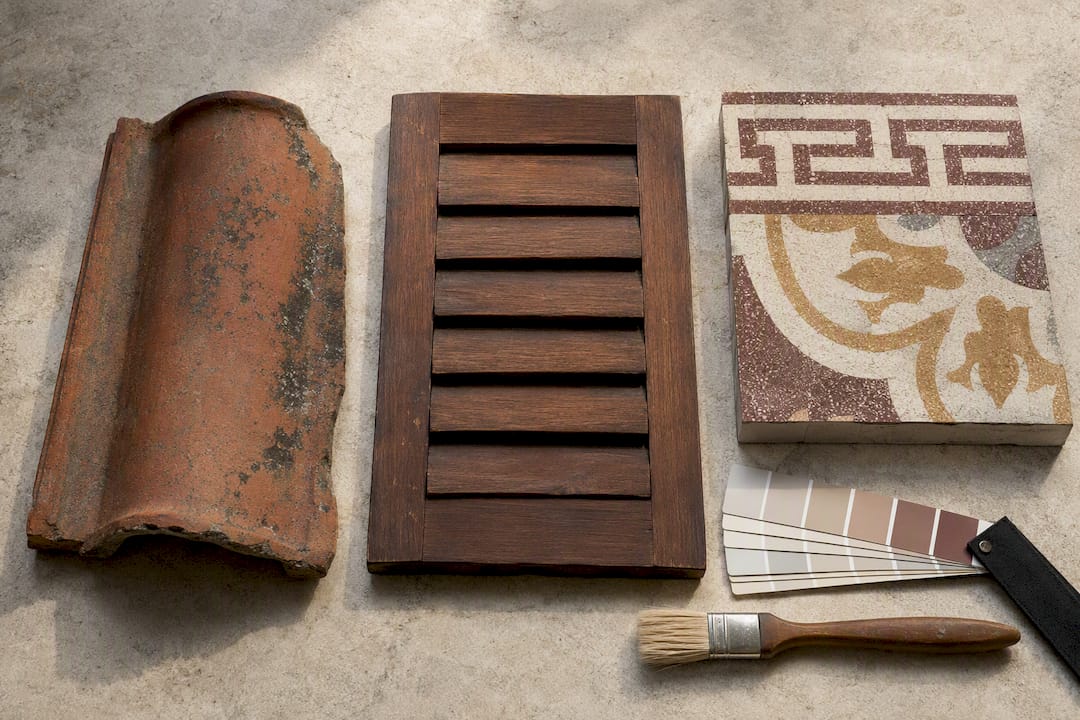
Larger or more sensitive projects sometimes need extra material URA doesn’t list as a blanket requirement: a heritage justification statement explaining why a proposed change is compatible with the building’s conservation status, material samples matching original finishes, or test reports on structural adequacy. AECTechnicalSG’s shophouse conservation guidance walks through six specific elements, roof tiles, timber shutters, five-foot way flooring, that commonly trigger these extra requests.
Pro Tip: Photograph every elevation and every protected detail before a single hoarding goes up. A thin “before” record is one of the fastest ways to turn a routine Category 2 submission into a contested one.
How Long Approval Takes and What Comes After
Timelines differ sharply by category, and knowing which clock you’re on prevents unrealistic project scheduling.
- Category 3: About two weeks when the submission is complete and free of charge.
- Category 1 and 2 via CORENET: Typically processed within roughly 20 working days once URA confirms the package is complete, though incomplete submissions or unresolved queries extend that.
- Fees: Most Category 3 submissions carry no charge. Larger Category 1 and 2 projects may attract development charges or other fees depending on scope and site, so check the current Development Control Fee Schedule before budgeting.
After URA issues Conservation Permission, the sequence continues rather than ends. Submit to BCA for Building Plan approval, secure any permits needed to start construction, then arrange the TOP or CSC inspection once works are finished in line with the approved drawings. AECTechnicalSG’s guide on project submission requirements breaks down how these authority steps stack for larger, multi-agency projects.
Common Mistakes That Delay or Derail Approval
Most delays trace back to a handful of repeat mistakes, not bad luck with URA’s review queue.
- Starting work before permission is granted. This is the most frequent and most expensive error, and enforcement action, fines, and forced rectification are all real consequences, not scare tactics.
- Submitting thin documentation, no photo baseline, no engineer sign-off on the protection plan, then discovering URA wants both before it will even begin review.
- Treating a Category 2 scope as Category 3 to skip QP involvement. URA will re-categorize the project when documentation doesn’t match the actual impact, and that reset costs more time than doing it right the first time.
- Responding to URA queries with vague reassurances instead of revised drawings and engineering justification, which is what URA actually wants to see.
Pro Tip: When you’re not sure whether an element counts as protected, ask before you submit. A short pre-consultation with URA, or a QP’s read on the building’s gazette listing, is far cheaper than a rejected application.
Your Pre-Submission Checklist
Run through this before you file anything, whether you’re going the Category 3 e-service route or a full QP-led CORENET submission.
- Letter of Owner’s Authorisation, signed and dated.
- QP appointment confirmed in writing, if your works fall under Category 1 or 2.
- Drawings or photos matching the required format for your category.
- Structural investigation report, where applicable.
- Engineer-endorsed method statement and protection plan for Category 1/2 works.
- Active CORENET account and login credentials ready before drafting begins.
- Post-approval: BCA submission prepared, photographic records kept throughout construction, TOP/CSC inspection requested once works are complete.
How AECTechnicalSG Approaches URA Conservation Submissions
Coordinating a Registered Architect, a structural engineer, and a CORENET submission across a single conservation timeline is where most delays actually originate, not in URA’s review itself. AECTechnicalSG works alongside QPs to produce the structural reports, method statements, and protection plans URA expects to see endorsed before it will grant permission. The projects that move fastest are the ones where the engineering documentation was built to answer URA’s likely questions before they’re asked, not after a query letter arrives.
— Aman
Get Your Conservation Submission Engineered Right the First Time
A missing engineer’s endorsement or a thin structural report is what turns a routine Category 2 submission into a months-long back-and-forth with URA. Some engineering consultancies offer a coordinated team to handle the structural investigation, the method statement, the protection plan, and the authority submission as a single package.
That matters most on Category 1 and 2 projects, where a professional engineer’s sign-off on your protection plan isn’t optional. AECTechnicalSG’s PE endorsement and authority submission service covers exactly this gap, structural reports, method statements, and CORENET filing prepared to withstand URA’s first round of questions rather than trigger a second one. If your project also needs geotechnical input near an existing foundation, the team’s geotechnical investigation guidance feeds directly into the same submission package. For owners weighing broader sustainability upgrades alongside conservation work, GreenLearn’s green building courses are worth a look before finalizing scope.
Get in touch with an engineering consultancy to scope your conservation submission and find out what documentation your specific project needs before you file.
Sources
- Submission Process for Additions and Alterations (A&A) and Category 3 Works | URA
- BCA guidance on building works and plan submissions