
Introduction
Designing specialized lightning protection systems for hazardous industrial environments requires more than adapting a standard building scheme. In these facilities, the system must combine explosion-proof air terminals, chemical-resistant down conductors, low-impedance enhanced grounding, and multi-stage surge protection, then align that design with IEC 62305, NFPA 780, SS 555, and Singapore authority requirements. Explosive atmospheres, corrosive chemical storage, heavy structural loading from process equipment, and ignition control make each design decision safety-critical. In Singapore’s industrial landscape-spanning Jurong Island petrochemical complexes, pharmaceutical manufacturing plants, and flammable material warehouses-these risks are intensified by high ground flash density, where a single strike can damage equipment, shut down operations, trigger explosions, or release toxic substances.
This article follows the full engineering and regulatory path for these systems: hazardous area classification, component selection, surge protection coordination, structural loading checks, material compatibility in corrosive and explosive atmospheres, statutory submissions to SCDF, NEA, MOM, and BCA/URA, and the maintenance protocols needed to keep protection reliable over time. It is written for facility engineers, safety managers, project developers, and engineering consultants responsible for production facilities handling hazardous materials, especially where compliance, uptime, and ignition risk must be managed together. It focuses on design, coordination, and submission requirements for hazardous industrial facilities rather than general lightning protection for conventional commercial buildings.
After reading this article, you will understand:
-
How hazardous area classifications directly shape lightning protection system design requirements
-
Material selection criteria for corrosive and explosive industrial atmospheres
-
Structural loading considerations when mounting air terminals on heavy process equipment
-
Multi-authority submission strategies and realistic approval timelines in Singapore
-
Ongoing maintenance protocols and periodic inspection requirements for sustained system integrity
Understanding Hazardous Industrial Environments and Lightning Risks
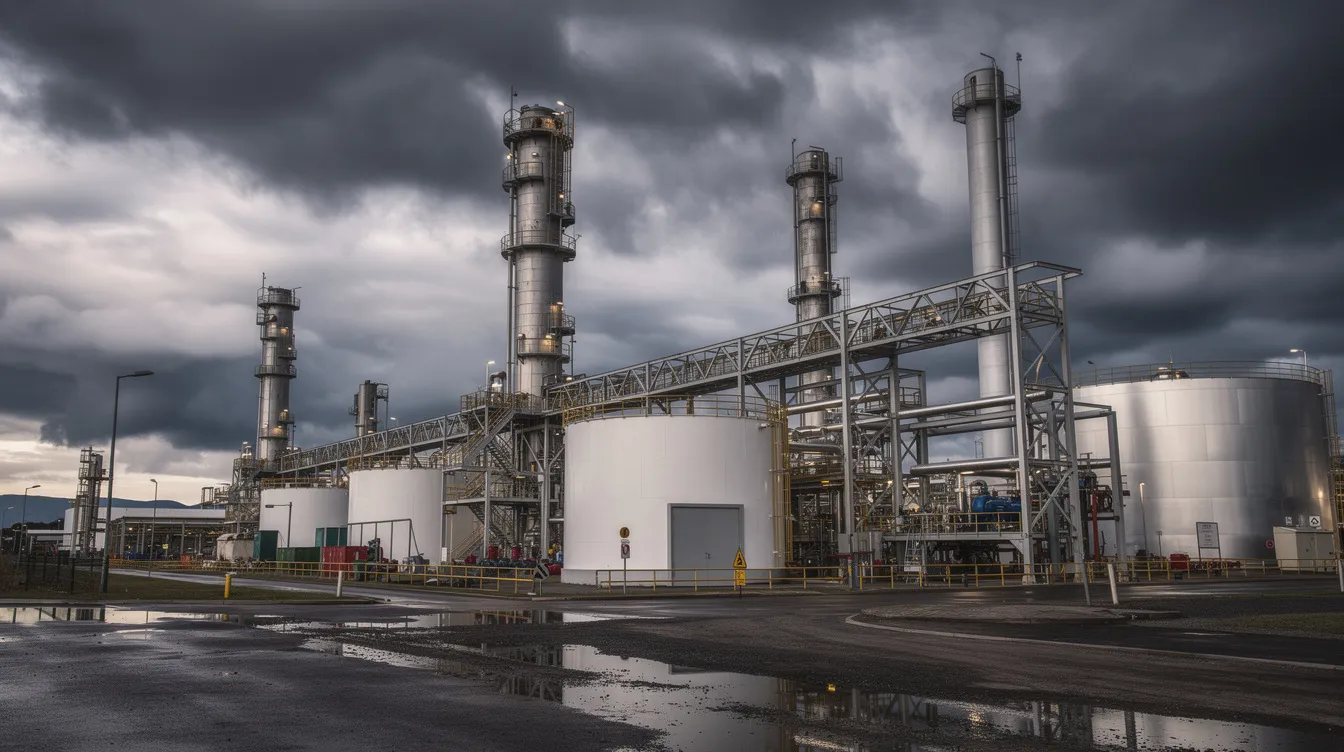
A hazardous industrial environment encompasses any facility where explosive gases, vapors, combustible dust, or corrosive chemicals create conditions that demand specialized safety engineering. These environments-petrochemical refineries, chemical processing plants, pharmaceutical manufacturing plants, oil and gas installations, and flammable material storage warehouses-present conditions where standard lightning protection fails. Conventional lightning rods, aluminum components, and basic grounding electrodes corrode rapidly in acid or salt-laden atmospheres, non-Ex-rated components become ignition sources in explosive zones, and general surge protection cannot safeguard the sensitive instrumentation that keeps these facilities operating safely.
Designing lightning protection systems requires adherence to global safety frameworks, but hazardous locations introduce additional constraints due to explosive atmospheres that fundamentally change every aspect of system design, from material selection to installation practices.
Classification of Hazardous Areas in Singapore
The foundation of any effective lightning protection system in a hazardous industrial setting is the area classification system. Singapore adopts the IEC 60079 framework through SS CP 15 and SS 254/255 standards, which define explosive atmosphere zones based on the probability and duration of hazardous gas or dust presence:
-
Zone 0 / Zone 20: Explosive atmosphere present continuously or for long periods (gas/dust respectively)
-
Zone 1 / Zone 21: Explosive atmosphere likely during normal operations
-
Zone 2 / Zone 22: Explosive atmosphere unlikely during normal operations, and if it occurs, only briefly
These zone classifications dictate which lightning protection components can be physically installed in each area, what certifications those components must carry (IECEx, ATEX), and what installation methods are permissible. Lightning protection systems must avoid physical installation of components inside hazardous zones where possible, or use only components certified for the specific zone classification. Separation distances should be maintained between lightning protection components and flammable storage to prevent thermal ignition.
Chemical storage areas-often containing Class 3 flammable liquids, Class 5 oxidizers, or Class 8 corrosive substances under SCDF Fire Code classifications-add another dimension. The chemicals themselves attack lightning protection materials, creating a dual requirement: components must resist both the explosive atmosphere and the corrosive environment simultaneously.
The relationship between area classification and lightning protection system design is direct and non-negotiable. A Zone 1 area requires Ex-certified air terminals with flameproof or increased safety ratings, while a Zone 2 area may permit standard components with additional protective measures. Misclassifying a zone-or failing to account for transient vapor formation during process upsets-can render an entire protection system inadequate.
Amplified Lightning Risks in Industrial Settings
Industrial facilities concentrate multiple risk factors that dramatically increase both the probability of a lightning strike and the severity of its consequences:
Structural exposure: Process towers, distillation columns, storage tanks, and exhaust stacks routinely exceed 30–50 meters in height. These tall metallic structures act as preferential strike points, and Singapore’s tropical location produces ground flash densities between 8–12 flashes/km²/year-among the highest globally. Facilities need to analyze local thunderstorm frequency to determine the necessary protection class.
Conductive pathways: Extensive piping networks, cable trays, structural steel frameworks, and metallic building systems create interconnected conductive paths. Without proper equipotential bonding, a lightning discharge generates hazardous potential differences across these metallic systems, producing step and touch voltages lethal to personnel. Equipotential bonding is critical to prevent dangerous potential differences during a lightning event.
Ignition sensitivity: Stored chemicals with low auto-ignition temperatures, volatile vapor clouds, and combustible dust create environments where even a minor arc or spark from an unbonded connection can trigger an explosion. Lightning protection systems should mitigate explosion risks from thermal sparks.
Control system vulnerability: Continuously operating SCADA, DCS, and safety instrumented systems (SIS) rely on low-voltage electronics susceptible to induced surges. Many industrial failures are caused by induced surges rather than direct lightning strikes-electromagnetic pulses from nearby strikes can corrupt safety-critical data or disable protective shutdowns.
The consequences cascade: a direct strike ignites a vapor cloud, causing an explosion that breaches chemical containment, triggering a toxic release while simultaneously disabling the control systems meant to manage the emergency. Lightning protection enhances personnel safety during storms and ensures business continuity after strikes-making effective lightning protection not merely a regulatory obligation but an operational necessity.
Understanding these amplified risks establishes why specialized lightning protection system components, materials, and design methodologies are essential-topics addressed in the following section.
Specialized Lightning Protection System Components and Design
With hazardous area classifications defined and risk factors established, the engineering focus shifts to selecting and configuring lightning protection components specifically designed for explosive, corrosive, and structurally demanding industrial environments, including data centers where uptime and data-loss risk make exposure especially consequential. The basic components of a complete lightning protection system-air termination, down conductors, grounding electrodes, and surge protective devices-require significant modification from standard commercial designs. Key design phases of lightning protection include air termination and ground termination, but in hazardous settings, every phase carries additional constraints.
Explosion-Proof Air Terminals and Strike Termination
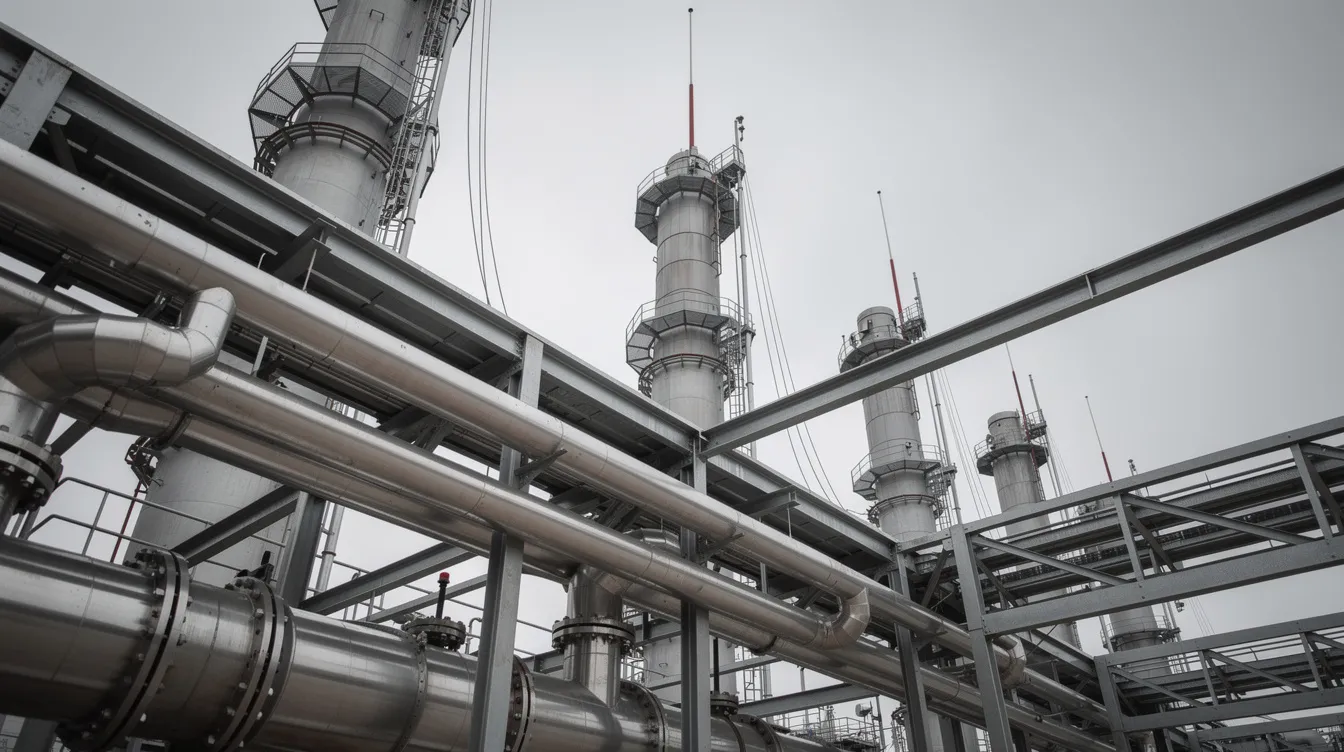
Each basic component of a complete lightning protection system—air termination, down conductors, grounding electrodes, and surge protective devices—must work together, but air terminals positioned to intercept lightning strikes must comply with both SS 555 Part 3 geometric requirements and IEC 60079 explosive atmosphere certifications. A Franklin rod is a metal rod installed at the highest point to intercept a strike, and air terminals must be at least 10 inches above protected surfaces per NFPA 780. In hazardous zones, every strike termination device must carry appropriate Ex ratings-flameproof enclosure (Ex d), increased safety (Ex e), or intrinsic safety (Ex i)-matching the zone classification.
Traditional air termination systems use Franklin rods for protection, and this remains the accepted methodology because of their proven reliability. Within the lightning protection industry, Early streamer emission devices are still discussed for their claimed extended protection radius, but they are not recognized under IEC 62305, making them unsuitable for regulatory submissions. The rolling sphere method per SS 555 Part 3 determines air terminal placement, with Class I systems using smaller sphere radii for comprehensive coverage of critical process areas. For stacks and similar tall structures, class ii air terminals may also be specified where the applicable standard, material size, height, and spacing criteria are met.
Material selection is dictated by chemical exposure. Standard copper components corrode in sulphuric acid atmospheres; standard aluminum components fail in chloride-rich marine environments common around Singapore’s coastal industrial zones. Suitable materials include:
-
316L stainless steel: excellent resistance to chloride and acid attack
-
Copper-nickel alloys: superior corrosion resistance with maintained conductivity
-
Galvanized copper with zinc-nickel plating: durable protective layer for moderate chemical exposure
-
Coated copper with epoxy or bituminous protection: for buried or semi-enclosed applications
All external components require high Ingress Protection ratings (IP66 or IP67 minimum), sealed joints, and smooth profiles that prevent chemical accumulation in crevices.
Installation practices in classified areas prohibit or severely restrict hot work. Air terminals and their mounting assemblies must use mechanical fastening-explosion-safe clamps, crimped connections, and prefabricated assemblies joined off-site. Fasteners must be metallurgically compatible with the terminal material to avoid galvanic corrosion. Where dissimilar metals cannot be avoided, insulating washers or gaskets provide electrical separation at the junction while maintaining the lightning current path through purpose-designed bonding connections. Poor installation or unsuitable hardware can compromise system performance and increase the risk of lightning damage.
Enhanced Grounding Systems for Heavy Industrial Loading
The grounding system must safely dissipate large lightning currents and should have low impedance-this is the foundation of any effective lightning protection system. Grounding electrodes dissipate lightning currents into the earth, and in industrial environments handling heavy electrical loads, the grounding electrode system must accommodate not only lightning current but also switching surges and fault currents from process equipment.
Maintaining a low-resistance grounding network is critical for lightning protection effectiveness. Industrial facilities typically target earth resistance below 1 ohm for the complete system, achieved through ring electrode configurations or mesh conductor networks using large cross-sectional copper conductors or copper-bonded steel. Low-resistance grounding is essential to ensure rapid dispersion of lightning energy in lightning protection systems, preventing dangerous voltage buildup across the facility’s metallic infrastructure.
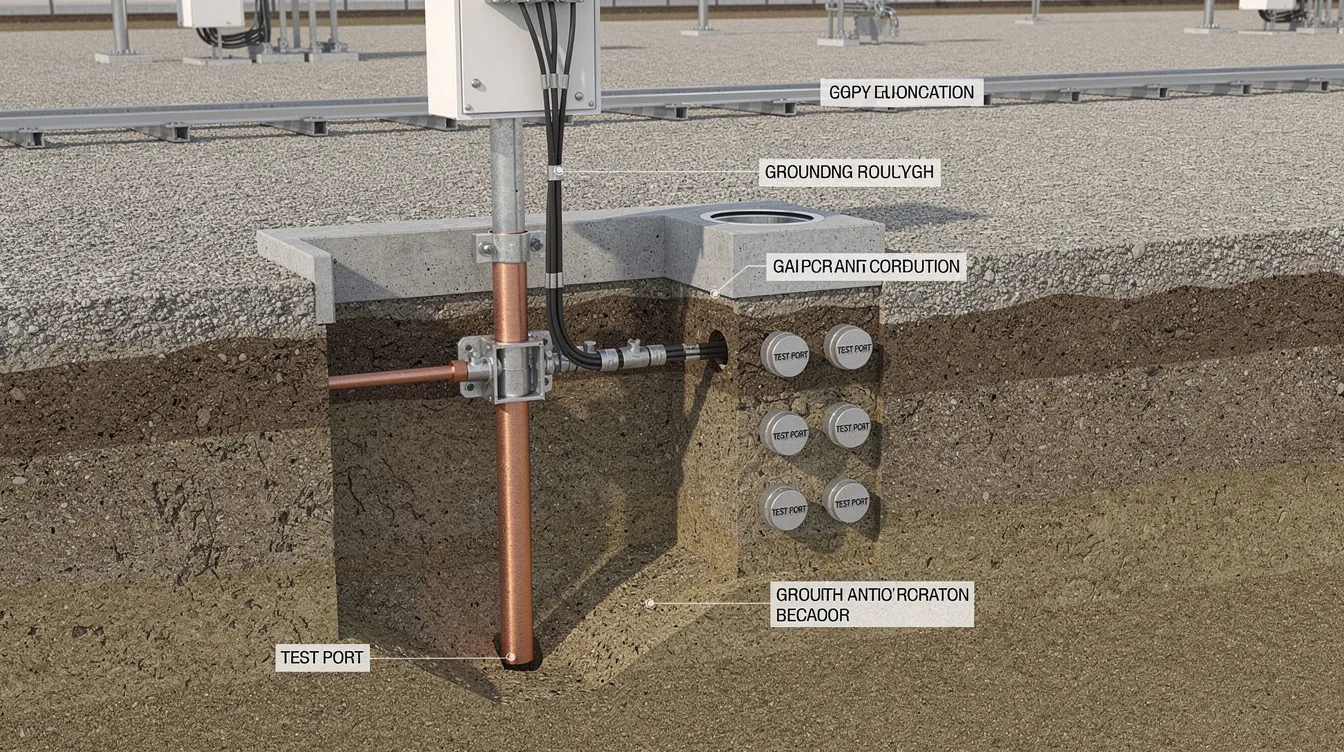
Chemical resistance of grounding electrodes buried in industrial soil presents unique challenges. Spills, leaks, and process discharges acidify or contaminate surrounding soil, accelerating corrosion of buried grounding electrodes. Solutions include:
-
Stainless steel or copper-clad steel electrodes with protective coatings
-
Concrete encasement of critical electrode junctions
-
Bentonite or carbon backfill for consistent soil contact (subject to chemical compatibility assessment)
-
Sacrificial anode integration for cathodic protection in aggressive soil chemistry
-
Electrochemical monitoring ports for periodic resistance verification
Integration with existing plant electrical systems is essential. Lightning protection systems need to bond all exposed metallic structures to eliminate potential differences-structural steel, process piping, cable trays, storage tanks, HVAC ductwork, and incoming utility services must all connect to a unified equipotential bonding network. Conductors carry lightning discharge currents to grounding electrodes through this network, and any discontinuity creates a potential arc point in exactly the locations where explosive atmospheres may be present. Improper setup can leave the facility exposed to lightning damage even when the required hardware has been installed.
Surge Protection for Critical Control Systems
Surge protective devices limit surge voltages on equipment, and in hazardous industrial environments, the consequences of SPD failure extend beyond equipment replacement to potential loss of safety-critical functions. A multi-stage SPD coordination strategy protects internal systems:
-
Class I SPDs at the service entrance handle direct lightning current from the grounding system
-
Class II SPDs at distribution panels manage residual surges propagating through electrical systems
-
Class III SPDs at individual equipment protect sensitive electronics-SCADA terminals, DCS controllers, telecommunications equipment, and safety instrumented system inputs
Surge protective devices must be installed at boundaries entering hazardous zones, with intrinsically safe barriers or isolators providing the interface between classified and non-classified areas. Signal cabling routes must avoid inductive coupling loops, use properly grounded shielded cables, and maintain separation distances between electrical lines and conductive structures to prevent lightning-induced surges from compromising safety-critical circuits.
Redundancy is non-negotiable for critical control circuits. Redundant SPD paths ensure that degradation of one protective device does not leave sensitive equipment exposed. After a severe weather event, degraded SPDs must be identifiable and replaceable safely-a consideration that influences both component selection and physical placement within the facility’s protection system.
These component selections and design principles feed directly into the formal design process and Singapore’s statutory compliance framework, where every specification must be documented, justified, and approved.
Design Process and Statutory Compliance Requirements
With component specifications established, the design process transitions to formal risk assessment, protection level determination, and navigation of Singapore’s multi-authority approval framework. A site-specific risk assessment is necessary for designing effective lightning protection systems, and in Singapore’s hazardous industrial context, this assessment must satisfy multiple statutory boards simultaneously. Facilities must comply with IEC 62305 and NFPA 780 standards as internationally recognized frameworks, while SS 555:2018 provides the Singapore-specific adoption.
Risk Assessment and Lightning Protection Level Determination
A comprehensive risk assessment is essential for protection effectiveness in any industrial facility, but for major hazard installations (MHIs) in Singapore, it becomes a statutory requirement enforced by MOM’s Major Hazard Department. The assessment follows IEC 62305-2 methodology, and IEC 62305 and NFPA 780 are nationally recognized standards, with SS 555:2018 serving as the Singapore-specific adoption, evaluating four risk components:
-
Conduct site-specific lightning risk assessment: Calculate the expected number of dangerous events using local ground flash density data (Singapore: 8–12 flashes/km²/year), facility dimensions, surrounding terrain, and shielding from adjacent structures. The 2024 third edition of IEC 62305-2 introduced ground-strike point density (NSG) replacing the older NG parameter for improved accuracy.
-
Evaluate facility-specific hazards: Document complete chemical inventories including flammability ratings, vapor pressures, and auto-ignition temperatures. Map explosive gas/dust zones against facility layouts. Assess control system sensitivity and identify safety-critical instrumentation that must remain operational during and after a lightning event.
-
Determine required protection level: Compare calculated risk against tolerable risk thresholds for each risk component-R₁ (loss of human life), R₂ (loss of service to the public), R₃ (loss of cultural heritage), R₄ (economic loss). SS 555 Part 3 defines LPS Classes I through IV, with Singapore mandating minimum Class III for standard buildings. Hazardous industrial environments with explosive content typically require Class I or Class II-providing significantly higher protection through smaller rolling sphere radii and more extensive air terminal coverage.
-
Document risk assessment for authority submissions: The complete risk assessment report forms part of the Quantitative Risk Assessment (QRA) required for MHIs. It must include LPS class justification, all calculation parameters, equipment selection rationale, grounding test targets, and the planned maintenance schedule. This documentation also supports insurance requirements-proper systems reduce insurance premiums for commercial properties, and insurers increasingly demand evidence of LPS class and maintenance history.
Budget constraints influence the selection of lightning protection systems, and the cost of protection systems varies based on building complexity and system complexity. However, in hazardous environments, the risk assessment almost invariably drives design toward Class I or II-the cost differential between protection classes is negligible compared to the consequences of an explosion or toxic release at a petrochemical facility.
Multi-Authority Submission Strategy
Singapore’s regulatory framework for hazardous industrial facilities involves concurrent submissions to multiple statutory boards, each with distinct concerns and documentation requirements. Coordinating these submissions is essential to avoid delays, conflicting requirements, and gaps in meeting legal obligations under applicable standards and local building codes. For detailed guidance on individual authority processes, see our guides on SCDF compliance and NEA approval requirements.
System complexity also affects budget planning here: in hazardous facilities, extensive bonding, surge coordination, and classified-area constraints typically increase design effort, installation cost, and maintenance planning.
Authority Submission Comparison Table
|
Authority |
Primary Concern |
Required Documentation |
Approval Timeline |
|---|---|---|---|
|
SCDF |
Fire safety, ignition source control, petroleum & flammable material licensing |
Fire Safety Report with LPS design drawings; PE(Electrical) certified calculations; QRA for major hazard installations; SS 555 compliance evidence; earth resistance and continuity test reports |
4–6 weeks for standard facilities; 4–6 months for major hazard installations requiring QRA |
|
NEA |
Chemical safety, environmental release prevention, hazardous substance licensing under EPMA |
Hazardous substance permits; chemical inventories; environmental safety assessments; LPS component specifications where required to prevent ignition |
6–8 weeks for storage permits; longer for complex multi-chemical facilities |
|
MOM/MHD |
Worker safety, major hazard installation registration, explosion risk control |
Safety Case with QRA including lightning risk; IEC 60079 compliance for Ex-rated equipment; ignition source control documentation |
First comments within ~15 working days; QRA clearance: 4–6 months with iterative review rounds |
|
BCA/URA |
Building control, structural safety, development compliance |
Building plans showing LPS per SS 555; structural support calculations; PE endorsements; minimum LPS Class III (higher for hazardous) |
4–8 weeks aligned with fire safety approvals |
The most effective submission strategy initiates MOM QRA clearance first-as the longest approval pathway-while preparing concurrent SCDF and NEA submissions. BCA/URA building plan submissions can often proceed in parallel once the LPS class is determined. Installation requires certified lightning protection specialists, and systems must comply with NFPA 780 and UL 96A standards. A Master Label Certificate is issued after proper installation, providing documented evidence of regulatory compliance for all authorities.
Common Design Challenges and Engineering Solutions
Even with thorough risk assessment and proper component selection, hazardous industrial lightning protection projects consistently encounter practical obstacles that require engineering creativity and multidisciplinary coordination.
Material Compatibility in Corrosive Environments
The most persistent challenge in industrial lightning protection is material degradation. Chloride corrosion from marine atmospheres, sulphuric acid vapors from chemical processing, and general industrial atmospheric pollution accelerate galvanic corrosion between dissimilar metals-a particular concern where copper components connect to structural steel or where aluminum components interface with stainless steel fixtures.
Solutions: Select alloys matched to the specific process chemicals present. Use 316L stainless steel or duplex stainless in chloride-rich environments; copper-nickel alloys where acid resistance and conductivity are both required. Insulate dissimilar metal interfaces with non-conductive washers or gaskets while maintaining the intentional bonding path through dedicated bonding conductors. For buried grounding electrodes, concrete encasement combined with cathodic protection using sacrificial anodes addresses aggressive soil chemistry. Design all installations with testing ports and modular connections that permit equipment replacement of sacrificial components without major production disruption-extending service life while controlling ongoing maintenance costs.
Structural Loading and Heavy Equipment Integration
Air termination towers, lightning rods, and down conductors mounted on process towers, storage tanks, or heavy industrial equipment must withstand wind loading, mechanical vibration, thermal expansion, and seismic forces. These structural materials and their supports interact with the building structure, cladding, and process piping in complex ways.
Solutions: Engage structural engineers early to compute combined static and dynamic loads from lightning protection mounting systems. Use existing structural steel frameworks as mounting points wherever possible, avoiding cantilevered supports that introduce stress concentrations in classified zones. Never weld directly onto thin-wall process piping-use mechanical clamps rated for the vibration environment. Route down conductors to minimize length and avoid sharp bends (particularly in classified zones where bends can create arc points), ensuring all supports are either Ex-rated or located outside classified boundaries.
Hot Work Restrictions During Installation
Hot work-welding, grinding, cutting-inside classified explosive zones is severely restricted under SCDF and MOM regulations. Any spark in a Zone 1 area containing flammable vapors can trigger an explosion, making standard installation practices for lightning protection components impossible in many areas of a hazardous facility.
Solutions: Prioritize cold connection techniques: mechanical fastening, crimped joints, explosion-proof clamps, and riveted connections. Maximize prefabrication off-site, where hot work occurs in a controlled, non-hazardous environment, with modular assemblies transported and mechanically joined on-site. Where hot work is unavoidable, the area must be temporarily declassified through ventilation and purging, with continuous gas detection, hot work permits, dedicated fire watches, and coordination with Safety, Process, and Operations departments. This adds time and cost but eliminates the ignition risk entirely.
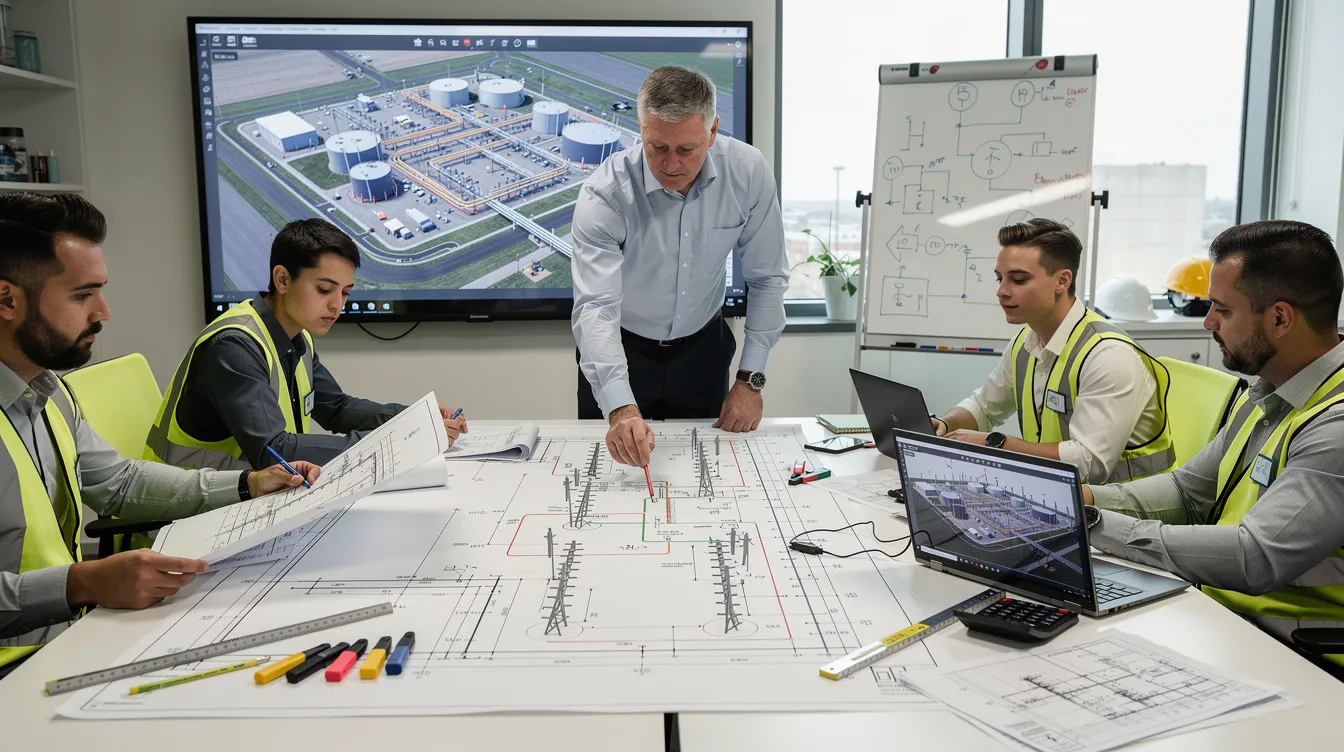
These challenges underscore the importance of professional installation by certified specialists and early-stage engagement of multidisciplinary teams-electrical, structural, chemical, and fire safety engineers working within Singapore’s regulatory framework from the preliminary design phase.
Conclusion and Implementation Strategy
Effective lightning protection for hazardous industrial environments requires an integrated engineering approach that simultaneously addresses electrical performance, structural integrity, chemical compatibility, and multi-authority regulatory compliance. A complete lightning protection system in these settings goes beyond installing lightning rods and connecting down conductors-it demands explosion-proof components certified for classified zones, chemical-resistant structural materials sized for heavy industrial loading, enhanced grounding electrodes buried in potentially aggressive soils, and coordinated surge protection for safety-critical electronic systems.
Lightning protection systems prevent severe damage to structures, protect personnel safety, and ensure business continuity-but only when designed, installed, and maintained to the standards these environments demand.
Immediate next steps for facility managers and project teams:
-
Commission a site-specific risk assessment per IEC 62305-2, incorporating chemical inventories, zone classifications, and Singapore’s high ground flash density
-
Initiate early consultation with MOM’s Major Hazard Department for QRA requirements-this pathway takes 4–6 months and sets the project timeline
-
Engage a PE(Electrical) experienced in M&E engineering for hazardous environments to develop preliminary system design and authority submission packages
-
Establish the ongoing maintenance program from the outset, including annual inspections, earth resistance testing, SPD verification, and documentation protocols
Related considerations: Lightning protection systems require regular inspections for effectiveness-visual inspections should occur after severe weather events, and comprehensive inspection programs verify bonding connections and ground conductor integrity. Lightning protection systems should be inspected annually as a minimum, with semi-annual testing recommended in aggressive chemical environments. Any facility modifications-new process towers, expanded chemical storage, or altered zone classifications-trigger re-assessment of the complete system design and may require updated authority submissions.
Frequently Asked Questions
What makes lightning protection for chemical plants different from standard commercial buildings? Chemical plant lightning protection requires explosion-proof (Ex-rated) air terminals and strike termination devices certified for classified zones, chemical-resistant materials that withstand corrosive atmospheres, enhanced grounding systems with lower impedance targets, intrinsically safe surge protection barriers for hazardous area instrumentation, and compliance with both lightning protection standards (IEC 62305, NFPA 780, SS 555) and explosive atmosphere standards (IEC 60079). Standard commercial designs use none of these provisions. Hazardous locations introduce additional constraints due to explosive atmospheres that affect every component selection and installation method.
Which Singapore authorities must approve lightning protection systems for hazardous industrial facilities? Four primary authorities: SCDF (fire safety and petroleum/flammable material licensing), NEA (chemical safety and environmental protection under EPMA), MOM/MHD (worker safety and major hazard installation registration), and BCA/URA (building control and development compliance). Each requires specific documentation, and submissions typically run concurrently to manage the overall 4–6 month timeline for complex facilities.
How do you determine the appropriate lightning protection level for a petrochemical facility? Through a site-specific risk assessment per IEC 62305-2, evaluating local ground flash density, facility dimensions, chemical inventories, zone classifications, and control system criticality. The assessment calculates risk components against tolerable thresholds, typically resulting in Class I or Class II LPS for facilities with explosive atmospheres-significantly exceeding the minimum Class III required for standard Singapore buildings.
What materials are suitable for lightning protection in corrosive chemical environments? 316L stainless steel, copper-nickel alloys, pure copper with epoxy or bituminous coatings, and galvanized copper with zinc-nickel plating. All materials must be evaluated against the specific chemicals present-chloride-rich marine atmospheres, acid vapors, and oxidizing agents each attack different metals. Galvanic corrosion prevention between dissimilar metals requires insulating interfaces or compatible alloy selection.
How does heavy industrial equipment loading affect lightning protection system design? Air terminals and down conductors mounted on process towers, tanks, and heavy equipment must account for wind loading, vibration, thermal expansion, and seismic forces. Structural engineering analysis is required for all mounting points. Designs should leverage existing structural steel rather than adding cantilevered supports, and all connections must use mechanical fastening rather than welding in classified zones.
What are the typical approval timelines for multi-authority submissions in Singapore? Standard SCDF plan approvals take 4–6 weeks; NEA chemical storage permits require 6–8 weeks; MOM/MHD provides first-round QRA comments within approximately 15 working days, with full QRA clearance taking 4–6 months through iterative reviews; BCA/URA building plan approvals align with fire safety submissions at 4–8 weeks. The MOM QRA pathway typically sets the overall project timeline and should be initiated first.
How do you integrate lightning protection with existing industrial electrical systems? Through comprehensive equipotential bonding connecting all metallic structures-structural steel, piping, cable trays, tanks-to a unified grounding network. SPD coordination must reference all protective devices to the same grounding system with low impedance paths. Existing equipment must be verified for Ex/zone compliance, and continuity testing must confirm that bonding connections remain intact across the complete system.
What maintenance requirements apply to lightning protection in hazardous areas? Lightning protection systems require annual inspections at minimum, with semi-annual testing recommended in corrosive environments. Comprehensive inspection programs verify bonding connections and ground conductor integrity. Periodic inspection includes visual inspection for corrosion and loosened connections, earth resistance testing, SPD functional verification, and documentation updates. Visual inspections should occur after severe weather events to identify damage requiring immediate attention.
How do you handle lightning protection during facility upgrades and expansions? Any modification-new tall structures, additional process lines, changed chemical inventories, or reclassified zones-requires re-assessment of the lightning protection system design. New structures may alter the air termination geometry calculated by the rolling sphere method, additional metallic systems require bonding to the existing grounding network, and changed zone classifications may require upgraded component ratings. Updated authority submissions are typically required for significant modifications.
What documentation is required for PE endorsement of lightning protection designs? PE(Electrical) endorsement requires complete design drawings (air terminal layouts, down conductor routing, earth termination details, bonding diagrams), risk assessment calculations with LPS class justification, material specifications with Ex certificates and manufacturer test data, installation test plans for earth resistance and continuity, and a comprehensive maintenance program. During construction, the PE must maintain photographic records and standardized test forms for all concealed bonding-documentation required for TOP/CSC submissions under SS 555.