
Introduction
Industrial reclaimed land in Jurong and Tuas presents some of Singapore’s most demanding geotechnical engineering challenges – soft marine clay deposits beneath heterogeneous fill, heavy petrochemical loading requirements, and aggressive chemical environments that threaten foundation durability. Engineered solutions combining deep soil improvement, specialized foundation systems, and chemical-resistant ground treatment are essential for safe, compliant, and cost-effective development across these reclaimed industrial zones.
This article covers the full scope of geotechnical solutions for heavy industrial loading, chemical-resistant foundations, and facility upgrades on reclaimed land in Jurong Island and Tuas. It is written for industrial developers, facility engineers, and project managers who need technically grounded guidance on foundation design, ground improvement selection, and regulatory compliance with Singapore’s statutory boards – including BCA, NEA, Jurong Town Corporation (JTC), and the Public Utilities Board.
In direct terms: successful industrial development on Jurong and Tuas reclaimed land requires a layered approach shaped by geotechnical performance needs and coordinated government approvals – comprehensive site investigations to characterize variable fill and marine clay, ground improvement techniques matched to soil type and loading demands, deep foundation systems for structures with strict settlement tolerances, and chemical containment measures that satisfy NEA pollution control requirements. Each project demands careful coordination across geotechnical, structural, and environmental disciplines from the earliest design phases through to completion.
By reading this article, you will gain:
-
A clear understanding of soil composition challenges specific to Jurong and Tuas reclaimed land
-
Technical knowledge of foundation systems and ground improvement methods for heavy industrial use
-
A practical framework for navigating sector-specific industry requirements alongside BCA, NEA, and JTC regulatory approvals
-
Solutions for common challenges including excessive settlement, chemical spill protection, and brownfield facility expansion
-
Awareness of emerging trends such as alternative fill materials and digital twin monitoring
Understanding Geotechnical Challenges in Land Reclamation of Reclaimed Industrial Land
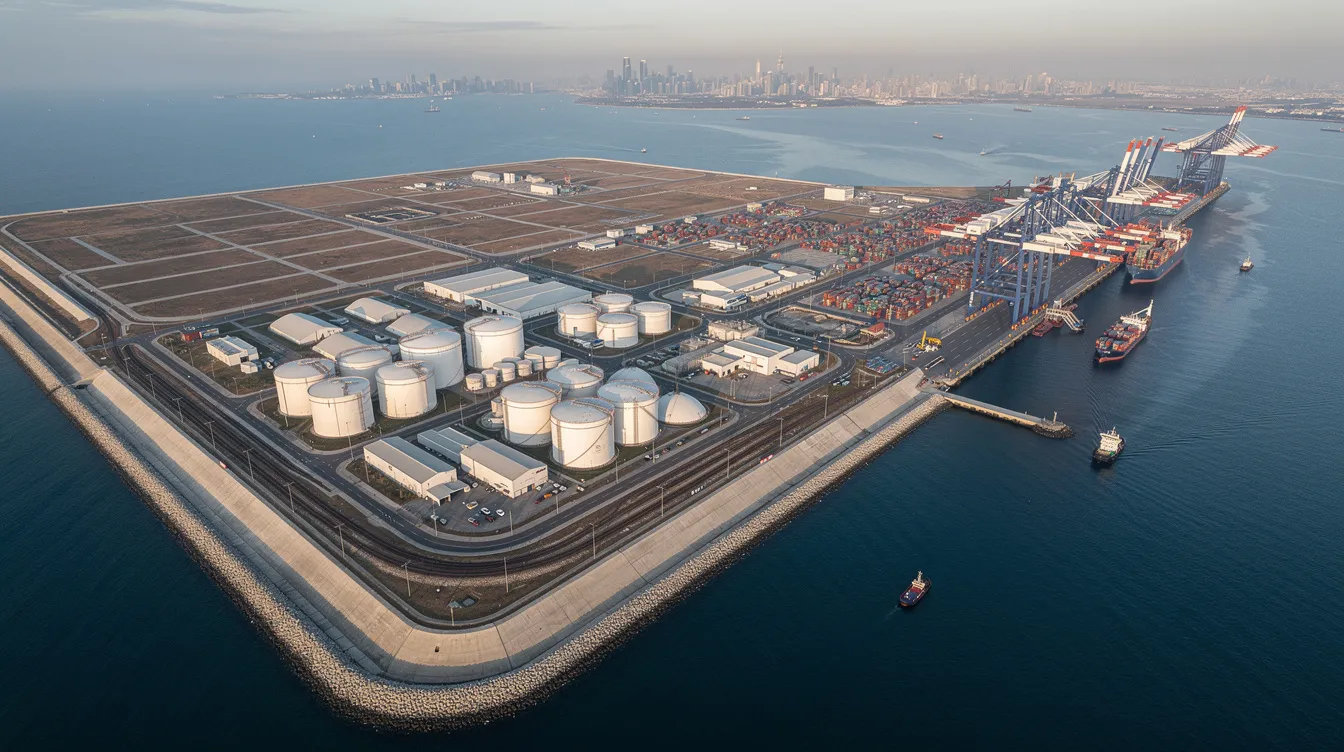
Significant geotechnical challenges exist in reclaimed land development in Jurong and Tuas. The reclaimed land in these areas is characterized by marine clay layers of varying thickness overlain by heterogeneous fill materials – loose sand, hydraulic fill, sandy clay, and sometimes dredged or excavated materials, and parts of pre-development Jurong also included forested and swamp terrain before reclamation. This variability in fill quality and type creates unpredictable bearing capacity and settlement behavior that must be thoroughly understood before any industrial construction begins.
For facilities requiring heavy loading capacity – petrochemical process vessels, crane foundations supporting 500–1,000 tons, tank farms, and heavy industrial buildings – the combination of soft, compressible marine clay and loose fill demands specialized geotechnical engineering approaches to support equipment and foundations reliably. Chemical resistance adds another layer of complexity, as industrial activities expose foundations to acids, hydrocarbons, chlorides, and sulphates that can degrade concrete and corrode reinforcement over decades.
Soil Composition and Bearing Capacity Issues
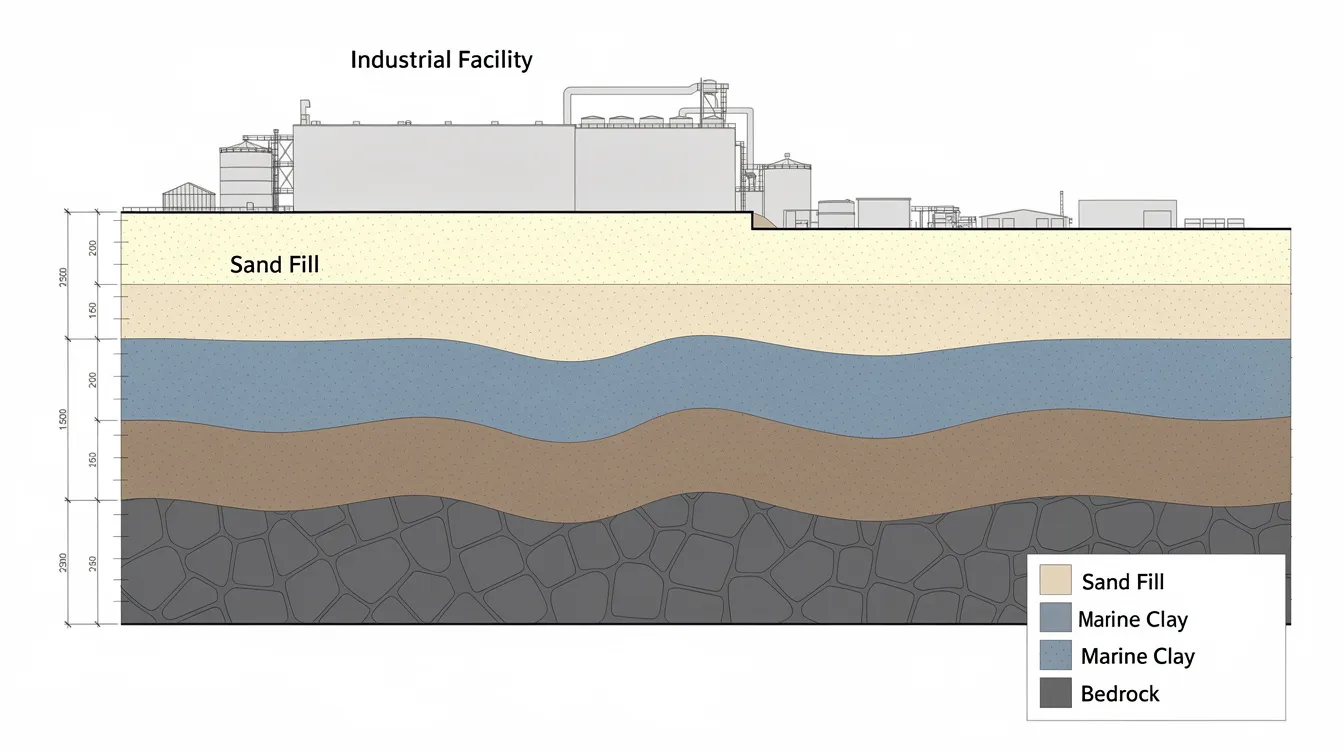
Soft marine clay deposits are prevalent under reclaimed fills in Singapore, and the Jurong and Tuas areas are no exception. Marine clay in these zones typically exhibits very low shear strength, high water content, low effective stress, and slow consolidation rates. Beneath the fill, marine clay thicknesses range from approximately 9 m in southern Tuas View up to 20–30 m or more depending on location, with fill depths reaching up to 30 m in some sectors.
These soil properties have direct implications for industrial loading. Under heavy concentrated loads from equipment, storage tanks, and crane foundations, long-term settlement – including both primary consolidation and secondary compression (creep) – can be substantial. Long-term settlement continues in reclaimed land even after construction, which is particularly problematic for precision equipment and automated systems. For the Tuas Next Generation Port, a residual settlement limit of no more than approximately 40 mm over its 60-year design life has been specified – illustrating how stringent settlement tolerances have become for modern industrial infrastructure.
Geotechnical challenges in the Jurong Formation further complicate foundation design due to variable geological conditions. Sandy fills in loose to medium-dense states require densification to meet cone penetration test (CPT) resistance criteria before they can support industrial structures. Groundwater conditions also affect excavation stability and the durability of infrastructure on reclaimed land, requiring careful assessment during site investigation.
Chemical Contamination and Ground Treatment
Industrial activities across Jurong Island and Tuas – petrochemical processing, chemical manufacturing, fuel storage – introduce chemical hazards that directly affect soil stability and foundation durability. Spills of acids, hydrocarbons, and chloride-rich substances can alter soil properties and attack concrete and steel reinforcement, so contamination control must also address waste handling in petrochemical and manufacturing settings. The low permeability of underlying marine clay can trap contaminants, creating long-term degradation zones around foundations.
Marine salts already present in fill materials and groundwater – particularly chlorides and sulphates – pose inherent risks to concrete durability. Sulphate attack can cause expansive reactions in standard Portland cement concrete, while chloride ingress accelerates reinforcement corrosion and can reduce mechanical performance relevant to foundation design. These chemical interactions influence every aspect of foundation design: concrete mix specification, reinforcement protection (including epoxy-coated or stainless steel bars), minimum cover depths, and the selection of barrier and containment systems.
The relationship between chemical exposure and foundation performance is particularly critical for petrochemical and manufacturing environments where facilities must maintain structural integrity for 30–50 years or more under aggressive conditions. Understanding these soil challenges is what drives the selection of specialized foundation systems and ground treatment methods discussed next.
Specialized Foundation Systems for Heavy Industrial Use Loading
Given the soil challenges outlined above, industrial facilities on Jurong and Tuas reclaimed land require foundation systems specifically engineered for heavy loading, variable subsurface conditions, and chemical exposure. Ground improvement methods often combine several techniques for effective results in industrial developments – a single approach rarely addresses the full range of soil conditions present across a typical site.
Deep Foundation Solutions
Piled foundations are often necessary for structures with strict settlement tolerances, and heavy industrial facilities on reclaimed land almost always fall into this category. Bored piles or drilled shafts that penetrate through the fill and marine clay into competent bearing strata – such as the Jurong Formation or underlying rock – are commonly specified for petrochemical process vessels, large cranes, and heavy manufacturing equipment. Typical pile diameters of 1.0–1.5 m or larger, with lengths of 20–40 m or more, are not uncommon given the depth of soft soils in these areas.
Driven precast concrete piles or steel H-piles serve container handling facilities, heavy warehouses, and manufacturing structures where vibration, noise, and groundwater conditions permit their installation. Their load capacity depends on pile length, cross-sectional area, and soil interaction – particularly the development of shaft friction through marine clay and end bearing on competent strata. Deepwater wharf construction in these areas has also required seabed dredging and deep excavation to reach suitable founding levels.
For facilities with strict structural requirements, the connection between pile design and superstructure loading must be carefully coordinated. Load transfer mechanisms through marine clay layers involve negative skin friction (downdrag) as the clay consolidates under fill weight, which must be accounted for in pile capacity calculations.
Ground Improvement Techniques
Where ground improvement can reduce or eliminate the need for deep piling – achieving substantial cost savings – several proven techniques are deployed across Jurong and Tuas projects.
Vibro-compaction enhances bearing capacity and reduces liquefaction susceptibility in reclaimed sand. For the Jurong Island highway infrastructure project (Areas 3B1/3B4), loose sand fill up to approximately 20 m deep was densified via vibro-compaction across areas of 51,000 to 220,000 m². Target CPT cone resistance values were set at 8 MPa for 0–2 m depth, 12 MPa for 2–8 m, and approximately 17 MPa for depths exceeding 8 m, with relative density targets of 70–80%. Average settlement after compaction was approximately 1.3 m, representing about 7% of the compaction depth. Dynamic compaction also improves soil properties effectively and is used for similar applications in granular fills.
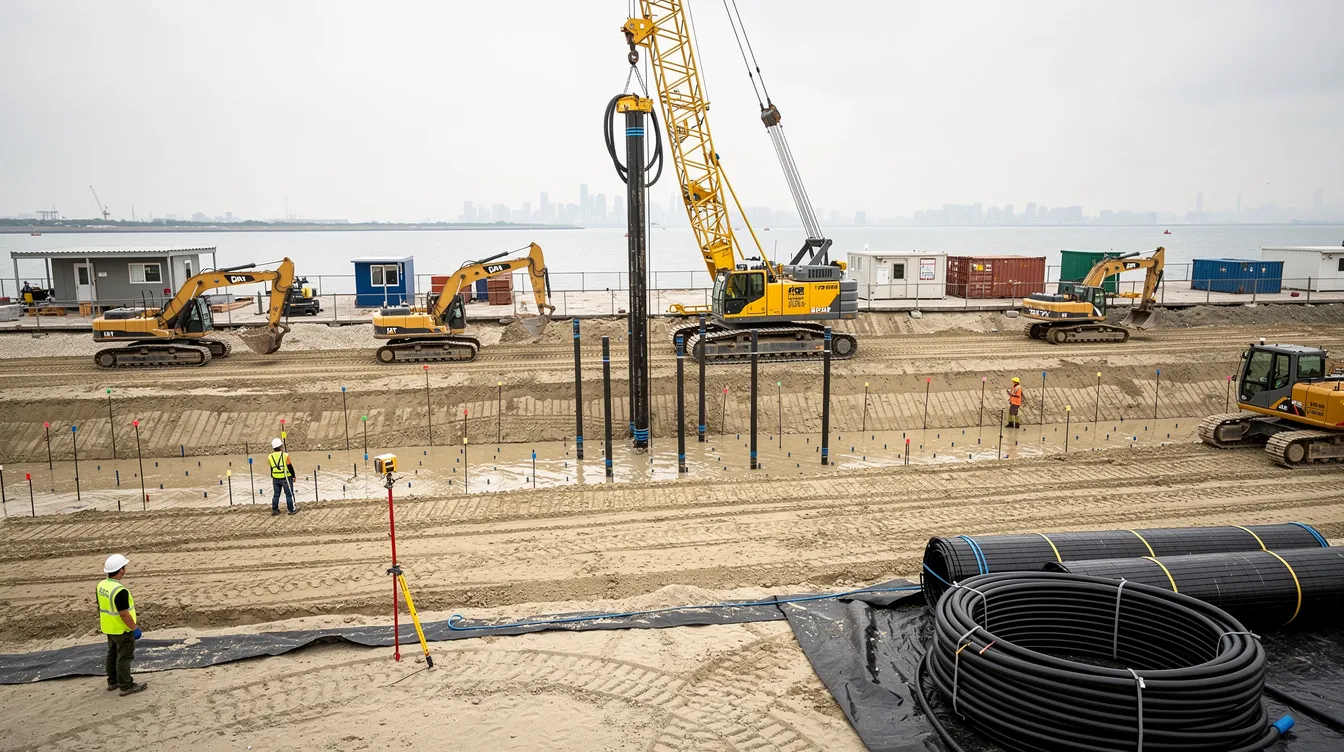
Surcharge preloading with prefabricated vertical drains (PVDs) enhances soil strength and reduces settlement in marine clay zones. PVDs accelerate consolidation by shortening drainage paths within thick clay layers. At the Jurong Shipyard in Tuas View, PVDs were installed to depths of 25–40 m with surcharge heights of approximately 5.6 m across marine clay and sandy clay layers. Tuas Port demonstrates the implementation of extensive soil improvement in reclaimed developments, with preloading and in-situ consolidation strategies being studied to meet the stringent 40 mm residual settlement requirement over 60 years.
Vibro-replacement (stone columns) is a common soil improvement method for moderate-to-heavy loading applications. Stone columns raise bearing capacity and reduce settlement under raft foundations. In Singapore offshore dike applications, columns have been installed to depths of 28 m below sea level in a square grid spacing of approximately 1.78 m, with column diameters of approximately 1.1 m and a replacement ratio of approximately 30%.
Deep cement mixing is used for stabilizing weak soils, particularly very soft marine clay where other methods are less effective. Deep soil mixing is preferred for improving the stability of very soft marine clay that is too cohesive for vibro-compaction. Jet grouting is also effective for soil improvement in construction, providing localized stabilization beneath foundations, tank pads, and equipment footings.
Chemical-Resistant Ground Treatment
Specialized grouting systems – including chemical-resistant cementitious grouts with additives, epoxy, and polyurethane – provide chemical containment and spill protection beneath slab edges, tank basements, and in permeable fill layers. These systems seal fractures and permeable zones that could otherwise become migration pathways for industrial chemicals.
Barrier wall construction methods for petrochemical facility perimeters include sequential diaphragm walls or sheet pile walls with concrete cut-off or synthetic membranes. These isolate contaminated zones and contain spills within bunded areas – a critical requirement for hazardous material storage facilities across Jurong Island.
Concrete durability specifications for chemical environments include sulphate-resisting cement, fly ash, slag, and pozzolanic admixtures; low-permeability concrete mixes; higher minimum cover depths per Singapore Standards exposure classes; and protective coatings at contact zones. Secondary containment systems – bund walls, HDPE or PVC liners beneath ground slabs, and leak detection layers – complete the chemical protection strategy. Shore protection structures are also crucial for reclaimed land stability, particularly at coastal perimeters exposed to tidal and wave action.
Implementation Methods and Regulatory Compliance
Translating foundation solutions and ground improvement designs into executed projects on Jurong and Tuas industrial land requires systematic procedures and careful navigation of Singapore’s multi-agency regulatory framework. Early coordination among geotechnical, structural, and environmental disciplines is essential – especially for heavy industrial developments where chemical containment requirements intersect with foundation engineering.
Civil Engineering Design and Construction Procedures
Comprehensive site investigations are crucial for successful projects on reclaimed land. The following sequence represents the standard implementation pathway:
-
Site investigation and soil testing: Boreholes, CPTs, and laboratory testing (Atterberg limits, water content, oedometer tests, triaxial tests) establish fill depth, marine clay thickness and properties, consolidation parameters, and chemical content (chloride, sulphate, pH). A thorough geotechnical analysis at this stage prevents costly design changes later.
-
Foundation and ground improvement design with PE endorsement: Based on soil investigation results, the design team will lead coordination of foundation systems (deep piles, raft, mat) and ground improvement modules (vibro-compaction, PVD with surcharge, stone columns, deep cement mixing). Chemical exposure class assignment drives concrete mix specification, liner and barrier design, and containment layouts. All designs must be endorsed by a Professional Engineer (PE), including a geotechnical PE where required.
-
Authority submissions to BCA and NEA: Regulatory approvals proceed through BCA’s Building Plan and Piling Gateway submissions (under the CORENET X 3-Gateway Process), NEA’s Industrial Siting Consultation (ISC), and JTC technical reviews where applicable.
-
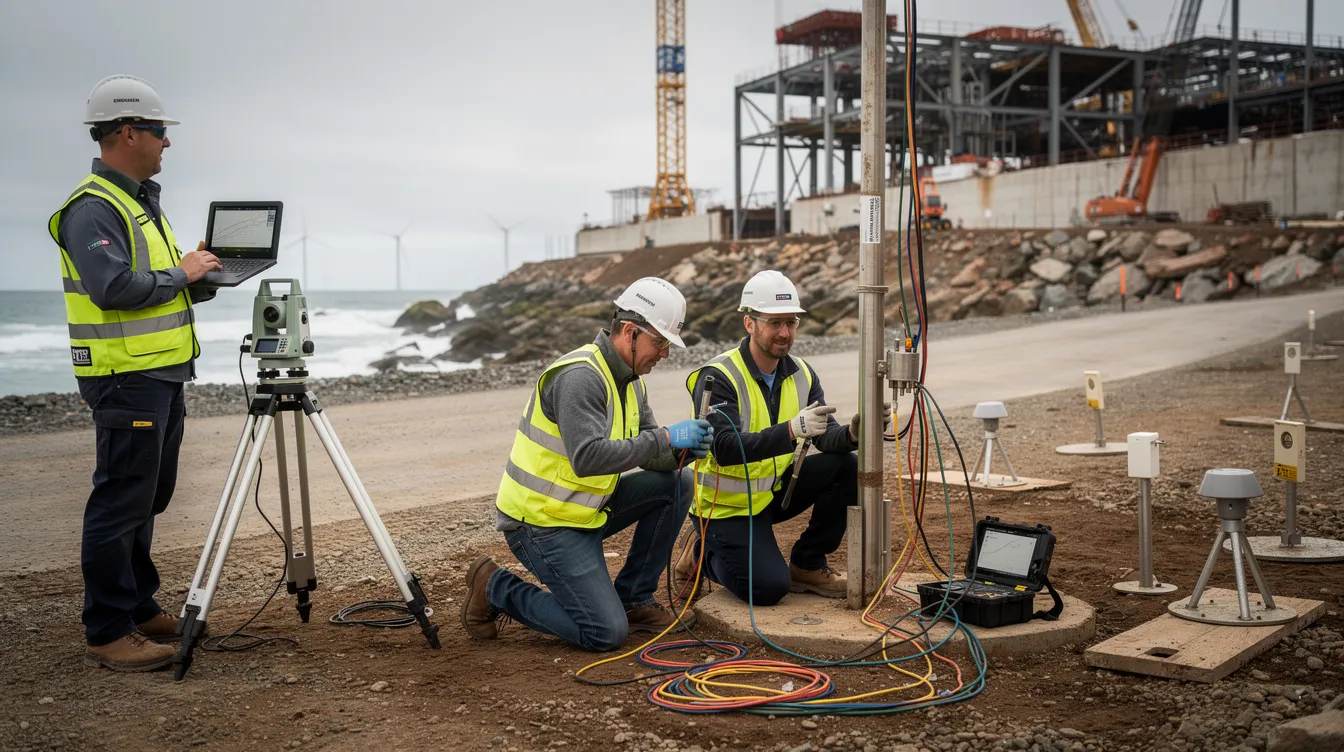
Construction monitoring and quality control: The qualified project team or PE will oversee execution monitoring and quality control to confirm that the works match the approved design intent. During execution, monitoring includes settlement plates, pore pressure sensors, post-improvement CPTs, vibration measurement near buried pipelines, and pile load testing. For chemical treatments, verification covers liner integrity, concrete mix testing, protective coating inspection, and site supervision for compliance monitoring.
-
Authority inspections and completion certifications: Temporary Occupation Permit (TOP) and Certificate of Statutory Completion (CSC) from BCA, plus environmental and pollution control clearances from NEA, require as-built plans, laboratory reports, and compliance documentation.
Authority Submission Requirements
Industrial facilities on reclaimed land must satisfy requirements from multiple statutory boards simultaneously. The table below compares key criteria, submission documents, and typical approval timeframes.
|
Criterion |
BCA (Building & Construction Authority) |
NEA (National Environment Agency) |
JTC (Jurong Town Corporation) |
|---|---|---|---|
|
Key Focus |
Structural safety; foundation design; materials durability (concrete exposure classes for sulphate and chloride); compliance with Building Control Act |
Environmental health; hazardous substance storage and transport; chemical spillage containment; pollution control; industrial siting classification |
Lease conditions; permissible industrial uses; settlement limits; spill containment; setback from marine channels |
|
Submission Documents |
Soil investigation report; structural design drawings and calculations; foundation/pile layout plans; durable materials specifications; PE and accredited checker endorsements; as-built records |
ISC application with process flowcharts and materials lists; pollution control equipment details; environmental information reports; Quantitative Risk Assessment (QRA) if hazardous; geo-environmental assessment where contamination is possible |
Lease plans; industrial use alignment; foundation/ground improvement design reports; durability specifications; spill containment and bunding plans |
|
Typical Timeframe |
Piling Gateway: ~15 working days for independent submissions once complete; full building plan approvals may take several weeks to months depending on project complexity |
ISC: ~7 working days for complete submissions; full environmental clearances required prior to TOP; longer if site surveys or multi-agency coordination needed |
Technical checks aligned with BCA and NEA submissions; additional JTC consent timeframe varies by complexity and land availability |
The recommended submission sequence is: ISC (industrial siting) → BCA Design Gateway → Piling Gateway (foundation-specific) → Building Plan / Structural Plan → Construction Gateway → TOP/CSC and NEA clearances. Budget at least several months for heavy industrial developments requiring ground improvement and chemical containment approvals. This infrastructure project workflow must be planned from the outset to avoid delays.
Common Challenges and Practical Solutions
Projects on Jurong and Tuas reclaimed industrial land consistently encounter several recurring challenges. Stability and monitoring are essential for supporting large-scale port and industrial infrastructure on reclaimed land, and the solutions below draw on hands on experience from completed Singapore projects.
Excessive Settlement Under Heavy Loads
For warehouses, tank farms, and crane foundations on reclaimed land, excessive settlement under heavy concentrated loads remains the primary geotechnical risk. The clear solution is pre-loading with surcharge fills combined with PVD installation to accelerate consolidation in marine clay zones. Consolidation periods of 6–12 months or longer are typically required depending on clay thickness and target degree of consolidation. Stone columns beneath heavy load footings or tank ring foundations provide additional bearing capacity and settlement reduction. For very heavy loads, deep piles transferring load to competent strata remain necessary. Throughout the consolidation period, monitoring of settlement plates, inclinometers, and piezometers is essential to verify that design predictions are being met and to refine loading schedules.
Chemical Spill Protection Requirements
Chemical spill containment on industrial reclaimed land requires impermeable liner systems (HDPE geomembranes) and secondary containment design meeting NEA guidelines for hazardous substance management. Bunded areas with waterproof concrete slabs, integrally sealed joints, and drainage systems for leak detection form the primary defense. Barrier walls around facility perimeters prevent lateral migration of contaminants through permeable fill layers. Concrete in contact with aggressive substances must meet the appropriate exposure class with sufficient cover depth, and periodic inspections of containment integrity should be scheduled throughout the facility’s operational life.
Facility Expansion on Existing Foundations
Brownfield upgrades on existing reclaimed land foundations – adding process units, expanding storage capacity, or increasing crane loading – present unique challenges. Underpinning methods including micropiles beneath existing slabs or foundations, load transfer platforms, and upgraded ground improvement adjacent to existing structures enable capacity increases without demolition. Work must be carefully phased to control differential settlement between new and existing foundation zones. Soil-structure interaction analysis is critical for understanding how additional loads redistribute through existing improved ground. Because reclaimed land under marine clay continues to creep, long-term monitoring of settlement, tilt, and differential movements must continue well beyond construction completion – particularly for precision equipment and automated systems.
Conclusion and Next Steps
Industrial development on Jurong and Tuas reclaimed land demands integrated geotechnical solutions that address variable fill conditions, thick marine clay deposits, heavy industrial loading, and aggressive chemical environments simultaneously. The history of land reclamation in these areas unfolded in four phases – from Jurong’s early reclamation in the 1960s, where fill earth was obtained from local hills, through the June 1972 approval for 450 ha of foreshore reclamation at Jurong, as reported by the Straits Times, the merging of seven southwestern islands to form Jurong Island, and the reclamation of a total of 2,880 ha in Tuas from 1982 to 1999 – creating a vast industrial landscape tied to Singapore’s wider industrial growth in Asia and broader regional engineering experience across Malaysia, China, and Australia that continues to evolve with the Tuas Next Generation Port reclamation works planned through 2040. Pulau Ayer Merbau, merged with five islets between 1976 and 1977, and the reclamation of southwestern islands that began in the late 1960s are part of this broader transformation. Each generation of reclaimed land brings new fill compositions and new engineering challenges.
Emerging trends – including alternative fill materials such as dredged and excavated materials and incineration bottom ash, digital twin modelling for long-term settlement prediction, and BCA’s Building Innovation Panel supporting adoption of novel grouts, liners, and smart monitoring technology – are reshaping how geotechnical solutions are designed and delivered. Research at the National University of Singapore on in-situ consolidation and novel creep models is directly informing design approaches for the next generation of industrial facilities.
To move your project forward:
-
Conduct a preliminary geotechnical assessment – engage qualified specialists to perform soil investigation including boreholes, CPTs, and chemical testing to characterize your site’s specific fill and marine clay profile
-
Engage PE-qualified geotechnical and structural consultants from the right engineering company or consultancy team with strong interest and hands on experience in Singapore’s reclaimed industrial zones to develop foundation and ground improvement designs
-
Initiate authority pre-consultation – coordinate early with BCA, NEA, and JTC to clarify submission requirements, sequencing, and any site-specific conditions before committing to detailed design
For further reading, explore facility-specific design considerations for different civil engineering project types in Singapore, long-term monitoring systems for reclaimed land, and geotechnical consultancy approaches that integrate slope stability assessment, instrumentation planning, and regulatory management from project inception through completion.