Introduction
A q4 tender season technical submission checklist for contractors is the single most reliable tool for surviving October–December without a disqualification letter. In Singapore, Q4 is when government ministries, statutory boards, and private developers rush to release and close tenders before year-end budget and capex cut-offs. The result is a compressed, high-stakes window where overlapping deadlines, limited PE availability, and holiday office closures punish any gap in your technical submission.
This article provides a practical, step-by-step tender submission checklist built for contractors bidding on commercial building and infrastructure projects in Singapore’s Q4 2026 season. The focus is squarely on the technical side-design documentation, method statements, programmes, compliance evidence, and digital file readiness-rather than pricing or bill of quantities. All regulatory references are Singapore-centric, covering BCA, URA, SCDF, LTA, PUB, and NEA requirements, including the expanded CORENET X mandates now in effect.
A complete Q4 technical submission should include design and engineering documentation with current PE endorsements, project-specific method statements, a realistic construction programme with resource evidence, compliance and safety plans mapped to relevant authorities, and verified digital files uploaded well ahead of the deadline. A technical submission checklist ensures compliance, competitiveness, and professionalism in proposals-and prevents the kind of last-minute firefighting that costs bids.
By working through this guide, you will gain:
-
A structured five-pillar checklist covering every component evaluators expect in a commercial project tender.
-
A repeatable pre-submission review process you can run 48–72 hours before any deadline.
-
Reduced risk of non-compliance rejections from authorities and clients through systematic coverage.
-
Clear guidance on coordinating with consultants for last-minute PE endorsements and design reviews.
-
Awareness of the most common Q4 pitfalls and concrete actions to avoid them.
Understanding Q4 Tender Season for Contractors
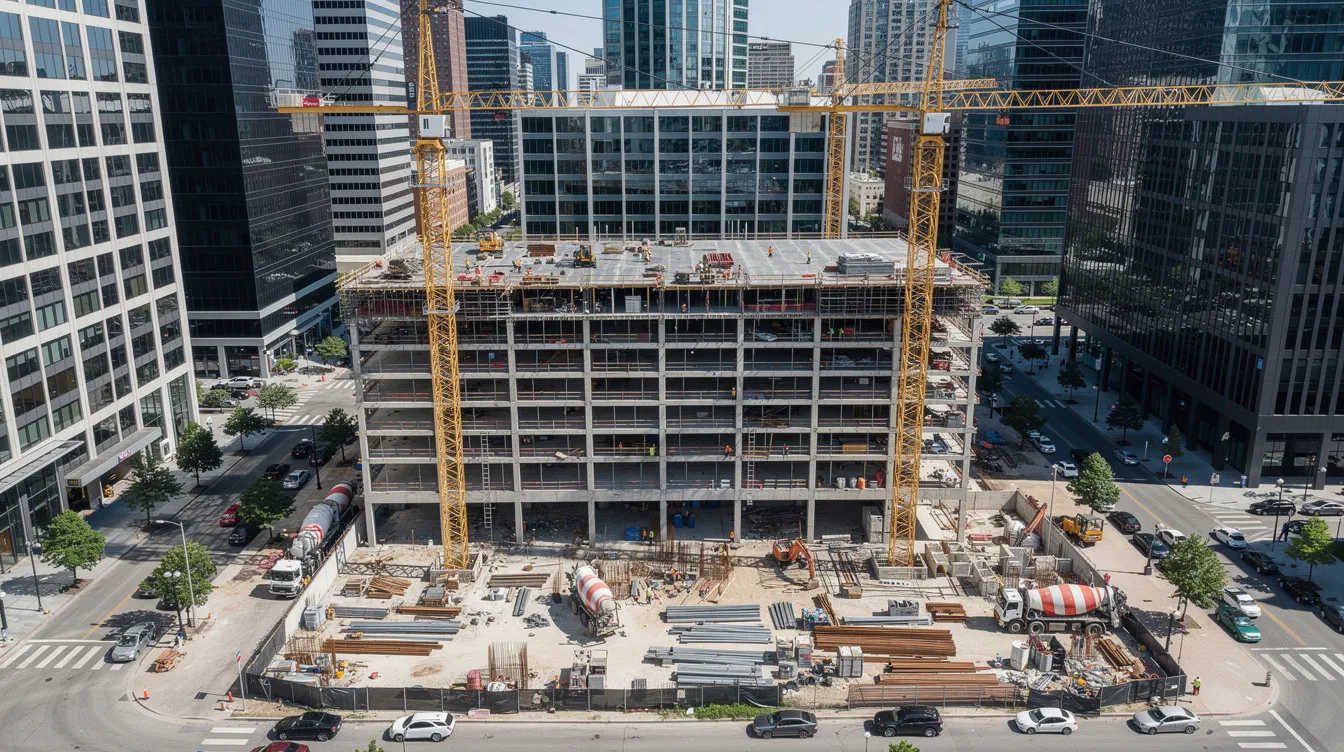
Q4 tender season-October through December-is the period when Singapore’s construction procurement calendar reaches peak intensity. Many agencies and developers finalise their spending before the financial year closes, releasing a surge of tenders that must be evaluated and awarded quickly. For contractors, this means more opportunities but far less room for error in every submission.
The intensity of these overlapping deadlines magnifies the impact of errors or incomplete technical submissions. Agencies processing large volumes of bids have less buffer time for queries or requests for resubmission. A missing stamp, an expired certificate, or a non-compliant file format that might prompt a clarification request in a quieter quarter can result in outright disqualification during Q4. Late submissions are disregarded under current regulations, and under procurement law offers may be accepted only within the stated receipt period, leaving the bidder responsible for timely delivery.
What Makes Q4 Tenders Different?
Several patterns make Q4 fundamentally harder than other quarters. Timelines are compressed: invitation-to-tender periods that might run six weeks in Q1 are squeezed into four. Multiple tenders close in the same week, forcing bid teams to split attention across concurrent proposals. Q4 tendering is affected by year-end project rushes and resource constraints, with the same pool of PEs, QPs, and specialist subcontractors being pursued by every bidder simultaneously.
In 2026 specifically, the working window is tighter than usual. Deepavali falls on Sunday 8 November with Monday 9 November observed as a public holiday in many organisations. Christmas Day on Friday 25 December effectively wipes out the last week of the year. Consideration of year-end deadlines and procurement lead times is vital during Q4 submissions-contractors who don’t build buffer days into their schedules for PE endorsements, document finalisation, and portal uploads will find themselves scrambling.
Competition for large commercial and industrial projects released before the next financial year also intensifies. Evaluation panels become stricter on compliance because they can afford to be: with more bidders submitting, any non-conforming offer is an easy elimination. The checklist prevents disqualification due to non-conforming offers during Q4. That higher tempo and stricter scrutiny make a structured tender submission checklist not just useful but essential.
What Counts as a “Technical Tender Submission” (vs Financial Offer)?
In the tender context, a technical submission encompasses all non-price deliverables that demonstrate a contractor’s capability, methodology, and compliance. This includes method statements, construction programmes, design reports, temporary works concepts, manpower and plant schedules, safety and quality plans, and BIM models. Technical submissions should address specific client objectives and site constraints clearly-generic boilerplate is easily spotted by experienced evaluators and scored accordingly.
The financial offer, by contrast, covers pricing summaries, rate breakdowns, and the bill of quantities. While price matters, the technical submission is what determines whether your bid is even evaluated on cost. Many tender evaluation frameworks score technical and financial components separately, with minimum technical thresholds that must be met before the price envelope is opened.
This article focuses entirely on the technical components that drive compliance and technical scoring. Understanding these components allows contractors to build a structured checklist covering each area-which is exactly what the next section delivers.
Core Components of a Q4 Technical Tender Submission Checklist
A strong Q4 checklist must cover five pillars: design documentation, construction methodology, planning and resources, compliance and safety, and submission logistics. Each pillar addresses a distinct area that evaluation criteria typically weight, and weakness in any single pillar can undermine an otherwise strong bid.
The following subsections break down each pillar into concrete checklist items that bid teams can apply directly to commercial project tenders closing in Q4 2026.
Pillar 1: Design and Engineering Documentation
Tender designs must align with Singapore codes and client specifications from the outset. For commercial projects, this means demonstrating that your proposal is not just conceptually sound but practically buildable within the regulatory framework that BCA, URA, and SCDF enforce. Submissions should incorporate the latest revisions and client-issued amendments-working from outdated documents is one of the fastest routes to a non-compliant bid.
Checklist items:
-
Architectural drawings: Verify latest revisions, clear title blocks with drawing numbers, revision dates, scales, and full alignment with Employer’s Requirements. For projects requiring BCA plan submission, title blocks must carry QP or Architect stamp, practising certificate number, and digital signature.
-
Structural design basis: Include a summary of design codes used (Eurocodes, SS EN), imposed loads, soil parameters from geotechnical investigations, and key assumptions. All structural calculations must be endorsed by a PE registered in the correct discipline.
-
M&E schemes: One-line diagrams, HVAC zoning, lighting and power layouts, standby generator provisions, and fire protection schematics compatible with SCDF requirements. Refer to your M&E engineering submission steps for the full scope.
-
Temporary works concepts: Preliminary designs for deep excavations, facade retention, lifting operations, hoarding, and scaffolding. Under LTA Engineering Group requirements, all temporary works must be designed to their working life, use compliant materials, and be independently checked. Engage a temporary works design consultant where required.
-
Professional endorsements: Verify which drawings and reports require a Singapore-registered PE or Architect stamp and signature. Only PEs with valid Practising Certificates in the correct discipline may endorse statutory submissions. For overseas designs, a local PE must perform verification and assume professional liability. Leave explicit buffer days for endorsement-at least 5 working days before your internal freeze date.
-
Coordination records: For complex commercial projects, provide clash-free layout evidence such as BIM coordination screenshots or model clash reports. For projects meeting CORENET X thresholds, cross-disciplinary coordination models must use the IFC+SG format.

Pillar 2: Construction Methodology and Sequencing
Clear, pragmatic method statements are heavily weighted in technical evaluations, especially for inner-city or brownfield commercial sites where logistics constraints are severe. Evaluators want to see that you have thought through the how, not just the what.
Checklist items:
-
Project-specific method statements for major trades: piling, superstructure, facade installation, M&E installation, testing and commissioning. Generic boilerplate is penalised. For guidance on structure and content, see these construction method statement examples.
-
Site logistics plan: Access routes, crane locations, material laydown areas, hoarding lines, and traffic management aligned with LTA expectations. LTA requires Traffic Control Plan submissions approximately 45 working days before implementation-reflect this lead time in your proposal.
-
Sequencing narratives for critical activities, with references to design constraints such as existing structures, operating tenants, and adjacent properties. Show that your sequence accounts for real-world conditions, not textbook assumptions.
-
Temporary works and safety-critical steps integrated directly into method statements: shoring sequences, formwork cycles, lifting plans with load charts. The technical submission should include a clear project delivery plan and risk management strategies for these high-risk activities.
-
Photographs or diagrams of similar completed projects to evidence constructability and experience. These should be clearly labelled with project name, date, and scope description.
Pillar 3: Programme, Resources, and Capacity
In Q4, evaluators scrutinise whether contractors can realistically commit resources while handling multiple concurrent tenders and projects. Overpromising here is a red flag that experienced evaluation panels will catch immediately.
Checklist items:
-
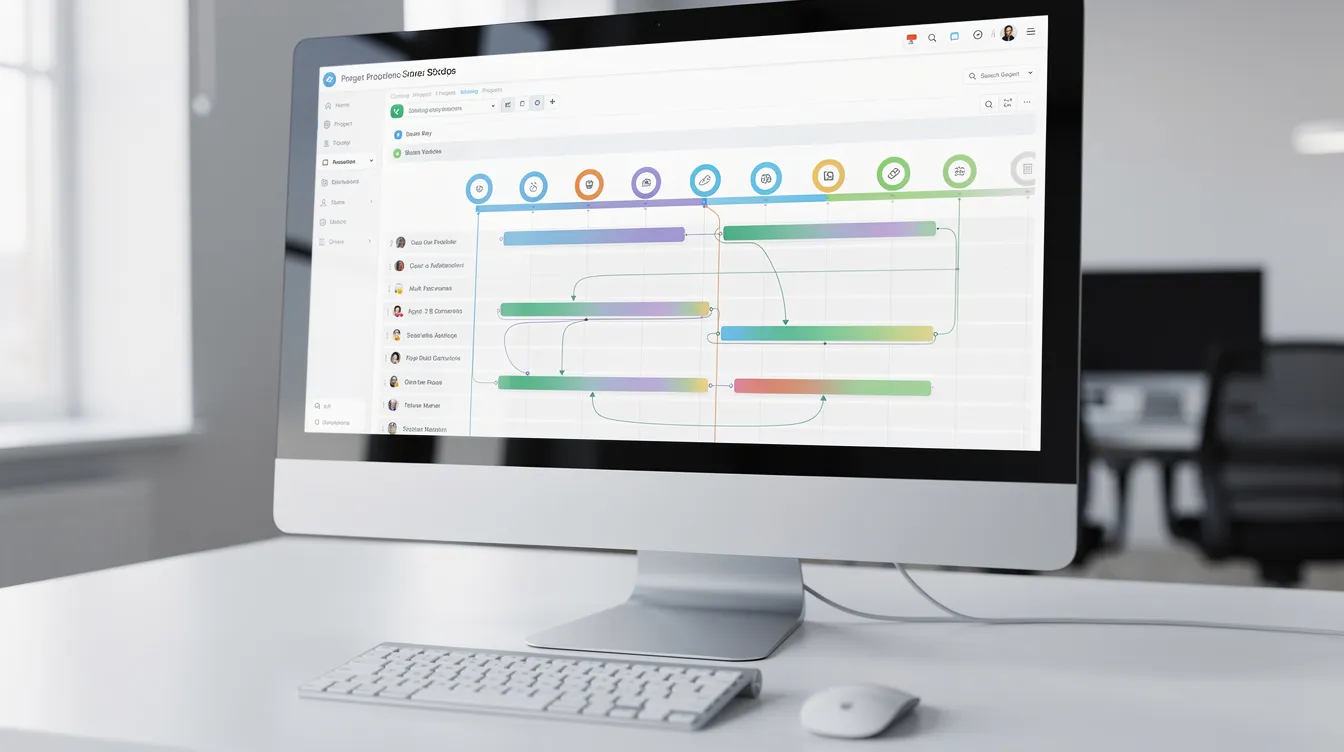
Construction programme (Primavera or MS Project Gantt chart) aligned with the client’s milestone dates and showing float on critical path items. Include milestones for major authority approvals at Design Gateway and Construction Gateway stages under CORENET X.
-
Resource histograms or tables for manpower, cranes, hoists, and key equipment, mapped to programme phases. Careful resource and manpower planning is essential to demonstrate project delivery capacity.
-
Named key personnel: PM, CM, RE, Safety Officer with CVs highlighting similar commercial or industrial projects in Singapore. Contractors must prove team availability during the holiday period-confirmed availability of personnel and subcontractors ahead of Q4 deadlines is crucial.
-
Subcontractor strategy: Letters of intent or indicative support from major subs (piling, facade, M&E) to prove delivery capacity. If subcontractors are overseas, reflect how their work will be PE-endorsed to meet local code requirements.
-
Contingency strategies for common Q4 risks: wet-weather monsoon periods, material lead times near year-end, factory shutdowns over Christmas and Chinese New Year. Supply chain disruptions can occur due to year-end inventory closures and shipping delays-your plan should acknowledge and address this.
Pillar 4: Compliance, Safety, and Quality
Many technical disqualifications arise from missing certifications or misaligned safety and quality documentation. All certifications and compliance documents must be current to avoid disqualification-an expired bizSAFE certificate or lapsed PE Practising Certificate can eliminate an otherwise strong bid.
Checklist items:
-
Statutory compliance mapping: A compliance matrix helps track tender requirements. Build a brief matrix showing which elements need URA, BCA, SCDF, LTA, PUB, or NEA attention, even at tender stage. For a comprehensive authority approval list, cross-reference early.
-
WSH plan summary aligned with MOM and BCA requirements, with project-specific risk assessments for high-risk work including deep excavation, lifting, facade works, and demolition. Quality assurance plans should include risk identification and inspection testing procedures.
-
Environmental management proposals: Noise control, dust mitigation, waste handling, and runoff control for urban commercial sites, ensuring NEA compliance.
-
Quality management plan excerpts: ITPs (Inspection and Test Plans) for structural, architectural, and M&E works, referencing ISO 9001 certifications and bizSAFE levels held by the contractor. A robust quality control and compliance process improves submission reliability.
-
Track record evidence: MOM incident statistics (lost-time incidents per million man-hours), safety awards, and defect rates from past projects, presented in a clear, verifiable format.
Pillar 5: Submission Logistics and Digital File Readiness
Most tenders now require portal submissions-GeBIZ, client portals, or CORENET X-with strict file requirements. Proper formatting, naming conventions, and document control are necessary for compliance. Getting the technical content right means nothing if the file fails to upload.
Checklist items:
-
File naming convention aligned with tender instructions (project code, package, revision number) with one standard format across the entire bid team.
-
Format and size checks: Confirm PDF versions, locked/unlocked requirements, maximum file size per upload, and drawing resolution. For BIM e-submission requirements, verify IFC+SG compliance for projects with GFA ≥ 5,000 m².
-
Version control: One “final technical set” folder frozen 48–72 hours before closing, with a change log for any late amendments. No substantive technical changes should be made after files are frozen without a complete re-review.
-
Portal dry run: Test upload at least one working day before the deadline to verify credentials, access rights, and upload speed. Upload at least one day before the deadline-portal congestion on closing day is common and unforgiving. Late offers are disregarded under current regulations, and under the new law taking effect in early January 2027, offers may be accepted only within the stated receipt period.
-
Backup plan: Mirrored copies on a second device (local and cloud), and a designated alternate uploader in case of absenteeism in late December. Include a bank guarantee letter in the submission if required by tender instructions.
With all five pillars addressed, the next step is turning them into a repeatable, chronological process that your bid team can execute under Q4 time pressure.
Building a Step-by-Step Q4 Technical Pre‑Submission Process
The five pillars above define what needs to be in your tender submission. This section defines when and how to assemble it-a chronological procedure with timing anchors calibrated for Q4 2026 deadlines when every working day counts.
Recommended Review Procedure for Each Tender
Mid-sized contractors handling two to four concurrent Q4 bids can adapt the following six-step process for each major tender. The timing anchors (T minus working days) should be adjusted based on submission complexity, but the sequence should not be compressed below these minimums.
-
Initial scoping (T‑14 to T‑10 days): Identify all technical requirements from the invitation to tender, evaluation criteria, and mandatory submissions. Map each requirement to the responsible team member. Flag any items requiring external support-PE endorsements, specialist method statements, BIM modelling.
-
Draft consolidation (T‑9 to T‑5 days): Gather inputs from design consultants, internal engineering teams, and key subcontractors. Compile all design documents, method statements, programme files, and compliance certificates into a single working folder. Check for arithmetic errors in financial offers running in parallel.
-
Internal technical review (T‑5 to T‑3 days): Discipline leads (structural, M&E, planning, safety) check their portion against the checklist. Each lead confirms that their section addresses specific client objectives and site constraints. Independent reviews and audits are essential before tender submissions-reviewers should not be authors of the tender.
-
Independent “fresh eyes” review (T‑3 to T‑2 days): A non-author reviewer verifies completeness, consistency, and alignment with tender instructions. Final reviews occur 48 to 72 hours before deadlines. Independent reviewers should check the final proposal-a final review checks for errors not covered by compliance matrices.
-
Final sign-off and packaging (T‑2 to T‑1 days): Directors or authorised signatories approve. PE and Architect endorsements confirmed with valid stamp and digital signature. Files frozen-no further changes without full re-review and re-endorsement.
-
Upload and verification (T‑1 day minimum): Upload all technical files to the designated portal. Download confirmation receipts or take screenshots. Verify that the complete submission appears correctly in the portal listing. Keep a simple log of all uploaded files: file name, size, timestamp.
Using AEC Technical Advisory as a Technical Partner
External consultants can materially strengthen a contractor’s Q4 submission, especially when internal teams are stretched across multiple concurrent bids. Here is where AEC Technical Advisory typically supports contractors under time pressure:
-
Tender design support: Structural and M&E tender designs, constructability review, temporary works concepts, and value engineering options to differentiate your proposal.
-
Authority submission insights: Early guidance on BCA, URA, and SCDF expectations to align tender proposals with approval pathways. Understanding common pitfalls in authority plan submissions before you submit can eliminate costly rework.
-
PE endorsements: Process and lead time needed for signing structural calculations, temporary works, or fire safety layouts. Ten working days are allowed to fix missing certificates in some frameworks, but relying on this grace period during Q4 is risky. Review the PE endorsement checklist early.
-
Independent technical review: Acting as a third-party reviewer for method statements, programmes, and design documentation-providing the “fresh eyes” that internal teams may lack in a busy quarter.
Pre-book Q4 slots with consultants by early October rather than waiting until the final week before submission. PE and QP availability drops sharply in November and December.
Comparing Ad‑Hoc vs Checklist‑Driven Submissions
The difference between an unstructured approach and a checklist-driven one becomes most visible under Q4 pressure.
|
Criterion |
Ad‑Hoc Approach |
Checklist‑Driven Approach |
|---|---|---|
|
Compliance risk |
Higher risk of missing mandatory items; reliance on individual memory |
Systematic coverage of all requirements against a documented standard |
|
Team coordination |
Duplicated or conflicting documents across disciplines |
Clear allocation of responsibilities with version-controlled deliverables |
|
Time pressure in Q4 |
Last-minute firefighting; errors discovered at upload |
Earlier detection of gaps; fewer emergencies before the deadline date |
|
Perceived professionalism |
Disjointed format, inconsistent title blocks and naming |
Unified, polished technical package that signals credibility to bidders and evaluators |
During Q4, the structured approach is a competitive advantage, not just an administrative tool. When evaluation panels are processing dozens of submissions under time pressure, a well-organised, complete technical package stands out immediately.
Common Q4 Technical Submission Pitfalls and How to Avoid Them
Many lost tenders are not due to price but to preventable technical or compliance errors that multiply under year-end rush conditions. These are the mistakes AEC Technical Advisory sees repeatedly in Singapore commercial project tenders-and the concrete fixes for each.
Pitfall 1: Missing or Expired Certificates and Endorsements
Outdated bizSAFE or ISO certificates, expired PE Practising Certificates, or unsigned drawings are among the most common reasons for technical non-compliance. Overseas PEs who lack local registration or a valid PC cannot provide accepted endorsements for Singapore statutory submissions.
Preventative actions:
-
Maintain a central register of corporate and individual certifications with expiry dates. Set renewal reminders at least 60 days before expiry, well ahead of Q4.
-
Run a pre-Q4 audit (by early October) to ensure all frequently requested certificates are current, scanned, and filed in a shared drive accessible to the bid team.
-
Allocate specific responsibility to a bid coordinator for checking endorsement completeness before final upload. No document should leave the office without verified stamp and signature status.
Pitfall 2: Non-Aligned Drawings and Descriptions
Inconsistencies between architectural, structural, and M&E drawings-or between method statements and the drawings they reference-undermine technical scores and signal poor coordination. An architect’s floor level that doesn’t match the structural plan, or an M&E layout that clashes with structural slabs, tells evaluators that the contractor hasn’t done basic coordination.
Preventative actions:
-
Assign a “document integrator” to cross-check key dimensions, levels, and systems across all disciplines before the review freeze date.
-
Use a frozen set of background drawings for all disciplines one week before submission to minimise late coordination clashes.
-
Run at least one interdisciplinary review (architectural, C&S, M&E, safety) focused purely on alignment-not detailed design debates. This is separate from the technical content review.
Pitfall 3: Over-Optimistic Programme and Resource Claims
Some bids promise unrealistic completion times or manpower levels that experienced evaluators immediately recognise as impractical. A programme showing zero float on critical activities, or a resource histogram claiming equipment availability that exceeds the contractor’s known fleet, invites scepticism.
Suggested solutions:
-
Benchmark tender programmes against similar completed projects in Singapore, adjusting for specific site constraints and authority permit lead times.
-
Have planning engineers validate all key durations and resource levels instead of leaving schedules solely to bid managers focused on winning the work.
-
Include short explanatory notes for critical durations to show that the programme is thought through, not arbitrary. Reference realistic authority review timelines-NEA’s QRA service standard, for example, provides first-round consolidated comments in 15 working days.
Pitfall 4: Ignoring Authority and Stakeholder Interface Requirements
Common oversights include underestimating LTA approvals for works near MRT lines, SCDF requirements for fire engine access and hydrant layouts, URA heritage or conservation facade constraints, and NParks tree preservation orders. Ignoring these early in design leads to required redesigns or outright rejection at gateway stages.
How to avoid:
-
Integrate an “Authority Interface” sub-checklist: identify all likely authority touchpoints early in the tender using a project submission requirements guide.
-
Consult with AEC Technical Advisory or a similar firm for quick feasibility checks on tricky issues-fire engine access to inner-city sites, basement excavation near public roads, or facade retention on conservation buildings.
-
Reflect realistic durations for authority clearances in the tender programme. Under CORENET X, agencies may take up to 20 working days for Written Directions at gateway stages. Do not assume instantaneous approvals.
Pitfall 5: Last-Minute Portal or File Issues
Failed uploads on the deadline evening, corrupted PDFs, proprietary file formats not accepted by the portal, or BIM models exceeding size limits-these scenarios are entirely preventable but occur with alarming regularity during Q4. Late offers are disregarded once the stated receipt period closes under procurement law, with no exceptions for technical difficulties.
Preventative measures:
-
Plan for upload at least one working day before the deadline, especially for tenders closing in late December when offices are running skeleton crews.
-
Run a “test export” day to confirm all large drawings and BIM files can be opened on a standard viewer and meet portal size limits. For projects requiring CORENET X submission, as of 23 July 2026, IFC+SG BIM format is mandatory for projects with GFA ≥ 5,000 m²-verify compliance well before the deadline.
-
Keep a simple log of all uploaded files (file name, size, timestamp) and screenshots of the submission confirmation page. This sample record protects you in any dispute about what was submitted and when.
Conclusion and Next Steps
In Q4, success hinges on disciplined technical submission processes, not just competitive pricing. The contractors who win are those who treat the tender submission as an engineered deliverable-planned, reviewed, and quality-checked with the same rigour as a construction programme. The five-pillar checklist-design, methodology, programme and resources, compliance and safety, and submission logistics-should be standardised as a checklist template across all tenders your firm pursues.
Practical next steps for Q4 2026:
-
By early November 2026: Set up or refine your internal Q4 technical submission checklist, incorporating company-specific and client-specific requirements for each active bid.
-
Schedule a pre-Q4 audit of certificates, PE endorsements, and template method statements. Confirm that all corporate credentials (bizSAFE, ISO, PE Practising Certificates) are current and accessible.
-
Identify 1–2 high-priority tenders where engaging AEC Technical Advisory for design review, PE endorsement, or independent technical review can meaningfully strengthen your technical score.
-
Train your bid team on the upload and verification process, using a non-critical submission as a dry run before the critical December deadlines hit.
Related topics worth exploring next include detailed authority submission planning, value engineering strategies for commercial projects, and temporary works design for complex urban sites.
Additional Resources, Practical Checklists, and How to Share This Document
This section offers optional reference material to complement the core checklist above.
Suggested resources:
-
2 pages printable “Q4 Technical Submission Checklist” summarising the five pillars in tick-box form, suitable for pinning above each bid manager’s desk.
-
Sample method statement structure for a Singapore commercial building project, annotated with reviewer tips-see construction method statement examples for a starting point.
Illustrative visuals to include in your internal package:
-
Annotated programme screenshot showing critical path, authority milestone dates, and float allocation across monsoon months.
-
Site logistics plan visual with labelled crane positions, access routes, material laydown zones, and safety exclusion areas.
-
Example of a properly stamped structural drawing title block with PE signature, Practising Certificate number, and revision date clearly visible.
Key regulatory references:
-
BCA plan submission requirements for building works and structural plans.
-
CORENET X submission workflows and typical submission packages for gateway processes.
-
CORENET X agency list for coordinated submissions across BCA, URA, SCDF, LTA, PUB, and NEA.
For contractors who want a customised Q4 2026 technical submission review package-including PE endorsement scheduling, design review, and authority compliance checks-contact AEC Technical Advisory directly to secure capacity before the November rush.
found this document useful