
The role of pub in construction is defined by its dual function as both a regulated built environment asset and a measurable unit of social infrastructure within development projects. Construction professionals in Singapore increasingly encounter pubs not as peripheral hospitality venues but as protected community anchors that shape planning approvals, design decisions, and stakeholder engagement. International research from the UK and Australia now provides data frameworks that Singapore developers can apply directly to mixed-use and urban redevelopment projects. Understanding how pubs operate within construction contexts reduces approval delays, strengthens community relations, and improves project outcomes.
What is the role of pub in construction projects?
Pubs function as social infrastructure within construction and infrastructure projects, not merely as commercial tenants. The industry term for this classification is “community social infrastructure,” a designation that carries regulatory weight in planning submissions and redevelopment proposals. When a construction project affects a pub, the developer must account for its social, economic, and community functions, not just its physical footprint.
The economic case for this classification is substantial. Average UK pubs contribute up to £1.3 million annually in combined economic and social value, including local supplier spending and wages. That figure means a single pub closure during a construction project can remove a significant economic node from the surrounding community, a fact that planning authorities weigh seriously.
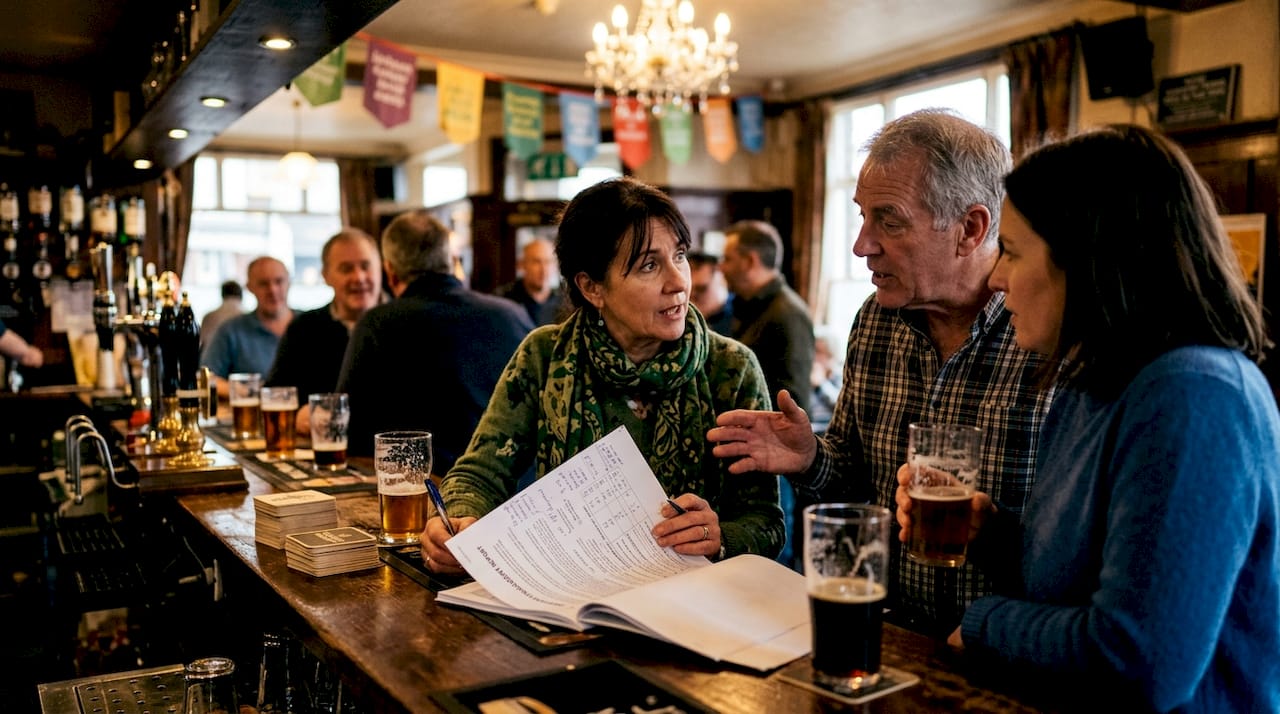
Pubs also generate measurable social value through the Community Engagement Index (CEI), a data-driven tool that quantifies their function relative to other community venues. Pubs contribute an estimated £142 million in social value per annum across the UK sector. The CEI gives developers and planners a concrete metric to include in planning submissions, replacing subjective arguments about community benefit with auditable data.
The importance of pubs in construction planning extends to mental health and social cohesion outcomes. Pubs serve as reliable hubs for social interaction, particularly in urban neighborhoods undergoing redevelopment. Construction projects that displace or damage these venues without mitigation plans face community opposition that can stall approvals for months.
How do planning regulations treat pubs in construction?
Planning frameworks in multiple jurisdictions now formally protect pubs as cultural, economic, and community anchors. London planning policies seek to safeguard pubs of exceptional heritage or community importance while enabling adaptable reconfiguration for operational sustainability. The challenge for developers is that protection and flexibility pull in opposite directions during construction planning.
Singapore’s regulatory context adds further complexity. Submissions to the Urban Redevelopment Authority (URA) and the Building and Construction Authority (BCA) require developers to demonstrate how mixed-use projects preserve or enhance community functions. Pubs and similar licensed premises within development zones fall under this scrutiny. The Singapore architecture planning guide outlines how social infrastructure considerations integrate into URA compliance workflows for 2026.
Four regulatory factors consistently affect pub-inclusive construction projects:
- Heritage listing. Modifications to listed pubs require heritage-specific consents beyond standard building regulations, significantly complicating construction timelines. Adding outdoor structures, even temporary ones like domes or canopies, triggers listed building consent processes.
- Liquor licensing alignment. Planning approvals and liquor licensing operate under separate regulatory systems. Changes to a pub’s physical layout, such as extending outdoor seating, can require both a planning amendment and a liquor license variation, creating parallel approval tracks that extend project timelines.
- Social infrastructure evidence. Councils increasingly require developers to prove community employment and local supplier spending before approving pub redevelopment. Financial metrics alone no longer satisfy planning authorities in jurisdictions that have adopted social infrastructure frameworks.
- Operational continuity obligations. Some planning frameworks require developers to maintain pub operations during construction phases, imposing design constraints on staging, access routes, and noise management.
Singapore professionals working on projects near or including licensed premises should review building regulations for 2026 to confirm current authority submission requirements for social infrastructure components.
What challenges arise when integrating pubs into construction projects?
Physical construction challenges in pub-inclusive projects are more technical than most developers anticipate. Brewpubs represent the most complex case. Managing multiple operational zones with distinct structural and ventilation needs is critical to avoid failures like CO2 buildup and floor flooding. A brewpub requires five distinct zones: brewhouse, fermentation cellar, taproom, kitchen, and storage, each with unique structural loads, drainage specifications, and mechanical ventilation requirements.
Beyond brewpubs, standard pub refurbishments within larger construction projects generate their own complications. Disjointed planning systems often treat minor operational changes as high risk, causing excessive delays that threaten project feasibility. A simple internal reconfiguration to improve accessibility can trigger a full planning process, adding weeks to a project program.
Infrastructure works adjacent to pubs create a separate category of risk. Prolonged road closures and infrastructure projects have caused up to 15% trade losses for pubs due to reduced footfall and delivery challenges. Twenty-three weeks of total road closures in documented UK cases produced measurable negative impacts on hospitality trade. Singapore developers managing MRT construction, road widening, or utility upgrades near pub premises should factor this trade disruption into their community impact assessments.
The opportunities are equally real. Developers who historically viewed pubs as temporary site offices and canteens are now recognizing their long-term social and economic value as community-led initiatives demonstrate sustained returns. Projects that actively preserve pub functions during construction phases report stronger community relations and fewer objections at planning hearings.
Pro Tip: Engage the pub operator and local council at the pre-application stage. Presenting a community impact mitigation plan before formal submission reduces the risk of objections that trigger public hearings and extend timelines by months.
Pubs and building projects also intersect through community relations during construction, where maintaining goodwill with neighboring businesses directly affects project reputation and approval speed.
How do pub-inclusive projects compare across different approaches?
The contrast between treating pubs as purely commercial assets versus recognizing them as community social infrastructure produces measurably different project outcomes. The table below compares the two approaches across key dimensions relevant to construction professionals.
| Dimension | Commercial asset model | Social infrastructure model |
|---|---|---|
| Planning submission basis | Financial viability and land use | CEI data, community employment, supplier spending |
| Heritage compliance | Minimum required consents | Proactive heritage impact assessment |
| Community engagement | Notification only | Co-design and operational continuity planning |
| Approval timeline | Higher objection risk, longer hearings | Reduced objections, faster approvals |
| Post-construction outcome | Pub may close or downsize | Pub retained or enhanced, high street vitality maintained |
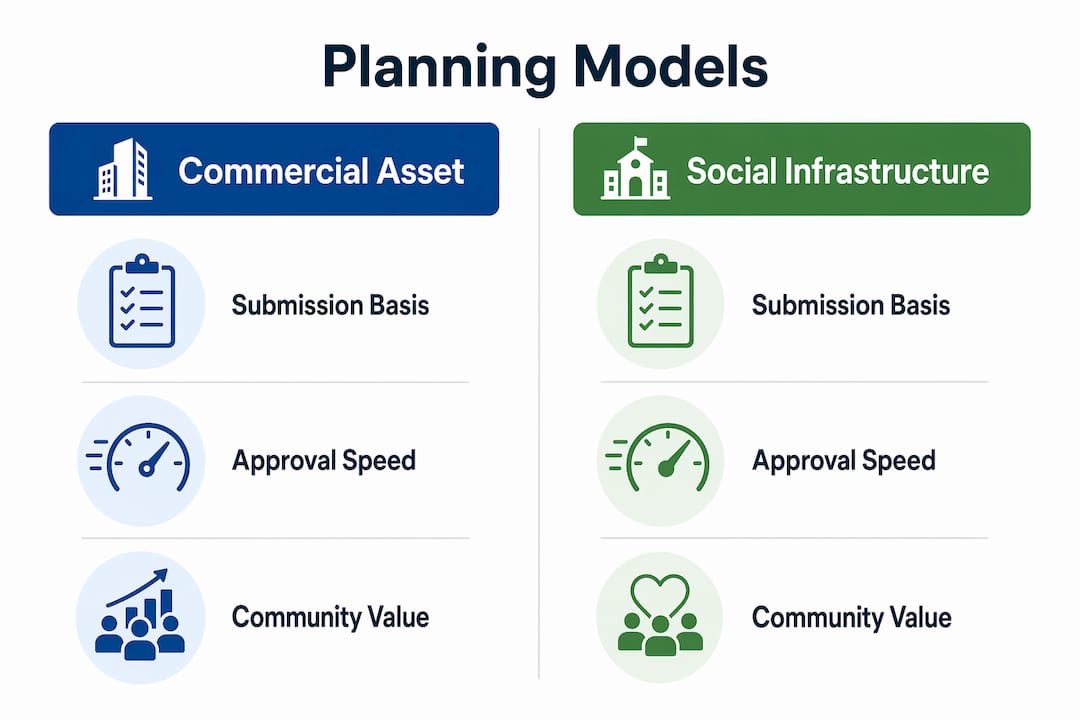
The social infrastructure model produces faster approvals because it addresses planning authority concerns before they become formal objections. Pubs with strong community engagement increased revenue by £150,000, demonstrating that the investment in community-focused design pays returns to the operator as well as the developer.
Singapore professionals can apply CEI-style frameworks to URA mixed-use submissions by quantifying the social functions of any licensed or community premises within the project boundary. The PUB submission compliance guide from Aectechnicalsg details how data-driven social infrastructure metrics integrate into Singapore authority submissions. Lessons from London and Victoria apply directly: planning authorities respond to evidence, and CEI data provides that evidence in a format regulators recognize.
Pro Tip: Use outdoor construction project examples from comparable mixed-use developments to benchmark your community impact mitigation plan against established practice before submission.
Key Takeaways
Pubs function as measurable social infrastructure within construction projects, and treating them as such produces faster approvals, stronger community relations, and better project outcomes.
| Point | Details |
|---|---|
| Pubs are social infrastructure | The CEI quantifies pub social value, giving developers auditable data for planning submissions. |
| Regulatory complexity is layered | Heritage consents, liquor licensing, and planning approvals operate as separate tracks that must align. |
| Infrastructure works cause trade losses | Road closures and site works near pubs can reduce trade by up to 15%, requiring mitigation plans. |
| Early engagement reduces delays | Pre-application community impact plans prevent objections that extend timelines by months. |
| Singapore frameworks apply | URA and BCA submissions benefit from social infrastructure evidence modeled on CEI frameworks. |
Why the community role of pubs deserves more attention from Singapore developers
From my experience working across construction and infrastructure projects in Singapore, the community role of pubs is consistently underestimated at the project initiation stage. Developers treat licensed premises as tenancy matters to be resolved by the legal team, not as design and planning variables that affect the entire approval timeline.
The shift I have observed in UK and Australian practice is instructive. Regulators in those markets now expect developers to demonstrate social infrastructure preservation as a condition of approval, not as a goodwill gesture. Singapore’s URA has moved in a similar direction with its emphasis on community-serving uses in mixed-use zones. The gap between international practice and local awareness among Singapore construction professionals is closing, but it has not closed yet.
The practical implication is straightforward. Construction professionals who engage with pub operators, quantify social value using frameworks like the CEI, and present that evidence at pre-application meetings will face fewer objections and shorter approval timelines. Those who treat pubs as commercial tenants to be managed around will encounter the same delays that have frustrated developers in London and Melbourne.
The deeper point is that pubs represent a category of social infrastructure that construction projects can either preserve or erode. Projects that preserve it build community goodwill that pays dividends through the entire construction phase. Projects that erode it pay the cost in objections, delays, and reputational damage that outlasts the construction program.
— Aman
Aectechnicalsg’s advisory services for pub-inclusive construction projects
Construction projects in Singapore that incorporate licensed premises, community venues, or mixed-use social infrastructure require specialist input at the design and regulatory submission stages.
Aectechnicalsg provides design for safety advisory services that address the structural, ventilation, and compliance requirements specific to pub-inclusive developments. The team supports URA, BCA, SCDF, and NEA submissions, including projects where social infrastructure evidence must accompany planning applications. For developers managing complex mixed-use projects, the construction compliance checklist provides a structured framework for confirming regulatory alignment before submission. Contact Aectechnicalsg to discuss how specialist engineering advisory can reduce approval risk on your next project.
FAQ
What does “role of pub in construction” mean professionally?
The role of pub in construction refers to its function as community social infrastructure within development and redevelopment projects. It covers regulatory compliance, social value measurement, and design integration requirements that affect planning approvals.
How does the Community Engagement Index affect construction approvals?
The CEI quantifies a pub’s social value through measurable metrics like community employment and local supplier spending. Planning authorities in multiple jurisdictions now require this data before approving pub redevelopment or displacement.
What construction risks arise from road closures near pubs?
Infrastructure works and road closures have caused up to 15% trade losses for pubs in documented cases. Developers must include trade disruption mitigation in their community impact assessments to satisfy planning authority requirements.
Are heritage-listed pubs subject to different building regulations?
Yes. Modifications to listed pubs require heritage-specific consents beyond standard building regulations. Even minor additions like outdoor structures trigger listed building consent processes that extend construction timelines.
How can Singapore developers apply international pub planning frameworks?
Singapore developers can adapt CEI-style social value metrics for URA mixed-use submissions by quantifying the community functions of licensed premises within the project boundary. Aectechnicalsg’s integrated engineering approach supports this process from pre-application through authority submission.