
Infrastructure engineering touches nearly every aspect of modern life, yet most people struggle to articulate what it actually covers. Understanding what is infrastructure engineering means recognizing it as far more than roads and bridges. It spans the design, construction, operation, and maintenance of foundational systems that keep societies and organizations functioning, from transportation networks and water utilities to the servers, cloud platforms, and data networks that power digital operations. This guide explains the discipline’s scope, its core concepts, and why it matters to developers, professionals, and students pursuing careers in this field.
Table of Contents
- Key takeaways
- What is infrastructure engineering, defined
- Why system thinking defines modern infrastructure engineering
- Infrastructure development and full lifecycle delivery
- Careers and practical applications in infrastructure engineering
- My perspective on where infrastructure engineering is heading
- How Aectechnicalsg supports your infrastructure engineering needs
- FAQ
Key takeaways
| Point | Details |
|---|---|
| Infrastructure engineering is broad | It covers both physical civil systems and IT infrastructure across design, build, operate, and maintain phases. |
| System thinking is non-negotiable | Treating infrastructure as interconnected systems prevents costly failures that component-level thinking misses. |
| Lifecycle delivery defines the discipline | Projects span strategy, financing, construction, and long-term operation, not just the build phase. |
| Career paths are diverse | Roles range from civil infrastructure engineer to cloud and network engineer, all within the same discipline. |
| Integration drives modern projects | Sustainability, digital infrastructure, and resilience are now core requirements, not optional upgrades. |
What is infrastructure engineering, defined
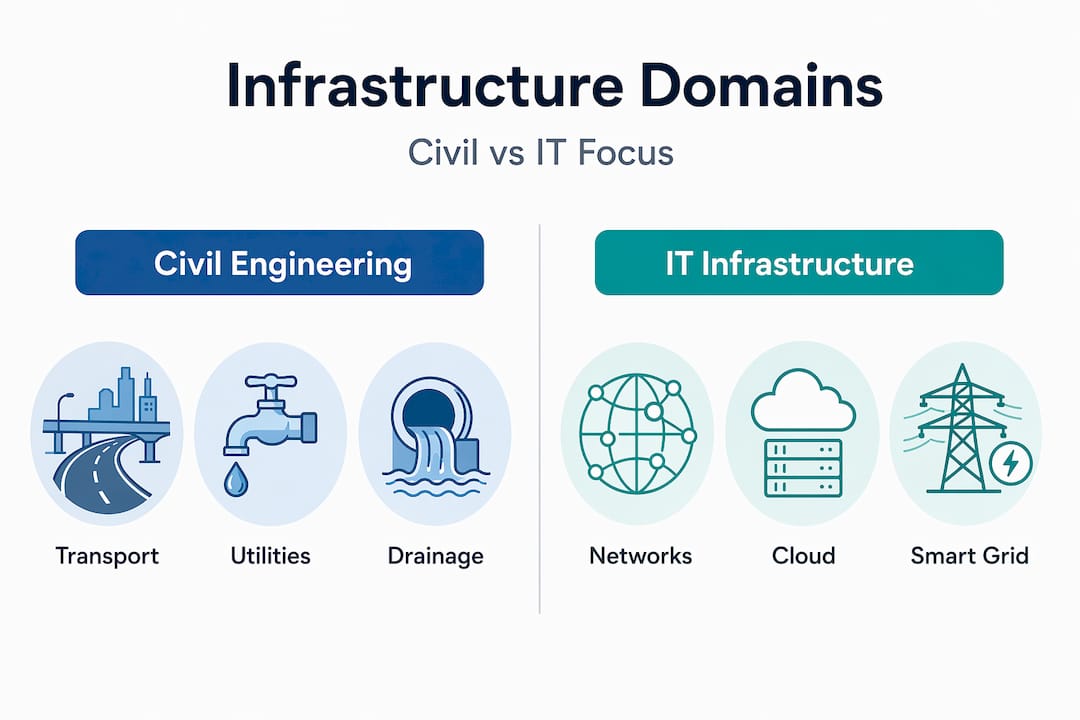
The infrastructure engineering definition spans two distinct but related domains. In civil engineering, it refers to the discipline responsible for designing, constructing, and managing physical systems such as roads, bridges, airports, water treatment plants, drainage networks, and telecommunications towers. In information technology, infrastructure engineering covers designing, building, operating, and maintaining IT infrastructure including servers, networks, cloud services, and databases.
Both domains share a common purpose: creating and sustaining the systems that everything else depends on. A hospital cannot operate without reliable electrical supply and water systems. A financial institution cannot function without stable network infrastructure and secure data centers. The discipline exists precisely to design, monitor, and protect those foundational layers.
Physical infrastructure examples include:
- Transport systems: highways, rail corridors, airport runways, and port facilities
- Utility networks: water supply, wastewater treatment, stormwater drainage, and electrical grids
- Telecommunications: fiber optic networks, broadcast towers, and cellular infrastructure
- Public facilities: tunnels, retaining walls, and flood defense structures
IT infrastructure examples include:
- Server architecture: on-premises hardware, virtualization, and bare-metal servers
- Networking: LANs, WANs, firewalls, and SD-WAN configurations
- Cloud platforms: public, private, and hybrid cloud environments
- Databases and storage: structured data systems, backup solutions, and disaster recovery configurations
Pro Tip: Students entering the field should decide early whether their interest leans toward civil systems or IT systems. The foundational knowledge overlaps, but the specialization tracks diverge significantly in terms of technical skills, certifications, and project environments.
Within civil infrastructure, you will find specializations in geotechnical engineering, structural engineering, hydraulics, and transportation planning. Within IT infrastructure, specializations include server, network, security, cloud, and database engineering. Understanding this scope is the starting point for anyone serious about the field.
Why system thinking defines modern infrastructure engineering
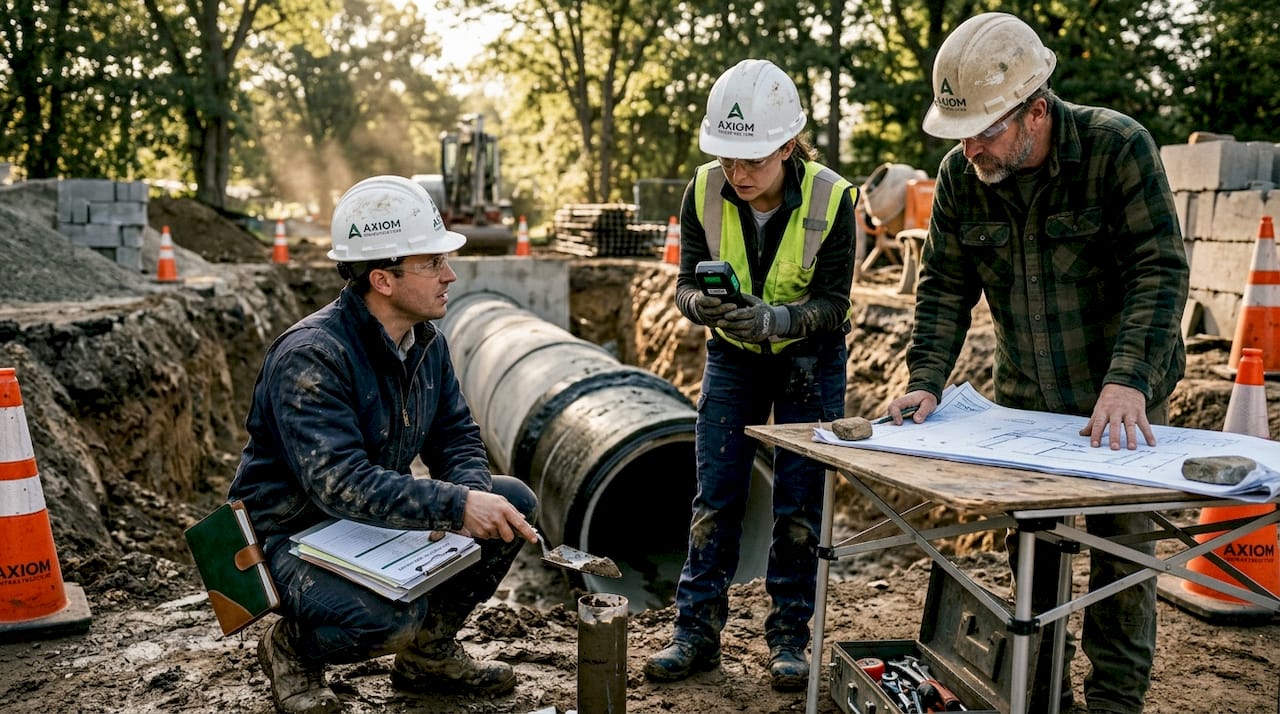
One of the most misunderstood infrastructure engineering concepts is the difference between component-level and system-level thinking. Most early-career engineers are trained to design and evaluate individual components: a pipe, a switch, a slab. Modern infrastructure demands a fundamentally different approach.
Subsystem interdependencies mean that a failure in one part of the system can cascade through the entire operation. A small pressure imbalance in a building’s cooling water network, ignored because the individual pipes all appear functional, can over time cause joint fatigue failures, water intrusion, and costly structural damage. In data centers, a misconfigured network segment might appear stable until peak load conditions expose latency issues that crash dependent services.
The consequences of neglecting system interdependencies are concrete and measurable:
- Operational downtime. IT infrastructure failures lead to email outages, website unavailability, and equipment shutdowns with direct revenue loss.
- Structural failures. In civil infrastructure, ignored drainage deficiencies or inadequate soil bearing assessments lead to settlement, cracking, and in severe cases, collapse.
- Regulatory penalties. Non-compliant infrastructure systems attract enforcement actions and mandatory remediation orders from authorities.
- Reputational damage. For developers and operators, infrastructure failure erodes client and public confidence rapidly.
“Infrastructure is no longer a collection of standalone assets but an interconnected system where every part must coordinate for resilience and efficiency.” PwC Infrastructure Services
Quality installation practice is equally important as design. Minor installation inconsistencies such as loose connections, inadequate pipe bedding, or unsecured cable terminations can escalate from negligible defects into major failures when infrastructure operates under sustained load over time. This is why commissioning procedures, quality assurance inspections, and post-installation testing form a non-negotiable part of any serious infrastructure project.
Modern infrastructure engineering therefore treats design, construction quality, and operational monitoring as a continuous loop rather than separate phases. Engineers who understand only design without operational realities, or only construction without design intent, create gaps that eventually become failures.
Infrastructure development and full lifecycle delivery
Infrastructure engineering fits into what is infrastructure development as the technical backbone of every lifecycle phase. Infrastructure development describes the full process of bringing new or upgraded infrastructure into operation, from strategic planning and needs assessment through financing, design, construction, and long-term operation.
Major infrastructure programs now treat projects as integrated systems rather than discrete build contracts. This shift matters because it changes how engineers engage across phases. An infrastructure engineer who understands only construction details cannot effectively advise on maintenance planning, lifecycle costing, or operational risk, all of which are now standard client expectations.
Consider what this looks like in practice:
| Aspect | Traditional approach | Modern approach |
|---|---|---|
| Project scope | Build to specification, hand over | Design for full lifecycle performance |
| Maintenance | Reactive repair after failure | Planned maintenance with condition monitoring |
| Technology | Conventional materials and methods | Digital twins, automation, and smart sensors |
| Sustainability | Not a primary design driver | Integrated from concept stage |
| Risk management | Addressed during construction | Assessed at every lifecycle phase |
Public investment reinforces the scale at which infrastructure engineering operates. California’s government, for example, announced over $540 million in transportation infrastructure investments in 2026, creating nearly 6,000 jobs and targeting safety modernization across the state. Projects of this scale require infrastructure engineers at every lifecycle phase, from route assessment and structural design to materials specification and long-term asset management.
Emerging trends are reshaping what infrastructure engineers must know. Digital infrastructure, including smart grid systems, IoT-enabled building management, and 5G networks, now intersects with traditional civil systems. Resilience planning, accounting for climate change, seismic risk, and extreme weather, has become a baseline client requirement rather than an added service. Engineers pursuing civil engineering projects in urban environments now routinely coordinate across these technical domains.
Pro Tip: Developers and project owners should ask their engineering consultants specifically how lifecycle cost modeling is incorporated into design decisions. A lower construction cost often comes with significantly higher maintenance costs over a 30-year asset life.
Careers and practical applications in infrastructure engineering
What do infrastructure engineers do, day to day? The answer depends heavily on the domain and seniority level, but the core function is consistent: keep foundational systems performing reliably and improve them over time.
Key roles and responsibilities in the field include:
- Infrastructure design engineer. Produces technical designs for civil or IT systems, specifying materials, configurations, and performance standards. Works closely with architects, project managers, and regulatory bodies.
- Network infrastructure engineer. Designs and manages enterprise and carrier-grade networks, responsible for uptime, capacity planning, and security architecture.
- Cloud infrastructure engineer. Builds and operates cloud environments, managing virtual machines, containerized workloads, and cost optimization strategies.
- Civil infrastructure engineer. Oversees structural and systems design for public works, transportation, and utilities. Engages with planning authorities and manages site supervision.
- Infrastructure operations engineer. Focuses on monitoring, automation, and incident response to maintain high availability across IT environments, including disaster recovery and fault tolerance.
The design to operation lifecycle demands both broad architectural knowledge and deep technical specialization. A cloud engineer, for example, must understand overall system architecture while mastering specific platforms such as AWS, Azure, or Google Cloud. A civil infrastructure engineer must understand structural behavior under load while specializing in, for instance, geotechnical assessments or hydraulic modeling.
Infrastructure engineers directly support community safety. When drainage systems are correctly designed and maintained, flood risk in urban areas decreases. When IT infrastructure achieves high fault tolerance through automation and redundancy, hospitals and emergency services maintain operational continuity during crises. The discipline’s economic contribution is equally significant. Infrastructure capacity constrains or enables regional growth, and well-designed systems attract business investment and raise property values over time.
Pro Tip: Professionals transitioning into infrastructure engineering from adjacent fields should prioritize earning domain-specific certifications early. For IT infrastructure, vendor certifications from Cisco, AWS, or Microsoft provide immediate credibility. For civil infrastructure, engaging with professional bodies such as the Institution of Engineers Singapore establishes recognized standing.
My perspective on where infrastructure engineering is heading
In my experience working with infrastructure projects across both civil and IT domains, the single most consistent source of preventable failure is the assumption that a well-designed component is a well-designed system. I’ve seen civil projects where drainage elements were individually sound but collectively inadequate because no one modeled how they performed together under storm loading. I’ve seen IT infrastructure deployments where servers and networks passed every individual test but collapsed under integrated production load.
What I’ve found is that the engineers who build genuinely reliable infrastructure think in flows, not components. They ask what happens when two subsystems interact under stress, not just whether each subsystem passes its own specification. That shift in thinking is, in my view, the defining characteristic of a capable infrastructure engineer.
The convergence of civil and IT infrastructure knowledge is accelerating. Smart buildings, connected transport systems, and digital twins are not future concepts. They are current project requirements. Engineers who build competency across both domains will be positioned to lead the most significant infrastructure programs of the next two decades. Those who remain siloed will find their scope narrowing as projects demand integrated expertise.
My encouragement to students and early-career professionals is direct: build your foundations wide before you specialize deep. Learn how systems interact before you master any single component. That sequence will serve you better than any certification or technical credential alone.
— Aman
How Aectechnicalsg supports your infrastructure engineering needs
Aectechnicalsg provides engineering consultancy services designed for developers, construction firms, and project owners who need technical rigor at every stage of infrastructure delivery in Singapore.

Whether you are navigating regulatory submissions to LTA, PUB, or BCA, or require structural, geotechnical, and M&E engineering input for a complex infrastructure project, Aectechnicalsg brings the system-thinking approach this article describes directly to your project. The team’s experience across civil engineering services and authority submissions means your project receives technically sound, compliance-ready solutions from concept through approval. Explore the full range of engineering consultancy options available or contact the team directly to discuss your infrastructure project’s specific requirements.
FAQ
What is infrastructure engineering in simple terms?
Infrastructure engineering is the discipline of designing, building, operating, and maintaining the foundational systems that support society and organizations, covering both physical systems like roads and utilities and IT systems like networks and cloud platforms.
What do infrastructure engineers do on a daily basis?
Infrastructure engineers design systems, monitor operational performance, manage upgrades, coordinate with regulatory bodies, and resolve failures to maintain reliable system operation across civil or IT environments.
What is the difference between civil and IT infrastructure engineering?
Civil infrastructure engineering focuses on physical systems such as transportation, utilities, and drainage, while IT infrastructure engineering focuses on digital systems such as servers, networks, and cloud environments. Both disciplines share a system-level design and lifecycle management approach.
Why is infrastructure engineering important for development projects?
Infrastructure engineering provides the technical foundation that makes development projects functional, safe, and compliant. Without it, buildings, transport systems, and digital services cannot perform reliably or meet regulatory requirements.
What skills are needed for a career in infrastructure engineering?
A career in infrastructure engineering requires both architectural knowledge and specialization in domains such as civil design, cloud platforms, or network architecture, along with skills in project management, regulatory compliance, and systems analysis.