
Construction risk assessment is the proactive process of identifying hazards, evaluating their potential impact, and applying targeted controls before work begins. Construction accounts for over 20% of workplace fatalities in the U.S., with falls alone causing more than a third of those deaths. For construction managers, project owners, and safety officers, understanding why risk assessment in construction is non-negotiable starts with recognizing that most site fatalities are preventable. Frameworks like OSHA’s hazard identification standards, NIOSH’s hierarchy of controls, and the Job Hazard Analysis (JHA) process exist precisely because uncontrolled hazards kill workers and destroy project timelines.
Why is risk assessment critical in construction projects?
Sixty percent of construction site fatalities arise from hazards that were never identified in the first place. That single statistic defines the core argument for rigorous, ongoing construction project risk analysis. When hazards go unrecognized, no control measure is ever applied, and the result is injury, death, or project shutdown.
The financial consequences compound the human cost. Unplanned incidents trigger insurance claims, regulatory investigations, work stoppages, and litigation. Each of these events consumes budget and schedule reserves that most projects cannot absorb. OSHA calls hazard identification and assessment a core element of safety programs, specifically mandating focus on falls, trenching, silica exposure, electrical work, and confined spaces. Failing to address these categories is not just operationally risky. It exposes project owners to direct regulatory penalties.
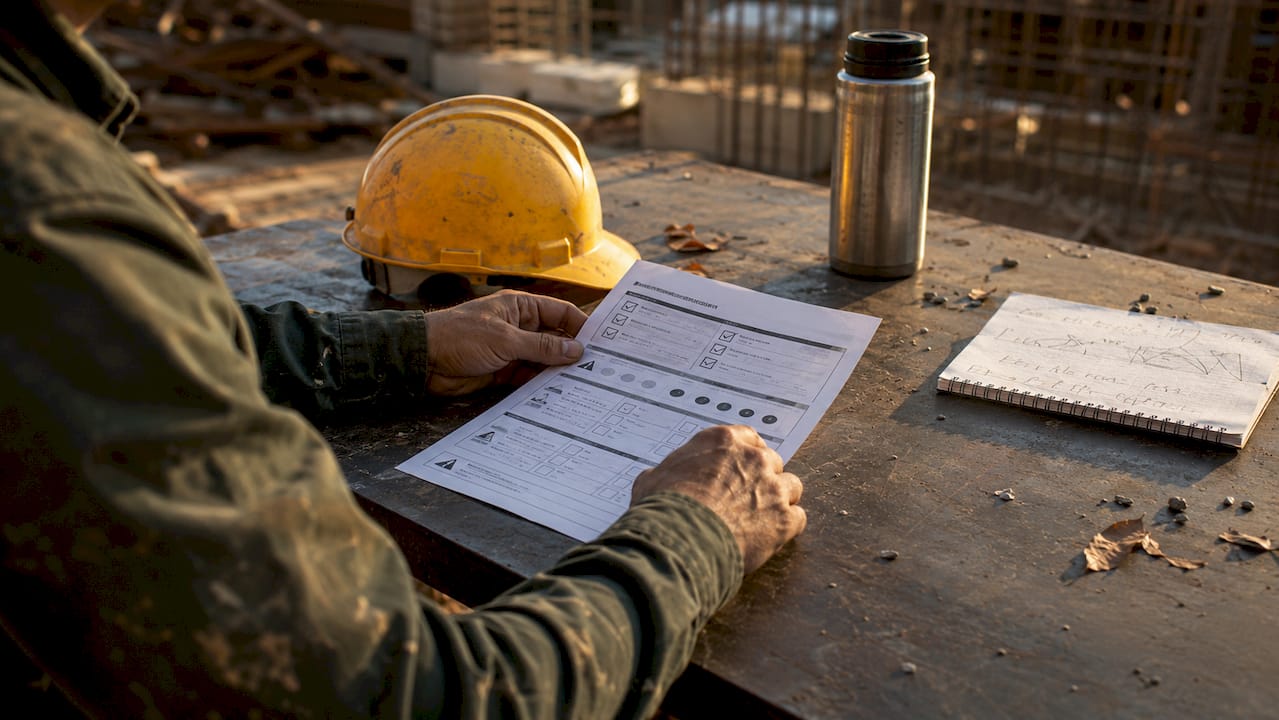
Reputational damage is the third dimension that project owners often underestimate. A single high-profile incident can disqualify a firm from future tenders, particularly in Singapore’s tightly regulated construction sector where BCA and MOM maintain close oversight. The importance of risk assessment extends well beyond the job site. It protects the organization’s license to operate.
Pro Tip: Document every hazard identification session with dated records and named attendees. This creates a defensible audit trail if a regulatory body or insurer requests evidence of due diligence.
What are the key steps of a construction risk assessment?
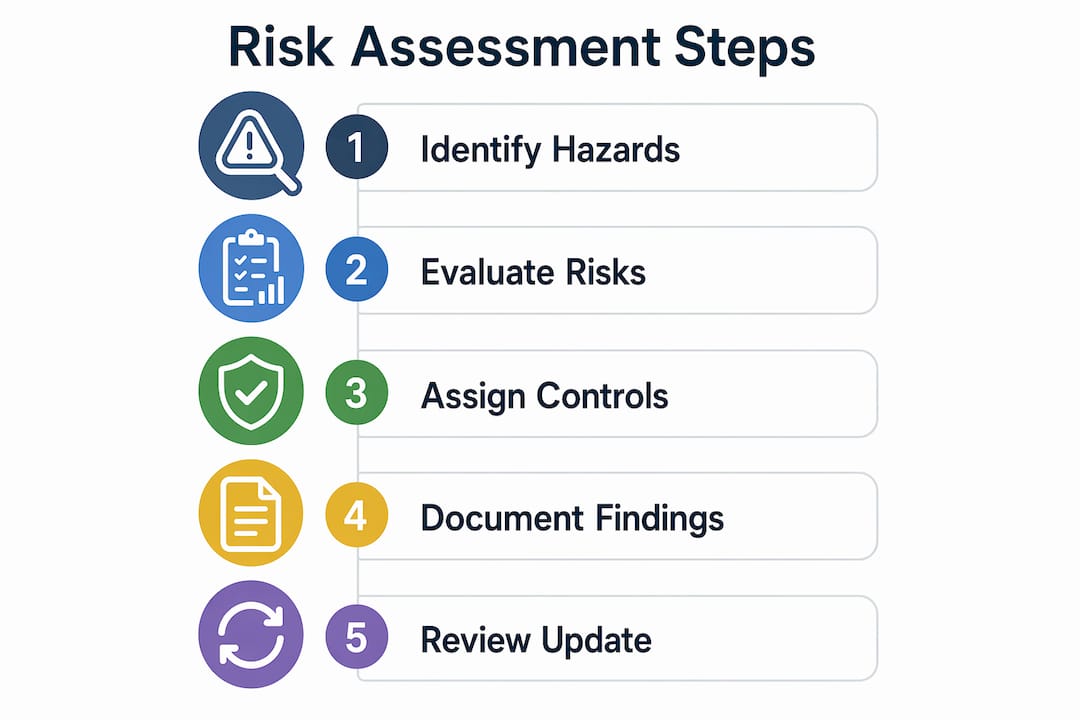
A structured construction safety assessment follows a repeatable sequence. Skipping any step reduces the process from a genuine safety tool to a compliance formality.
-
Task decomposition. Break each work activity into discrete steps using a Job Hazard Analysis (JHA). Excavation, formwork erection, and electrical installation each carry distinct hazard profiles that require separate analysis.
-
Hazard identification. For each task step, identify physical, chemical, biological, and ergonomic hazards. Falls from height, struck-by events, and trench collapses are the categories OSHA and NIOSH flag most frequently in construction.
-
Risk evaluation using a risk matrix. Assign probability and impact scores to each hazard. A standard matrix produces a hazard rating (low, medium, high, critical) that determines the urgency and type of control required.
-
Control selection using the NIOSH hierarchy. The hierarchy of controls prioritizes elimination and engineering controls over administrative measures and personal protective equipment. Removing a hazard entirely is always preferable to managing it with a hard hat.
-
Assignment of named owners with deadlines. Every identified hazard must have a specific person responsible for implementing the control measure, with a defined completion date. This step is where most assessments fail in practice.
-
Review triggers. Reassess before any new task type begins, after any design change, and immediately following a near-miss or incident. Static assessments become obsolete within weeks on active sites.
Pro Tip: Use consistent hazard categories and severity scales across all project phases. Inconsistent rating standards create gaps where high-risk items get misclassified as medium and never receive adequate controls.
How does accountability improve risk assessment effectiveness?
Risk identification without accountability is paperwork. Naming owners and deadlines for each risk converts a static document into a live action register that drives real safety outcomes.
The data supports this directly. Assigning named owners with deadlines reduces incident-related project delays by up to 40%. That figure reflects the difference between a site where hazards are logged and forgotten versus one where a specific supervisor is responsible for closing out each item by a set date.
Several failure patterns emerge when accountability is absent:
- Hazards are rated and recorded but no corrective work order is ever raised.
- Multiple team members assume someone else owns the item, so nothing gets done.
- Risk registers are updated only before audits, not as conditions change.
- High-rated hazards remain open for weeks because no escalation path exists.
The solution is structural, not motivational. Build the risk register so that every row requires a named owner, a target date, and a status field. Integrate that register with your project management system so that overdue items generate automatic notifications. This approach treats risk management in construction as an operational discipline, not a documentation exercise.
What practical challenges exist in construction risk assessment?
Real-world construction risk assessment faces obstacles that no template can fully address. Understanding these challenges is the first step toward building a process that holds up under site conditions.
Inconsistent rating standards are the most common technical failure. When different supervisors apply different definitions of “high probability,” the risk matrix produces unreliable outputs. Two assessors evaluating the same scaffold erection task may produce ratings that differ by two severity levels, leading to entirely different control responses.
Isolated documentation is the second major problem. Risk assessments stored in a project manager’s folder, disconnected from daily toolbox talks and site inductions, have no operational effect. The people doing the work never see them.
Dynamic site conditions make static assessments obsolete quickly. A risk assessment completed during the foundation phase does not account for the hazards introduced when tower crane operations begin three months later. Schedule risks often precede project failure, and the Schedule Performance Index (SPI) is a useful lead indicator that signals when compressed timelines are creating new safety exposures.
The table below summarizes common assessment pitfalls and their practical remedies:
| Challenge | Impact | Remedy |
|---|---|---|
| Inconsistent hazard ratings | Misclassified risks receive inadequate controls | Standardize severity and probability scales across all assessors |
| Isolated documentation | Field crews unaware of identified hazards | Integrate assessments into daily briefings and site inductions |
| Static assessments | New hazards go uncontrolled as work evolves | Schedule reassessment at defined project milestones |
| No crew involvement | Practical hazards missed by office-based assessors | Involve site crews in hazard identification sessions |
| Compliance-only mindset | Operational benefits overlooked, site stoppages increase | Treat the risk register as a live project management tool |
Involving site crews in the assessment process addresses both the inconsistency and isolation problems simultaneously. Workers closest to the task identify practical hazards that office-based assessors miss, and their participation builds the safety culture that makes controls stick.
How can risk assessment integrate with broader project management?
Construction risk assessment reaches its full value when it connects to budgeting, scheduling, and contract management rather than sitting in isolation as a safety document.
Integrating risk registers with project budgets and allocating contingency funds by risk category gives project owners a transparent mechanism for responding to emerging threats without disrupting the overall financial plan. A geotechnical risk that materializes mid-project does not become a crisis when the budget already carries a quantified contingency line for ground condition uncertainty.
The lifecycle approach to construction risk management treats assessment as an ongoing enterprise commitment rather than a pre-construction checkbox. Key integration practices include:
- Linking the risk register to the project schedule so that high-rated items trigger schedule buffer reviews.
- Using near-miss reports and safety observation data as lead indicators that update the risk register in real time.
- Aligning risk reviews with contract milestone dates so that subcontractor performance and scope changes are assessed alongside physical hazards.
- Sharing the risk register across disciplines, including structural, M&E, and geotechnical teams, so that cross-discipline hazards are captured before they become incidents.
For Singapore projects specifically, this integration extends to regulatory submissions. Authority submissions to BCA, SCDF, and NEA each carry compliance risk that belongs in the project risk register alongside physical site hazards. A construction compliance checklist aligned with the risk register prevents submission delays from cascading into program disruptions.
The Design for Safety framework formalizes this integration at the design stage, requiring that hazard identification begins before construction drawings are finalized. That upstream approach eliminates entire categories of site risk before any worker sets foot on the ground.
Key takeaways
Effective construction risk assessment requires proactive hazard identification, named accountability for every control measure, and full integration with project budgets, schedules, and regulatory submissions.
| Point | Details |
|---|---|
| Fatalities are preventable | Sixty percent of construction deaths involve hazards that were never identified through formal assessment. |
| Accountability drives outcomes | Naming owners and deadlines for each hazard reduces incident-related delays by up to 40%. |
| Hierarchy of controls applies | Eliminate or engineer out hazards before relying on administrative rules or personal protective equipment. |
| Dynamic reassessment is required | Static assessments become obsolete as site conditions change; reassess at every major project milestone. |
| Integration multiplies value | Linking the risk register to budgets, schedules, and authority submissions converts assessment into a project management asset. |
Why risk assessment cannot be a one-time exercise
Construction risk assessment is one of those disciplines where the gap between doing it and doing it well is enormous, and the consequences of that gap are measured in lives and project failures.
The most common mistake I see on complex projects is treating the initial risk assessment as a deliverable rather than a process. A team produces a thorough JHA before mobilization, files it with the safety plan, and then never opens it again. Six months later, when the structural steel program accelerates and a new subcontractor brings unfamiliar equipment onto the site, nobody has updated the register. That is when incidents happen.
The second mistake is confusing activity with accountability. A risk register with 80 identified hazards and no named owners is not a safety tool. It is a liability document that will be used against you in a coroner’s inquiry. Every item needs a person, a date, and a status. That discipline is what separates organizations with strong safety records from those that treat compliance as a paperwork exercise.
The practical lesson from working across Singapore’s construction sector is that the best-performing projects embed risk review into their weekly program meetings. The risk register sits alongside the lookahead schedule. When a new activity enters the two-week window, the team asks whether the existing assessment covers it. That question takes five minutes. Answering it incorrectly costs far more.
— Aman
How Aectechnicalsg supports construction risk and compliance

Construction risk management in Singapore carries regulatory dimensions that extend beyond the job site. Authority submissions to BCA, SCDF, PUB, and NEA each introduce compliance risks that must be tracked alongside physical hazards. Aectechnicalsg provides engineering consultancy services for project developers, construction firms, and property owners who need both technical expertise and regulatory submission support under one roof. From structural and geotechnical engineering to M&E coordination and authority approvals, the team helps project owners manage risk across every phase of the project lifecycle. If your project requires PE endorsement and authority submissions aligned with your risk management framework, contact Aectechnicalsg to discuss your requirements.
FAQ
What is the main purpose of risk assessment in construction?
Construction risk assessment identifies hazards before work begins and assigns controls to prevent injuries, fatalities, and project delays. It is a proactive process, not a reactive one.
How often should a construction risk assessment be updated?
Assessments should be reviewed before any new task type begins, after design changes, and immediately following any near-miss or incident. Static assessments become unreliable within weeks on active sites.
What is a Job Hazard Analysis in construction?
A Job Hazard Analysis (JHA) breaks each work activity into discrete steps, identifies the hazard at each step, and specifies the control measure required. It is the foundational tool for construction safety assessment.
Why does accountability matter in a risk assessment?
Without named owners and deadlines, identified hazards remain unaddressed. Assigning specific responsibility for each control measure reduces incident-related project delays by up to 40%.
How does risk assessment connect to construction project costs?
Integrating the risk register with the project budget allows contingency funds to be allocated by risk category, giving project owners a financial mechanism to respond to emerging threats without disrupting the overall cost plan.