
Introduction
Monsoon readiness for temporary works excavations determines whether an open-cut basement, a services trench, or a shaft survives a 100 mm downpour intact or becomes a flooded, unstable liability. In Singapore, where annual rainfall reaches 2,300–2,600 mm and the North-East Monsoon (mid-November through early March) delivers sustained heavy rain over weeks, every temporary excavation that lacks a monsoon plan is exposed to slope failure, base heave, and uncontrolled flooding.
This guide addresses open-cut excavations, trenches, and shafts supporting building and infrastructure works in Singapore and Southeast Asia. It does not cover permanent drainage design or M&E waterproofing. The target readers are main contractors, subcontractors, site supervisors, resident engineers, and developers who are planning or managing temporary works during monsoon months. Proper planning reduces accidents during rainy weather; the converse is equally true. The Tanjong Katong Road South sinkhole incident of July 2025, where a 16 m deep shaft failed due to inadequate risk assessment and supervision, is a reminder that monsoon-season excavation failures carry regulatory, financial, and human costs.
Monsoon readiness in practice means three things: ensuring excavation stability under saturated soil conditions, maintaining safe access and egress for workers during and after storms, and controlling groundwater so that dewatering systems keep pace with inflow. Excavation projects must prepare for heavy rainfall to prevent flooding from inundating work areas.
By the end of this article, you will know how to:
-
Plan excavation sequences and construction programming before the monsoon starts
-
Design temporary drainage, sumps, and dewatering for monsoon-intensity rainfall
-
Specify shoring and bracing that accounts for saturated backfill and elevated water tables
-
Schedule inspections and set trigger-based action plans tied to real-time weather conditions
-
Avoid the compliance gaps and common pitfalls that lead to collapse, delays, and enforcement action
Understanding Monsoon Risk in Temporary Works Excavations on Construction Sites
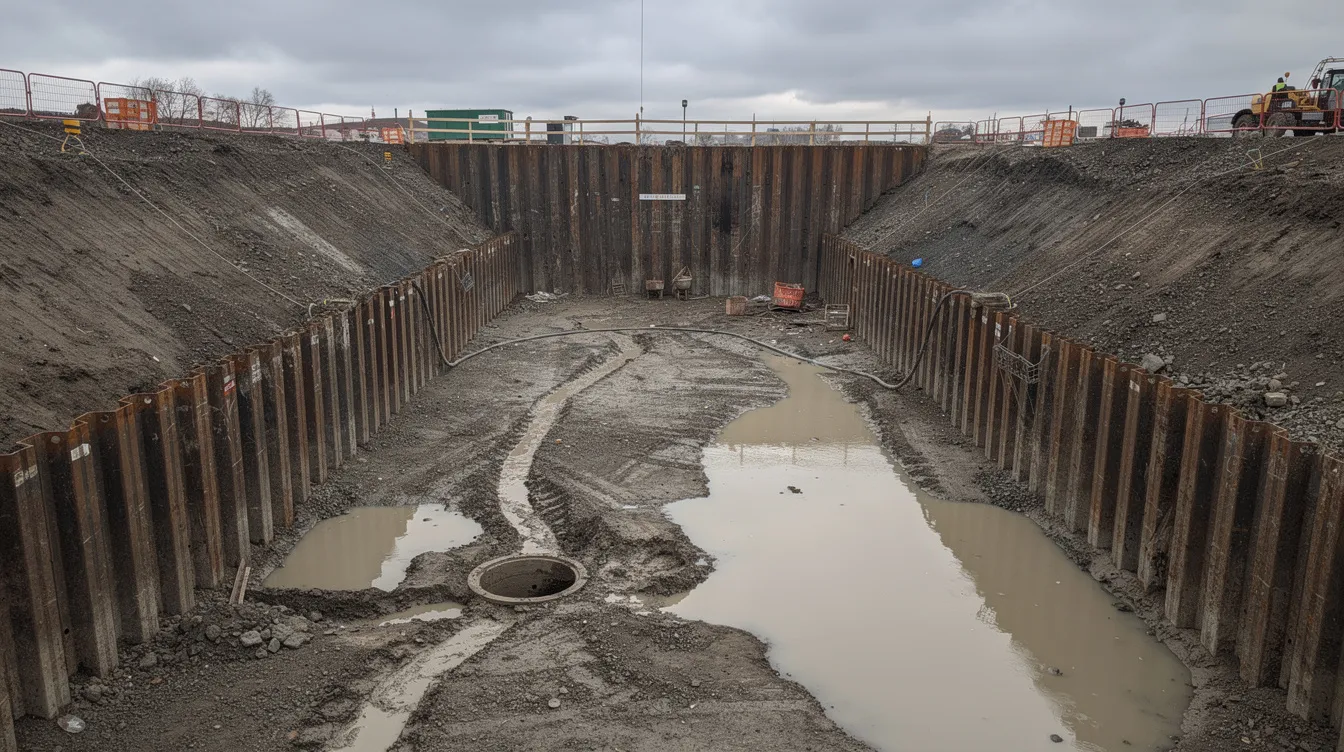
Temporary excavations are open wounds in the ground. Unlike permanent structures with sealed envelopes, they expose soil faces, berms, and formation levels directly to rain. Monsoon conditions introduce slope failures, base heave, flooding, erosion, and damage to adjacent utilities and properties. This section covers the climate patterns that drive these risks and the geotechnical mechanisms through which rain destabilizes excavations.
Monsoon Climate and Rainfall Patterns
Singapore experiences two monsoon seasons: the North-East Monsoon from mid-November through early March, and the South-West Monsoon from June through September. Inter-monsoon thunderstorms in April–May and October–November fill the gaps. According to PUB’s engineering design references, a 10-year Average Recurrence Interval (ARI) storm with a 10-minute time of concentration produces rainfall intensity of 190 mm/hour. A 100-year ARI event reaches approximately 275 mm/hour.
Short, intense bursts cause surface erosion on exposed slope faces and overwhelm undersized sumps within minutes. Prolonged rainfall over hours or days raises the groundwater table, saturates fill materials, and builds pore water pressures in clay layers that take weeks to dissipate. A typical intense monsoon thunderstorm over Singapore can deliver 50–100 mm in a single hour.
Site teams should reference local meteorological data from the Meteorological Service Singapore (MSS) and PUB drainage design guidelines when sizing site runoff capacity and sump volumes. PUB raised its drainage design standards in 2011 so that drains can handle up to 45% higher rainfall intensities than prior benchmarks. For temporary works catchments under 100 hectares, the design storm return period is 10 years; for 100–1,000 hectares, 25 years; for critical infrastructure, 50–100 years. Understanding these rainfall patterns is what separates a realistic monsoon readiness plan from a generic wet-weather procedure.
How Monsoon Conditions Affect Excavation Stability
Saturation of soils reduces shear strength. In Singapore’s Kallang Formation marine clay, the Upper Marine Clay (UMC) has undrained shear strength of only 10–30 kPa when saturated, with sensitivity ratios of 3 to 8; disturbance from rain infiltration or vibration can reduce strength to remoulded values. Heavy monsoon rains can lead to wall collapses and soil erosion at excavation sites. Residual soils from the Bukit Timah Granite and Jurong Formation carry strength through matric suction in unsaturated zones above the water table. Heavy rain destroys that suction rapidly in shallow zones, with saturated permeability coefficients for Jurong sediments ranging from 10⁻¹⁰ to 10⁻⁶ m/s.
Rainfall changes pore water pressure differently in clays versus sands. In marine clay, undrained behavior dominates under rapid loading or rainfall; increased pore pressures raise lateral earth pressures on soldier piles and struts. In sandy residual soils, rainwater infiltrates quickly, raising the water table and reducing effective stress. The consequences include localized slips in temporary cut slopes, toe erosion undermining sheet piles, strut overstress from unanticipated lateral loads, and hydraulic uplift where permeable layers beneath the excavation base allow upward flow. LTA’s Civil Design Criteria (DC-A1) require a minimum factor of safety against hydraulic uplift of 1.2.
With these risk mechanisms established, the next section addresses how to integrate monsoon readiness into excavation planning and design before the first bucket of soil is removed.
Planning Monsoon-Ready Temporary Excavations
The risk mechanisms above confirm that monsoon readiness cannot be bolted on as a last-minute site fix. It must be embedded in the temporary works design, construction programming, and site layout from the outset. Early engagement with a Professional Engineer (PE) for temporary works design is required under BCA and WSH regulations, and that PE must account for wet-season operations in the design brief.
Integrating Monsoon Readiness into Temporary Works Design
Project preparations for monsoon conditions should involve a detailed risk assessment and planning. Design briefs should state the design storm criteria explicitly: for most urban Singapore sites, that means sizing drainage and pumping for a 10-year ARI event (190 mm/hr at 10-minute time of concentration). Temporary excavation supports must be designed for wet-ground conditions to avoid failures. Slope stability designs must consider increased hydrostatic pressure from saturated soil during monsoons.
For earth retaining and stabilizing structures (ERSS), the PE should verify minimum factors of safety for slopes and retaining systems under saturated conditions, including checks for seepage, uplift (minimum FOS 1.2 per DC-A1), and basal heave in soft clay. Layout drawings should explicitly allocate space for drains, sumps, pumps, sediment control measures, and safe access routes. Coordination with permanent works design avoids clashes; for example, temporary drainage lines routed through future utility corridors create conflicts during the transition from temporary to permanent works.
Seasonal Construction Projects Programming and Sequencing
Adjusting the construction schedule so that deep excavations and critical temporary works are either completed or fully supported before the heaviest monsoon months (December–January for North-East Monsoon) is one of the most cost-effective risk reduction measures available. Construction projects that ignore this sequencing principle routinely face unplanned downtime and claims.
Splitting large excavations into smaller stages or compartments reduces the total exposed area at any given time. Each compartment can be drained and shored independently. Coordination between the planner, site manager, and PE should lock monsoon-sensitive milestones into the programme: target dates for strutting completion, backfilling deadlines, and hold points for monsoon readiness inspections. Limiting overnight open trenches, planning backfilling during short dry windows, and avoiding cutting key slopes just before forecast storms are specific sequencing practices that contractors should mandate during monsoon months.
Designing Site Layout for Rainwater Management
Proper site drainage must be established before excavation work begins to manage rainwater effectively. Site platforms should slope away from excavation edges at a minimum gradient that directs runoff to peripheral drains and diversion channels. Installing perimeter bunds is critical for preventing surface water from entering excavations during storms. Entry ramps, materials storage zones, and plant routes should be positioned so that muddy runoff flows away from, not into, excavation areas.
Integration of silt fences, sedimentation tanks, and wheel-wash areas addresses PUB and NEA environmental requirements for surface water drainage. Use of adequate sediment control measures is needed to prevent site contamination during water discharge. PUB’s Code of Practice for Surface Water Drainage requires developers to implement on-site detention to manage peak runoff before discharge to public drains.
Planning sets the foundation. The next section covers the specific physical measures that bring these plans to life on site.
Practical Measures for Monsoon-Ready Excavations
Field implementation during pre-monsoon preparation and throughout the season translates design intent into physical protection. The measures below apply to urban Singapore construction sites: basement excavations, MRT/road cut-and-cover works, and services trenches.
Drainage, Sumps, and Dewatering Systems
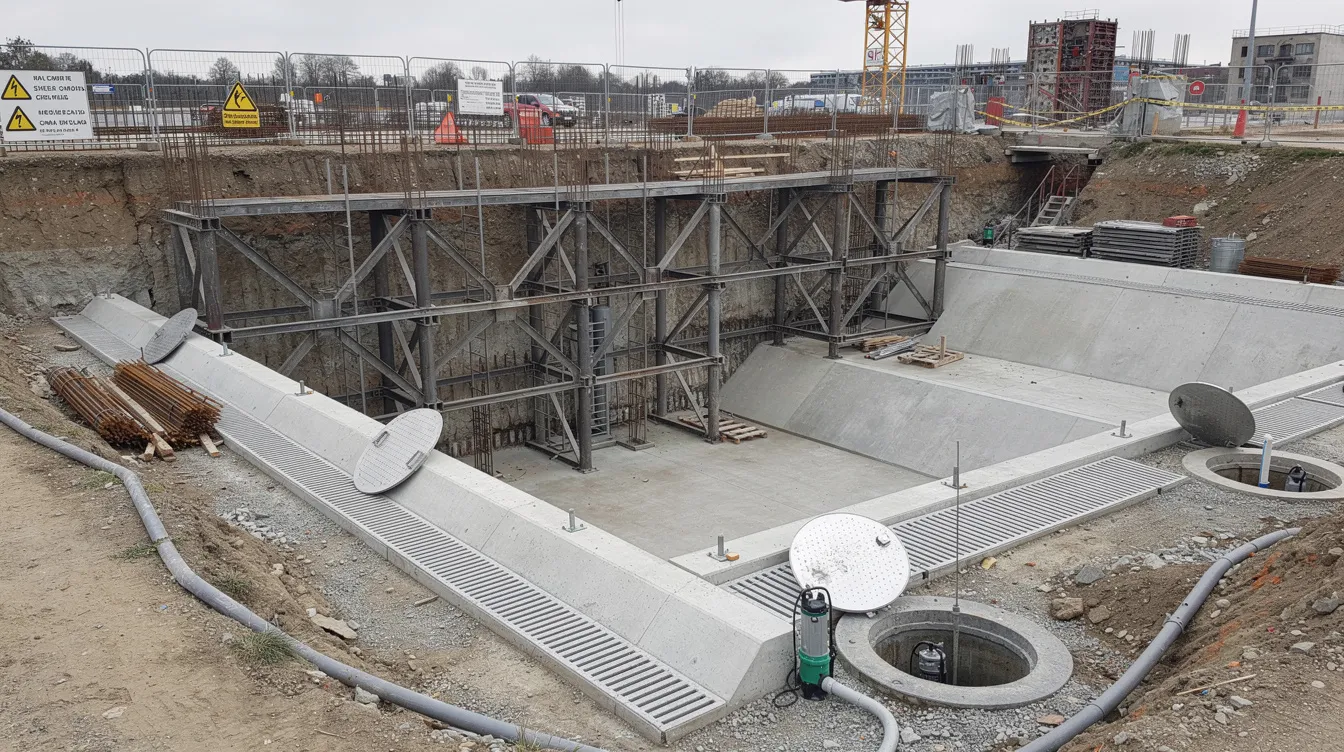
Dewatering systems are essential for managing water accumulation in excavation sites during monsoons. Temporary surface drains and toe drains within and around excavations should be laid with minimum fall to discharge into sumps. Key design considerations for sumps include capacity sufficient to handle the design storm without overtopping, redundancy (at least one standby pump per active pump), freeboard above peak inflow level, separation from structural elements, and ease of maintenance access during heavy rain.
Submersible pumps with auto float switches, backed by generator power, are standard. Backup power for dewatering pumps is necessary to maintain operations during power outages. Alarms that trigger when sump levels exceed set thresholds give site supervisors early warning. PUB requires that pumped discharge meets quality standards; silty water needs treatment through settling tanks or filter systems before release to public drains. Backflow prevention valves on discharge lines stop floodwater from downstream drains reversing into the excavation.
Protection of Excavation Faces, Slopes, and Working Platforms
Excavation slopes should be bench designed or flattened to improve stability during saturated conditions. Temporary shotcrete, gunny bag walls, geotextile coverings, and plastic sheeting protect exposed faces from direct rain impact and erosion. Where time permits, turfing or hydroseeding provides longer-term surface stabilization.
Berms and benches should intercept and channel runoff safely, preventing erosion gullies at the slope face. Secure loose materials before rainfall to prevent hazards; unsecured stockpiles on slope crests add surcharge loads and generate sediment-laden runoff. Haul roads and working platforms need stabilization using crushed hardcore, geogrids, and regular re-levelling to prevent ponding and rutting. Regular cleaning of mud near crane pads and heavy plant locations maintains bearing capacity. Crane operators depend on stable platforms; a rutted, waterlogged pad compromises lifting safety and violates WSH lifting plan requirements.
Shoring, Bracing, and Support Systems Under Monsoon Conditions
Engineered ground support is necessary to prevent excavation wall collapse during saturated soil conditions. Under Singapore’s WSH (Construction) Regulations 2007, any excavation deeper than 4 metres requires shoring designed and certified by a PE. Temporary excavation support systems, including sheet piles, secant piles, walers, and struts, must be verified for elevated water levels and saturated backfill conditions that monsoon rainfall produces.
The choice between drainage relief (weep holes, relief wells) and sealed systems depends on soil type and adjacent structures. Weep holes in sheet piles relieve hydrostatic pressure but increase water inflow, requiring larger pump capacity. Sealed systems retain water pressure, demanding higher structural capacity in the wall and struts. Pre-loading and monitoring struts, maintaining clear access for inspection, and protecting steel members from corrosion in standing water are all practices that reduce failure risk during wet months.
Physical support systems and water management must work together. The next section addresses the monitoring and inspection regime that keeps both in check.
Monsoon Monitoring, Inspection, and Response on Site
Monsoon readiness is not a one-time setup. It requires active monitoring, inspections before and after storms, and clear response procedures integrated with the project’s risk assessment and method statements (RAMS). Monitoring groundwater levels and soil movement is important for excavation safety during monsoons.
Weather Forecasting and Trigger-Based Action Plans
Use of weather forecasting helps in planning excavation activities around potential heavy rains. Local meteorological forecasts, lightning alerts, and real-time rainfall radar from NEA provide lead time to activate pre-storm procedures. Establishing clear stop-work conditions is vital for responding to sudden hazards during excavation work.
Trigger levels link forecast or observed conditions to pre-defined actions. For example: when NEA issues a heavy rain warning or observed rainfall exceeds 50 mm in one hour, the site stops deepening excavations, deploys additional pumps, and tops up generator fuel. A simple pre-storm checklist for site supervisors might include: verify all sumps are clear, confirm pump operations and fuel levels, secure loose materials and formwork, check safe egress routes, and brief workers on stand-down procedures. These trigger thresholds and actions should be documented in the project’s monsoon preparedness plan, endorsed by the PE.
Routine Inspections and Warning Signs Before, During, and After Heavy Rain
Regular inspections of excavations should occur before and after heavy rainfall to ensure safety. Pre-rain inspections cover drains, sumps, pump functionality, protective covers on slopes, secured materials and formwork, and safe ladder access. During rain, personnel in excavations should be limited; visual monitoring from safe vantage points and immediate reporting of slope seepage or distress warning signs is the standard practice. Suspend high-risk activities during rain to ensure safety.
Post-rain inspections assess excavation faces for tension cracks, settlement at strut levels, movement of sheet piles, and integrity of working platforms. Inspect excavations for collapse risk after rainfall. Remove standing water before resuming construction activities. Photographic records and inspection forms, noting items that require PE attention or corrective works, create an audit trail that satisfies BCA and MOM requirements.
Instrumentation and Performance Monitoring
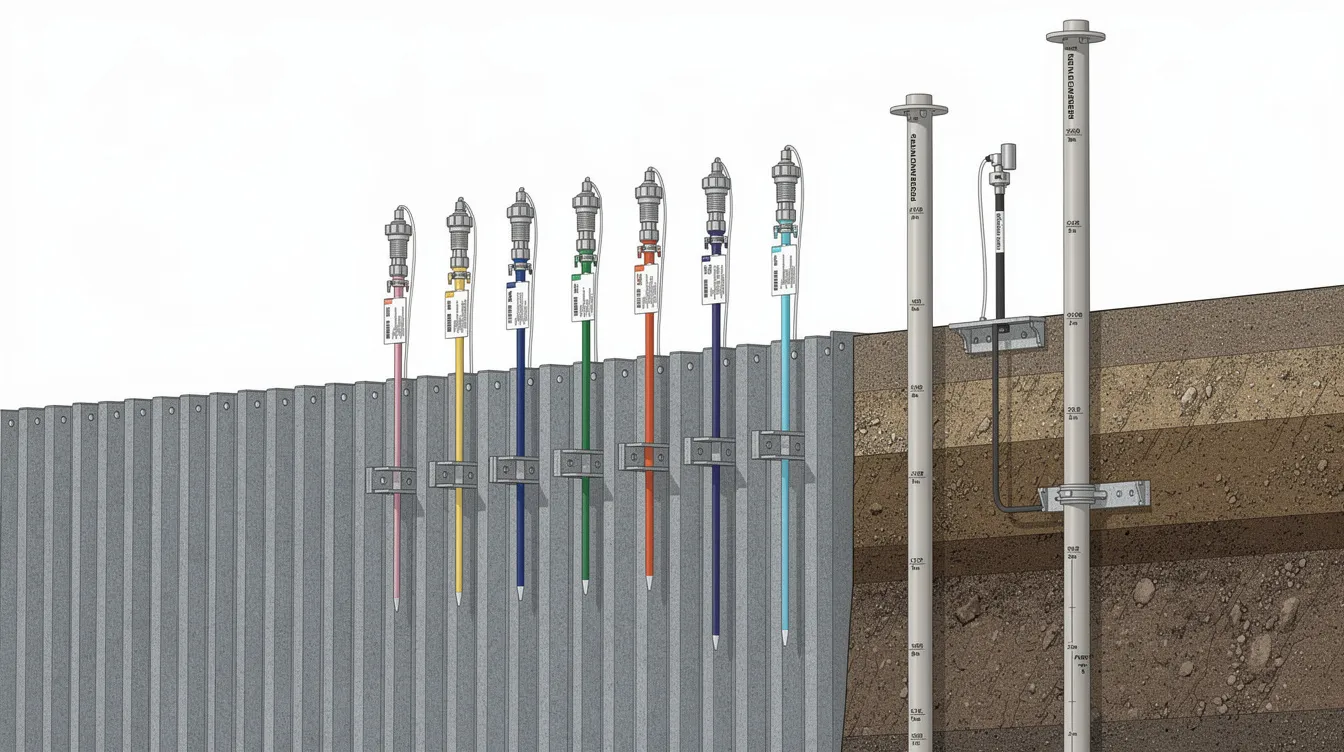
For deeper or higher-risk excavations, geotechnical instrumentation provides quantitative data that visual inspections cannot. Excavation safety requires continuous ground monitoring to detect early signs of instability. Inclinometers measure lateral wall movement, piezometers track pore water pressures, settlement markers monitor adjacent ground, and load cells on struts record actual forces versus design assumptions.
Monsoon conditions cause short-term spikes in piezometer and inclinometer readings. Alert and alarm limits should be tightened during rainy months to account for the reduced margin between working loads and design capacity. In a documented case of deep excavations in Bukit Timah residual soils, numerical simulation calibrated against instrumented data showed that when drawdown exceeded design assumptions, wall movements increased non-linearly. Responsibilities for daily data review (RE/RTO, PE, geotechnical consultant) and escalation procedures when movements increase after storms should be assigned in writing.
These monitoring and response measures catch small issues before they become failures. The next section addresses compliance requirements and the mistakes that recur on construction sites across Singapore.
Regulatory Expectations, Common Pitfalls, and How to Avoid Them
Technical measures only work when they align with authority requirements and avoid the errors that investigation reports document repeatedly. This section focuses on practical compliance and recurrent on-site mistakes rather than legal detail.
Authority Guidelines and Professional Responsibilities
BCA’s Guidelines for Structural Plan Applications require mandatory compliance with ERSS requirements and the Observational Method for deep excavations. For excavations deeper than 4 metres, WSH (Construction) Regulations 2007 mandate PE-designed shoring and certification before non-excavation work can proceed inside the excavation. The role of the Accredited Checker applies to deeper, higher-risk excavations under BCA’s framework.
PUB requires Qualified Persons to submit building plans for Development Control and Detailed Plan clearances, covering discharge control, silt management, and flood risk to adjoining properties. LTA’s updated Code of Practice for Works on Public Streets (April 2026) adds stricter checklists for temporary earth retaining structures, including uplift checks and requirements to use both drained and undrained parameters depending on soil type.
Responsibilities during monsoon operations distribute across the developer, main contractor, specialist subcontractors, PE (Temporary Works), and RE/RTO. Workers should receive proper safety training and PPE for working in monsoon conditions. The Tanjong Katong Road South sinkhole case illustrates the enforcement reality: BCA, MOM, and LTA jointly charged multiple parties including the contractor, Qualified Persons for design and supervision, and the resident engineer for failures including missing risk assessment, unapproved departures from approved plans, and defective monitoring.
Frequent Monsoon-Related Mistakes on Excavation Sites
Common issues on construction sites during monsoon months follow predictable patterns:
-
Undersized sumps and inadequate pump capacity: Sites that sized drainage for dry-season inflow rates face overflow during 50+ mm/hr rainfall events
-
Blocked drains: Sedimentation chokes stormwater inlets, causing surface water ponding and overflow into excavations
-
Leaving steep slopes unprotected: Exposed excavation faces without shotcrete, sheeting, or geotextile erode within a single storm
-
Poor housekeeping: Debris-choked channels, unsecured formwork, and waste materials blocking drainage paths
Programming mistakes are equally damaging: starting major cuts just before monsoon, keeping trenches open longer than necessary, and ignoring forecast warnings. Documentation gaps compound the problems; no written monsoon preparedness plan, unclear trigger actions, and absent as-built updates for drainage layouts leave site teams without a reference during emergencies. These mistakes have contributed to localized flooding, basement wall failures, and damage to adjacent properties across Singapore in recent years.
Practical Strategies with Numerous Advantages to Stay Compliant and Resilient
Early design reviews with the PE, pre-monsoon readiness audits, and regular coordination meetings focused on weather risk form the first line of defense. Permit-to-work systems that explicitly address weather conditions and groundwater levels ensure that supervisors and managers check conditions before authorizing excavation deepening or strut removal.
Standard checklists adapted to the specific project reduce reliance on individual knowledge and memory. Transparent communication with neighbours and authorities when deep excavations near property boundaries coincide with monsoon months prevents disputes and demonstrates responsible site management. BCA’s 2023 Framework on Risk-Based Slope Design expects greater attention to soil water characteristic curves, unsaturated soil parameters, and groundwater table position in slope stability analysis. PUB’s Flood-Resilient Developments Guidebook, launched in June 2026, includes a flood risk assessment matrix that, while not mandatory, reflects growing authority expectations. Partnering with experienced consultants such as AEC Technical Advisory for PE endorsement and temporary works design provides access to project-specific monsoon readiness strategies.
Common Challenges and Solutions in Monsoon-Season Excavations
The following problems recur on excavation sites during monsoon months. Each subsection provides specific, applicable guidance for site teams.
Challenge 1: Sudden Flooding of Excavation After Night-Time Storm
An overnight storm drops 80 mm of rain in two hours. The morning shift arrives to find the basement excavation flooded to 1.5 m above formation level, pumps overwhelmed or tripped on overload.
Response: Suspend entry to the excavation. Verify electrical safety of all submerged equipment. Deploy additional pumps from standby stock. Before allowing workers back in, inspect slope faces for seepage, check strut connections for distortion, and confirm that the working platform has not softened to the point where plant access is unsafe. Remove standing water before resuming construction activities.
Prevention is more effective than response. Remote pump status monitoring via SMS or IoT alerts, extra freeboard in sumps (minimum 300 mm above calculated peak inflow), and pre-storm checks at the end of each shift during monsoon months reduce the frequency of flooded mornings. Digital monitoring systems can provide real-time sump level data to off-site managers.
Challenge 2: Localised Slope Failures and Face Slips
Symptoms appear as fresh tension cracks behind the crest, bulging at mid-height, sloughing of soil from the face, or pooling at the toe. Preparing temporary excavation works during the monsoon season requires slope stability management as a continuous activity, not a one-time design exercise.
Immediate actions: cordon off the affected area and a buffer zone beyond the tension cracks. Stop nearby excavation work. Notify the PE. Install temporary props or reduce slope height by removing soil from the crest if safe to do so. Document the condition with photographs and measurements.
Medium-term solutions depend on the cause. If the failure is rainfall-induced loss of matric suction in residual soils, options include flattening the slope angle, adding surface protection (shotcrete, geotextile), improving drainage behind the slope face, or converting the open cut to a shored system with sheet piles or soldier piles.
Challenge 3: Soft and Unstable Working Platforms
Repeated rain combined with truck and excavator movement turns crane pads, piling platforms, and haul roads into rutted, waterlogged surfaces. The risk of plant overturning on a softened platform is a WSH compliance issue that affects lifting plans and equipment safety.
Solutions: re-compact the platform surface, add 150–300 mm of crushed rock, install geotextile separation layers or geogrids to distribute loads, re-route heavy plant to firmer ground where possible, and increase inspection frequency from weekly to daily during active monsoon periods. Crane operators should verify pad conditions before each lift. Scaffolding and temporary platform structures adjacent to excavations need the same attention to bearing capacity.
Challenge 4: Maintaining Productivity While Prioritising Safety
Programme pressure creates tension between keeping excavation operations running and stopping works during heavy rain or in marginal conditions. Site managers face contractor claims for downtime and developer pressure on the schedule.
Resequencing work to focus on off-excavation tasks during wet days (fabrication, logistics, documentation) keeps productivity measurable without exposing workers to potential hazards in flooded or unstable excavations. Night shifts after storms can focus on cleanup, reinstatement, and pump maintenance. Clear decision authority for work stoppage, assigned to a named site manager or RE rather than left ambiguous, removes hesitation during fast-moving weather events. Early monsoon planning, with realistic allowances for wet-weather downtime built into the programme, reduces unplanned stoppages and the disputes that follow.
Conclusion and Next Steps
Effective monsoon readiness for temporary works excavations combines sound geotechnical design, robust water management, vigilant monitoring, and clear site procedures. Investment in preparation reduces the risk of collapse, protects adjacent properties, and avoids costly disruptions and regulatory scrutiny. The Nicoll Highway collapse of 2004 and the Tanjong Katong sinkhole of 2025 demonstrate that failures in temporary excavation works carry consequences measured in lives, months of delay, and millions in cost.
Actionable next steps:
-
Conduct a monsoon readiness review of all current excavation sites within the next two weeks, using the checklist below
-
Engage a PE to reassess temporary works design for saturated conditions if the original design did not explicitly address monsoon-intensity rainfall
-
Verify that dewatering pump capacity, generator backup, and sump sizing match the 10-year ARI storm intensity for your site’s catchment area
-
Brief all site supervisors, subcontractors, and workers on trigger-based action plans and stop-work conditions before the next monsoon season
-
Schedule a pre-monsoon coordination meeting with BCA, PUB, and LTA liaison points for projects involving deep excavations near public roads or adjacent buildings
For construction projects in Singapore and the region, AEC Technical Advisory provides PE endorsement, temporary works design, and monsoon preparedness audits tailored to specific site conditions. Related topics worth exploring next include basement waterproofing interfaces, permanent drainage design, and instrumentation strategies for adjacent building protection.
Additional Resources and Monsoon Readiness Checklist
Key local references for monsoon readiness in temporary excavation works:
-
BCA: Guidelines for Structural Plan Applications (ERSS and slope requirements); Framework on Risk-Based Slope Design (2023)
-
PUB: Code of Practice for Surface Water Drainage; Flood-Resilient Developments Guidebook (June 2026); Condensed Booklet of Engineering Procedures (IDF curves)
-
LTA: Code of Practice for Works on Public Streets (April 2026); Civil Design Criteria DC-A1 (hydraulic uplift, base stability)
-
MOM/WSH Council: WSH (Construction) Regulations 2007 (excavation shoring at >4 m depth, safe access, adverse weather procedures)
Monsoon Readiness Checklist for Excavations
Planning
-
[ ] Design storm criteria stated in temporary works brief (ARI, intensity, duration)
-
[ ] Monsoon-sensitive milestones locked into construction programme
-
[ ] Written monsoon preparedness plan endorsed by PE
-
[ ] Risk assessment covering saturated soil conditions, hydraulic uplift, and slope stability
Drainage and Dewatering
-
[ ] Perimeter bunds and surface drains installed before excavation begins
-
[ ] Sumps sized for design storm with minimum 300 mm freeboard
-
[ ] Standby pumps and generator backup in place and tested
-
[ ] Sediment control (settling tanks, silt fences) compliant with PUB discharge requirements
-
[ ] Backflow prevention on discharge lines
Structural Support
-
[ ] Sheet piles/struts/walers verified for saturated backfill and elevated water table
-
[ ] Hydraulic uplift check completed (FOS ≥ 1.2)
-
[ ] Basal heave check completed for marine clay or fluvial clay profiles
-
[ ] Weep holes or relief wells installed and functional where required
Inspections and Monitoring
-
[ ] Pre-rain, during-rain, and post-rain inspection procedures documented
-
[ ] Geotechnical instrumentation installed for excavations >10 m or in soft soils
-
[ ] Alert and alarm trigger levels tightened for monsoon months
-
[ ] Responsibilities for data review and escalation assigned in writing
Documentation and Training
-
[ ] Trigger-based action plan distributed to all supervisors and subcontractors
-
[ ] Workers briefed on monsoon safety procedures and PPE requirements
-
[ ] Photographic inspection records maintained after every storm event
-
[ ] As-built drainage layouts updated as excavation progresses
AEC Technical Advisory provides customised checklists and templates adapted to specific project types, including MRT stations, basements, and utility tunnels. Contact the team for a monsoon readiness audit before the next wet season.