
Introduction
A Qualified Person (QP) is a statutory role under Singapore’s Building Control Act. A Professional Engineer (PE) is a registered professional credential under the Professional Engineers Act. These are not interchangeable titles, and most commercial building projects in Singapore require both. Confusing the two leads to rejected submissions, stop-work orders, and personal liability for owners and directors.
A QP is the only person who can submit plans to the Building Authority (BCA). Only a QP can submit plans to the Building Authority. A PE, by contrast, certifies the technical and structural adequacy of engineering works within a specific discipline. A PE may act as a QP if registered appropriately and formally appointed for that project, but PE registration alone does not make someone a QP. The QP’s role includes supervising construction site activities and ensuring compliance with the Building Control Act. The PE’s primary responsibilities include designing engineering systems, preparing engineering drawings, and providing professional certification.
This article covers the legal definitions of QP and PE under Singapore statutes, how appointments work for BCA, URA, and SCDF submissions, accountability and statutory liability for each role, and practical project scenarios for commercial and industrial properties. It does not cover detailed examination routes for PE registration and is focused on Singapore rather than a comparison with australia or other regulatory regimes.
By the end of this article, you will:
-
Understand the legal difference between a QP appointment and PE registration
-
Know when your project needs a QP, a PE, or both
-
See how QP and PE roles affect your Temporary Occupation Permit (TOP) and Certificate of Statutory Completion (CSC) timeline
-
Recognize the personal liability that QPs and PEs carry under Singapore law
-
Know what to check in consultant appointments before signing engagement letters
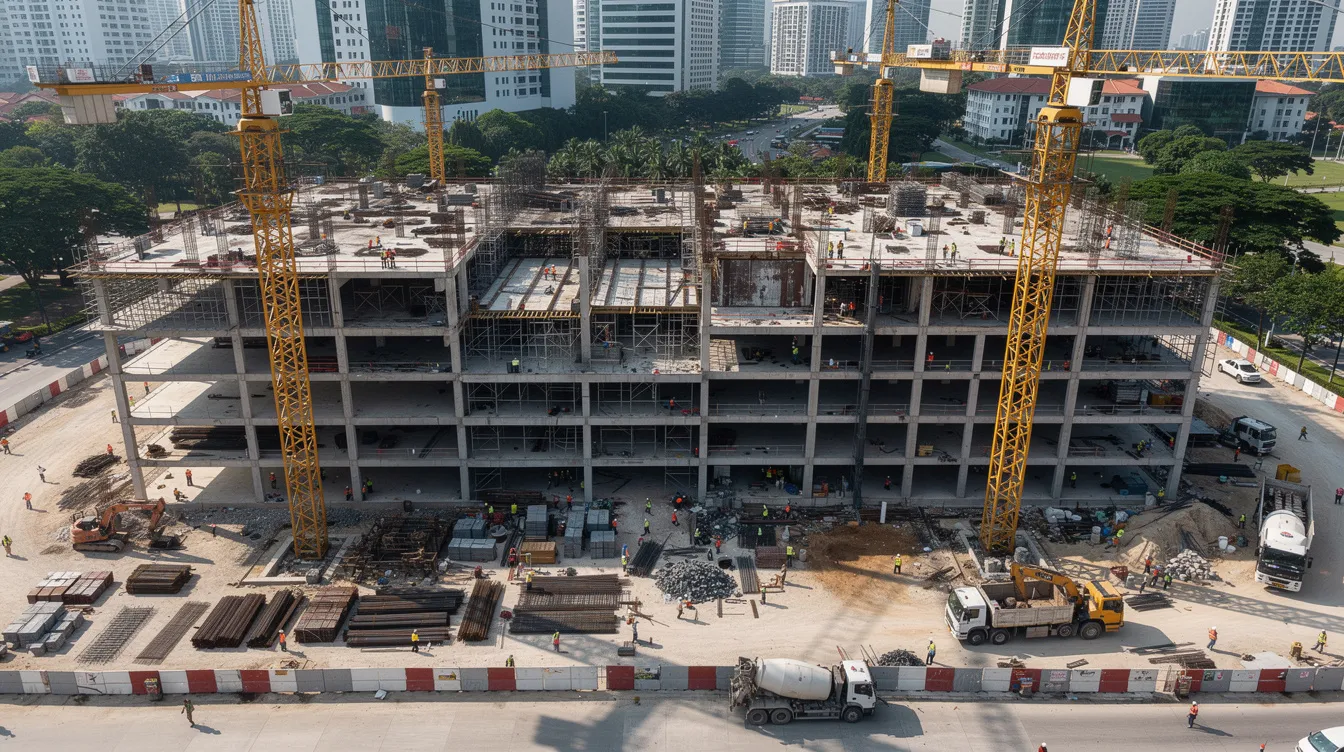
Understanding QP and PE in Singapore’s Regulatory Framework
Singapore’s building safety regime rests on two statutes: the Building Control Act (Cap. 29), administered by BCA, and the Professional Engineers Act (PEA 1991), administered by the Professional Engineers Board (PEB). URA handles planning and land-use approvals; SCDF handles fire safety. Both “QP” and “PE” are terms defined in these specific statutes, not generic job titles. Understanding which statute governs which role is the first step to correctly staffing any project.
What is a Qualified Person (QP) under the Building Control Act?
A Qualified Person is a statutory role. Under Section 2 of the Building Control Act, a QP must be either a registered Architect under the Architects Act or a Professional Engineer under the Professional Engineers Act. In both cases, the person must hold a valid practising certificate. A QP can be either a registered Architect or a Professional Engineer depending on the project.
The QP is not a separate licence class. It is a function assigned to a specific project. Under Section 8 of the Building Control Act, the developer must appoint a QP(D) to prepare plans and a QP(S) to supervise the carrying out of building works. For geotechnical components, a separate QP(Geo) is required. BCA’s December 2025 circular on “Clarification on single QP” now requires projects with structural plan submissions from 20 December 2025 onward to have a single QP(S) for supervision, though the QP(D) may also serve as QP(S) if competent in both functions.
The QP is responsible for statutory plan submissions. Core responsibilities at the project level include ensuring plans comply with applicable codes, coordinating with BCA, URA, SCDF, and other regulatory bodies, and signing formal declarations to BCA. A QP must ensure compliance with all applicable regulations. QP submissions require compliance with specific laws and regulations, and Qualified Persons must submit plans to the BCA through the CORENET / CORENET X e-submission system.
What is a Professional Engineer (PE) and professional registration in Singapore?
A Professional Engineer (PE) is a licensed engineering professional who certifies the technical and structural adequacy of engineering works. PE status is discipline-specific: civil, structural, mechanical, electrical, geotechnical, and others. Registration requires an approved degree, at least four years of relevant practical experience, and passing the Fundamentals of Engineering (FE) and Practice of Professional Engineering examinations administered by PEB.
A PE focuses on technical design, engineering calculations, and safety compliance within their specialized discipline. A PE provides a PE endorsement by signing off on technical drawings and calculations, confirming that the engineering design meets code requirements and safety standards. PEs bear personal professional liability for the structural or technical adequacy of the systems they sign off on.
PEB also registers specialist professional engineers (SPEs) in areas such as geotechnical engineering, tunnelling, pressure vessel engineering, access platform engineering, and protective security. SPE registration requires substantial practical experience across core areas. For geotechnical SPE, these core areas include site investigations, pile load tests, temporary earth retaining structures deeper than 6m, slope protection over 6m, and foundation works for high-rise buildings. The Nicoll Highway collapse in 2004 triggered reforms that expanded the SPE framework and heightened demands for geotechnical specialist oversight.
How QP and PE Roles Intersect
Every QP must be a registered professional (PE or Architect), but not every PE or Architect is appointed as QP on each project. The distinction matters because QP carries statutory accountability to BCA and the Commissioner of Building Control, while PE carries professional responsibility to PEB and civil law obligations to clients. When one person acts as both QP and PE on a project, both sets of obligations apply concurrently; neither cancels the other. Understanding this intersection is the foundation for planning submissions, structuring contracts, and allocating risk on any commercial or industrial project.

Core Differences Between QP and PE Roles on Singapore Projects
From an owner’s or facility manager’s perspective, three questions matter: who can submit what to which authority, who is legally responsible if something goes wrong, and how does this affect approval timelines. This section breaks down the differences by scope, appointment mechanism, authority interface, and legal accountability.
Scope of work: statutory compliance vs technical design
The QP’s scope centres on ensuring statutory and regulatory compliance across all plans and submissions to BCA, URA, SCDF, LTA, NEA, and PUB. The QP coordinates across disciplines, checks that plans meet the Building Control Act and its regulations, and signs legal declarations on behalf of the project. QP roles include legal responsibility for project submissions.
The PE’s core scope is competent technical engineering design: load paths, foundations, M&E system sizing, fire protection engineering, and discipline-specific safety performance. The design intent of any engineering system is the PE’s domain. In practice, a C&S PE often performs both deep structural design work and acts as QP(D) or QP(S) for structural submissions.
Consider a new industrial building. The architect serves as Architect QP for building plan submissions to BCA and URA. A C&S PE is appointed as QP(S) for structural supervision and also performs the structural design. An M&E PE separately designs and endorses the mechanical and electrical systems. Each person’s scope is distinct even though all work on the same project.
Appointment and accountability: who signs for what?
The QP is formally appointed by the developer or owner through BCA’s e-submission system (CORENET X from 2024 onward) and appears on authority records as the named responsible person. This appointment is project-specific and non-delegable. A PE can be engaged purely as a design checker or specialist consultant without being recorded as the project QP.
QP carries non-delegable statutory obligations: accurate declarations, notification of safety issues to the Commissioner of Building Control, and supervision of building works. A QP’s duties include notifying authorities of any contraventions. A PE carries professional and contractual obligations to perform design competently within the PE’s area of registration. Authorities look at the named QP for compliance enforcement; PEB looks at the individual PE for professional conduct. Companies cannot absorb these personal responsibilities entirely, which is why directors can face personal liability under statutory laws if they fail to ensure proper appointments are in place.
Authority interaction: single regulatory face vs multiple specialists
The QP serves as the primary interface with BCA and typically coordinates approvals from URA, SCDF, LTA, and PUB. Discipline PEs support the QP with calculations, reports, and discipline-specific submissions. For example, a fire safety engineer PE prepares a performance-based fire design while the QP handles the SCDF lodgement.
Misalignment between the design PE and the appointed QP for a given work category causes BCA or SCDF to reject submissions. If a PE endorses structural calculations but a different, non-appointed person attempts the QP submission, the authority will not accept the filing. This distinction between the QP as the single regulatory face and PEs as technical specialists is what drives the project team structure on every commercial development in Singapore.
How QP and PE Roles Play Out Across the Project Lifecycle
A typical commercial or industrial project in Singapore moves from concept through authority submission, construction, and finally TOP/CSC. QP and PE responsibilities shift at each stage, and gaps at any stage create downstream delays.
Pre-submission and concept stage: mapping out who you need
Before any drawings reach BCA or URA, the owner should confirm which QP and which PEs are needed. A standard commercial project typically requires an Architect QP, a C&S PE (who may also serve as QP for structural works), an M&E PE, and potentially a fire safety consultant. For projects involving deep foundations or basement excavation, a geotechnical SPE is required.
An experienced firm can run a regulatory trigger review to identify whether the proposed works fall under minor A&A, full building works, conservation, or change-of-use requiring URA and BCA approvals. This mapping step prevents a common failure: assuming a contractor’s in-house drafter can handle submissions without a formally appointed qualified person, and it is also the right stage to get early professional advice before appointments and submissions are assumed.
Design and authority submission stage: QP as lead, PEs as technical backbone
During design, the Architect QP or C&S QP prepares and lodges building plan submissions to BCA and other agencies via CORENET X. Discipline PEs (C&S, M&E, geotechnical, façade) provide signed calculations, reports, and PE endorsements underpinning those submissions.
Take adding a mezzanine floor in a warehouse. The C&S PE calculates additional loads on existing columns and foundations, produces structural drawings, and signs the PE endorsement. The QP then incorporates these into the QP submission to BCA, ensures fire compartmentation is addressed, and coordinates with SCDF if exit routes change. Approvals are contingent on both: sound PE design and correct QP statutory submission. If the PE’s calculations are inadequate, BCA will reject the structural plans. If the QP’s submission documents are incomplete, the filing will not proceed regardless of the quality of the PE’s work.

Construction stage: QP(S) supervision and PE site inspections
The QP(S) carries the statutory duty of supervising structural works under the Building Control Act, including appointing a Resident Engineer (RE) or Resident Technical Officer (RTO) where required. The QP(S) must inspect works, ensure constructions follow approved plans, and notify the Commissioner of Building Control of any contravention.
PEs conduct key inspections at critical stages: piling, deep excavation, temporary works installation, and structural load tests. For high-risk elements such as basement excavation near MRT lines, LTA and BCA may require named PEs with specific experience and clear QP-to-PE accountability chains. The QP’s role includes supervising construction to ensure compliance, while the PE verifies that the engineering design performs as intended under actual site conditions.
Completion, TOP, and CSC: final declarations and certifications
QPs lead the TOP and CSC application process, coordinating “as-built” submissions and clearances from SCDF, PUB, NEA, and other agencies. A Temporary Occupation Permit is required for building occupancy, and the QP’s formal declarations to BCA are what trigger the issuance process.
PEs provide final certifications: structural completion certificates, M&E testing and commissioning sign-offs for ACMV, electrical systems, and fire protection systems. A PE’s pre-FC site inspection confirms that installed systems match approved designs. False or negligent declarations by QP or PE at this stage can trigger enforcement action, fines for non-compliance that can reach up to S$200,000, and disciplinary proceedings under the PEA. QP and PE accountability does not end at CSC; both remain exposed to claims for defects or failures discovered after completion.
Deciding When You Need a QP, a PE, or Both
Many A&A, fit-out, and minor works still have statutory thresholds that dictate when QPs and PEs must be involved. Misjudging these thresholds is one of the most common reasons commercial projects face delays.
Typical scenarios for commercial and industrial properties
-
Office interior renovation without structural changes. If work is purely cosmetic (partitions, flooring, ceiling replacement) with no impact on structure or fire compartmentation, it typically falls under BCA’s minor works guidelines and does not require a QP or PE for submission. However, if fire escape routes change or fire-rated walls are affected, SCDF and BCA submissions become mandatory.
-
Adding heavy equipment on a rooftop. Rooftop chiller units or solar panel arrays add load to the structure. This scenario requires a C&S PE to design load capacity and provide PE endorsement for structural calculations, plus a QP to submit revised structural plans to BCA. If loads cross thresholds for major building works, an accredited checker may also be required.
-
Converting a warehouse to F&B use. Change-of-use triggers URA approval. Plans altering fire escapes or compartments require SCDF clearance. The project needs an Architect QP for URA and BCA submissions, a C&S PE or QP for structural aspects, an M&E PE for ventilation and electrical, and a fire safety engineer PE. This is a case where a diverse range of professionals must work together under clear role assignments.
-
New multi-storey industrial building. Full project team: Architect QP, C&S PE/QP, M&E PE, and potentially geotechnical SPE and façade PE. Each discipline requires distinct appointments.
Quick decision guide for owners and managers
Run through these questions before engaging consultants:
-
Are you changing structural elements? (Removing walls, adding floors, cutting openings.) If yes: C&S PE design + QP submission to BCA.
-
Are you altering fire escape routes or compartmentation? If yes: fire safety PE + QP submission to SCDF.
-
Are you changing the use of the space? (Warehouse to office, industrial to retail.) If yes: Architect QP for URA + BCA; M&E PE; possibly C&S PE.
-
Are you installing equipment that adds load to the building? If yes: C&S PE endorsement + QP structural submission.
-
Are you excavating near property boundaries or adjacent structures? If yes: geotechnical SPE + QP(Geo).
For each “yes,” confirm who is named QP and which PEs are signing endorsements before any work begins. A QP design consultation scope checklist helps formalize this early.
How QP vs PE roles affect cost, timeline, and risk
QP fees cover statutory submissions, authority coordination, formal declarations, and legal accountability. These fees reflect more than drawing production; they include the QP’s personal exposure to fines and prosecution, and owners may ultimately pay for delays, rework, or enforcement consequences caused by incorrect appointments.
PE fees cover in-depth engineering design, calculations, risk assessments, and on-site inspections. A PE endorsement for renovation works, for example, requires the PE to verify structural adequacy and sign off personally, with the required level of review depending on the nature of the works.
A common misunderstanding: the cheapest “design” quote may exclude QP appointment or PE endorsements. This omission surfaces later as add-on costs and programme delays when BCA rejects submissions for lacking a named QP or PE sign-off.
|
Approach |
Likely outcome |
|---|---|
|
Both QP and PE roles correctly appointed |
Smoother approvals, predictable TOP/CSC timeline, clear accountability |
|
Designer engaged without QP/PE appointment |
Potential stop-work orders, BCA rejections, fines for non-compliance that can reach S$200,000 |
|
QP appointed but specialist PE omitted |
Submissions returned for missing endorsements; redesign required |
Legal Duties, Personal Liability, and Insurance
Individual PE and QP accountability is the backbone of Singapore’s workplace safety and building control regime. Statutory liability holds companies accountable for legal compliance, but the law also holds named individuals responsible.
Statutory duties of QP under the Building Control Act
Under Section 9 of the Building Control Act, the QP(D) must take “all reasonable steps and exercise due diligence” to ensure plans comply with the Act and building regulations. The QP(S) must inspect and supervise works, ensure constructions follow approved plans, and notify the Commissioner of Building Control of any contravention. These are statutory duties that cannot be delegated to drafters, RE/RTO, or contractors.
A QP must ensure compliance with the Building Control Act. Penalties under the Act for breach of QP duties include fines up to S$20,000, imprisonment up to 12 months, and daily fines for continuing contraventions. Fines for statutory breaches can reach up to S$200,000 in Singapore for more serious violations. Fines for QP non-compliance can reach S$200,000. An alleged breach triggers investigation by BCA and can result in prosecution under criminal law, with sanctions extending to responsible directors and employees involved in the contravention, as well as referral to the relevant professional registration board.
Professional duties of PE under the Professional Engineers Act
PEs must practise only within their area of competence, exercise due care and skill, and adhere to PEB’s Code of Professional Conduct and Ethics. The Professional Engineers Board administers the disciplinary framework: a Disciplinary Committee can suspend a PE for up to two years, revoke professional registration, impose fines up to S$50,000, and order costs. For serious misconduct including fraud or dishonesty, registration may be cancelled permanently.
Statutory liability includes penalties for workplace safety violations, and PEs who certify unsafe designs face both disciplinary action and civil claims. Making false entries in registration or procuring registration improperly leads to fines up to S$5,000, imprisonment up to six months, or both. Where a PE is also the QP, both statutory and professional regimes apply concurrently for negligent conduct; a single act of negligence can trigger penalties under both the Building Control Act and the PEA, whereas deliberate misconduct may attract separate consequences.
Professional indemnity and statutory liability insurance and corporate structures
Reputable firms maintain statutory liability insurance and professional indemnity (PI) coverage to protect clients and stakeholders if something goes wrong. Statutory liability insurance covers legal costs for unintentional breaches of safety laws and regulations. Statutory liability policies typically cover defence costs and penalties arising from regulatory prosecution, while a broader insurance policy may also address property damage claims and third-party injuries.
Insurance backs financial risk but does not erase personal accountability. An insured firm’s PI coverage pays for defence and damages, but a QP or PE who is held liable under statute still faces personal consequences: loss of practising certificate, suspension, or criminal penalties. Directors can face personal liability under statutory laws if they fail to ensure proper QP and PE appointments. Firms that manage risk well use internal design checks, peer reviews, and documented supervision plans aligning QP and PE responsibilities; these processes reduce potential liabilities for all parties involved.

Common Pitfalls Owners Face When Dealing with QP vs PE Roles
Many commercial owners only discover the QP-PE distinction when facing rejected submissions or enforcement actions. These are the three most frequent mistakes.
Assuming a contractor or drafter can “handle the submission”
Some owners rely on contractors’ in-house draftsmen or “runners” to lodge BCA submissions without verifying that a formally appointed qualified person is named on the filing. Only a QP can submit plans to the Building Authority. Submissions filed without a properly appointed QP are not recognized by BCA. The risks include liability loopholes (no one is personally accountable for compliance), uncoordinated designs, and enforcement actions against the owner.
Corrective action: before any submission, confirm in writing who is named QP on BCA’s system and which PEs are signing endorsements. Review the appointment process to verify that the person holds a valid practising certificate in the relevant discipline.
Misaligning scope: thinking QP includes all PE services
Some engagement letters label one consultant as “QP” and assume that appointment covers all engineering design, supervision, specialist certifications, and authority coordination. In practice, a QP appointment may cover only building plan submissions, while façade engineering, geotechnical design, temporary works, or fire safety require dedicated PEs with separate endorsements.
Request a detailed scope matrix from your consultants. The matrix should state which party is QP and PE for each discipline and each authority. This prevents gaps where, for example, no one is appointed to provide the geotechnical PE endorsement for deep foundation works, or no fire safety engineer PE has been engaged for SCDF compliance.
Late engagement of QP/PE and last-minute redesigns
Tenants and owners sometimes complete internal layout designs first, then approach a QP or PE days before lease commencement or contractor mobilisation. Late engagement regularly uncovers non-compliant layouts: insufficient exits, excessive floor loading, fire compartments breached by new openings. The result is redesign, resubmission, and delay.
Engage consultants as soon as change-of-use, new equipment installation, or structural alterations are under consideration. Early involvement means compliance issues surface during schematic design when changes cost hours, not during construction when changes cost weeks and tens of thousands of dollars. A firm providing integrated architecture and engineering services can identify all required QP and PE roles at the outset, manage authority submissions, and coordinate inspections and certifications across the full project lifecycle.
Conclusion and Next Steps
QP vs PE is not a “which is better” question. It is about correctly aligning statutory and professional roles so that building safety is maintained, authority approvals proceed without rejection, and no individual or company faces avoidable enforcement action.
Three points to retain:
-
A Qualified Person (QP) is a statutory role. The QP is the statutory gatekeeper for submissions under the Building Control Act.
-
A Professional Engineer (PE) is a registered professional credential. The PE is the licensed professional responsible for engineering design and endorsements.
-
Owners should ensure both roles are clearly appointed, coordinated, and documented for every project that triggers BCA, URA, or SCDF requirements.
Next steps for owners and managers:
-
Audit current projects to confirm who is named QP and which PEs are appointed for each discipline.
-
Review appointment letters and consultancy agreements for clear scope of QP vs PE responsibilities.
-
Engage a qualified consultancy early in planning for upcoming projects to prevent scope gaps and submission delays.
-
Set up an internal checklist for future A&A or fit-out works to flag when QP/PE involvement is mandatory.
-
Review your firm’s statutory liability policies and professional indemnity coverage to confirm they address the risks specific to your project types.
For related reading, explore how authority approval workflows operate in Singapore, what goes into a periodic structural inspection checklist, and how A&A works differ from reconstruction in terms of submission requirements.
FAQs on QP vs PE Roles in Singapore
These questions come up repeatedly from commercial real estate managers and business owners dealing with building works in Singapore.
Is every PE automatically a QP in Singapore?
No. PE registration under the Professional Engineers Act is a prerequisite for acting as a QP in engineering disciplines, but QP appointment is project-specific and authority-specific. A PE must be formally appointed as QP for a particular project through BCA’s system and must hold a valid practising certificate. PE registration alone does not confer QP status on any project.
For small office renovations, do I really need a QP or PE?
If the work is non-structural, does not alter fire compartmentation or escape routes, and does not change the approved use of the space, it may fall under BCA’s minor works regime and not require formal QP or PE involvement. However, misclassification is common: removing a fire-rated wall or blocking an exit corridor triggers BCA and SCDF submission requirements. When in doubt, consult a qualified person to confirm whether your scope crosses a statutory threshold.
Can one person be both QP and PE for my project?
Yes. For C&S or M&E works, a single PE frequently acts as both design engineer and QP(D)/QP(S). BCA’s single-QP circular, effective for structural plan submissions from 20 December 2025, allows the QP(D) to also serve as QP(S) if competent. However, the Architect QP for building plan submissions is typically a separate appointment, and specialist disciplines (fire safety, geotechnical, façade) still require their own PEs.
Who is liable if something goes wrong: the firm or the individual QP/PE?
Both. The individual QP faces statutory liability under the Building Control Act, with penalties including fines and imprisonment. The individual PE faces professional liability and disciplinary action under the Professional Engineers Act, with fines up to S$50,000 and suspension or cancellation of registration. The firm faces contractual and tortious liability to the client and third parties. Enforceable undertakings and prosecution can apply to both the individual and the corporate entity. Owners should appoint established practices with current professional indemnity insurance and verify that named individuals hold valid practising certificates.
How can AEC Technical Advisory help me navigate QP and PE appointments?
AEC Technical Advisory provides integrated architecture and engineering services, which means the firm can identify all required QP and PE roles for a project from the outset. The firm manages authority submissions across BCA, URA, SCDF, and other agencies, coordinates PE endorsements for structural, M&E, and specialist disciplines, and oversees site inspections and certifications through to TOP and CSC. Early engagement with an integrated consultant prevents the scope gaps and late-stage redesigns that cost commercial owners time and money.