
Introduction
An accredited checker for retaining structures provides independent verification that earth retaining and stabilising structures (ERSS) on Singapore infrastructure projects are safe, constructable, and compliant with the Building Control Act. On roads, MRT lines, deep basements, and drainage corridors, the specialist accredited checker – particularly the AC(Geo) – reviews geotechnical building works independently from the project’s qualified person, catching design gaps and ground-movement risks before they become site incidents. Drawing practical lessons from Singapore sites where these checks have shaped real outcomes is what separates competent delivery from costly surprises.
This article focuses on site-based, practical insights from Singapore infrastructure works – ERSS for cut-and-cover tunnels, highway embankments, MRT station boxes, and soil-nailed slopes – rather than a theoretical walkthrough of the statutory framework. It is written for developers, contractors, and project managers delivering infrastructure, as well as QP(C&S) and QP(Geo) professionals who want smoother BCA and LTA approvals for retaining structures.
In short: an accredited checker adds independent safety verification, reduces ground deformation risk near sensitive assets, and prevents regulatory delays by ensuring structural plan submissions are complete and technically robust before they reach the authorities.
By reading this article, you will:
-
Understand when and why AC/AC(Geo) involvement is crucial for retaining structures in infrastructure works.
-
Learn concrete lessons from recent Singapore projects (2015–2026) on site investigation, design checks, and monitoring.
-
See practical workflows that integrate AC reviews into design and construction stages.
-
Get a checklist to avoid typical BCA queries and site incidents linked to retaining walls and ERSS.
-
Know how AEC Technical Advisory supports accredited checking and coordination for infrastructure schemes.
Understanding Accredited Checking for Retaining Structures in Singapore
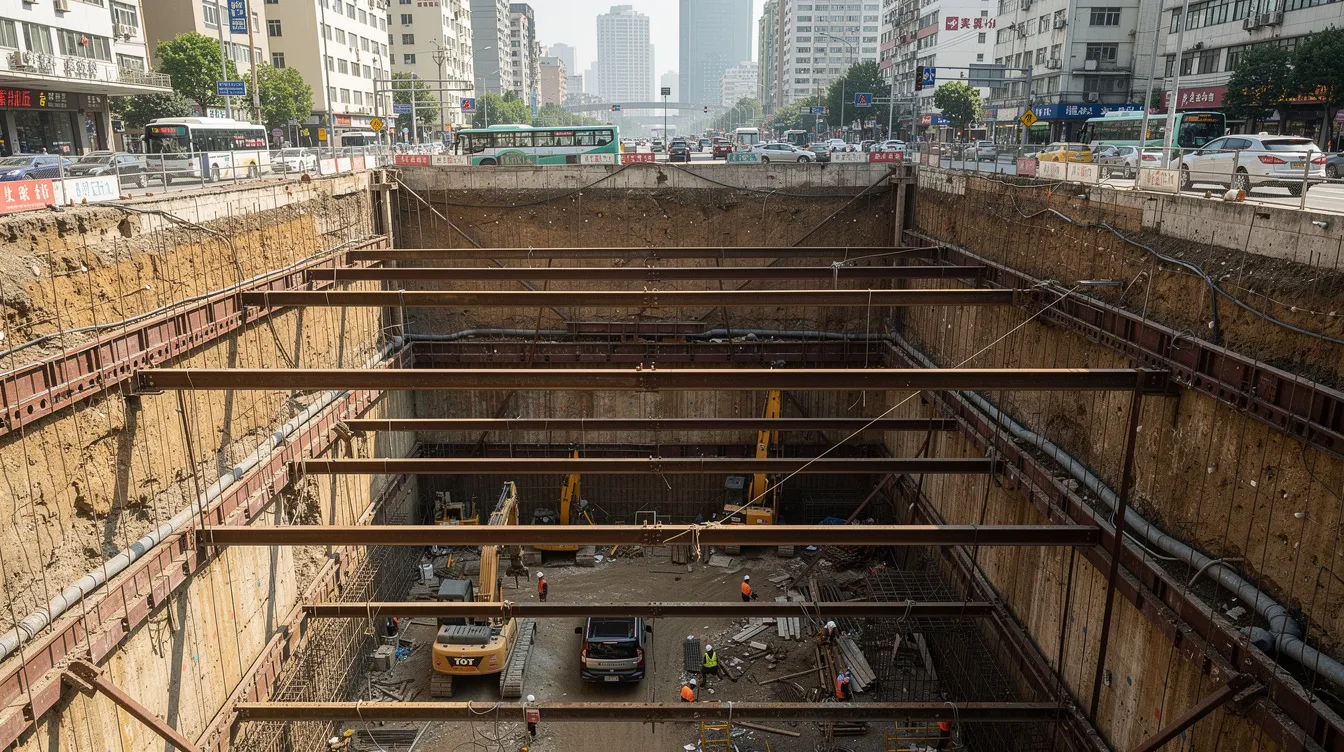
Accredited checking for retaining structures in an infrastructure context means an independent, qualified engineer reviews the structural design and geotechnical aspects of systems that hold back soil, water, or both – diaphragm walls for MRT station boxes, sheet pile walls along expressway interchanges, MSE walls at ramp abutments, and soil nail walls beside arterial roads. The Building Control Act 1989 governs retaining structures in Singapore, mandating that these high-risk building works undergo independent structural design checks before construction proceeds.
The AC and specialist AC(Geo) roles sit alongside the qualified person (structural/civil) and qualified person (geotechnical) within BCA’s building control regime. While the QP takes responsibility for the proposed design and structural plan, the accredited checker performs a comprehensive review – including independent calculations – to confirm the design’s adequacy. Where geotechnical building works are involved (excavations over 6 metres, retaining structures in soft marine clay or reclaimed fill, works near Railway Protection Zones), a specialist AC(Geo) with deep geotechnical engineering experience is required. The geographical and geological complexities in Singapore necessitate rigorous geotechnical checking, particularly in Kallang Formation marine clays where undrained shear strength can fall below 25–40 kPa.
Core Responsibilities of an Accredited Checker on Retaining Structures
The AC’s independent review role on infrastructure retaining structures goes well beyond a document-level check. Accredited Checkers must verify structural design compliance across the full range of earth retaining structures – ERSS walls, soil nail walls, reinforced soil walls, and permanent basement retaining walls that serve as structural elements. Independent checking requires original calculations by the accredited checker, not just review of others’ work. This means the AC runs separate structural analysis and geotechnical capacity assessments to confirm that the QP’s design calculations are sound.
On infrastructure sites, specific tasks include checking wall stability under earth and water pressures plus surcharge (traffic, adjacent fill, construction loads), verifying basal heave resistance for embedded earth retaining wall systems, and confirming global stability for slopes and abutment transitions. The AC also reviews strut and anchor loads, pile wall embedment including founding or penetration depth into competent strata, and effects on adjacent roads, utilities, and MRT assets. Accredited Checkers assess the load-transfer mechanisms and potential failure points in retaining structures, including pile lateral geotechnical capacity and pile shaft friction where walls are founded on piles.
A critical responsibility is verifying that construction methods – top-down versus bottom-up sequencing, staged embankment loading, ground support systems – match the design assumptions used in analysis. If the actual construction sequence differs from what the structural design assumed, the safety envelope may be invalidated. The aftermath of historical collapses led to stricter mandates for independent structural reviews in Singapore, and inadequate design in past projects highlighted the need for strong regulatory oversight of geotechnical works. These public-safety implications are acute near expressways, viaducts, and existing tunnels where ground movement above allowable limits can cause structural damage and service disruption.
How Infrastructure Retaining Structures Differ from Building Projects
Infrastructure retaining structures differ from building basement walls in ways that fundamentally change the emphasis of accredited checking:
-
Scale and geometry: Infrastructure walls are often long and continuous – running hundreds of metres along a road corridor or MRT alignment – compared with the compact rectangular plans of building basements. The longer the wall, the higher the probability of encountering differential ground conditions, pockets of weak fill, or varying groundwater and piezometric levels along its length.
-
Complex traffic staging and utilities: Infrastructure works operate adjacent to live carriageways, existing public utilities, and MRT lines, imposing dynamic structural loads and limiting access for construction and instrumentation. Utility diversions and traffic management add layers of temporary loading that must be captured in design.
-
Multiple agency interfaces: Beyond BCA, infrastructure projects must satisfy LTA’s Civil Design Criteria (including E/GD/09/106/A2 for embedded retaining wall design), PUB drainage requirements, NParks, JTC, and sometimes URA or Coastal Protection standards. The AC must be conversant with these layered regulatory requirements.
-
Long-term performance: Infrastructure walls, embankments, and MSE walls must perform over decades under consolidation, groundwater fluctuation, and evolving traffic surcharge – a different durability horizon than typical building works.
These differences mean that lessons drawn from actual Singapore infrastructure projects carry particular value for project teams planning their next retaining structure submission.
Singapore Infrastructure Retaining Structures: Typical Systems and Risk Drivers
Before examining practical lessons from specific sites, it helps to understand the retaining systems commonly checked by ACs on Singapore infrastructure projects and the risk drivers that shape the geotechnical scope of those checks.
Common Retaining Systems on Roads, MRT and Drainage Corridors
Singapore infrastructure sites deploy a range of retaining systems, each triggering different levels of AC involvement under current BCA practice:
-
Diaphragm walls and secant bored piles: Used for MRT station boxes, underpasses, and depressed roadways, especially in deep excavations exceeding 20 m through soft marine clay. Tanjong Rhu MRT station, for example, required diaphragm wall panels extending approximately 81 m depth through reclaimed fill over marine clay. Excavations deeper than 6 m require a specialist accredited checker review as AC(Geo) involvement becomes mandatory.
-
Sheet pile and soldier pile ERSS with struts or anchors: Common for cut-and-cover tunnels, utility diversions, and temporary excavation works. One documented case involved a 14 m deep, 20 m wide cut using steel pipe pile walls with three levels of struts and Deep Cement Mixing ground improvement beneath formation level.
-
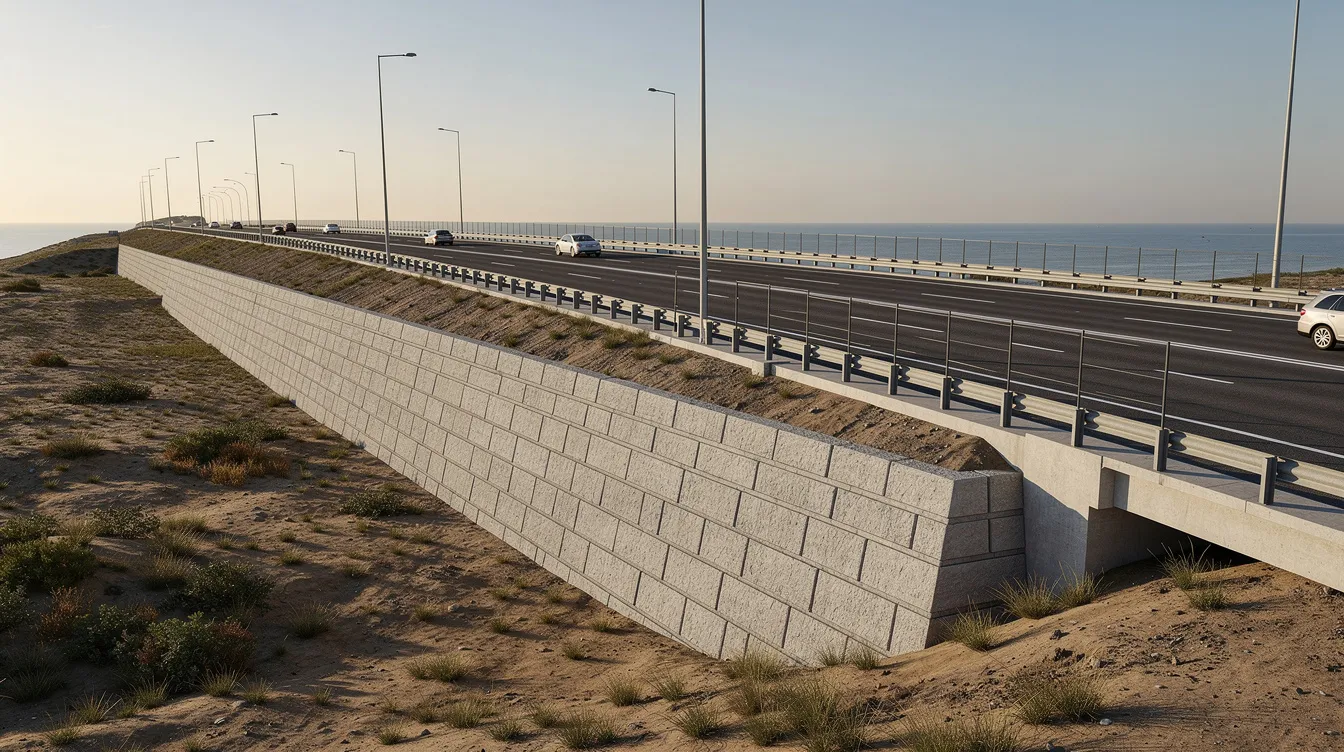
Mechanically Stabilised Earth (MSE) and reinforced soil walls: Reinforced soil walls are common along expressway corridors – ramps, abutments, and retained embankments on reclaimed land. These require consideration of long-term settlement, bearing capacity of the founding material, and negative skin friction on any embedded piles.
-
Soil nail walls and cut slopes: Soil nail walls are used for cut slopes in hillside developments and road widenings. These involve mixed residual soil and weathered rock profiles, making slope stability analyses and drainage design critical, particularly during monsoon seasons.
Each system’s risk profile determines whether it is classified as geotechnical building works and whether the second and third schedules of the accredited checking organisations regulations apply.
Key Geotechnical and Structural Risk Drivers on Singapore Sites
The AC’s detailed review of infrastructure retaining structures is shaped by several persistent risk drivers:
-
Soft marine clays and reclaimed fill: Thick layers of Kallang Formation marine clay (Upper and Lower Marine Clay) with low soil strength characterise sites at Marina Bay, Tuas, Changi, and the eastern coastal corridor. Fill layers can reach 15 m over marine clay, creating heterogeneous ground conditions with ongoing consolidation. The Nicoll Highway collapse involved marine clay with shear strength of only 20–40 kPa – a sobering reminder of what happens when ground conditions are underestimated.
-
High groundwater table and tidal influence: Coastal and reclaimed sites experience tidal groundwater fluctuations, hydraulic uplift, and seepage forces that must be accounted for in every excavation stage. The need to control groundwater is a recurring theme in AC reviews.
-
Proximity to sensitive existing structures: MRT tunnels, deep sewers, and expressway viaduct foundations are often within metres of new retaining works. In one Thomson-East Coast Line station project, the station box edge sat less than 10 m from an existing MRT viaduct, demanding intensive monitoring and tight deflection limits.
-
Traffic-induced dynamic loads: Permanent road surcharges, future ramp loadings, and construction plant near live carriageways contribute structural loads that, if inadequately considered, lead to underdesigned walls.
-
Long plan lengths with variable soil profiles: A 400 m MSE wall may cross zones of shallow fill over clay, sandy layers, and areas of different groundwater drawdown – each segment behaving differently and requiring zoned design.
These risk drivers collectively explain why the geotechnical scope of accredited checking on infrastructure projects is broader and more demanding than on typical building projects, and why the following case-based lessons carry weight.
Practical Lessons from Recent Singapore Infrastructure Sites
The following sub-sections present anonymised but realistic composite cases from 2015–2026 road, rail, and drainage projects. Each lesson is framed around how AC/AC(Geo) engagement affected outcomes and what future project teams can learn.
Lesson 1: Early AC(Geo) Input on Deep ERSS for MRT Station Boxes
On a 2018–2022 Downtown Line extension station in dense urban fill, the initial design assumed diaphragm wall panels with internal steel strutting for an excavation exceeding 20 m depth through soft fill and marine clay. The project’s qualified person had prepared a scheme based on desk-study soil parameters and limited initial boreholes.
Early engagement of the accredited checker during project design mitigated risks and avoided delays. The AC(Geo) challenged the assumed soil strength by insisting on back-analysis of instrumentation data from nearby completed stations. This led to the adoption of more conservative undrained shear strength values, supported by additional boreholes and piezometers installed to establish the groundwater regime and pore pressure profile during excavation. The AC(Geo) also reviewed the instrumentation layout – requiring inclinometers in retaining wall panels and settlement markers on adjacent heritage shophouses and utilities – ensuring the monitoring plan covered all zones of potential ground deformation.
The outcome: wall deflections remained under 10–12 mm, there was no spalling or structural distress, and the team received fewer BCA queries on basal heave. Early AC involvement translated to shorter construction stoppages and a smoother review process with LTA.
Practitioner takeaways:
-
Involve the specialist AC before finalising the ERSS concept and ground investigation scope.
-
Set soil parameters conservatively, backed by local data and back-analysis rather than generic correlations.
-
Ensure the instrumentation plan extends to adjacent structures and critical utility crossings, not just the wall itself.
Lesson 2: Managing Long MSE Walls along Expressways in Reclaimed Land
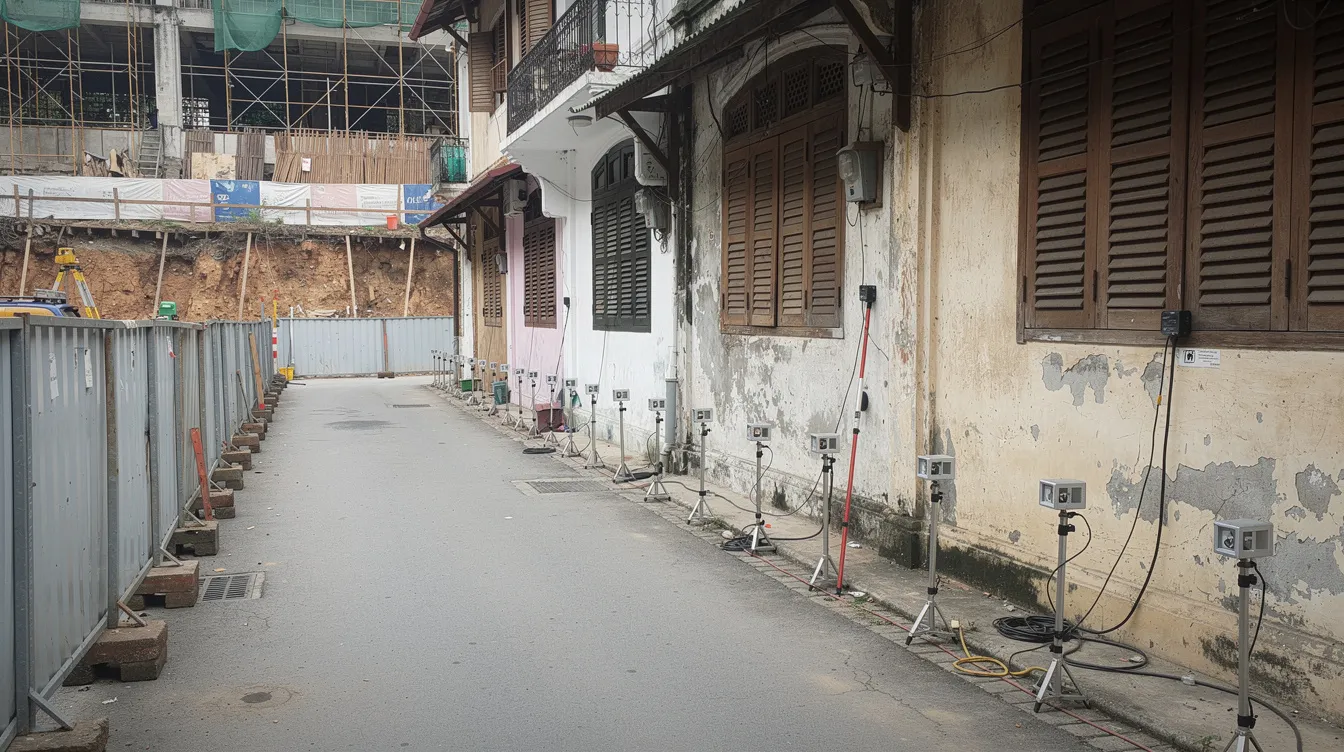
A 2016–2020 upgrading project on a coastal expressway ramp spanned approximately 400 m of MSE wall over reclaimed fill and marine clay in the eastern corridor. The subsoil profile varied significantly along the wall length: some zones had shallow fill over clay, while others had fill underlain by sandy layers with different consolidation characteristics.
The initial design treated the wall as a single uniform section. During the accredited checking review process, the AC flagged that this approach did not account for differential settlement risk. The AC recommended segmented design zones with variable reinforcement lengths and higher-tensile geogrid in weaker zones. The AC also insisted on staged embankment fill construction – adding surcharge in controlled stages with waiting periods to allow consolidation – rather than the contractor’s preferred rapid-fill approach.
Drainage design at the wall toe and along the face was refined to prevent erosion and surface run-off damage. Settlement plates and inclinometers were installed at transitions and in weaker zones. The result: long-term settlement under final surcharge remained within predicted bounds, differential settlement at transitions between MSE and rigid abutment sections was minimal, and maintenance issues were significantly reduced.
Practical lessons for future MSE walls:
-
Adopt segmental design zones along long wall lengths, keyed to site investigation data at each zone.
-
Allow consolidation waiting periods and monitor settlement before applying final surcharge.
-
Pay particular attention to drainage and toe design – these details drive long-term performance.
-
Coordinate reinforcement design and connection details with LTA’s technical requirements for future traffic loads.
Lesson 3: Soil Nail and Cut-Slope Stability near Existing Roads
Between 2019 and 2023, a road-widening project in hilly residual terrain required soil nail walls and cut slopes adjacent to a live arterial road. The earth slope involved mixed residual soil and weathered rock at shallow depths – a profile that creates variable nail performance along the face.
Challenges included rainfall-induced pore pressure spikes during the Northeast Monsoon season that were not adequately captured in the original slope stability sensitivity analyses. Once shotcrete facing was installed, access for instruments was limited, and the monitoring plan had gaps in critical berm zones.
The AC(Geo) demanded robust sensitivity analyses for extreme rainfall conditions, applying higher safety factors for slope stability under saturated and undrained conditions. Additional instruments were recommended in critical berms before facing installation, and alternative drainage details – drainage blankets, additional toe drains, and face drains – were specified to relieve pore pressures. The AC’s involvement also ensured that the monsoon readiness of the excavation was addressed as a design parameter, not an afterthought.
Measurable benefits: monitoring showed negligible post-construction movements over two years, and there were no lane closures due to slope distress – a significant outcome given the high traffic volumes on the adjacent road.
Implementing Effective AC Workflows on Infrastructure Retaining Structures
Statutory AC duties only translate into safer outcomes if embedded into project workflows from feasibility through to handover. This section sets out how infrastructure project teams – developers, QPs, ACs, and contractors – can practically structure collaboration under Singapore’s regulatory framework.
Recommended End‑to‑End Workflow for AC Involvement
The following generic but realistic process reflects local authority expectations as of 2024–2026:
-
Feasibility and concept phase: Conduct early risk screening for deep excavations, long MSE walls, and slopes. Engage a potential AC(Geo) to discuss likely classification as geotechnical building works. The 1.5m rule helps determine AC(Geo) requirements early – if the retaining wall or excavation approaches regulatory depth thresholds, plan for specialist AC engagement from this stage. Retaining structures over 6 meters require specialist accredited checker review.
-
Ground investigation planning: The AC(Geo) comments on borehole locations, in-situ testing (SPT, vane, CPT), groundwater observation, and laboratory tests results relating to both drained and undrained strength. From 1 March 2026, all SI reports must follow AGS(SG) format and be certified by an appropriate PE. Where AC and AC(Geo) input is sought, the site investigation should also be planned and reviewed to standards recognised within the structural engineering discipline. Insufficient ground investigation can lead to project compliance issues downstream.
-
Scheme and detailed design: The AC and AC(Geo) conduct iterative design reviews covering retaining wall types, embedment depth, support systems, groundwater and seepage assumptions, load combinations, and sensitivity analyses. Design calculations for stability, structural integrity, and movement predictions are checked independently. Construction method (top-down versus bottom-up) must match design assumptions.
-
Plan submission: Compile AC certificates (Form A / Form B), evaluation reports, drawings, SI report, instrument plans, and independence declarations for BCA and LTA. An accredited checker must submit a Certificate of Adequacy to BCA for compliance. Missing forms can delay BCA approval by weeks – the ERSS submission checklist helps avoid this.
-
Construction phase: Review method statements, instrumentation data, and design amendments. Instrumentation and monitoring are essential components of safety management during construction. AC sign-off is required for major changes. When deviations arise – movements exceeding predictions, water ingress greater than assumed – the AC must review and approve modifications.
-
Completion and handover: The AC confirms that retaining structures as constructed match the checked design, with monitoring records and as-built information documented. Any residual movements or ongoing monitoring requirements are flagged for the asset owner.
Coordinating Design, Monitoring and Construction Methods
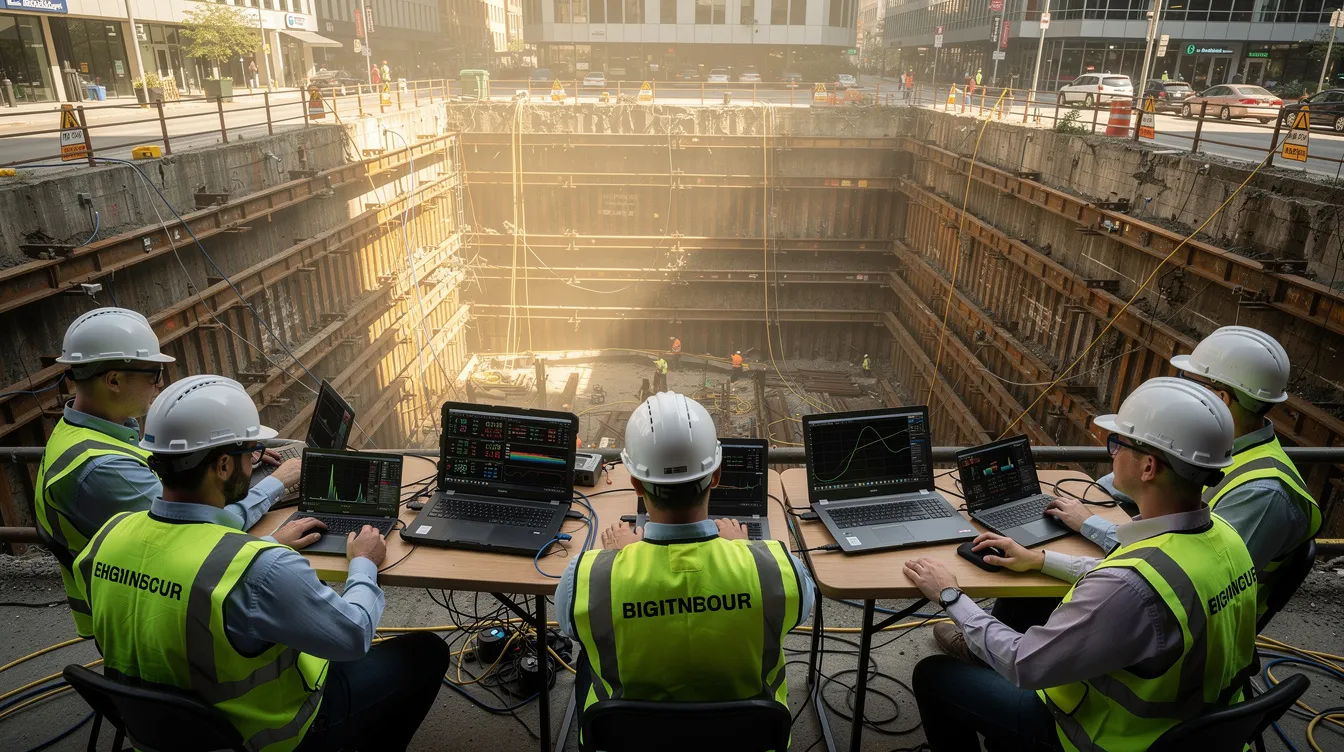
Effective retaining structure delivery requires alignment of three strands: design assumptions (soil strength, groundwater, traffic loads), instrumentation and monitoring (type, frequency, trigger levels), and actual construction sequence (traffic staging, wet-season planning, night works). Misalignment among these is one of the most common causes of site incidents and regulatory queries.
Examples of misalignment observed on Singapore sites and how ACs helped correct them:
-
Re-sequencing excavation stages: A contractor proposed removing a strut level earlier than the design assumed to accelerate works. The AC’s independent calculations showed this would exceed allowable wall deflections; the original staging was restored.
-
Revising trigger levels: Generic trigger levels set by the contractor at 30 mm wall deflection were far above the 15 mm limit required by the design. The AC imposed green/amber/red criteria derived from predicted movements and allowable limits for adjacent asset damage.
-
Requiring preloading before opening ramps: An MSE wall on weak ground needed consolidation under preload before the road surface could carry traffic. The contractor’s programme omitted the waiting period. The AC’s detailed review identified the gap, and a revised programme with monitoring-linked release criteria was implemented.
-
Adjusting groundwater control: On one coastal site, the dewatering system was less effective than assumed. The AC required supplementary pumping and cutoff grouting to maintain the design assumption for water pressure on the wall.
Project teams should build a shared “retaining structure coordination register” – maintained by the QP and AC – that logs critical design decisions, construction sequencing milestones, monitoring plans, trigger thresholds, interface conditions, and any deviations with their approvals.
Comparing Approaches: Minimal Compliance vs Best Practice AC Involvement
|
Criterion |
Minimal AC Approach |
Best Practice AC Involvement |
|---|---|---|
|
Timing of AC appointment |
Late – just before structural plan submission to BCA |
Early – during concept and ground investigation phases |
|
Depth of review |
Document-based; relies on QP’s design calculations without independent calculations |
Independent verification with original calculations, site visits, and transient-stage checks |
|
Monitoring integration |
Basic instruments with generic triggers set by contractor |
Custom instrument layout; tightly defined trigger/action thresholds linked to adjacent structures; regular dashboard reviews by AC |
|
Handling design changes |
Loose – post-construction change orders without formal AC re-check |
Formal method-change review flow with AC sign-off on all deviations; updated analysis before implementation |
Best-practice AC involvement tends to reduce unplanned stoppages, programme delays, costly remedial works, and claims from neighbouring property owners. For infrastructure owners, this translates to lower life-cycle risk and more predictable long-term maintenance costs. Accredited Checkers must have at least 10 years of experience, and specialist AC(Geo) requires 10 years in geotechnical engineering – this depth of technical competence is what makes early, thorough engagement so valuable, with the required experience for retaining structure checks grounded in the structural engineering discipline alongside geotechnical expertise where applicable.
Common Challenges and How ACs Help Resolve Them on Singapore Infrastructure Sites
This section distils recurring issues observed on real projects and maps them to actionable solutions involving accredited checkers.
Challenge 1: Inadequate or Poorly Targeted Ground Investigation
A common shortcoming on infrastructure projects is sparse boreholes along long walls, missing data at transitions (e.g. where an MSE wall meets a rigid abutment), and absent piezometers in coastal reclaimed zones. When site investigation is incomplete, the design operates on assumptions rather than evidence, and BCA queries inevitably follow.
The AC(Geo) can insist on additional investigation at abutment transitions, sharp plan curves, and major utility crossings. Where budgets limit new drilling, the AC may require correlation with nearby historic SI data to refine soil parameters. Accredited Checkers must be registered professional engineers under the Professional Engineers Act, giving them the authority and obligation to demand adequate investigation.
Solution checklist:
-
Lock in a GI review with the AC before finalising tender drawings.
-
Space boreholes at appropriate intervals along the full length of walls and slopes, with closer spacing near existing structures and utility crossings.
-
Include both drained and undrained strength laboratory tests, groundwater table measurements, and seasonal variation data.
-
Ensure SI reports meet AGS(SG) format requirements and are certified by a PE.
Challenge 2: Monitoring Data Not Properly Linked to Design Decisions
Many projects install instruments and take readings, but trigger levels are generic and action plans are vague. This creates a situation where data accumulates without driving timely decisions – movements escalate past the design envelope before anyone acts.
ACs help resolve this by defining clear green/amber/red criteria based on predicted movements and settlements from the structural analysis. Pre-defined contingency actions – rest periods, additional strutting, grouting – are tied to each trigger band. The AC reviews monitoring dashboards regularly during critical stages such as bottom-out of excavations and opening to traffic.
Challenge 3: Design Changes During Construction Without Proper Re‑Checking
Contractors frequently propose alternative retaining systems or construction sequences to save time or cost but do not route changes through formal AC review. This can invalidate design assumptions – for example, changing strut levels alters the bending moment distribution in the wall and may reduce structural integrity below acceptable limits.
A robust workflow requires method-change submissions with updated analyses, rapid-turnaround AC reviews that maintain professional and financial independence, and documentation of revised design envelopes for long-term records. Legal responsibilities of Accredited Checkers are personal and non-delegable under Singapore law – the AC cannot delegate the re-check to the contractor’s engineer.
Lessons for contract governance:
-
Include contractual provisions requiring all retaining system changes to be submitted to the QP and AC before implementation.
-
Allow for rapid-turnaround AC reviews (typically 5–10 working days for urgent changes) with pre-agreed fee structures.
-
Maintain a change register that captures the revised design envelope and as-built records for future widening or upgrading works.
Challenge 4: Interface Risks at Tie-Ins with Existing Infrastructure
When new retaining structures abut existing bridge abutments, MRT structures, or canal linings, differences in stiffness and foundation systems can cause differential settlement, cracking, and service disruption. These interface risks are often underappreciated until cracks appear.
ACs can highlight incompatibilities in stiffness and structural detailing, recommend transition slabs or flexible joints, and advise on additional monitoring at interfaces during and after construction. Early joint reviews with asset owners – LTA for MRT protection zones, PUB for drainage assets, JTC for industrial estate infrastructure – prevent conflicts in standards and expectations from surfacing late in construction.
Conclusion and Next Steps
Accredited checking for retaining structures on Singapore infrastructure projects is not just a statutory requirement under building regulations – it materially improves safety, constructability, and lifecycle performance. The practical lessons from recent Singapore sites consistently show that early, thorough AC involvement reduces redesign risk, prevents damage to adjacent infrastructure, and delivers smoother authority approvals. Accredited Checkers provide independent reviews of high-risk engineering projects in Singapore, and their value is greatest when engagement begins at concept stage rather than the week before submission.
Immediate actionable steps for project teams:
-
Screen upcoming projects for deep excavations, long MSE walls, and slopes that will likely require AC(Geo) involvement – use the 6 m depth threshold and proximity to sensitive assets as initial filters.
-
Engage potential ACs during concept and GI planning rather than just before BCA submission. Specialist Accredited Checkers require at least 10 years of experience – their early input on ground investigation and retaining system selection is where the most value is created.
-
Develop integrated design–monitoring–construction plans specifically for retaining structures, with trigger levels derived from design predictions.
-
Set clear internal protocols for design changes and AC re-checks during construction, with contractual backing.
-
Ensure professional indemnity insurance of at least S$500,000 is in place for the appointed AC – this is a regulatory requirement, not optional. Accredited Checkers must declare no conflicts of interest and must have no professional or financial interest in the project they certify.
Related topics worth exploring include temporary works design for deep excavations, tunnelling-induced settlements near retaining walls, and long-term asset monitoring strategies – all of which tie directly into retaining structure performance on infrastructure projects.
How AEC Technical Advisory Supports Accredited Checking for Retaining Structures in Infrastructure Projects
AEC Technical Advisory is a Singapore-based multidisciplinary consultancy experienced in civil, structural, and geotechnical works for infrastructure. The firm supports clients across the full lifecycle of retaining structure delivery – from early concept to completion and handover.
Specific ways AEC Technical Advisory supports infrastructure project teams:
-
AC/AC(Geo) classification guidance: Advising on when an accredited checker versus a specialist AC(Geo) is needed for retaining systems in expressway upgrades, MRT station boxes, drainage improvements, and industrial estate platforms. This early screening under building control requirements prevents last-minute scope changes.
-
Coordinated design and documentation: Preparing integrated civil, structural, and geotechnical designs with complete AC-ready documentation – including structural plan, evaluation report, and all statutory forms – for submission to BCA, LTA, PUB, JTC, and other agencies. This multidisciplinary approach ensures that structural detailing and geotechnical aspects are aligned in a single coordinated package.
-
Streamlined AC review collaboration: Collaborating closely with appointed ACs and AC(Geo)s to streamline review cycles, providing independent design check packages with independent calculations, clear construction staging diagrams, and well-documented design assumptions that accelerate the checker’s work.
-
ERSS and temporary works design: Providing temporary works and ERSS design that accounts for AC feedback on stability, movement control, and monitoring integration – covering everything from foundation systems and key structural elements to strut loads and groundwater control.
-
Instrumentation and monitoring planning: Assisting with instrument selection, placement, frequency, and defining trigger/action thresholds that are properly linked to the structural and geotechnical capacity of the retaining system.
-
Structural and façade inspections: Conducting inspections where new retaining structures interface with existing bridges, buildings, and slopes – ensuring that the structural engineering discipline’s requirements for both new and existing structures are met.
Frequently Asked Questions on Accredited Checkers for Retaining Structures in Singapore Infrastructure
These FAQs target practical queries from Singapore infrastructure project teams dealing with retaining walls, ERSS, and slopes.
When is a Specialist AC(Geo) typically required for infrastructure retaining structures?
Excavations over 6 meters require mandatory AC(Geo) review under BCA’s geotechnical building works classification, as defined in the third schedule of the building control accredited checkers and accredited checking organisations regulations. Beyond the formal thresholds, practical triggers that should prompt early planning for specialist AC engagement include retaining walls or slopes near Railway Protection Zones or major expressways, MSE walls on soft ground with significant long-term settlement risks, and any works where proximity to existing MRT tunnels or critical viaduct foundations creates interface risk. The QP should confirm classification with BCA early, but these rules-of-thumb guide initial planning and prevent programme disruption from late-stage reclassification.
How early should we appoint an AC/AC(Geo) for a new road or rail project?
Early engagement of accredited checkers during project design can mitigate risks and avoid delays. The recommended timeline is during concept or scheme design – typically 12–24 months before major retaining construction begins – not just before structural plan submission.
Value created at each early stage:
-
GI planning: AC(Geo) input on borehole spacing, in-situ test types, and groundwater monitoring locations along the alignment.
-
Option evaluation: Independent perspective on whether diaphragm walls, secant piles, MSE walls, or soil nails best suit the ground conditions and programme.
-
Preliminary risk assessment: Identifying where approved plans may face BCA or LTA queries, allowing the QP to address issues before formal submission.
Can we change the retaining system after tender if a contractor proposes an alternative?
Changes are possible but must be fully redesigned by the QP and independently re-checked by the AC/AC(Geo). The revised design must maintain or improve safety margins and predicted movements versus the original design, and must be resubmitted to BCA and relevant agencies with updated design calculations and drawings. Accredited Checkers must declare no financial interest in projects they certify, ensuring their re-check of the alternative remains independent. Programme risks are significant if AC re-checking is treated as an afterthought – allow adequate time for independent verification in the revised programme. Accredited Checkers must carry at least S$500,000 in professional indemnity insurance, and such registration requirements apply equally to re-checks of alternative designs.
What documents should we prepare to enable an efficient AC check for infrastructure retaining structures?
A well-prepared submission package dramatically reduces review cycle time and should reflect the documentation standards expected across the structural engineering discipline for retaining structure checks:
-
Up-to-date factual and interpretative soil investigation reports for the full length of walls or slopes, in AGS(SG) format.
-
Retaining structure drawings showing staging, connection details, drainage, and interfaces with existing structures.
-
Design reports covering stability checks, movement predictions, load combinations (including structural loads from traffic and construction), and sensitivity studies.
-
Instrumentation and monitoring plans with proposed trigger levels and contingency actions.
-
Authorities’ correspondence (LTA, PUB, NParks, JTC) relevant to adjacent assets and protection requirements.
-
Completed AC certificate forms and independence declarations – Accredited Checkers must declare no conflicts of interest, confirming no professional or financial interest in the project.
How do AC recommendations affect construction sequencing and cost?
While some AC recommendations – additional struts, extended monitoring, revised drainage details – can add upfront cost or time, they typically:
-
Reduce likelihood of stoppages due to excessive movements or safety concerns, avoiding far greater programme losses.
-
Prevent damage to adjacent infrastructure that would be much more expensive to remedy than the cost of prevention.
-
Support smoother authority inspections and approvals, limiting programme slippage from queries on the structural plan or evaluation report.
-
Provide documented evidence of due diligence under the Building Control Act, reducing exposure to professional liability insurance claims and regulatory action.
The net effect, consistently observed on Singapore infrastructure sites, is that best-practice AC involvement lowers total project risk and lifecycle cost – not just the construction-phase budget.