
Introduction
Qualified person supervision for precast and PPVC construction registers encompasses the structured documentation, inspection, and oversight responsibilities that a QP(S) must fulfil when projects use off-site manufactured concrete elements or volumetric modules in Singapore. These registers serve as the traceable backbone connecting design approvals, factory quality control, site installation checks, and rectification records – all under the direction of a qualified person appointed under the Building Control Act.
This article focuses on how QP(S) teams should plan, implement, and maintain supervision and registers specifically for precast concrete and PPVC (Prefabricated Prefinished Volumetric Construction) building works. The scope covers new-build and A&A projects in Singapore using these industrialised construction methods, addressing civil and structural aspects, authority compliance with BCA and SCDF where relevant, and site documentation. Detailed design calculations and overseas regulations fall outside this scope.
In short: QP(S) must implement risk-based supervision, maintain BCA-compliant registers for every precast and PPVC element across the full project lifecycle, and ensure complete traceability from design through fabrication, delivery, installation, and ultimately TOP/CSC submission. Failure to maintain site records is considered prima facie evidence of negligence under the Building Control framework.
The audience for this guide includes developers, main contractors, specialist precast and PPVC suppliers, and QP(S) teams – professionals who need practical, consistent guidance on compliance and best practice. By the end of this article, readers will:
-
Understand the statutory duties of a qualified person for precast and PPVC systems
-
Know what registers are required and what data they must contain
-
Learn how to create supervision workflows from factory to site installation
-
See how structured record-keeping supports TOP/CSC and reduces dispute risk
-
Appreciate how risk-based frameworks and digital tools optimise supervision effort

Understanding QP Supervision for Precast and PPVC Works
QP supervision for precast and PPVC works refers to the legally mandated oversight by a Professional Engineer or Architect – appointed as the Qualified Person for Supervision – who must direct, control, and document all activities related to the fabrication, delivery, and installation of off-site manufactured structural elements. Under Singapore’s Building Control framework, a Qualified Person (QP) is legally defined under the Building Control Act 1989, and the QP(S) is legally accountable for the entire project’s supervision. A developer must appoint only one QP(S) for project supervision, and that person must hold a valid practising certificate renewed annually.
These industrialised construction methods demand more rigorous planning, collaboration, and documentation than conventional cast-in-situ works. Off-site fabrication means defects in reinforcement placement, embedded items, or connection details may be hidden until installation – and fixing them later is costly or impossible. The QP(S) must therefore establish registers and supervision processes that capture quality data at every stage, from mould setup in the factory to the final grouted joint on site.
Regulatory Context: Building Control Act and BCA Guidance
The core regulatory instruments that define QP(S) responsibilities for precast and PPVC construction are:
-
Building Control Act and Building Control Regulations: These define the duties of developers, QP(S), and site supervisors; requirements for submission of building plans, amendments, and Record Structural Plans (C-Forms). The Building Control Act separates QP responsibilities into design and supervision – QP Design and QP Supervision have distinct legal duties, and multiple QP Designs can be appointed for specialized project parts while only one QP Supervision is required for each project, with potential professional, legal, and financial consequences if supervision duties are not properly discharged.
-
BCA Circulars on Precast and PPVC: The circular on Supervision of Precast Structural Elements requires site supervisors stationed at yards under QP(S) control, photographic records, and documentation of reinforcement installation before formwork closing. The December 2024 guidelines for standard performance tests on composite wall systems of concrete PPVC projects address mock-ups, material tests, and acceptance criteria.
-
Risk-Based Inspection Framework** (Annex 1)**: This sets risk classifications (low, medium, high), minimum supervision frequencies, site supervisor requirements, and critical component lists that explicitly include precast and PPVC modules.
These regulations connect to broader national goals in productivity through DfMA and safety. QP(S) documentation directly supports both – demonstrating compliance while enabling the efficiency gains that precast and PPVC systems are designed to deliver. A qualified supervisor is essential for ensuring structural quality, construction safety, productivity, and regulatory compliance.
Key Characteristics of Precast and PPVC Systems Affecting Supervision
Precast concrete elements include beams, slabs, staircases, façade panels, and structural walls manufactured in accredited local or overseas facilities. PPVC modules are free-standing volumetric units – bathroom pods, hotel room modules, student hostel units – built complete with finishes in accredited factories before being installed on site. For PPVC projects, supervisors must understand complex modular erection and DfMA quality controls.
Several characteristics of these systems directly impact how QP(S) must plan and manage supervision:
-
High level of off-site production control: Factory QA/QC operates under the manufacturer’s system, but the QP(S) must verify its adequacy and maintain oversight through registers capturing batch data, test results, and inspection outcomes
-
Heavy reliance on correct lifting, alignment, and connection details: Precast and PPVC construction involve significant safety risks during lifting and installation – modules in projects like the Clement Canopy weighed between 26 and 31 tons each
-
Limited opportunity to correct defects post-installation: Once a module is craned into position and grouted, remediation options become restricted and expensive
These traits make robust registers capturing design approvals, factory inspections, delivery condition, installation checks, and rectification actions not just valuable but essential for compliance.
From Concept to Site: How QP(S) Responsibilities Evolve for Precast and PPVC
QP(S) involvement should begin at the design stage, where review of the DfMA strategy, buildability, and structural concepts shapes the entire supervision approach. A Qualified Supervisor acts as the link between design intent, factory production, and site execution. During fabrication, the QP(S) must take all reasonable steps to supervise construction, whether elements are produced locally or overseas. At site assembly, the intensity of supervision peaks as connection works determine the structural integrity of the completed building.
The hand-offs between QP(D), QP(S), precast designer, PPVC manufacturer, and contractor are critical interfaces where information can be lost. Supervision records and registers are the primary tools that manage these transitions, ensuring every stakeholder works from the same approved plans, helping explain responsibilities and status clearly across those hand-offs, and ensuring that deviations are captured in real time.
With the roles and regulatory context established, the following section examines the specific registers that QP(S) teams must maintain – the practical tools that demonstrate due diligence across the entire precast and PPVC workflow.

Core Registers for Qualified Person Supervision in Precast and PPVC Construction
BCA expects systematic documentation of supervision, typically via structured registers maintained by or under the direction of the QP(S). QP Supervision must maintain detailed site records for accountability – these records form the evidential foundation for C-Form submissions, TOP/CSC applications, and any future investigation into structural performance. While formats may vary by project, certain content fields are consistently required to demonstrate traceability and compliance.
Design and Approval Registers
The design and approval register captures the complete revision history and authority clearance status of every precast element and PPVC module type on the project. Core fields include:
-
Element/module ID mapped to a drawing number, revision status, and approval date (for example: “PC-WALL-12A, Drg S-402 Rev C, approved 15 Jan 2025”)
-
PE endorsement details, including the professional engineer’s name, certificate number, and date of endorsement for structural adequacy
-
BCA submission and clearance dates, along with any conditions imposed, and SCDF clearance where fire-rated walls or compartmentation is involved
-
Revision history documenting what changed between versions and whether changes were assessed as material or immaterial deviations
This register is critical for preventing mismatches between factory shop drawings and approved authority plans – a common source of rework. When QP(D) issues revisions, this register should be updated immediately and cross-referenced with the BCA plan submission records to confirm that all parties are working from the current approved drawings.
Factory Production and Quality Control Registers
The QP(S) must ensure factories maintain and share QA/QC data, and a supervision register should summarise production quality for each element or module batch:
-
Production date, batch numbers, and concrete strength test results (cube tests at 7 and 28 days, slump values, mix design references)
-
Rebar heat numbers and mill certificates for all reinforcement steel, prestressing strand, and connectors
-
Dimensional checks and tolerance records for panels and modules, verifying compliance with design specifications
-
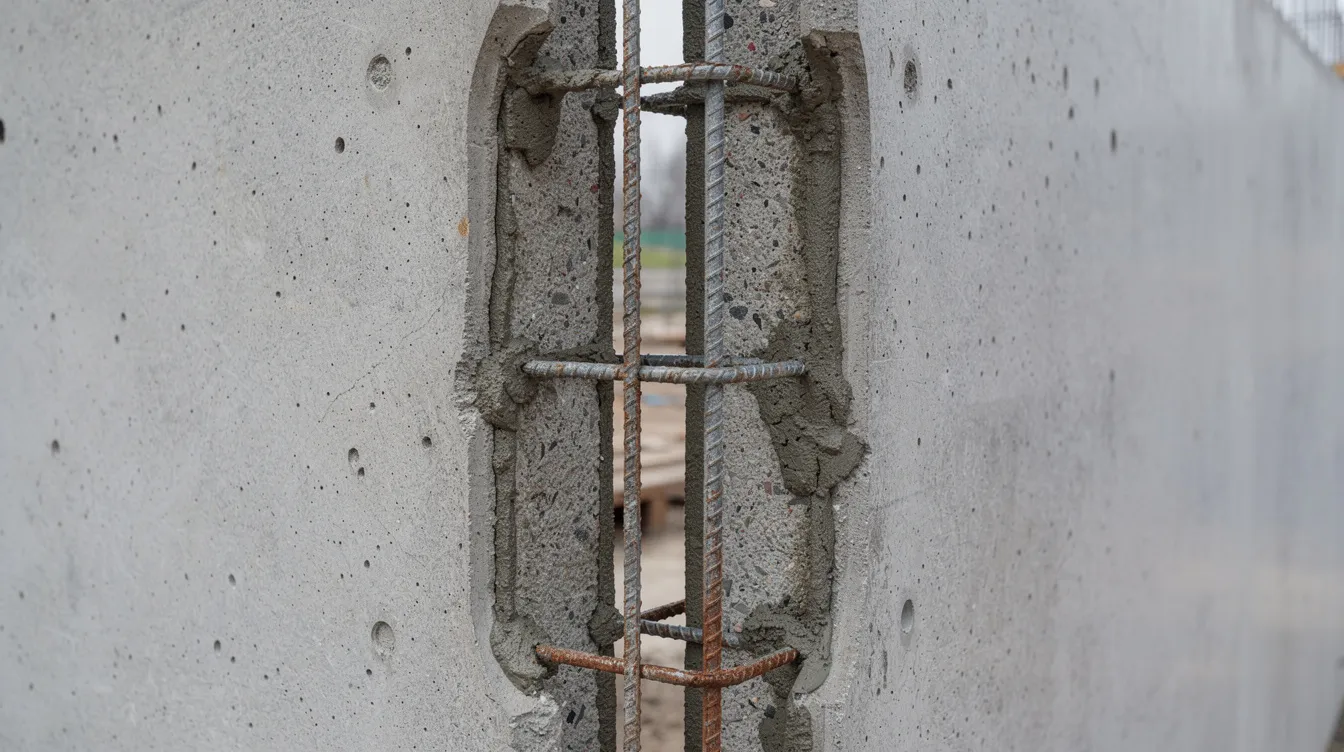
Embedded items – lifting anchors, mechanical couplers, splice sleeves, starter bars, box-outs – and their inspection status before concrete placement
-
Mock-up outcomes: For PPVC modules, BCA requires mock-up trials to resolve issues like bar congestion and connection accuracy; the QP(S) must approve mock-up outcomes and document findings before authorising mass production
The QP(S) or appointed RE/RTO verifies factory audits, must inspect factory records and non-conformances closely before authorising further production, and ensures traceability from each installed element back to factory records via unique IDs. Supervisory personnel must typically possess specific foundational engineering qualifications supplemented by specialized industry certifications. To supervise precast operations, personnel typically complete targeted programs like the BCA Academy Certification Course on Precast Concrete Construction Supervision.
Delivery, Storage, and Handling Registers
A delivery and handling register tracks the journey from factory to site with consistent structure across every shipment:
-
Delivery date, vehicle/trailer number, supplier name, and element ID for each panel or module received
-
Site reception inspection results: checks for damage, cracks, misalignment, incomplete finishes, or deformation from transport
-
Storage location on site, stacking configuration, exposure conditions, and storage duration
-
Records of incidents (for example, a dropped panel or impact damage during handling) and the subsequent inspection outcomes, including whether the element remains fit for installation
These records connect to Workplace Safety and Health compliance and lifting plans reviewed by the QP(S) or temporary works designer where relevant. For elements fabricated overseas and delivered to Singapore, the register should also note sampling tests and non-destructive testing (such as GPR scans or exposed reinforcement checks) conducted before installation.
Installation and Connection Registers
During installation, QP(S) supervision registers must capture:
-
Installation date, grid location, level, and module/element ID – linking each physical element to its design, factory, and delivery records
-
Survey checks (plumb, level, alignment) versus the project’s defined tolerance criteria
-
Connection details: type and method of every joint, whether grouted joints, splice sleeves, mechanical couplers, post-tensioned connections, or in-situ stitch joints
-
Sign-offs by RE/RTO and QP(S) for critical stages – for example, inspection before grouting, verification before casting stitch joints, and confirmation of void-free connections via ultrasound or other testing
-
Photographic references: photo IDs, timestamps, and grid locations providing visual evidence of completed works at each stage
The supervisor coordinates activities among project managers, engineers, manufacturers, crane operators, installation teams, and end users of the register data so handover and verification remain aligned. Supervisors ensure compliance with approved engineering designs, building codes, and safety management frameworks. Every connection is a critical node in the structural system and must be recorded with sufficient detail to reconstruct the supervision history.
Rectification, Non-Conformance, and Inspection Registers
Non-conformance (NC) and rectification registers support claims management and help present evidence that the QP(S) exercised due diligence. The consistent format should include:
-
Description of defect: for example, honeycombing at a grouted joint, misaligned starter bars, or a chipped module edge
-
Immediate risk assessment and interim control measures: whether the element is safe to leave in place, whether temporary propping is required, and the assessed risk level
-
Approved rectification method, including the responsible party, PE endorsement if structural significance warrants it, and target completion date
-
Re-inspection results and final acceptance by the QP(S) or delegated RE/RTO, with photographic evidence and scan reports as supporting data
These records are directly relevant during any building defect investigation and serve as proof that issues were identified, assessed, and resolved through a systematic process.
All five register types – design, factory QA, delivery, installation, and NC/rectification – interlock to form a comprehensive supervision record that traces every precast panel and PPVC module from its design origin to its final installed and accepted condition.
Implementing Supervision and Registers Across the Precast and PPVC Workflow
Knowing what to record is necessary but not sufficient. The following section addresses how to implement supervision and registers in practice – presenting a workflow that a QP(S) team can execute on a real Singapore project using repeatable structure and standardised tools.
Planning the Supervision Strategy and Documentation System
Before construction begins, the QP(S) must develop a comprehensive Site Supervision Plan that explicitly covers off-site precast and PPVC works and defines the registers to be used. This plan is a live document required during permit application for projects exceeding S$7.5 million in value.
Planning activities include:
-
Preparing the SSP to define the scope of supervision, frequency of QP(S) site visits, and critical works requiring direct QP inspection – with specific sections addressing factory oversight for precast and PPVC production
-
Assigning clear responsibilities to RE/RTOs and factory inspectors, clarifying who updates which registers and at what frequency
-
Deciding on digital tools (spreadsheets such as Excel, Common Data Environments, BIM-linked databases) and establishing photo documentation standards with naming conventions and timestamp requirements
-
Aligning the SSP with BCA’s risk-based inspection framework, ensuring that supervision frequencies and sampling strategies are documented and defensible
All structural site supervisors must be accredited by the Joint Accreditation Committee of the Institution of Engineers Singapore and the Association of Consulting Engineers Singapore. The Joint Accreditation Committee requires qualified site supervisors to have appropriate registrations and qualifications. Supervisors should also complete the Supervision of Prefabricated Prefinished Volumetric Construction Projects Course for PPVC-specific competencies.
Factory Supervision and Integration with Supplier Systems
QP(S) coordination with precast yards and PPVC factories is essential for maintaining register integrity:
-
Review and approve factory QA procedures: Confirm that the manufacturer’s test frequencies, inspection points, and documentation meet project and BCA requirements. For PPVC, the supplier should be accredited under the PPVC Manufacturer Accreditation Scheme
-
Conduct or delegate periodic factory visits: Outcomes must be logged into supervision registers, with photographic evidence and inspection findings documented on the same day
-
Align factory batch records with project element IDs: Where BIM models are used, each module’s QA data should be linked to its BIM identity to enable downstream tracking
Typical factory documents to cross-reference in QP(S) registers include cube test reports, weld inspection certificates, rebar mill certificates, and dimensional tolerance records. For overseas fabrication, QP(S) must include sampling tests upon delivery to Singapore – GPR scans, exposed reinforcement checks, and condition assessments – before authorising installation.
Site Installation Supervision and Real-Time Updating of Registers
Once elements arrive on site, supervision execution intensifies:
-
RE/RTOs use checklists during installation of each panel or module, recording grid location, survey readings, and connection details in real time
-
Verification of survey readings and connection details occurs prior to casting or grouting – the QP(S) or delegated supervisor must sign off before irreversible works proceed
-
Daily or weekly consolidation of site reports feeds into central registers under QP(S) oversight, ensuring no data gaps accumulate
Real-time or near-real-time updates prevent data loss and help the team address issues before they escalate. Supervisors must complete specialized training to handle the sequence of erection specific to DfMA technologies, as PPVC installation sequences differ substantially from conventional construction.
Digitalisation: Linking Registers with BIM, IDD and Photos
Digital tools enhance supervision capabilities for precast and PPVC projects in several ways:
-
BIM integration: Tagging each panel or module in the BIM model with its QA records, delivery status, and installation progress creates a visual, auditable register that stakeholders can access in real time
-
Mobile applications: Tablet or smartphone apps allow RE/RTOs to enter inspection findings and capture images on site, with automatic timestamps and GPS tagging
-
Integrated Digital Delivery (IDD) platforms: Storing records in a centralised IDD system supports the CORENET X digital submission workflows that took effect from 1 October 2026, where site records, certificates, and supervision documentation feed directly into TOP/CSC submissions, while giving different business stakeholders consistent access for record review
While digital workflows offer significant productivity gains, the QP(S) remains legally accountable regardless of the technology used. The system must support – not replace – professional judgement and physical inspection.
Condensed Key Points and Workflow Templates from the Implementation Workflow
-
Plan supervision and registers early, before fabrication starts, through a comprehensive SSP endorsed by the QP(S)
-
Maintain strong linkages between factory QA records, site inspections, and element IDs using a single naming convention
-
Use digital tools to make registers accurate, timely, and easily auditable – but verify data integrity regularly
-
Ensure QP(S) reviews and signs off on critical stages, with each sign-off explicitly captured in the registers
-
Define clear roles and responsibilities for every team member involved in updating records
With a robust implementation workflow in place, the next consideration is how to optimise supervision effort by applying risk-based principles to different categories of precast and PPVC elements.
Risk-Based Supervision for Precast and PPVC: Optimising Effort While Maintaining Compliance
Not all precast and PPVC elements carry the same structural risk, and the QP(S) should tailor inspection intensity and register granularity accordingly. BCA’s risk-based framework provides the foundation for this approach, allowing QP(S) teams to focus resources where they create the most value while maintaining compliance across the full scope of works.
Applying Risk Classifications to Precast and PPVC Elements
QP(S) can categorise precast and PPVC works using risk classifications that determine the required supervision intensity:
|
Risk Level |
Element Examples |
Supervision Implication |
|---|---|---|
|
High |
Primary structural walls, transfer beams, heavily loaded PPVC modules, elements in seismic or high-wind zones |
Direct QP(S) involvement, 100% inspection, detailed register entries for each unit |
|
Medium |
Non-loadbearing façade panels, staircases, corridor slabs |
Regular RE/RTO inspection with periodic QP(S) review, sampling-based records |
|
Lower |
Architectural cladding, modules with minimal structural role |
Sampling inspection with clear rationale documented in the SSP |
Risk classifications also depend on project value thresholds. Under BCA’s Annex 1 framework, risk levels change at S$7.5 million, S$15 million, S$30 million, and S$75 million. For project value up to S$75 million, QP supervision visits must occur at least once per month; for projects above that threshold, at least twice per month. The number of SS/RE/RTO required increases with cost.
Designing Inspection Frequencies and Sampling Strategies
For factory and site works, the QP(S) should set inspection frequencies based on the determined risk level:
-
Critical structural elements: 100% inspection with individual records for each unit – every primary structural precast wall or PPVC module gets its own complete register entry
-
Repetitive non-critical units: Sampling strategies with clearly defined rules – for example, inspecting 1 in 10 panels of a standard façade type, or inspecting the first batch at 100% and then reducing to a defined sampling rate if quality is consistent
-
Composite wall systems in PPVC: The 2024 BCA guidelines require standard performance tests (coring, composite wall tests) with defined acceptance criteria; fewer tests may be permitted for systems already proven in documented past projects
The supervision registers should explicitly state the adopted sampling strategy and rationale. This documentation supports due diligence if the approach is challenged during audit or enforcement proceedings, and it also clarifies the outputs and downstream customers of the inspection process during audit or enforcement review. For overseas-fabricated elements, sampling tests upon delivery to Singapore are mandatory before installation proceeds.
Balancing Productivity and Documentation Load
On large PPVC projects with hundreds of modules, documentation volume can become a management challenge. Practical approaches to maintain register quality without overwhelming the team include:
-
Workflow templates with standardised fields and drop-down selections: These reduce typing errors and ensure consistency across entries by different RE/RTOs
-
Batch grouping: Similar elements produced in the same run can be grouped under batch records while still allowing traceability to individual units via unique IDs
-
Automated data capture: QR codes, barcodes, or RFID tags on modules enable rapid scan-based identification, linking physical elements to their digital records instantly
-
Template libraries: Maintaining a library of pre-formatted inspection checklists and register templates in a common format allows new team members to adopt the system quickly
Cutting documentation down must not compromise the ability to reconstruct the supervision history for any given element. The QP must maintain detailed records to demonstrate due diligence – this is a non-negotiable legal requirement.
Even well-designed systems encounter real-world challenges, and the next section addresses the most common issues that arise when managing precast and PPVC registers across multiple stakeholders and locations.

Common Challenges in QP Supervision for Precast and PPVC Registers and How to Address Them
High production speeds, multiple stakeholders, and geographically dispersed factories often lead to gaps or inconsistencies in registers and supervision records. Recognising these challenges early enables QP(S) teams to implement preventive measures rather than reactive fixes.
Incomplete or Inconsistent Records Across Stakeholders
The problem: Factories, contractors, and RE/RTOs may each use different formats, leading to missing links between element IDs, test results, and installation records. When files arrive in inconsistent formats from multiple sources, reconciliation becomes time-consuming and error-prone.
Solutions:
-
Establish project-wide standard workflow templates at the outset, endorsed by the QP(S) and distributed to all stakeholders including overseas suppliers
-
Mandate unique element/module IDs and designate a single “source of truth” register – typically maintained under QP(S) direction
-
Schedule periodic data reconciliation meetings among QP(S), contractor, and suppliers to identify and close gaps before they accumulate
Misalignment Between BIM Models, Drawings, and Physical Elements
The issue: When BIM IDs, shop drawing references, and on-site markings use different naming conventions, registers become difficult to maintain and cross-reference. This misalignment undermines the traceability that registers are designed to provide.
Recommended actions:
-
Define clear naming conventions during the design stage that remain consistent from BIM model to shop drawings to physical labels on manufactured elements
-
Require suppliers to adopt the same ID system on their production drawings and physical tags or markings
-
Periodically verify on site that labels match BIM entries and register records – discrepancies should be flagged and corrected immediately
Late or Reactive Recording Instead of Real-Time Updates
The challenge: Backdating entries at the end of the week or month leads to errors, omissions, and weakened evidential value. The QP(S) must report any contraventions of the Building Control Act immediately – delayed records undermine this obligation.
Solutions:
-
Empower RE/RTOs with mobile tools and simple digital forms for same-day logging of inspection findings, supported by timestamped images
-
Set contractual requirements on the timing of record updates – for example, within 24 hours of the inspected activity
-
Have the QP(S) or project engineer perform spot checks on register currency to enforce recording discipline
Managing Variations, Design Changes, and Site Adjustments
The challenge: Late design changes that alter precast details or PPVC layouts after factory production has started create confusion across registers, factory operations, and site installation sequences.
Solutions:
-
Implement formal variation procedures requiring QP(D) and QP(S) approval before any production changes proceed
-
Update design and installation registers immediately when revisions occur, ensuring all stakeholders access the current revision
-
Document and justify any on-site adjustments with photographs and PE endorsements where structural significance warrants it
Precast and PPVC technologies evolve rapidly, requiring qualified supervisors to log ongoing CPD points. Supervising advanced construction methods requires specialized technical competencies and formal accreditations – staying current with regulatory updates and technical developments is part of the QP(S)’s ongoing professional responsibility.
Overcoming these challenges positions projects for smoother authority clearance and strengthens the QP(S)’s ability to certify compliance at project completion.
Conclusion, Final Report, and Next Steps
Thorough, well-structured supervision registers are central to demonstrating QP(S) due diligence on precast and PPVC projects. The QP(S) certifies buildings for human occupation before use – and the registers built throughout the project lifecycle are the evidence supporting that certification. A high CONQUAS score, which indicates superior workmanship quality in projects, also depends on the disciplined monitoring and quality assurance that good registers enable.
The core principles are consistent regardless of project scale: apply risk-based supervision to focus effort where it matters most, maintain lifecycle documentation with a repeatable structure from design through factory QA to site installation, and leverage digital integration to keep records accurate, timely, and auditable. QP supervision is crucial for mitigating project risks in construction, and registers are the primary instrument through which that risk management is evidenced.
Actionable next steps for readers:
-
Audit current supervision and register practices on ongoing precast and PPVC projects against the checklist provided below
-
Standardise project templates for design, QA, delivery, installation, and NC registers – adopting a consistent format across all project stakeholders
-
Engage a consultancy like AEC Technical Advisory to review and refine QP(S) supervision systems before major DfMA deployments, ensuring compliance with the latest BCA circulars and CORENET X requirements
Related topics readers may explore next:
-
QP(S) duties for risk-based inspection across all structural works
-
Temporary works design and supervision for heavy lifting and bracing of precast and PPVC modules
-
Digital BIM workflows and BCA plan submissions for statutory submissions under CORENET X
Additional Resources and Practical Checklists
This section provides concise reference tools for QP(S) teams to adapt into project-specific templates rather than narrative guidance.
QP Supervision Register Content Checklist for Precast and PPVC
Design/Approval Registers:
-
Element/module ID, drawing reference number, and revision status
-
PE endorsement date and certificate number
-
BCA submission date, clearance reference, and any conditions
-
Revision history with material/immaterial deviation classification
Factory QA Registers:
-
Batch ID, production date, concrete mix design, and slump values
-
Cube test results (7-day and 28-day strengths)
-
Rebar mill certificate numbers and heat references
-
Dimensional checks versus design tolerances
-
Embedded item inspection status and inspector sign-off
-
Mock-up trial results and QP(S) approval (PPVC)
Delivery/Handling Registers:
-
Delivery note number, vehicle identification, and supplier name
-
Site reception inspection outcome (damage, cracks, finish condition)
-
Storage location, stacking arrangement, and exposure duration
-
Incident records and subsequent inspection findings
Installation Registers:
-
Grid reference, level, installation date, and element/module ID
-
Survey checks (plumb, level, alignment) versus tolerance criteria
-
Connection type and method (grouted, bolted, sleeved, stitched)
-
Photographic evidence with photo ID, date, and location reference
-
RE/RTO sign-off and QP(S) sign-off for critical stages
NC/Rectification Registers:
-
Defect description with precise location reference
-
Risk rating (high, medium, low) and interim control measures
-
Approved rectification method and responsible party
-
Completion date, re-inspection result, and QP(S) final acceptance
Reference Links and Standards (Singapore Context)
Key documents and standards that QP(S) teams should reference:
-
BCA Circular on Supervision of Precast Structural Elements – outlines factory supervision, photographic records, and sampling requirements
-
BCA Guidelines for Standard Performance Tests on Composite Wall Systems of Concrete PPVC Projects (December 2024) – defines acceptance criteria and testing protocols for PPVC composite walls
-
Building Control Act (Cap. 29) and Building Control Regulations – statutory foundation for QP(S) duties, site records, and C-Form submissions
-
BCA Annex 1: Framework for Risk-Based Inspection – sets risk classifications, supervision frequencies, and site supervisor requirements
-
PPVC Manufacturer Accreditation Scheme (MAS) – criteria for QA/QC, plant capability, and installation standards that accredited suppliers must meet
-
WSH Regulations on Lifting Operations – relevant where supervision intersects with safety management for precast and PPVC handling
-
BCA SSF Accreditation Scheme (effective September 2026, mandatory from 2028) – expanded accreditation requirements for site supervision firms, including PPVC-specific competencies
AEC Technical Advisory can help interpret and operationalise these standards for specific projects, including preparing tailored supervision and register templates that align with your team’s workflow and digital capabilities.