
Introduction
The consultancy model you select at feasibility stage determines far more than who draws your plans. It shapes how fast your development moves through approvals, how effectively conflicts between architecture, structural engineering, and M&E are resolved, and whether your project lands on budget or bleeds cost through coordination failures. For C-suite executives and development managers planning Singapore projects from 2026 onward, the choice between a single discipline consultancy and a multidisciplinary consultancy is a strategic decision with consequences that compound across every project phase.
This article compares single discipline vs multidisciplinary consultancies and provides a practical framework to decide which model fits your specific development strategy, timeline, and risk profile. The scope covers building and infrastructure projects in Singapore-landed houses, commercial and industrial developments, A&A works, and large integrated developments-rather than abstract definitions of disciplinarity. The choice between consultancy types affects coordination, cost, speed, accountability, and technical depth, and getting it wrong early is expensive to correct later.
In short: single-discipline firms often suit tightly scoped, low-integration projects where specialized knowledge in one domain is the primary value driver. Multidisciplinary consultancies usually outperform on complex, fast-track developments where integration, regulatory approvals, and design agility are critical, especially when psychological safety helps integrated teams surface issues early and make faster decisions. Research consistently shows that 60% of development delays stem from integration issues-precisely the kind of risk that your consultancy model either mitigates or amplifies.
By reading this article, you will:
-
Understand the structural differences between single-discipline and multidisciplinary consultancy models in the AEC context
-
Learn how each model affects communication speed, conflict resolution, and design agility across C&S, M&E, and Architecture
-
Get concrete examples of which model typically fits specific development types, from single landed houses to mixed-use integrated developments
-
Access a practical, step-by-step framework and decision tools to decide which approach to use for an upcoming project in Singapore
-
See how AEC Technical Advisory structures multidisciplinary delivery to streamline authority submissions and technical coordination

Understanding Consultancy Delivery Models in Property Development
In real estate and construction, the “consultancy model” refers to how different disciplines-architecture, structural and civil engineering, geotechnical, M&E, fire safety, authority submissions-are organised on the consultant side. It determines contract lines, communication flows, risk ownership, and the intellectual frameworks through which design decisions are made and coordinated.
Picking the right model early, at feasibility or concept stage, has cascading effects. It influences design integration, cost certainty, programme predictability, buildability, and lifecycle asset performance. Singapore’s regulatory landscape-with multiple agencies including URA, BCA, SCDF, LTA, PUB, and NEA, plus the recent rollout of CORENET X-makes early coordination not merely desirable but essential. A four-week delay caused by uncoordinated submissions on a medium commercial project can cost more than the annual retainer paid to a full-service consultancy.
What Is a Single-Discipline Consultancy in the AEC Context?
A single-discipline consultancy is a specialist firm focused on one discipline: a standalone structural engineering practice, a pure M&E house, or an architecture-only studio. Single-discipline consultancies focus on one specific area of expertise and build deep, concentrated competency within that domain.
Under this model, the client appoints separate firms for Architecture, C&S, Geotechnical, M&E, QS, Fire Safety, and other disciplines, then coordinates between them. Each firm operates under its own contract, negotiates its own fee, and manages its own area of design responsibility. Interfaces and coordination are handled mainly via the client, a project manager, or the lead architect.
Key characteristics include:
-
Deep specialisation: high technical depth in a single core domain-advanced structural analysis, complex geotechnical design, or sophisticated HVAC systems. Single-discipline consultancies may excel in solving specific technical problems that require rare expertise.
-
Separate contract lines: each discipline quotes independently, giving the client granular cost visibility per scope element.
-
External coordination burden: the client or project manager assumes integration risk, managing the boundaries between consultants and reconciling conflicting assumptions.
Single-discipline consultancies can be agile and provide quicker responses in their own area. This model is not inherently inferior-it is optimised for certain project types and risk appetites where one discipline dominates the design challenge and integration complexity is low.
What Is a Multidisciplinary Team Consultancy?
A multidisciplinary consultancy houses two or more disciplines under one organisational roof: Architecture, C&S, Geotechnical, M&E, Fire Safety, Temporary Works, and authority submission specialists. Multi-disciplinary consultancies usually centralize accountability through one lead organization, with one key account lead or internal project director overseeing all discipline inputs.
The engagement structure is typically consolidated: one or a few appointments cover multiple disciplines, with shared workflows, shared BIM environments, and integrated teams conducting internal coordination and clash detection before deliverables reach the client. Multi-disciplinary firms aim for integrated design and streamlined communication, with Qualified Persons and Professional Engineers often managed in-house across several disciplines.
Structural aspects of this model include:
-
Integrated teams and common project platforms: architecture, C&S, and M&E working in the same federated BIM model, enabling real synthesis of disciplinary perspectives
-
Centralised authority submissions: coordinating URA, BCA, LTA, SCDF, PUB, and NEA submissions through a dedicated submission team with full knowledge of overall project constraints
-
Shared responsibility for system-level design coherence: no single discipline operates in isolation; changes are evaluated holistically
The central trade-off is integration vs specialisation. Multi-disciplinary consultancies can optimize overall project performance through improved coordination, but multi-disciplinary consultancies may dilute expertise across various fields if internal depth is insufficient. The difference lies in how well the firm actually integrates knowledge, using a common language across in-house disciplines rather than simply co-locating them.
The next section connects these models to practical development outcomes-speed to market, cost certainty, buildability, and lifecycle value.
How Consultancy Models Impact Your Development Outcomes
C-suite executives and development managers care about outcomes: programme certainty, CAPEX and OPEX control, risk management, and asset performance. Internal org charts of consultants matter only insofar as they produce or undermine these results. This section connects each consultancy model to tangible impacts on communication speed, conflict resolution, and design agility-the three areas where the difference between models is most consequential.
Communication Speed and Decision Cycles
In a single-discipline set-up, communication typically flows sequentially. The architect issues a revised floor plan. The structural engineer reviews and adjusts beam layouts. The M&E engineer then re-routes services to accommodate structural changes. The architect reviews again. Each step involves separate email threads, separate meetings, and separate deliverable cycles. More RFIs accumulate because no single entity owns cross-disciplinary integration.
For a simple landed house, this sequential process might add a few days per revision-manageable. For a 40-storey mixed-use tower with basement, podium, and multiple authorities engaged, the same sequential pathway can add weeks per design iteration cycle. Faster iteration cycles result from eliminating handoff delays, which is precisely what multidisciplinary approaches enable.
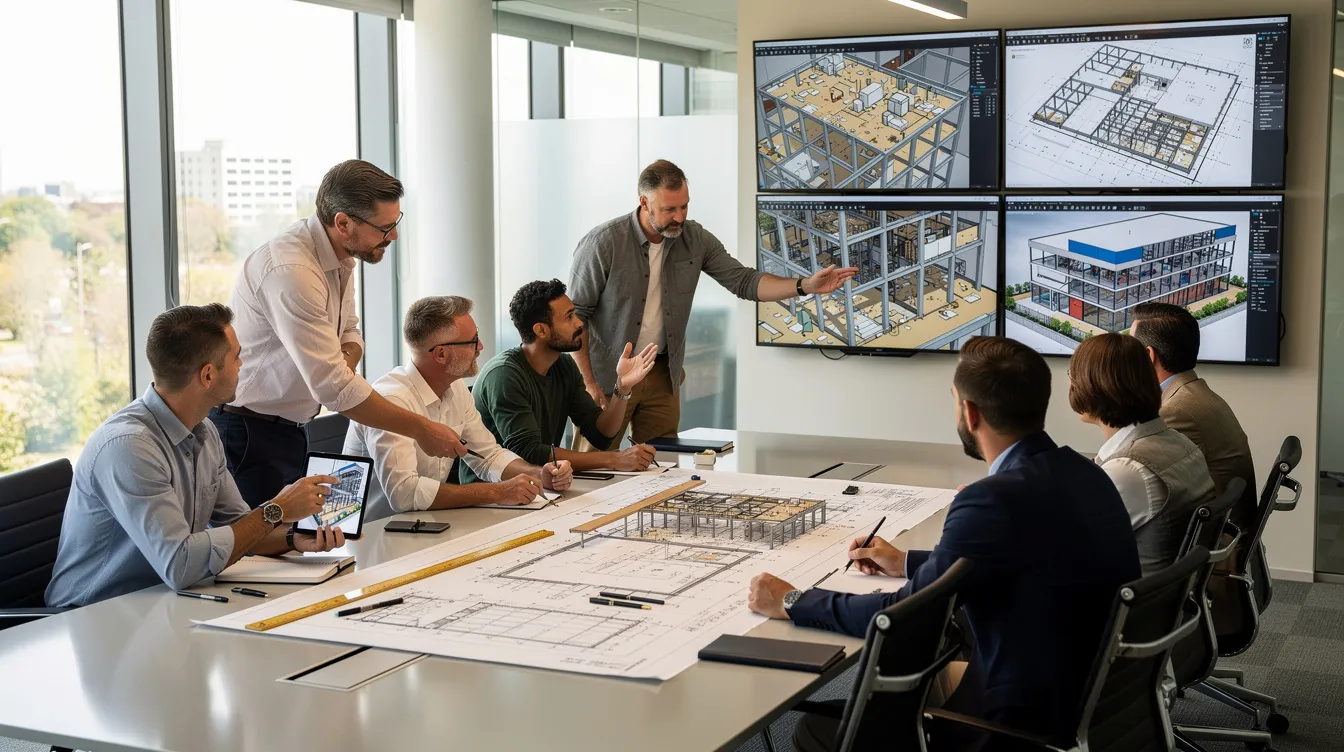
In a multidisciplinary workflow, coordinated design workshops bring architecture, C&S, and M&E into one room-physical or virtual-on short cycles, often weekly or more frequently during critical phases. Real-time review of clashes in BIM produces immediate decisions on trade-offs: beam depth vs duct routing, riser locations vs architectural planning, transfer structure positioning vs services distribution. Real-time collaboration leads to system-level innovation because disciplines working together can share and refine ideas quickly, identifying solutions that none would develop independently.
Companies with diverse teams are 35% more likely to outperform competitors, and inclusive teams make better decisions 87% of the time. These statistics translate directly to project outcomes: faster decisions, fewer abortive design cycles, shorter paths to submission-ready packages.
Conflict Resolution Across Different Disciplines
Common conflict types in Singapore developments include headroom battles between beams and M&E ducts in basement carparks, façade architectural intent clashing with structural grid and fire-safety egress requirements, and LTA or PUB requirements conflicting with architectural site layouts. These are not theoretical-they occur on nearly every project of moderate complexity.
In a single-discipline environment, these conflicts often become “discipline vs discipline” confrontations. The structural engineer insists on deeper beams for span efficiency. The M&E engineer needs duct clearance that the beams now obstruct. The architect wants a clean ceiling height for the carpark. With separate firms, each defends its own area of design, and the client or project manager must arbitrate-consuming time, creating programme delays, and sometimes producing compromised solutions that satisfy no discipline fully.
In a multidisciplinary set-up, one lead consultancy manages and resolves these issues internally before presenting consolidated proposals to the client. Discipline leads collaborate under a shared project director who can make trade-off decisions-adjusting beam profiles, re-routing ducts, and confirming architectural clearances in a single coordinated session. Multidisciplinary teams solve problems before they become expensive, catching clashes at the design stage rather than on site where changes cost orders of magnitude more.
Scenario: A basement carpark redesign is triggered by a late change to the structural grid. Under a single-discipline model, the architect redesigns lot layouts, sends them to the C&S engineer for beam re-checks, who then sends revised beam depths to the M&E consultant for services clearance review. Three to four weeks can pass before a viable consolidated solution emerges. Under a multidisciplinary model, the same redesign is workshopped internally in days, with all three disciplines adjusting simultaneously. The client receives one coordinated proposal rather than three separate and potentially conflicting responses.
Design Agility and Ability to Pivot Mid-Project
Design agility, in business terms, is the ability to pivot quickly when conditions change. Market demand shifts-post-2026 preferences for flexible office layouts or logistics conversion. Authorities request design changes during BCA, URA, or SCDF review. Cost escalation forces value engineering midway through detailed design. Each scenario requires rapid, coordinated response across multiple disciplines.
When disciplines are siloed, agility suffers. Each change requires separate rebriefing across firms, with each firm potentially working from conflicting assumptions. The architect assumes one floor-to-floor height; the structural engineer designs for another; the M&E engineer sizes systems based on a third set of parameters. Re-aligning these assumptions after the fact consumes weeks and generates abortive work.
Multidisciplinary teams can run optioneering faster-simultaneous architectural, structural, and M&E evaluations of alternative layouts, spans, or floor-to-floor heights. For example, AECOM’s AI-enabled optioneering ecosystem in Singapore can evaluate approximately 600 design permutations to create better coordinated options by testing cost, embodied carbon, daylight, and discipline-to-discipline trade-offs. Real-time collaboration uncovers optimization opportunities that sequential workflows simply cannot surface in comparable timeframes.
The trade-off is clear: single-discipline may offer maximum depth within one discipline, while a multidisciplinary model maximises system-level responsiveness. For complex, highly integrative projects with tight timelines, multidisciplinary teams are often favored. The next section examines when each model is the right strategic choice for specific project types.
Choosing the Right Model for Your Project Type
There is no universal “best model.” Suitability depends on project complexity, the level of integration required, and the client organisation’s capacity for coordination. This section offers a practical, scenario-based guide for Singapore developments.
Projects That Favour Single-Discipline Consultancies
Single-discipline consultancies offer deep, specialized expertise and are ideal for narrow problems with well-defined scope and limited cross-disciplinary interfaces. Projects requiring specialized expertise may benefit from single-discipline leaders managing external specialists.
Characteristics of projects that suit this model:
-
Low to moderate complexity: simple structural systems, conventional M&E without sophisticated controls, clear interfaces between disciplines
-
Minimal integration demand: the architectural, structural, and services designs do not heavily interact or constrain each other
-
Forgiving timelines: coordination overhead is manageable because the programme allows for sequential discipline responses
-
Focused technical challenge: one discipline dominates the design problem, and specialized knowledge in that area is the primary value driver
Concrete examples include a single landed bungalow in Bukit Timah with a typical RC frame and standard M&E systems, or a small A&A project involving a mezzanine addition to an industrial unit with straightforward structural checks. In these cases, a highly specialised structural PE or geotechnical specialist may be the optimal lead consultant, with other disciplines playing a supporting role under light coordination.
Single-discipline consultancies may improve focus and expertise but increase coordination complexity. For broader projects, single-discipline firms typically require coordination with several external specialists-a cost that the client must absorb and manage.
Projects That Benefit Most From Multidisciplinary Consultancies
Multi-disciplinary consultancies serve better for complex, cross-functional development needs. Multi-disciplinary approaches reduce the risk of integration gaps on complex projects, which is where most cost and programme overruns originate.
High-complexity conditions that favour this model:
-
Large commercial or mixed-use developments involving basements, podiums, and towers where structural, architectural, and services designs are deeply interdependent
-
Integrated projects with tight M&E–Architecture–Structure coordination: data centres, logistics hubs, healthcare facilities, or laboratories where services drive the building design
-
Aggressive timelines or phased TOP/CSC requirements where parallel workflows and early clash detection are essential to programme
-
High regulatory burden: multiple authorities engaged simultaneously, requiring coordinated submissions across URA, BCA, LTA, SCDF, PUB, and NEA
Specific project-type examples include a business park campus combining office, lab, and light industrial spaces with complex M&E systems, or an en-bloc redevelopment of an ageing commercial building in the CBD requiring façade retention, temporary works, and staged occupation. Multi-disciplinary consultancies provide a coordinated team across several disciplines, and for these project types, that coordination is not a luxury-it is essential.
Consider the Centrium Square project: a 19-storey tower with 5-storey podium where integrated delivery across architecture, engineering, and green consultancy enabled the use of precast concrete, post-tensioned slabs, and DfMA strategies. The result was approximately 20% cost savings on onsite structural work through reduced formwork and labour. That level of savings comes not only from early coordination, but from integrating knowledge across design disciplines from the outset rather than reconciling separate outputs later.
Hybrid and Transitional Approaches
Many development managers use blended models that capture the strengths of both approaches:
-
Multidisciplinary core plus niche specialist: a multidisciplinary firm handles Architecture, C&S, and M&E as the integrated core, while a separate façade PE, wind engineer, or geotechnical specialist provides focused depth in a specific area
-
Architect-led with multidisciplinary engineering partner: the architect retains design leadership while an integrated engineering consultancy provides coordinated C&S and M&E services
Hybrid approaches make sense when the internal client team wants strong in-house control but still needs integrated technical advice, or when a project is technically demanding in one niche while still benefiting from coordinated core disciplines. Multidisciplinary teams maintain boundaries between disciplines during collaboration, while interdisciplinary teams integrate knowledge, methods, and concepts from multiple disciplines into a unified approach where a project element requires deeper synthesis across disciplines-hybrid models allow you to calibrate where on that spectrum each project element sits.
C-suite leaders should think in “project archetypes” to choose models strategically: map each upcoming development against complexity, integration demand, and timeline pressure, then match the consultancy structure accordingly.
Practical Framework: How to Decide Which Model Fits Your Next Development
This section provides a repeatable decision-making process for development managers evaluating consultancy options in 2026 planning cycles. Rather than relying on instinct or precedent, apply these steps to each project in your pipeline.
Step-by-Step Decision Process
-
Define project complexity – Count storeys, basement levels, and mixed-use components. Identify performance targets such as BCA Green Mark, data centre PUE, or net-zero carbon commitments. Projects with basements near existing MRT infrastructure or marine clay conditions-like Paya Lebar Quarter’s 20-metre-deep excavation-signal high complexity where multidisciplinary integration is highly beneficial.
-
Map authority touchpoints – List which agencies will be involved and estimate submission volume. Under CORENET X, projects pass through three sequential gateway submissions with agencies committing to respond within 20 working days. Previously, projects could face over 20 separate approval touchpoints across eight entities. More agencies mean greater benefit from centralised submission strategy.
-
Assess internal coordination capacity – Evaluate whether your in-house team or project manager can realistically orchestrate multiple specialist firms. Successful teams clarify roles and responsibilities from the outset. If your internal resources lack the bandwidth or experience to manage discipline interfaces, the coordination risk of a single-discipline model escalates significantly.
-
Prioritise outcomes – Decide whether speed to market, CAPEX certainty, or maximum design customisation is the primary driver. If programme dominates, multidisciplinary models with parallel workflows respond better. If budget granularity matters most, separate discipline appointments give more line-item control-at the cost of higher integration risk.
-
Shortlist and interview – Prepare different perspectives for evaluating single-discipline vs multidisciplinary firms. Ask how they handle integration, RFIs, authority changes, and the team skills needed to manage cross-disciplinary coordination. Multidisciplinary teams require explicit coordination protocols-probe whether those protocols exist and are practiced, not just documented.
-
Run a scenario test – Ask each bidder to walk through how they would handle a late major design change or authority comment affecting multiple disciplines. Cross-training improves collaboration in multidisciplinary teams; firms that can show the coordination techniques they use under pressure give clearer proof of real integration capability.
Comparing Single-Discipline vs Multidisciplinary: Key Criteria
The following comparison distils the core differences across criteria that matter most to development managers:
|
Criteria |
Single-Discipline Consultancy |
Multidisciplinary Consultancy |
|---|---|---|
|
Communication speed |
Slower; sequential handoffs between firms; more RFIs and coordination layers |
Faster; internal coordination on short cycles; shared models enable parallel review |
|
Conflict resolution |
Disputes escalate to client for arbitration; higher risk of mismatched assumptions |
Internal discipline leads resolve conflicts; consolidated proposals to client |
|
Design agility |
Lower; changes require rework across multiple firms with separate assumptions |
Higher; optioneering across architecture, C&S, M&E simultaneously; multidisciplinary teams solve complex problems from multiple perspectives |
|
Authority submission management |
Potentially fragmented; risk of conflicting inputs causing rejections and resubmissions |
Centralised strategy; in-house QPs/PEs; fewer resubmission cycles; smoother CORENET X gateway process |
|
Perceived upfront cost vs hidden cost |
Lower headline fees; but hidden costs in coordination, delays, and redesign can exceed the difference |
Higher upfront fees; but lower total project cost through reduced RFIs, fewer change orders, and fewer resubmissions |
|
Best fit project types |
Landed houses, small A&A works, industrial sheds, simple commercial with low services intensity |
High-rise mixed-use, basements/podiums, data centres, healthcare, developments with intensive regulatory and sustainability requirements |
When a CEO sees a low-complexity landed residential project with a forgiving timeline, a single-discipline champion with deep expertise in that building type remains the right call. When the project involves a multidisciplinary team navigating several disciplines, tight programme, and multiple authority gateways, the integration benefits of a multidisciplinary model clearly outweigh higher apparent fees. Interdisciplinary work creates synthesized outcomes beyond what single disciplines produce in isolation, especially on complex projects that must integrate multiple theories as well as disciplines.
The next section explores how each model performs under the real-world challenges that surface during design development, submissions, and construction.

Common Challenges and How Each Model Handles Them
Problems rarely manifest at concept stage on paper-they surface during design development, authority submissions, and construction. This is where your choice of consultancy model truly shows its value or its limitations. Integration problems can lead to costly redesigns and delays, and understanding how each model responds to stress is essential for informed decision-making.
Late Authority Comments or Regulatory Changes
A common scenario: SCDF issues significant late comments requiring staircase reconfiguration and fire compartmentation changes, or BCA mandates structural loading revisions after design development is substantially complete. Under Singapore’s evolving regulatory landscape, such changes are frequent rather than exceptional.
Under a single-discipline model, this triggers a cascade. The architect must revise layouts. The structural engineer must re-check affected members. The M&E engineer must re-route services around reconfigured staircases and compartment walls. The fire safety consultant must verify compliance. Each firm responds independently, often with conflicting assumptions about what the others are doing. Three to six weeks can pass before a consolidated resubmission is ready.
Under a multidisciplinary model, the same authority comment triggers one internal impact analysis. Architecture, C&S, M&E, and fire safety discipline leads evaluate the change together, develop a coordinated response, and produce a consolidated resubmission package. Real-time collaboration prevents expensive integration surprises, and the turnaround can be measured in days rather than weeks.
Cost Overruns and Value Engineering Under Time Pressure
Tender prices come in 10–15% above budget for a mid-rise commercial project. Value engineering is needed urgently, but the programme cannot absorb months of redesign.
With separate consultants, VE often produces piecemeal suggestions. The structural engineer proposes reducing spans. The M&E engineer recommends simplifying plant. The architect suggests cheaper façade materials. These suggestions may conflict-shorter spans might require more columns that obstruct M&E routing, or cheaper cladding might increase cooling loads. Each consultancy explores solutions from its own area without full visibility of consequences in other disciplines.
With integrated teams, structural, M&E, and architectural changes are evaluated together. Reducing spans, optimising riser locations, and simplifying façade systems are assessed as a package, preserving functionality while achieving cost targets. Multidisciplinary teams make better decisions 87% of the time precisely because they can weigh trade-offs across disciplinary knowledge simultaneously.
Development managers should probe prospective consultants about their VE process: ask for a specific example of a past project where VE was required mid-design, and how the disciplines coordinated their response.
On-Site Coordination, RFIs, and Buildability Issues
Frequent construction-phase issues include RFIs on structural–M&E clashes not fully resolved at design stage, contractors requesting alternative details for buildability, and material substitution requests that affect multiple disciplines. These are the practical consequences of insufficient integration during design.
Under a single-discipline model, the contractor and main consultant (often the architect) must coordinate separate responses from each engineer. The structural engineer responds to a beam clash query. The M&E engineer responds separately about duct rerouting. Instructions may contradict each other. Each round of clarification costs days or weeks on site-and site delays carry holding costs, extended financing, and lost rental revenue.
Under a multidisciplinary model, one coordinated reply is issued with internal alignment across all disciplines before the Superintending Officer’s instruction reaches the contractor. The structural and M&E responses are checked against each other and against the architectural intent before release. Industry stakeholders consistently report that the largest cost overruns and schedule setbacks in Singapore stem not from poor construction, but from failure of early coordination, regulatory rework, and discipline misalignment.
The practical difference is measured in weeks of programme impact-not abstract efficiency. For context, C&S consultancy fees typically represent 1.5–3.0% of construction cost on large projects. A few weeks of site delay caused by unresolved coordination issues can easily exceed the entire consultancy fee budget.
How AEC Technical Advisory Structures Multidisciplinary Support
This section demonstrates how a multidisciplinary model works in practice within Singapore’s regulatory and construction landscape, using AEC Technical Advisory’s approach as a concrete example of methods rather than generic claims.
Integrated Architecture, C&S, Geotechnical, and M&E Delivery
AEC Technical Advisory organises project teams around practical integration:
-
Single project lead overseeing Architecture, C&S, Geotechnical, and M&E inputs, ensuring all disciplines report through one coordination layer rather than operating as separate silos
-
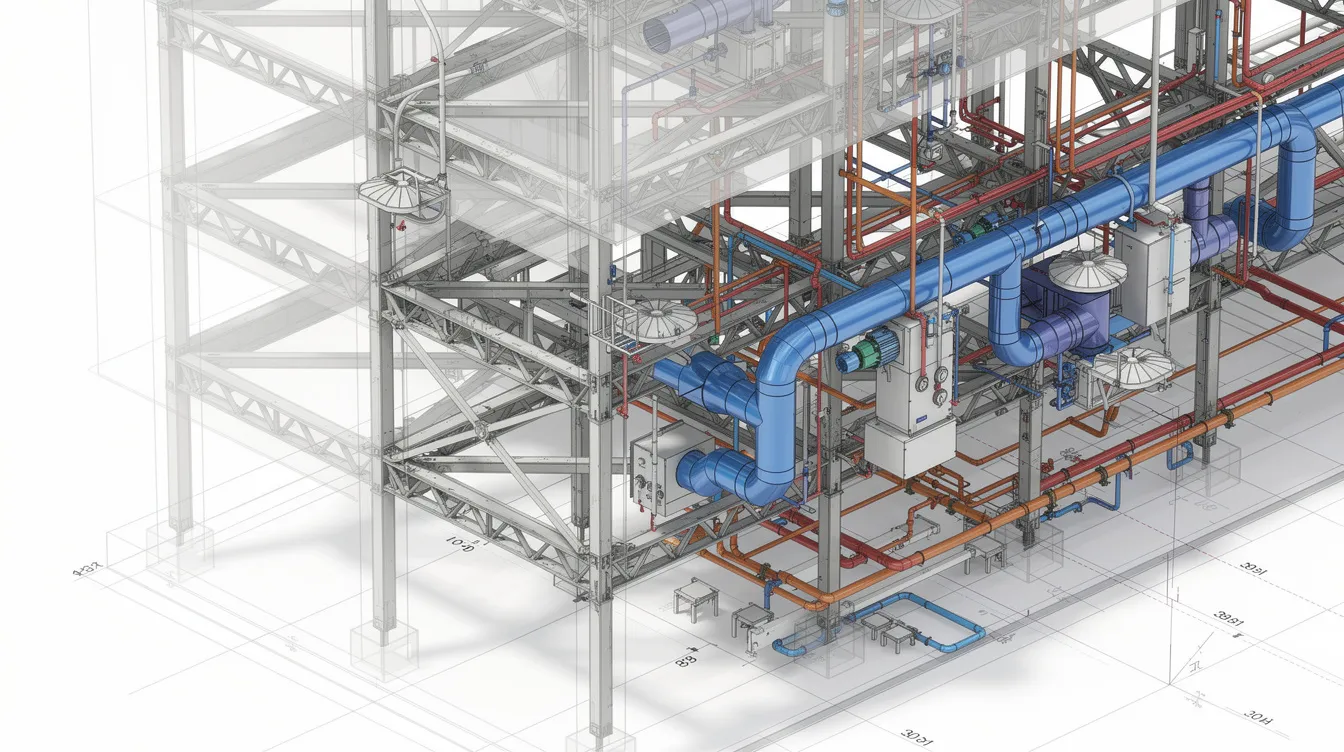
Shared 3D models and BIM environments where M&E coordination drawings are developed alongside structural layouts, sometimes with digital delivery support from a software engineer, enabling clash detection at design stage rather than on site
-
Internal design reviews specifically focused on resolving conflicts between beams and ducts, riser locations, transfer structures, and services distribution-before deliverables reach the client
-
Project scales ranging from landed properties and industrial facilities to mid-rise commercial developments and A&A projects involving structural strengthening
This structure creates a shared language across disciplines. When the structural engineer adjusts beam depths, the M&E engineer sees the change immediately in the same model and adjusts services routes in the same session. The architect confirms ceiling heights are maintained. One review cycle replaces three because the shared model integrates information across disciplines in one live coordination environment.
Authority Submissions and PE Endorsements Under One Roof
Centralising authority functions reduces risk in measurable ways:
-
A dedicated team coordinates submissions across URA, BCA, LTA, SCDF, PUB, and NEA, managing the project submission requirements as a unified package rather than fragmented discipline inputs
-
In-house PEs handle structural endorsements, geotechnical, and temporary works sign-offs with full knowledge of overall project constraints-no information gaps between the person who designed and the person who endorses
Practical benefits include faster turnaround for authority queries (the same team designed and submitted the work, so they can respond without re-learning the project) and reduced risk of misalignment between submitted design and site conditions. Under CORENET X’s three-gateway submission process, this integration is increasingly valuable as agencies expect coordinated, consistent inputs across all discipline areas.
Design Agility for A&A, Façade Inspections, and Temporary Works
AEC Technical Advisory’s integration extends to services that are frequently handled by separate specialist firms but benefit from close coupling with core design disciplines:
-
A&A and renovation projects where existing structures must be assessed and upgraded while operations continue, requiring real-time coordination between structural assessment, architectural redesign, and M&E adaptation
-
Façade inspections and remedial design, coordinating architectural intent, structural safety, and access methods within one team rather than across three separate firms
-
Temporary works design (façade retention frames, excavation support) tightly coupled with permanent works design so that temporary and permanent structural systems are compatible from the outset
Having these services integrated allows quicker design pivots when site conditions differ from original assumptions. If a façade inspection reveals structural deficiencies not visible in original surveys, the structural, architectural, and M&E teams can develop a coordinated remedial strategy immediately-rather than initiating a new round of consultant appointments and briefings.
Conclusion and Next Steps
The right consultancy model depends on project complexity, risk appetite, and your organisation’s internal coordination capacity. For straightforward, low-integration projects, single-discipline consultancies deliver focused expertise efficiently. For complex developments where multiple disciplines must collaborate under tight programmes and heavy regulatory requirements, multidisciplinary consultancies consistently deliver better outcomes in cost, programme, and design coherence. The data supports this: 60% of development delays stem from integration issues, and multidisciplinary teams solve problems before they become expensive.
Practical next steps for C-suite executives and development managers:
-
Audit your 2026–2028 pipeline for projects likely to require tight multidisciplinary integration-any development with basements, mixed-use components, multiple authority touchpoints, or sustainability targets
-
Define your internal coordination capabilities honestly, and identify where external integration from consultants is necessary rather than optional
-
Prepare a standardised question set to evaluate prospective consultants on integration methods, conflict resolution protocols, and authority submission strategy
-
Engage early with a shortlisted multidisciplinary consultancy like AEC Technical Advisory during pre-feasibility to shape project scope and consultancy structure before commitments are locked
-
Explore related topics for further development: lifecycle asset performance, BIM for temporary works integration, and risk allocation in consultant appointments
Frequently Asked Questions
These FAQs address common queries from developers and C-level leaders comparing consultancy models for Singapore projects.
Is a multidisciplinary consultancy always more expensive than appointing separate specialists?
Not on a whole-project basis. While headline fees for a multidisciplinary consultancy may appear higher-reflecting internal coordination overhead, integrated QA, and broader scope coverage-the total project cost is often lower. Integrated delivery reduces coordination overhead between separate firms, lowers the risk of delay-driven cost escalation, and produces fewer redesign cycles caused by conflicting discipline inputs. A contingency of 15–20% on consultant fees is standard industry guidance in Singapore structural engineering budgets; much of that contingency is consumed by coordination failures that integrated models are designed to prevent. Evaluate cost on a total-project basis, including time-to-market impact and construction-phase RFIs, not just the consultant fee line items.
Can I start with single-discipline consultants and switch to a multidisciplinary model mid-project?
It is possible but carries significant practical difficulties. Mid-project switching involves loss of design continuity, potential authority re-submissions, and time spent by the incoming firm re-learning decisions already made. A more effective approach is a hybrid solution: bring in a multidisciplinary firm to coordinate and rationalise existing discipline outputs rather than fully restarting. This preserves the work already done while introducing the integration and collaboration layer that was missing.
How do I evaluate whether a multidisciplinary firm is genuinely integrated or just a loose association of sub-consultants?
Ask about shared systems: do all disciplines work in a common BIM environment? Is there an internal project lead with authority over cross-disciplinary trade-offs? Request case studies showing how the firm handled conflicts between Architecture, C&S, and M&E on real Singapore projects-specifically how they resolved headroom clashes, services routing conflicts, or late authority comments. Genuine integration shows up in practice and methods, not in organisational charts. Cross-training between disciplines and internal coordination protocols are indicators of real integration versus co-location without collaboration.
When is specialized knowledge from a highly specialised single-discipline consultant non-negotiable?
When a project involves rare or extreme technical conditions that demand deep disciplinary knowledge concentrated in one domain: highly complex geotechnical conditions (karst geology, deep marine clay near critical infrastructure), advanced seismic or vibration design, specialised façade systems requiring wind tunnel testing, or mission-critical M&E for Tier III/IV data centres. In these cases, a focused specialist with decades of research practice and specialised research approaches for that specific challenge delivers insights that a generalist team cannot match. Even within multidisciplinary projects, these specialists can be integrated as focused sub-consultants—the hybrid model described earlier, combining specialist depth with broader coordination in a way loosely analogous to interdisciplinary research.
How can AEC Technical Advisory support our next development in Singapore?
AEC Technical Advisory provides one-stop architecture, structural, civil, geotechnical, M&E, authority submissions, PE endorsements, façade inspection, and temporary works design. The firm structures multidisciplinary delivery around a single project lead with integrated teams, shared BIM platforms, and centralised authority coordination. To explore which consultancy model fits your upcoming development, initiate a preliminary discussion or workshop to map project complexity, regulatory requirements, and coordination needs against the right delivery structure.