
Temporary Works Coordinator Role in Singapore Duties and Documentation: PE Endorsement
Introduction
A Temporary Works Coordinator manages temporary works on construction sites by coordinating design, installation, inspection, and removal of every temporary structure on a project. In Singapore, the temporary works coordinator role carries specific duties and documentation requirements shaped by local legislation, authority submissions, and Professional Engineer (PE) endorsement rules that differ from practices in other countries. This article explains what a TWC does on Singapore infrastructure and building projects, what documents they must control, and how this links to PE endorsement under the Professional Engineers Act.
The scope here covers construction and infrastructure projects regulated by BCA, LTA, MOM, and other Singapore authorities: MRT stations, expressways, deep excavations, heavy falsework, temporary bridges, and scaffolding. While BS 5975:2024 governs temporary works management in construction and is widely referenced as best practice, this article also covers how temporary works fit into the wider construction process in Singapore, where the TWC operates within a local framework of codes, contract specifications, and authority submission processes. The target readers are contractors, Resident Engineers and Resident Technical Officers, site managers, quantity surveyors, developers, and junior engineers who need a clear picture of TWC responsibilities and paperwork to avoid non-compliances and delays.
A Temporary Works Coordinator (TWC) is the nominated competent person within a contractor’s organisation responsible for planning, coordinating, verifying, and documenting all temporary works from identification through to removal. The TWC does not design the works; that is the role of the Temporary Works Designer or PE. Instead, the TWC ensures correct briefing, design review, PE endorsement, site implementation, and documentation, which also supports legal compliance by creating a clear record for review, approval, and site control. Core documents under the TWC’s control include the design brief, method statements, temporary works register, permits (permit-to-load, permit-to-strike), inspection records, and as-built or striking certificates.
By the end of this article, you will:
- Understand the temporary works coordinator role specific to Singapore projects, including the regulatory and contractual basis for the position.
- Know the typical scope of duties for infrastructure jobs involving tunnels, viaducts, deep basements, temporary traffic decks, and excavation support.
- See exactly what documentation a TWC must prepare, check, and file for audits and PE endorsement.
- Learn how proper temporary works management reduces safety incidents, variation order disputes, authority issues, and risks to legal compliance.
- Recognise when to engage an external consultancy like AEC Technical Advisory for design and PE endorsement of temporary works.
You can discuss project-specific temporary works needs with a specialist.
Understanding Temporary Works and the TWC Role in Singapore
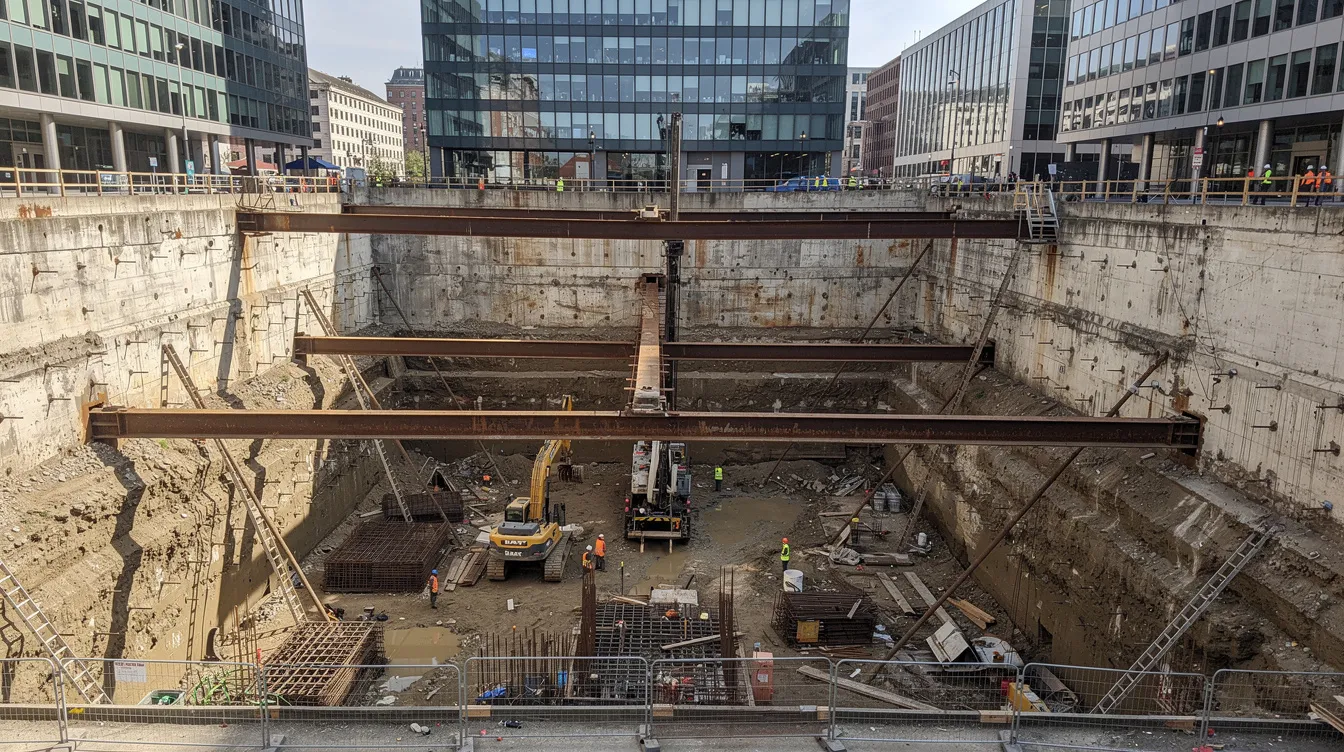
Temporary works support the permanent works during the construction process before they are removed: the struts holding open a 30-metre-deep MRT excavation, the falsework supporting a bridge deck pour, the scaffolding providing access to a viaduct pier, and the traffic deck carrying live vehicles over an active worksite. Temporary works include scaffolding, shoring, and excavation support, and project teams need to understand temporary works requirements through planning, design, installation, inspection, and dismantling. They carry real loads, interact with live utilities and public infrastructure, and must be treated with the same engineering rigour as permanent structures. Temporary works failures can lead to serious injuries or fatalities; the 2004 Nicoll Highway collapse, which killed four workers during a cut-and-cover excavation for MRT Circle Line contract C824, remains the defining case study for the Singapore construction industry.
While BS 5975:2024 mandates a systematic management approach for temporary works and the TWC should be familiar with industry standards like BS 5975, TWCs in Singapore operate under local legislation and contract-specific requirements that layer additional obligations on top of that framework.
What Counts as Temporary Works on Singapore Infrastructure Projects
On infrastructure projects, temporary works items are numerous and varied. Deep excavation support systems, including sheet piling, diaphragm wall struts, king posts, soil nails, and ground anchors, are required for MRT stations, underpasses, and utility tunnels. Heavy falsework and staging support bridge deck pours, viaduct segments, and flyover construction, sometimes involving launching gantries and temporary trestles spanning active roads.
Temporary traffic decks, detour bridges, and road diversions allow construction beneath live carriageways on LTA projects. Working platforms for cranes and piling rigs, temporary retaining walls, and shoring for existing structures near works all fall under the TWC’s scope. Access scaffolding, hanging platforms, formwork systems, and temporary roofs to protect public areas round out the list on most infrastructure contracts. Each of these types of temporary works structures is removed or de-stressed after the permanent structure becomes self-supporting, but while in place, each one carries loads that can injure or kill workers and the public if the structural integrity is compromised.
Regulatory and Contractual Context in Singapore
The Workplace Safety and Health Act and WSH (Construction) Regulations form the baseline: they require competent persons to oversee safety-critical construction activities, including excavation, demolition, and work at height. The Building and Construction Authority (BCA) publishes circulars on formwork and falsework, regulates earth retaining or stabilising structures (ERSS) submission requirements, and operates the CORENET X portal for structural plan submissions. Under CORENET X (operational from mid-2024), independent structural designs for temporary ERSS, temporary traffic decking, and demolition works require gateway submissions with a 15-working-day response window. BCA’s March 2024 update to ERSS submission requirements clarified trigger depths and roles for Qualified Persons and Accredited Checkers, with excavations exceeding 6 m depth requiring QP(Geotechnical) and Accredited Checker involvement.
Client specifications add project-specific layers. LTA’s Engineering Group Document E/GD/09/104/A2 defines temporary works as “all construction works that are required to complete the Permanent Works,” requires all load-bearing materials to be new and conforming to relevant Singapore Standards or adopted Eurocodes (reused steel only with Engineer’s written acceptance), and mandates that all temporary works begin only after method statements, drawings, and calculations have been independently checked and accepted. PUB, JTC, and HDB each impose additional stipulations for temporary diversions and support structures. These overlapping requirements create the need for a clearly appointed competent person coordinating temporary works to meet legal obligations and reduce potential legal liability if the works are not properly planned, checked, and controlled; on most LTA Design & Build infrastructure contracts, the TWC appointment and a formal temporary works register are explicit contractual requirements.
Understanding this context defines what the TWC in Singapore is expected to do on a day-to-day basis.
Definition of a Temporary Works Coordinator in Singapore Projects
The temporary works coordinator (TWC) is the nominated competent person within the contractor’s or JV’s organisation responsible for planning, coordinating, checking, and documenting all temporary works from concept to removal. They ensure temporary works are designed, installed, and dismantled safely. The role is crucial for preventing accidents and ensuring compliance with both regulatory and contractual obligations.
The TWC does not design the temporary structures; design is the responsibility of the Temporary Works Designer, who must be a registered Professional Engineer in the relevant discipline (Civil, Structural, or Geotechnical) under Singapore’s Professional Engineers Act. The TWC ensures the design brief is complete, reviews the approved design for constructability, confirms PE endorsement before site implementation, controls permits and inspections, and maintains documentation throughout the lifecycle. The TWC’s liaison role spans the contractor’s project teams, PE designer, Resident Engineer or Resident Technical Officer, permanent works designer, specialist subcontractors, and regulatory authorities.
Core Duties of a Temporary Works Coordinator on Singapore Infrastructure Sites
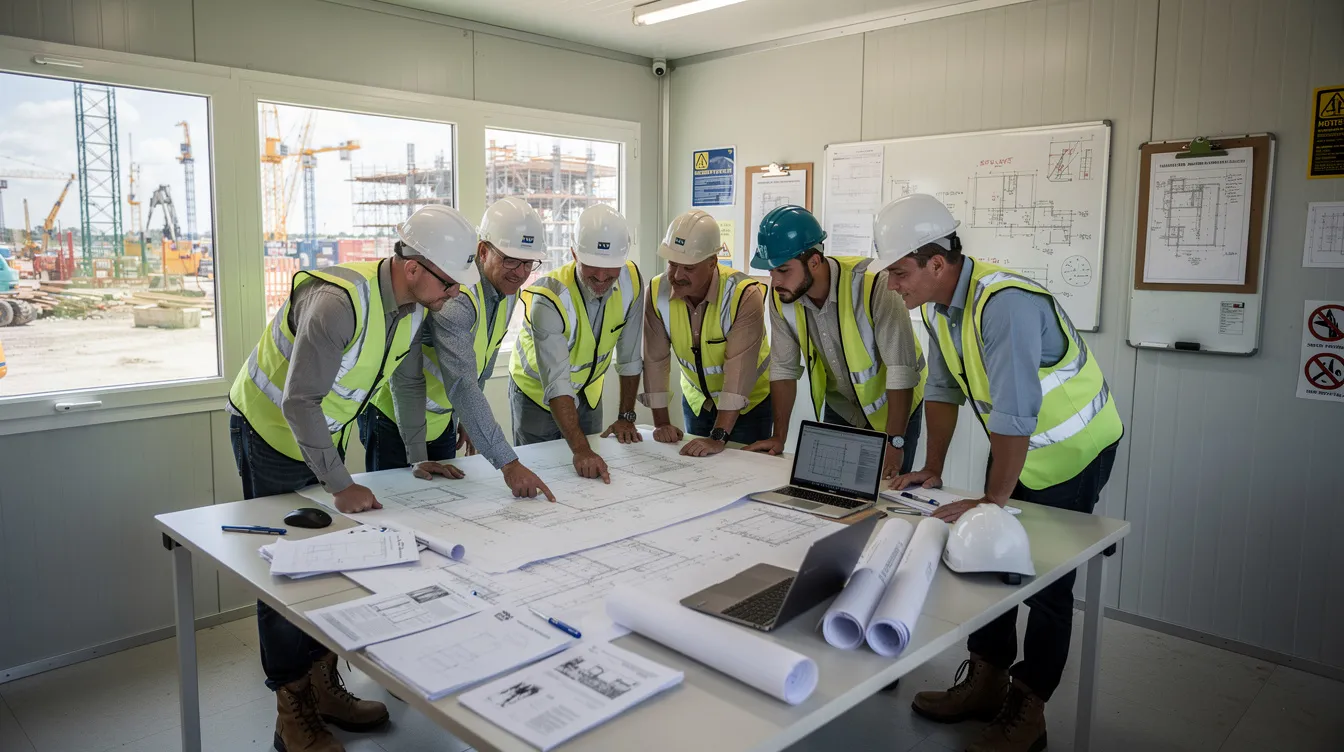
The temporary works coordinator responsibilities span the full lifecycle of every temporary structure on site, from first identification during tender review through to final removal and close-out documentation. On major infrastructure projects such as MRT lines, expressways, and deep sewer tunnels, the TWC role is typically full-time, given the volume of temporary works items and the coordination load across multiple agencies and several contractors working in adjacent zones.
TWCs must demonstrate competence through training and experience, including the technical and coordination skills needed to manage reviews, interfaces, and site controls. Most TWCs gain experience before specialized training, but recognized training is often expected by employers. CITB offers a comprehensive Temporary Works Coordinator Course, and training includes knowledge of current techniques and regulations. A temporary works coordinator course aligned with BS 5975 principles, combined with familiarity with Singapore codes and authority procedures, provides the foundation; some learners start with an online course before moving into site-based responsibility, while practical experience with ERSS, bridge staging, and traffic decks distinguishes a TWC who can handle infrastructure-scale complexity.
1. Identification and Scoping of All Temporary Works
Every temporary works item on a construction project must be identified before work begins. The TWC reviews tender drawings, IFC (Issued for Construction) drawings, the construction programme, and method statements to compile a complete inventory. This includes obvious items like ERSS and falsework, but also “hidden” items: lifting frames for precast segment erection, temporary openings in floor slabs for material delivery, working platforms for piling rigs, and protection decks over live roads, drains, or pedestrian routes.
Early identification prevents last-minute designs and non-compliant site improvisations. Inadequate design briefs are a common cause of temporary works failures, and briefs cannot be adequate if the temporary works items they describe were identified too late to gather proper geotechnical data, loading information, or utility surveys. On infrastructure projects, specific risk areas include utility diversions where underground services cross excavation zones, ERSS works adjacent to existing MRT tunnels or live expressway structures, temporary traffic management structures carrying public vehicles, and marine works subject to tidal loading and wave action.
The TWC records each identified item in the temporary works register at this stage, assigning a unique ID, risk category, and target date for design completion. For a typical MRT station contract, this register might contain 40 to 80 individual temporary works items across different construction phases.
2. Preparing and Managing the Temporary Works Design Brief
The design brief is the document that translates site reality into the information a PE Designer needs to produce safe and buildable temporary works. The TWC owns this process; they prepare the brief and update it as ground conditions, programme, or permanent works design evolve.
A good design brief captures loadings (dead load, live load, crane loads, traffic surcharge, water pressures), construction stages with sequencing constraints, interfaces with permanent works (e.g., where temporary props react against partially cured slabs), site constraints (clearances to utilities, rail protection zones, headroom requirements), geotechnical data (soil parameters, groundwater level, monitoring data from adjacent sites), and access and sequencing requirements. For ERSS, the LTA standard requires a minimum surcharge load of 10 kPa for construction loads in addition to existing structure and slope loadings. LTA also specifies minimum headroom under temporary structures: 5.4 m over highways and 2.4 m over footpaths.
The design brief becomes the basis upon which the PE Designer produces calculations, drawings, and method statements. AEC Technical Advisory frequently assists contractors to formalise design briefs and convert contractor sketches into PE-endorsed, authority-compliant designs, reducing iteration time and avoiding incomplete submissions that trigger rejection.
3. Coordination with PE Designers and Authority Requirements
The TWC must ensure all temporary works designs are approved by a Professional Engineer. For safety-critical temporary structures (deep ERSS, launching gantries, heavy lifting frames), PE endorsement is mandated by both the Professional Engineers Act and contract specifications. The TWC selects or confirms competent designers holding PEB registration in the relevant discipline, then manages the flow of information between the designer and the construction site.
Authority touchpoints vary by project type:
- BCA reviews formwork and falsework designs on building jobs and processes ERSS submissions via CORENET, with QP(Structural), QP(Geotechnical), and Accredited Checker roles triggered by excavation depth thresholds.
- LTA reviews temporary works adjacent to rail corridors and roads, with specific standards in the E/GD/09 series documents.
- PUB, JTC, and HDB impose requirements for temporary diversions, support structures, and protection of their assets.
The TWC consolidates comments from the RE/RTO and Engineer’s Representative, routes them to the PE designer for revisions, and tracks that responses are incorporated before final endorsement. Design reviews must cover compliance with Singapore Standards, adopted Eurocodes, and the contractor’s material specifications. AEC Technical Advisory can act as Temporary Works PE Designer, preparing calculations, drawings, and providing PE endorsement for submission packs to the relevant authorities.
4. Risk Assessment, Method Statements and Sequencing
Risk assessments must be prepared for erecting and dismantling temporary works so teams can manage risk during erection and dismantling. Safe Work Procedures must be created for handling temporary works. The TWC ensures that these documents directly reflect the design assumptions and construction sequence specified by the PE designer, not generic boilerplate copied from a previous project.
The linkage between design and execution documentation is where safety is either preserved or lost. If the ERSS design assumes struts are preloaded to a specified force before excavation proceeds to the next level, the method statement must state this requirement, and the risk assessment must identify the consequence of omitting preloading. For bridge falsework, the method statement must specify the load path during concrete placement and the maximum pour rate that the falsework was designed for.
Infrastructure-specific risks that the TWC must ensure are addressed include excavation collapse near live carriageways or MRT tunnels, diversion of live traffic onto and off temporary decks, marine currents and flooding affecting cofferdams or temporary jetties, and ground movements affecting adjacent structures. The WSH Officer, lifting supervisor, and site engineers all contribute to refining sequencing, traffic management plans, and contingency measures, but the TWC holds responsibility for ensuring these documents remain consistent with the PE-endorsed design.
5. Site Control, Inspections and Permits
The TWC translates paper designs into safe field implementation. Before any temporary structure is loaded or used, the TWC verifies that materials, dimensions, tolerances, and arrangements match the PE-endorsed drawings. Temporary works must be inspected at key points during their lifecycle, and monitoring temporary works at those stages includes checks before first loading, at regular intervals during use, and after any event that could affect structural integrity (heavy rain, flooding, ground movement alarms, vehicle impact).
Permits are required before loading or dismantling temporary structures. The permit-to-load system ensures that falsework, struts, working platforms, or temporary traffic decks are not loaded until an inspection confirms compliance with the approved design. Permits are signed off by the TWC, PE (when required), site engineer, safety officer, and RE/RTO where the contract specifies independent verification. Regular site audits are necessary because monitoring temporary works also includes checking for unauthorized modifications or damage; communication breakdowns between trades can lead to unauthorized modifications to temporary works that compromise the design assumptions.
Cooperation with RE/RTO and independent checkers is particularly important for Category 2/3 temporary works and for deep excavation categories on LTA projects, where the contract requires independent checking beyond the contractor’s own PE endorsement.
6. Managing Modifications, Non-Conformances and Remedial Actions
Any deviation from the PE-endorsed drawings must be returned to the PE designer for review and re-endorsement. A different prop size, altered strut spacing, removal of a brace, or change in ground conditions each invalidates the original design assumptions. The TWC documents every deviation, no matter how small it appears on site.
Non-conformances are documented through NCR (Non-Conformance Report) procedures. The TWC ensures the structural implications are assessed by the PE, temporary strengthening is implemented where required, and corrective actions are recorded. Photographic records, correspondence, engineering assessments, and re-issued permits form the audit trail. Environmental conditions can destabilize temporary structures after installation; for example, a heavy rainfall event may raise groundwater levels beyond the ERSS design assumptions, requiring reassessment before excavation continues.
This documentation also serves contractual purposes. When variations, claims, or disputes arise, the TWC’s records provide the factual basis for demonstrating what was designed, what changed, who approved the change, and what remedial measures were taken.
7. Planning and Supervising Removal / Demobilisation
Dismantling temporary works is the most dangerous phase of construction. Accidents during dismantling often exceed those during erection phases, because schedule pressure at the end of construction stages drives rushed removal of supports, and permanent works may not have reached full design strength.
Dismantling temporary works requires a formal, engineered permit. The PE must endorse the striking sequence for struts, falsework, launching gantries, and temporary traffic decks. Before any removal, the TWC verifies that the permanent works have reached the required strength (concrete cube test results, curing times satisfied), backfilling is complete where specified, overloads have been removed, and monitoring results confirm ground and structural behaviour are within acceptable limits.
The “permit to strike” is authorised by the TWC, PE, and site management. Close monitoring during striking (settlement gauges, inclinometers, crack surveys) is maintained until removal is complete. As-built records capture what was removed, when, by whom, and in what sequence, along with the final geometry and condition of the permanent works after temporary support was withdrawn.
Key Documentation Managed by the Temporary Works Coordinator
This section provides a practical guide to the core documents the TWC must control on Singapore projects. On infrastructure jobs involving multiple agencies, PE endorsements, and dozens of temporary works items running concurrently, the documentation system either enables safe, compliant construction or becomes the point of failure.
Temporary Works Register and Log
Temporary Works Coordinators maintain a live Temporary Works Register. A Temporary Works Register must track design details and inspection records for every temporary works item on the project. The register is the master control document; it ties together design, permits, inspections, and close-out for each item.
Standard fields include: unique ID number, description of the temporary works item, location (chainage, grid reference, or coordinates), risk category, assigned designer and PE, drawing and calculation references with revision numbers, status (identified / design underway / approved / installed / loaded / struck / removed), inspection dates, permits issued and closed, and removal completion date.
The register must be a live document updated weekly or more frequently on complex infrastructure works. Digital platforms such as BIM 360 or Aconex provide traceability and version history. During audits by the RE/RTO, client, or authority, the register is the first document checked for completeness and consistency with actual site conditions. A register that does not match reality on site is a non-conformance in itself.
Design Briefs, PE-Endorsed Drawings and Calculations
The TWC files both draft and final versions of every design brief, maintaining traceability from initial concept through to the PE-endorsed design package. PE-endorsed drawings must bear the PE’s name, PEB registration number, stamp, revision number, and date. For ERSS works, the design pack includes Annex A forms (Design Considerations) with QP(Designer) and Accredited Checker signatures, specifying soil parameters, water levels, surcharge loads, factors of safety, and load paths.
When design changes occur, the TWC must ensure only the latest revision is issued to site, with superseded copies withdrawn and clearly marked. Key design assumptions (allowable bearing pressures, traffic load models, hydraulic levels) must be preserved in an accessible location within the design pack so that any subsequent modification or incident investigation can reference the original basis of design. AEC Technical Advisory frequently prepares full design packs (brief, design calculations, PE stamps) structured to slot directly into the contractor’s TWC system.
Method Statements, Risk Assessments and Safe Work Procedures
These documents link the PE design to field execution. The TWC ensures that risk assessments and Safe Work Procedures reflect the specific load limits, exclusion zones, instrumentation monitoring trigger levels, and emergency actions from the PE-endorsed design, not generic templates.
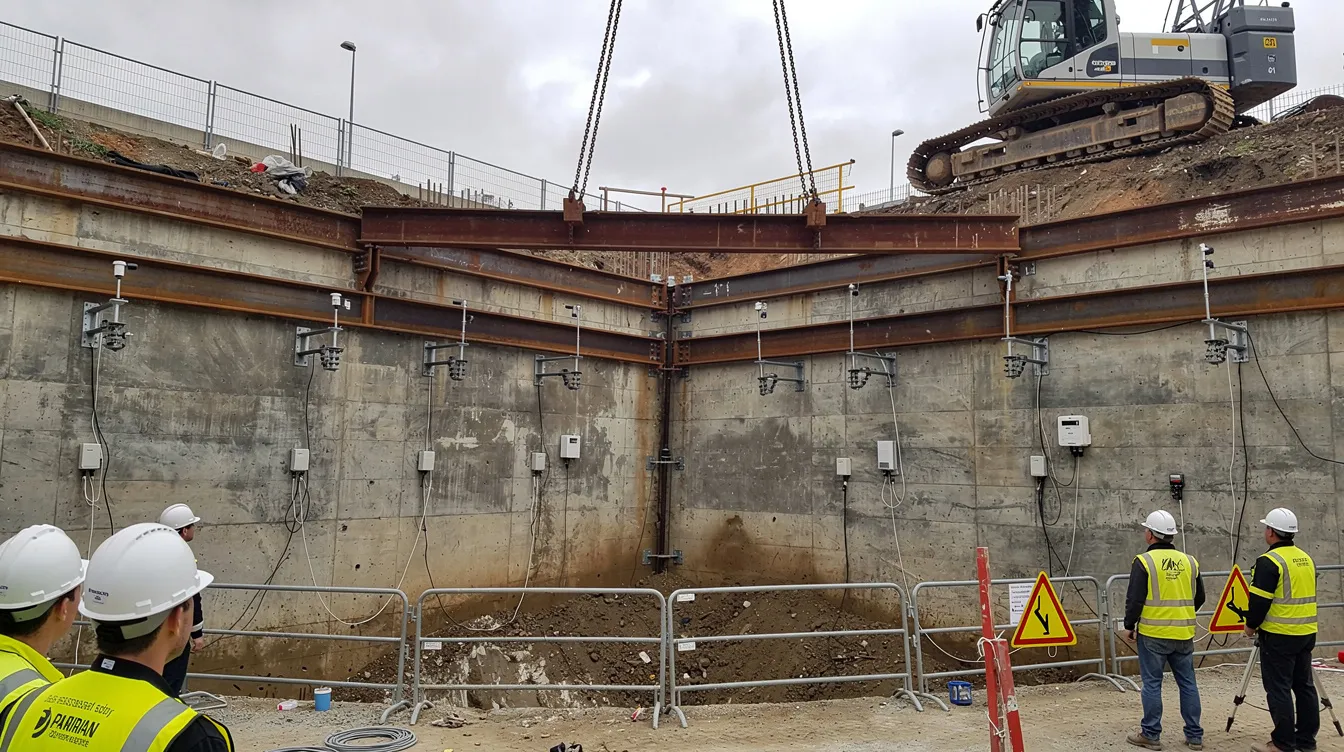
For infrastructure projects, specialised documents include ERSS monitoring plans (with trigger, review, and action levels for inclinometers, piezometers, and settlement markers), traffic management schemes for temporary decks and road diversions, lifting plans for erection of heavy precast segments, and marine safety plans for works in tidal zones. Sign-offs are required from the WSH Officer, TWC, PE, project manager, and, where the contract specifies, the RE/RTO.
Permits: Permit-to-Load, Permit-to-Strut, Permit-to-Strike
Three categories of permit govern the critical stages of temporary works use:
- Permit-to-Load: authorises the application of live load (concrete, traffic, crane) to falsework, temporary decks, or working platforms after inspection confirms the installation matches the approved design.
- Permit-to-Strut: authorises excavation to proceed to the next level after strut installation and preloading are confirmed to match the PE-endorsed ERSS design.
- Permit-to-Strike: authorises removal of temporary supports after the permanent structure has reached the required strength and monitoring confirms acceptable behaviour.
Each permit is signed by the TWC, PE (when required), site engineer, safety officer, and RE/RTO where the contract requires. Permits are cross-referenced in the temporary works register and linked to the corresponding inspection records, creating a traceable chain from design approval through installation to removal.
Inspection, Monitoring and Instrumentation Records
Inspection records form the evidence base for both safety management and claim defence. Types of records include daily and weekly visual inspection checklists, instrumentation reports (inclinometer profiles, piezometer readings, strain gauge data, settlement marker surveys), crack survey logs, and photographic records with date, time, and location metadata.
For ERSS on projects subject to BCA requirements, monthly monitoring reports (Annex E format) must be submitted via CORENET. Movement thresholds defined in the ERSS design trigger alerts at review level, and exceedances at action level must generate formal reports and remedial measures. The TWC organises these records so that the RE/RTO, PE, and authorities can access them within hours when a trigger level is reached or an incident occurs. On projects near MRT tunnels, real-time monitoring data feeds into the TWC’s daily review.
Handover, As-Built and Close-Out Documentation
After temporary works items are no longer needed and have been removed, the TWC produces striking certificates, close-out reports, and as-built records showing the final condition and the sequence of removal. Where temporary works elements remain in place (e.g., embedded ERSS elements such as sheet piles left below formation level), record plans (C1, C2, C3 categories) are required by BCA under the building works procedure.
The close-out file captures lessons learned, photographs from before, during, and after removal, monitoring summaries, and any non-conformances encountered. This documentation supports defects management during the maintenance period and provides reference data for future nearby works, such as subsequent phases of an MRT line or adjacent expressway construction.
How the TWC Role Interfaces with PE Endorsement and Authority Submissions
The temporary works process in Singapore intertwines the TWC’s coordination duties with the PE’s engineering endorsement and the authority submission cycle. Understanding how these three streams connect is central to avoiding delays and non-compliances.
Division of Responsibilities: TWC vs PE(QP) vs Contractor
They coordinate communication between designers and contractors, but the TWC is not the only party with responsibilities. The division is clear:
- Professional Engineer (QP): engineering design, structural calculations, code compliance, PE endorsement stamp on drawings and calculations, certification that temporary works are safe to load or dismantle.
- Temporary Works Coordinator: process control, ensuring the design brief is complete, verifying that site implementation matches the approved design, maintaining documentation, managing change, and coordinating with authorities.
- Contractor / Project Manager: providing resources (manpower, materials, equipment), training site teams, enforcing procedures, and implementing the systems established by the TWC and PE.
The TWC does not replace the PE’s engineering judgment, and the PE does not manage site documentation or permit issuance. When these boundaries blur, accountability gaps open, and those gaps are where incidents occur.
Typical Workflow for PE-Endorsed Temporary Works in Singapore
The temporary works process follows a defined sequence on well-managed projects:
- Identification: TWC identifies the need for PE endorsement during planning (e.g., deep excavation, traffic deck, major falsework) and enters the item in the temporary works register.
- Design Brief: TWC prepares and issues a detailed design brief with staging drawings, ground investigation data, loading specifications, and site constraints.
- PE Design: engagement of PE designer (e.g., AEC Technical Advisory) to produce design calculations and drawings based on the brief and relevant Singapore Standards or adopted Eurocodes.
- Internal Review: TWC, contractor, and RE/RTO review the design; comments are consolidated and returned to the PE designer for revision.
- PE Endorsement and Submission: PE endorses the final drawings and calculations; where required, submission is made to BCA, LTA, PUB, HDB, or JTC via CORENET X or project-specific procedures.
- Site Implementation: construction under supervision, with TWC issuing permits, coordinating inspections and monitoring, and keeping the register updated.
- Removal and Close-Out: controlled striking with PE confirmation where required, followed by final documentation archived by TWC.
For simple temporary works (hoardings, basic scaffolding), PE endorsement for temporary works might take 3 to 7 working days where documentation is complete. For complex ERSS or launching gantry designs, the cycle from design brief to PE endorsement can take 4 to 8 weeks, depending on the completeness of the geotechnical data and the number of review iterations.
Using External Consultants like AEC Technical Advisory
External consultants support the TWC function without replacing it. AEC Technical Advisory prepares temporary works designs, PE endorsements, design checks (including Category 2/3 independent checks where required), and submission packs aligned with Singapore authority expectations. The consultant’s role is to deliver the engineering product; the TWC’s role is to ensure it reaches the right people, gets implemented correctly, and is documented throughout.
AEC Technical Advisory also helps contractors set up or improve their TWC systems: templates for registers, permit forms, design briefs, inspection checklists, and digital filing structures. For infrastructure projects with multiple temporary works packages running concurrently (ERSS, falsework, launching gantry, temporary traffic deck), having a specialist consultancy handle the engineering support allows the TWC to focus on coordination, site control, and documentation rather than scrambling to produce designs under programme pressure, while also building experience for progression into senior site management or other engineering roles.
Common Challenges for TWCs in Singapore and Practical Solutions
Even experienced TWCs on major infrastructure projects face recurring problems. The five challenges below account for the majority of non-compliances, delays, and safety incidents related to temporary works on Singapore construction sites.
Challenge 1: Incomplete or Late Design Information
Permanent works design changes or sequencing shifts after contract award force temporary works redesign under time pressure. Missing soil investigation data, incomplete utility surveys, or undefined permanent works interface details leave the PE designer working from assumptions instead of facts.
Solutions that work in practice: hold early design coordination meetings between the PE, permanent works designer, and planning team before the temporary works design brief is issued. Maintain a rolling temporary works look-ahead schedule tied to the master programme, identifying which briefs must be issued 8 to 12 weeks before construction starts. Use standardised design brief templates developed with consultants like AEC Technical Advisory to capture all required inputs on the first pass and reduce iteration cycles.
Challenge 2: Poor Control of Revisions and Site Copies
On fast-track infrastructure jobs with multiple subcontractors, outdated drawings or permits circulate on site. A strut installed to a superseded layout, or a falsework loaded before an updated permit is issued, creates a condition the PE’s design did not account for.
Clear drawing control procedures reduce this risk: colour-coded stamps marking the current revision, QR codes on drawings linking to the latest digital version, or a central digital platform (BIM 360, Aconex) where only the current revision is accessible. The TWC and RE/RTO conduct regular joint site walks to verify that the correct revision is physically in use at workstations. Supervisors need retraining when violations are found, because the consequences of building to an outdated design are structural, not administrative.
Challenge 3: Inadequate Monitoring and Response to Ground or Structural Behaviour
Deep excavations adjacent to live expressways or MRT tunnels generate continuous monitoring data. The risk is not the monitoring itself; it is the failure to act when readings approach or exceed design thresholds. The Nicoll Highway collapse in 2004 involved a trench approximately 34.5 m deep, supported by 10 levels of steel struts and diaphragm walls in soft marine clay with undrained shear strength of approximately 20 to 40 kPa. The Committee of Inquiry attributed the failure partly to delayed response to instrumentation exceedances.
Integrate monitoring data review into the TWC’s daily routine: automated dashboards showing inclinometer, piezometer, and settlement marker trends against trigger levels, with weekly trend reports circulated to the PE and RE/RTO. Pre-define and document response plans in the risk assessment and Safe Work Procedure (e.g., install additional struts, impose load restrictions, implement partial closures) with PE endorsement obtained in advance. Close collaboration with geotechnical and structural consultants like AEC Technical Advisory allows rapid interpretation of data when readings trend toward action levels, rather than waiting until exceedance has already occurred.
Challenge 4: Underestimation of Dismantling Risks
Schedule pressure at the end of construction stages leads to rushed removal of struts, falsework, or temporary traffic decks. Dismantling temporary works is the most dangerous phase of construction, and treating it as a cleanup activity rather than an engineered operation is where accidents happen.
Solutions: mandate PE-endorsed striking sequences for all high-risk temporary works, with the striking sequence issued at the same time as the erection sequence, not weeks later. Integrate dismantling milestones into the master programme as fixed dates, not as “to be confirmed.” Apply the same level of permits and inspections at removal as at installation; the permit-to-strike is not a formality.
Challenge 5: Documentation Overload and Audit Readiness
A large infrastructure project generates thousands of pages of temporary works documentation across dozens of items. Missing a single permit countersignature or losing track of an inspection record for one of 60 temporary works items during an audit or incident investigation is a realistic risk.
Adopt a clear digital folder structure: one folder per temporary works ID, subdivided into “Design Briefs,” “Drawings & Calculations,” “Permits,” “Inspections & Monitoring,” and “Close-out.” Periodic internal audits led by the TWC, supported by external consultants when necessary, test traceability by selecting random items from the register and verifying the complete document chain. Summary dashboards allow quick demonstration of compliance during RE/RTO or authority audits without requiring reviewers to navigate the full filing system.
Conclusion and Next Steps
The Temporary Works Coordinator plays a vital role on Singapore infrastructure projects, sitting at the intersection of PE design, site execution, and regulatory compliance. The TWC’s core responsibilities span seven lifecycle stages, from identification and design brief through to removal and close-out, with each stage generating specific documentation that must be controlled, signed, and archived.
Proper temporary works management, anchored by a competent TWC with the right knowledge, training, and authority within the project organisation, is what separates projects that pass audits and complete safely from those that face enforcement action, programme delays, or structural failures.
Actionable next steps:
- Contractors: formally appoint a competent TWC for each construction project and clarify responsibilities in writing before site mobilisation.
- TWCs: review your current temporary works register, permits, and filing system against the documentation elements described in this article and close identified gaps within the current reporting period.
- Developers and owners: ensure your contracts specify TWC requirements and documentation standards, particularly on infrastructure projects with deep excavations, heavy falsework, or temporary traffic structures.
- All parties: engage a specialist consultancy such as AEC Technical Advisory to support complex temporary works design and PE endorsement, or to help set up robust TWC processes for upcoming infrastructure packages.
AEC Technical Advisory also provides engineering support for ERSS design, heavy lifting frames, working platforms, façade retention, and structural inspections across Singapore’s construction industry.
Frequently Asked Questions about the Temporary Works Coordinator Role in Singapore
These answers address questions frequently raised by contractors, TWCs, and project managers working on Singapore construction projects.
Is a Temporary Works Coordinator legally required on every project in Singapore?
No single clause in Singapore’s WSH Act names the “Temporary Works Coordinator” as a mandatory appointment for all projects. However, the Act and WSH (Construction) Regulations require competent persons to oversee safety-critical construction activities, and BCA and LTA authority requirements effectively require a designated person managing temporary works on any project with ERSS, falsework, or other temporary structures carrying loads. On complex infrastructure and deep excavation jobs, appointing a TWC is standard contractual practice and is often explicitly mandated by LTA, PUB, or HDB contract specifications.
What qualifications and experience should a TWC have in Singapore?
A TWC typically holds a civil or structural engineering degree or is an experienced site manager with a strong understanding of construction methods and safety management. Temporary works coordinator training aligned with BS 5975 principles provides the procedural framework; CITB offers a comprehensive temporary works coordinator course that covers current techniques and regulations. For major infrastructure works, practical experience with ERSS, bridge staging, falsework, and traffic decks is what distinguishes a competent TWC from one who can handle only building-scale works. TWCs must demonstrate competence through both training and experience, and most TWCs gain field experience before undertaking specialised temporary works coordinator training.
How does the TWC role differ between building and infrastructure projects?
Infrastructure projects involve deeper excavations, longer spans, more complex staging, and multi-agency interfaces (LTA, BCA, PUB, traffic police) compared to typical building projects. The documentation and coordination load on an MRT station contract with 50+ temporary works items is an order of magnitude greater than on a residential building with scaffolding, formwork, and a small shoring system. Building projects may focus on formwork, falsework, and façade access scaffolding, but the core principles of identification, design control, permits, and documentation remain identical in both contexts.
When should a contractor engage a PE and external consultant for temporary works?
Whenever the temporary works are complex, safety-critical, near public or sensitive assets, or explicitly specified by the client or authorities. Specific triggers include deep basements and ERSS, long-span falsework, heavy lifting and launching operations, temporary bridges and traffic decks, and any temporary structure where failure could injure workers or the public. Early engagement during the planning stage avoids rework and programme impact; AEC Technical Advisory can be engaged from tender stage onwards to prepare PE-endorsed designs and submission packs.
What simple improvements can a TWC make immediately to strengthen documentation?
- Standardise a project-wide temporary works register and ensure it is updated at least weekly as a live document.
- Adopt common templates for design briefs, permits, and inspection checklists so that all site teams use the same formats.
- Ensure every temporary works item has a single file (physical or digital) containing design, permits, inspection records, and close-out reports in a consistent folder structure.
- Schedule monthly internal reviews of high-risk temporary works with the PE and RE/RTO, using the register as the agenda.
- Conduct regular site audits to verify that installed temporary works match the current approved design revision.