Who Is Qualified to Act as a Risk Management Facilitator for a Tunnelling Project in Singapore? (2026 Guide)
Introduction
A qualified Risk Management Facilitator (RMF) for a tunnelling project in Singapore must be a competent person under the WSH (Risk Management) Regulations, appointed in writing by the employer or principal, with completed accredited risk management training and demonstrated expertise in tunnelling-specific hazards. The WSH Act governs workplace safety across all construction activities, and the Ministry of Manpower (MOM) requires that whoever leads risk assessments on high-risk works – including tunnel boring, shaft excavation, and underground construction – possesses both statutory training credentials and genuine technical competence in the relevant domain.
This guide focuses specifically on tunnelling projects in Singapore: MRT lines, road tunnels, utility and cable tunnels, sewer tunnels (including Deep Tunnel Sewerage System works), and associated underground construction using TBM, NATM, pipe-jacking, and cut-and-cover methods. General workplace risk management outside the construction industry is not covered here. The audience includes main contractors, specialist tunnelling contractors, public sector clients (LTA, PUB-type infrastructure projects), developers, safety consultants, and Professional Engineers seeking clarity on who can – and should – be appointed as RMF.
In Singapore, a Risk Management Facilitator for tunnelling must be a “competent person” under the WSH (Risk Management) Regulations, typically someone who has completed an accredited WSQ Risk Management course, understands tunnelling hazards, and is formally appointed by the employer or principal. The RMF ensures compliance with the WSH (Risk Management) Regulations by planning, leading, and documenting the entire risk management process for underground works.
After reading this article, you will:
- Understand MOM’s legal requirements for appointing an RMF on tunnelling projects
- Know the specific qualifications, certifications, and experience expected of a tunnelling RMF in 2026 Singapore
- Differentiate the RMF role from other positions such as WSHO, PE (Qualified Person), DfS Professional, and Tunnel Agent
- Learn a practical structured process to select, evaluate, and appoint a suitable RMF
- See how AEC Technical Advisory can support as a tunnelling-focused RMF and technical advisor
This article is structured as a Q&A-style answer page with role diagrams, process flows, and practical checklists throughout.
Understanding the Risk Management Facilitator Role for Tunnelling in Singapore
A Risk Management Facilitator is the competent person who plans, leads, and documents the risk assessment and risk management process on behalf of the employer or principal. Under Singapore’s WSH (Risk Management) Regulations, employers and principals must identify hazards, assess risks, implement risk control measures, and review them regularly. The management facilitator translates this legal obligation into a structured, actionable process – particularly critical in tunnelling, where specific hazards can escalate rapidly into catastrophic failures if not properly managed.
While “RMF” is a role description rather than a separate statutory licence, MOM regulations require that the person performing this function meets the definition of a competent person: someone with sufficient experience and adequate training to carry out the work. A Risk Management Facilitator must combine engineering literacy and statutory safety credentials to be effective. For tunnelling – classified as high-risk construction work involving confined spaces, ground instability, pressurised face operations, hyperbaric interventions, and interaction with existing utilities – this competence bar is significantly higher than for general building projects.
Legal Definition of a “Competent Person” and “Risk Management Facilitator”
Under the WSH (General Provisions) Regulations, a competent person is defined as someone who has both sufficient practical experience and adequate training – including any courses the Commissioner for Workplace Safety and Health may specify – to perform the specific work in question. Understanding Singapore’s WSH Act and related regulations is essential for Risk Management Facilitators. The WSH (Risk Management) Regulations assign responsibility for conducting risk assessments to employers, principals, and self-employed persons, who must then appoint a competent person to lead this process.
The RMF is that competent person – the individual who organises the risk assessment team, facilitates hazard identification sessions with project teams, documents findings, ensures controls are implemented, and triggers reviews when construction activities change or incidents occur. The RMF documents risk assessments for at least three years, as employers must maintain risk assessment records for at least three years under WSH regulations.
MOM’s Code of Practice on Risk Management (3rd Revision, 2021) provides detailed guidance: the RM Team should be led by someone who has completed a WSQ-accredited Risk Management course, has direct access to the employer, and can assemble a multidisciplinary team including technical staff, supervisors, and safety officers. The bizSAFE framework reinforces this – at bizSAFE Level 2, a Risk Management Champion must have formal RM training, while Level 3 and above require an audited risk management system.
Key legal requirements in summary:
- The RMF must be a “competent person” with sufficient training and experience under WSH regulations
- Employers must appoint and document the RMF in writing, with clear scope and authority
- Risk assessments must cover routine and non-routine activities, with reviews at least every three years or after any change or incident
- For tunnelling (high-risk work), MOM and client authorities expect higher technical competence than for general construction
Why Tunnelling Projects Need a Specialised RMF
Knowledge of tunnelling-specific hazards is crucial for a Risk Management Facilitator. Tunnelling in Singapore involves unique and severe hazards that make generic, non-specialist risk assessment inadequate:
- Ground conditions: Singapore’s mixed geology – soft marine clay, Old Alluvium, Bukit Timah granite, and residual soils – creates highly variable face conditions. TBM operators may encounter mixed-face situations where soil conditions change rapidly, requiring real-time adjustments to face pressure, grout injection, and advance rates.
- Water ingress: High groundwater tables in many parts of Singapore create constant risk of water ingress into shafts, cross passages, and tunnel face, potentially leading to sudden ground loss and surface settlement.
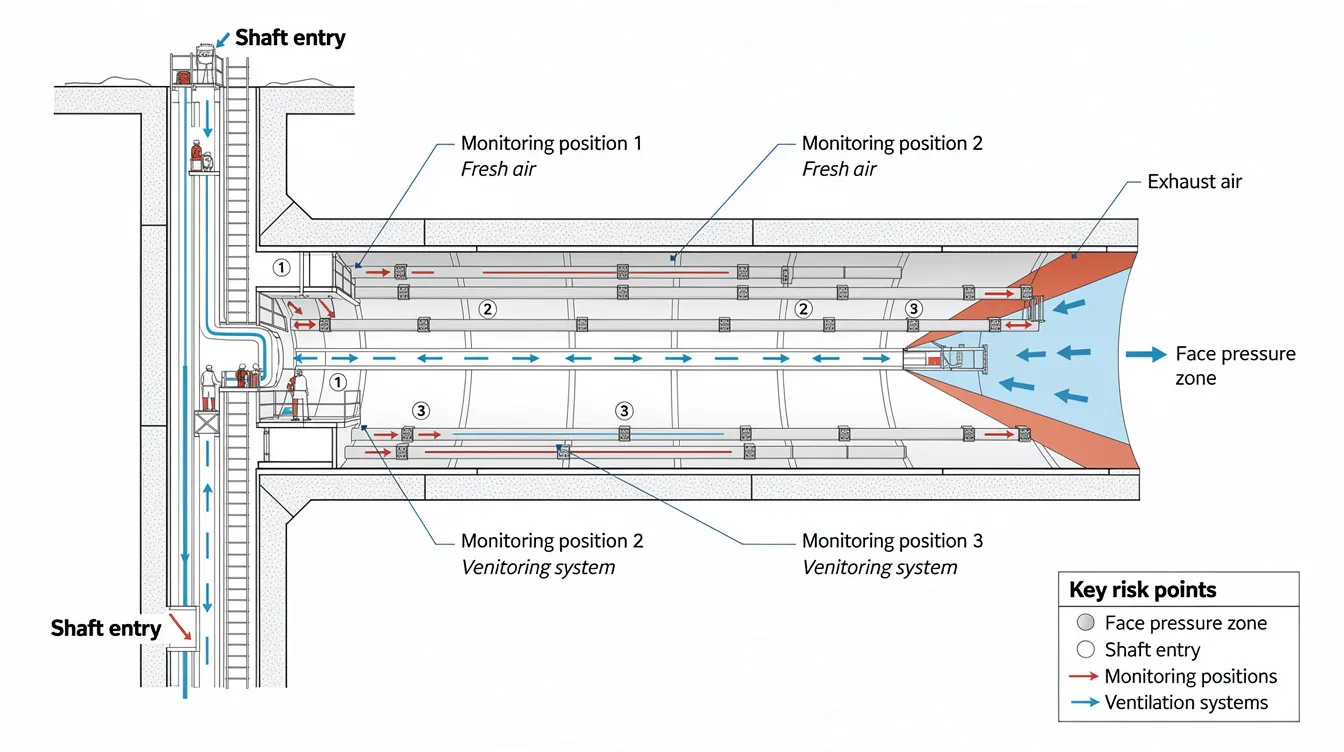
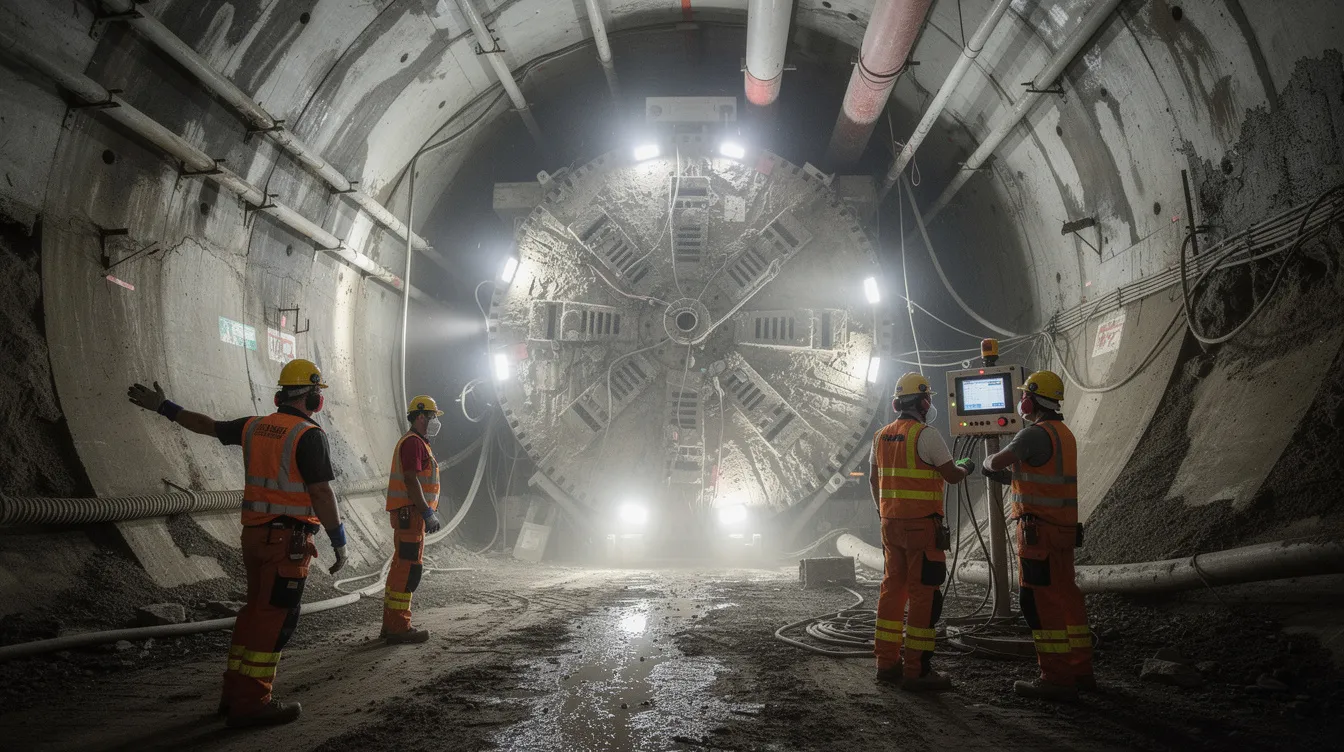
- Confined space and hyperbaric work: Cutterhead inspections, disc cutter changes, and emergency interventions often require workers to enter pressurised chambers – high risk activities governed by WSH (Confined Spaces) Regulations. Emergency rescue plans are mandatory for confined space work.
- Interaction with existing infrastructure: MRT tunnels, expressway foundations, deep basements, and live utilities sit in close proximity. Ground movement from tunnelling must be controlled within strict settlement limits to preserve structural integrity of adjacent structures.
- Toxic gases and air quality: Continuous air quality monitoring is mandatory in tunnelling operations to detect toxic gases and ensure safe breathing conditions underground.
These specific risks demand an RMF who understands geotechnical engineering, tunnelling methods, and local codes – including LTA design criteria, PUB and BCA requirements, and relevant WSH regulations. The effective RMF converts complex technical and regulatory requirements into a structured risk management process that subcontractors and workers can follow through clear method statements, safe work procedures, and permit to work systems.
The following sections detail the specific qualifications, certifications, and experience that make someone truly qualified to act as RMF on tunnelling works.
Who Is Qualified to Act as a Risk Management Facilitator for Tunnelling in Singapore?
Being “qualified” encompasses both legal compliance – the minimum threshold under WSH regulations – and industry best-practice expectations that major clients now enforce in 2026. For major tunnelling packages such as Thomson–East Coast Line, Cross Island Line, and Deep Tunnel Sewerage System Phase 2, clients insist on documented RMF credentials during tender and contract stages. A Risk Management Facilitator is legally required for PUB projects, and LTA applies equally rigorous requirements for all underground works contracts.
Mandatory Baseline: Training, Certification and Regulatory Requirements
Completion of the Ministry of Manpower’s recognised risk management training is often a requirement for facilitators. The core training and certification requirements for a tunnelling RMF include:
- WSQ Risk Management course: Completion of “Develop a Risk Management Implementation Plan” (or its updated 2025/2026 equivalent) from an SSG/MOM-accredited provider. This is the base qualification for any RM Team Leader under the Code of Practice.
- bizSAFE Level 2 or higher: As Risk Management Champion (Level 2) at minimum, satisfying the “competent person” training expectation for many public-sector tenders. Higher levels (3+) are preferred for infrastructure projects as they require a formal, audited risk management system.
- Design for Safety (DfS) for Professionals course: In Singapore, the Design for Safety (DfS) for Professionals course is required for Risk Management Facilitators working on LTA and major infrastructure projects, particularly where the RMF role overlaps with DfS Professional responsibilities.
- Foundation safety courses: MOM-recognised courses such as “WSQ Apply Workplace Safety and Health in Construction Sites” provide the baseline construction safety knowledge.
Documentation the RMF must be able to produce includes: course certificates, detailed CV showing tunnelling project history, formal appointment letter as RMF, and evidence of involvement in past risk assessments. MOM does not currently require a specific “tunnelling RMF licence,” but contractors must be able to demonstrate the RMF’s competence if audited or investigated following an incident. The RMF ensures compliance with the WSH (Risk Management) Regulations through this documented competence chain.
Technical and Industry Experience Expected of a Tunnelling RMF
The minimum experience required for a Risk Management Facilitator in tunnelling projects is often 5 to 10 years, depending on project scale and complexity. Current job postings from major tunnelling contractors in Singapore confirm this: a 2026 listing for RMF at Shanghai Tunnel Engineering Co (Singapore) required a civil engineering degree and 8–10 years of heavy civil infrastructure experience, while Gamuda’s RMF/DfS posting specified 5–8 years minimum with registered status or equivalent.
Typically, a qualified Risk Management Facilitator has an engineering degree in civil engineering or a related discipline. The qualifications for a Risk Management Facilitator can include registration as a Professional Engineer or Architect – LTA’s SHE Particular Specifications may require the RMF to be a registered PE with the Professional Engineers Board (PEB) or to hold a degree accepted by PEB, Board of Architects, SISV, or Society of Project Managers.
Typical technical backgrounds for a tunnelling RMF include:
- Civil or geotechnical engineer familiar with tunnel design, temporary works, and ground improvement methods
- Experienced tunnelling construction manager or Tunnel Agent with formal RM training added to their operational background
- WSH professional (e.g. registered WSHO) who has specialised in underground works and can interpret instrumentation and monitoring data and geotechnical risks
Desirable additional credentials include:
- Exposure to LTA and PUB tunnel projects with familiarity with their specific safety submissions and specifications
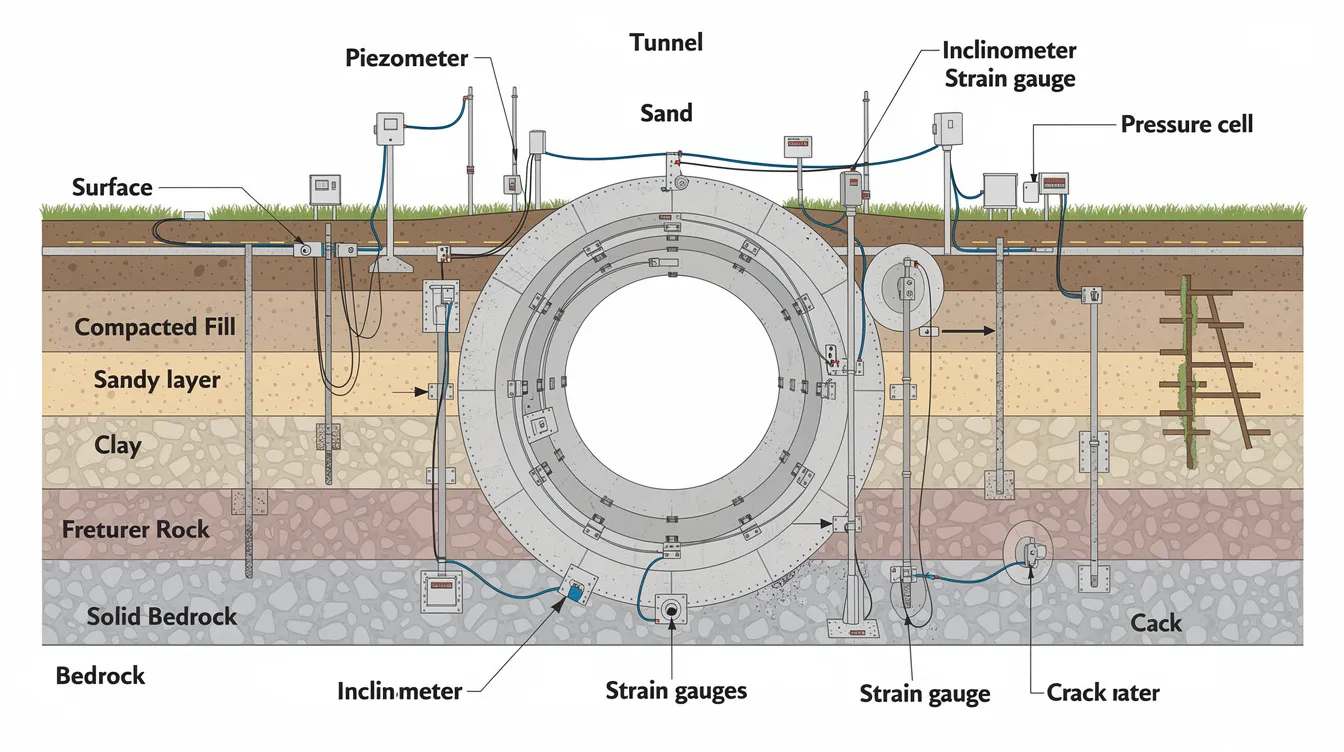
- Experience working with instrumentation (inclinometers, extensometers, settlement markers, building tilt meters) and interpreting actual conditions against trigger levels
- Participation in incident investigations relating to ground movement, water ingress, or TBM stoppages
- An RMF should have significant knowledge of construction methodologies and associated risks, particularly for underground works
Experience with local regulatory frameworks and safety submission processes is essential for facilitators in Singapore. AEC Technical Advisory’s tunnelling-focused RMFs typically combine WSQ RMF training with civil/geotechnical project experience – a combination that contractors can leverage to satisfy both regulatory compliance and client expectations.
Core Competencies and Skills of an Effective Tunnelling RMF
Proficiency in conducting risk assessments and workshops is a critical competency for a Risk Management Facilitator. The competency profile spans three domains:
Regulatory competence:
- In-depth understanding of the WSH Act, WSH Risk Management Regulations, WSH (Construction) Regulations, and WSH (Confined Spaces) rules
- Working familiarity with LTA Design for Safety requirements and contract safety clauses for underground works
- Knowledge of how WSH compliance intersects with BCA, National Environment Agency, and PUB requirements
Technical competence:
- Ability to interpret geotechnical baselines, soil/rock profiles, and tunnel lining details
- Understanding of TBM systems (slurry, EPB), ventilation, dewatering, grout injection, and temporary works for shafts and cross passages
- Appreciation of building/utility response to ground movement, damage categories, and ERSS design considerations
- Knowledge of shoring techniques adapted to specific soil conditions – including situations where excavation deeper than 1.5 meters requires protective systems
Facilitation and leadership:
- Leading multi-disciplinary RA workshops with designers, PEs, TBM contractors, and safety staff. In Singapore, collaborative workshops across multiple disciplines are standard for managing construction risks.
- Facilitation of safety reviews and risk assessments for underground works uses methodologies like HAZID and HAZOP
- Translating technical risks into clear controls and safe work procedures, using visual aids for a multilingual workforce
- The facilitator must maintain a live hazard register and track mitigation measures for ongoing projects
- Strong communication and leadership abilities are critical for effective risk management facilitation
- The Risk Management Facilitator must effectively manage stakeholder interactions during risk workshops
Must-have capabilities summary:
- WSQ RM course completion and DfS Professional certification
- 5+ years tunnelling experience with direct RA leadership
- Ability to conduct risk assessments using qualitative and quantitative methodologies
- Competence in reading monitoring data and defining trigger levels
- Skills in running risk management meetings with diverse stakeholders
- Experience preparing safety submissions (CDSS, CNSS, PSR)

How the Tunnelling RMF Fits with Other Key Roles on Singapore Projects
On Singapore tunnelling projects, multiple safety and technical roles operate simultaneously – WSHO, PE/Qualified Person, DfS Professional, Tunnel Agent, and RMF. Misalignment between these roles is a common failure point that can compromise both safety management and regulatory compliance. Clear boundaries ensure that every aspect of the safety and health framework is covered without gaps or unnecessary duplication.
RMF vs WSH Officer, PE/Qualified Person, and Tunnel Agent
Each role serves a distinct function in the project team:
- WSH Officer (WSHO): A statutory role on larger projects. Safety officers focus on daily site inspections, enforcement of safety regulations, incident investigation, and ensuring workers are using personal protective equipment correctly. The WSHO is legally required under WSH regulations for construction sites above specified thresholds.
- Professional Engineer (PE) / Qualified Person (QP): Designs and endorses permanent and temporary works – tunnel linings, shaft support systems, ERSS structures, and monitoring schemes. The PE certifies that designs are structurally sound.
- Tunnel Agent / Construction Manager: Manages TBM operations, tunnelling sequencing, production targets, and coordination with surface works. Construction managers drive programme delivery and site logistics.
- Risk Management Facilitator (RMF): Plans and leads the project’s overall risk management process – ensuring risk assessments, permit to work systems, method statements, and engineering controls are coherent, current, and updated throughout the project lifecycle.
| Criterion | RMF | WSHO | PE / QP | Tunnel Agent |
|---|---|---|---|---|
| Primary focus | Leading RA process, hazard register, risk control measures | Daily safety inspection, enforcement, incident reporting | Design certification, temporary works endorsement | TBM operations, tunnelling production |
| Legal basis | WSH (RM) Regulations – competent person | WSH Act – registered safety officer | PE Act – registered engineer | Contractual – no specific statutory registration |
| Typical background | Civil/geotech engineer + WSQ RM training | Safety diploma/degree + WSHO registration | Engineering degree + PE registration | Tunnelling experience + construction management |
| Involvement in RA | Leads and facilitates all risk assessments | Participates, provides site-level input | Provides technical design input | Provides method statement and operational input |
Where Design-for-Safety (DfS) and RMF Responsibilities Overlap
Under the WSH (Design for Safety) Regulations, larger tunnel projects appoint a DfS Professional at design stage. The DfS Professional identifies inherent design risks – alignment choice, shaft locations, slurry vs EPB TBM selection, cross-passage spacing, and proximity to sensitive structures – and works with the design team to eliminate or reduce these risks before construction begins.
The RMF later translates residual design risks into construction risk assessments, PTW systems, and method statements. On design-and-build tunnelling projects, the same organisation – or even the same individual if appropriately qualified – may serve as both DfS Professional and RMF, but the rmf role clarity and documentation remain vital. LTA’s SHE Specifications treat RMF and DfS as often overlapping contract clauses, and the authority reserves discretion over final approval of the appointed person.
Practical coordination guidance:
- DfS risk register should feed directly into construction RA templates, ensuring no residual risks are lost in the handover
- Joint DfS–RMF workshops at 30%, 60%, and IFC design milestones ensure continuous improvement of risk identification
- Residual risks from design must be tracked into construction method statements with clear ownership and closure criteria
- Both roles should participate in safety submissions to LTA or PUB, including Civil Design Safety Submission (CDSS) and Civil Construction Safety Submission (CNSS)
Practical Process to Select and Appoint a Tunnelling RMF
For tenders and project start-up in Singapore, contractors must demonstrate to MOM and clients how they selected a competent RMF. A structured process reduces disputes, non-compliance findings during audits, and – most importantly – the risk of appointing someone who cannot actually perform the role. This is especially critical for LTA infrastructure tenders where RMF credentials directly affect tender scoring.
Step-by-Step Appointment Process
- Map the project risk profile: Identify tunnel type (MRT, sewer, cable, road), length, depth, ground conditions, surrounding infrastructure sensitivity, and specific site conditions that will drive risk complexity.
- Define RMF competence criteria: Establish minimum requirements – WSQ RM training, DfS course completion, years of tunnelling experience, understanding of specific methods (slurry TBM, EPB, NATM, pipe-jacking), and ability to interpret monitoring data against actual conditions.
- Shortlist internal or external candidates: Consider in-house engineers, WSH managers, or specialist consultancies like AEC Technical Advisory that provide dedicated tunnelling RMF services.
- Verify qualifications and track record: Check certificates, MOM-recognised course completions, previous tunnel project involvement, references from past clients, and any incident history to ensure compliance with client specifications.
- Align scope and authority: Formalise whether the RMF covers the entire project or specific packages (e.g. launch shaft, TBM drive, reception shaft, cross passages). Define stop-work authority based on trigger exceedance.
- Issue formal appointment letter: Specify responsibilities, reporting lines to Project Director and WSH Committee, expectation to lead regular RM reviews, minimum site-hours per week, and authority to impose controls.
- Register the RMF role in project documentation: Integrate into the RA index, PTW procedures, DfS submissions, safety submissions, and internal WSH organisational chart so all project team members know the RMF’s function.
In-House RMF vs External Specialist: Choosing the Right Option
For smaller or simpler tunnelling works – short pipe-jacking runs or shallow cut-and-cover sections – an in-house RMF may be feasible if the contractor has suitably qualified staff. Complex urban deep tunnels, however, often benefit from external specialist support.
| Criterion | In-House RMF | External Consultancy RMF (e.g. AEC Technical Advisory) |
|---|---|---|
| Upfront cost | Lower (existing staff) | Higher (consultancy fees) |
| Long-term risk exposure | Higher if staff lacks tunnelling depth | Lower – specialist accountability |
| Depth of tunnelling experience | Variable – depends on company portfolio | Typically strong – dedicated tunnelling expertise |
| Availability and workload conflicts | Risk of RMF being pulled into production tasks | Dedicated allocation, fewer conflicts |
| Independence and objectivity | May face internal pressure from site managers | Greater independence from production pressure |
| Client perception and tender scoring | Acceptable if credentials are strong | Often scores higher on major public tenders |
Contractors new to tunnelling, those bidding on high-profile MRT or DTSS contracts, or organisations where the RMF would otherwise be conflated with a production role should strongly consider engaging an external specialist. The investment in an effective RMF with strong geotechnical and statutory experience pays for itself through reduced rework, fewer safety incidents, and stronger tender competitiveness.
Once appointed, the RMF must lead specific tunnelling hazard management activities – the practical work that proves genuine qualification beyond certificates.
What a Qualified RMF Actually Does on a Tunnelling Project
True qualification is proven through effective execution. The RMF’s role includes ensuring effective risk control measures are implemented – not just documented. RMFs help prevent catastrophic failures in construction projects by maintaining active, living risk management throughout the project lifecycle.
Leading Tunnelling-Focused Risk Assessments and Method Statements
The RMF plans and facilitates risk assessment workshops for each critical construction phase:
- Launch shaft excavation and support: Assessing ERSS stability, dewatering requirements, trench walls and shoring adequacy, and impact on adjacent utilities and structures
- TBM assembly, launch, and breakthrough: Evaluating crane operations, confined space entry, ground response at launch and reception eyes, and coordination with surface construction activities
- Hyperbaric interventions and cutterhead access: Addressing compressed air risks, medical fitness, emergency procedures, and rescue capability – recognising these as among the highest-risk construction activities on any project
- Cross-passage construction: Managing connection to existing tunnels, temporary support systems, waterproofing, and the specific risks of working between parallel bores
- Surface works near sensitive structures: Controlling settlement impact on MRT viaducts, buildings, and live services within strict trigger limits
Risk assessments involve qualitative and quantitative methodologies to evaluate risks. The RMF integrates PE-endorsed temporary works design, geotechnical baseline reports, and monitoring plans into the RA process. RMFs facilitate hazard identification sessions with project teams at each stage.
Example scenario: For tunnelling under an existing MRT viaduct with strict 15mm settlement limits, the RMF would facilitate a dedicated RA session bringing together the TBM contractor, geotechnical PE, instrumentation specialist, and LTA’s representative. The session would define advance rate restrictions, grout injection protocols, continuous monitoring trigger levels, and pre-agreed stop-work criteria – all documented in the risk register and reflected in the PTW system.
Integrating Monitoring, Instrumentation and PTW Systems
A qualified RMF ensures that ground and structural monitoring requirements are fully captured in risk assessments and method statements. This means:
- Ensuring settlement markers, inclinometers, and building tilt meters are specified, installed, and calibrated before tunnelling begins
- Defining trigger levels (Alert, Work Suspension, and Design levels) in consultation with the PE/QP and client authority
- Building trigger levels into the permit to work (PTW) system so that TBM advance cannot continue if monitoring alarms are breached
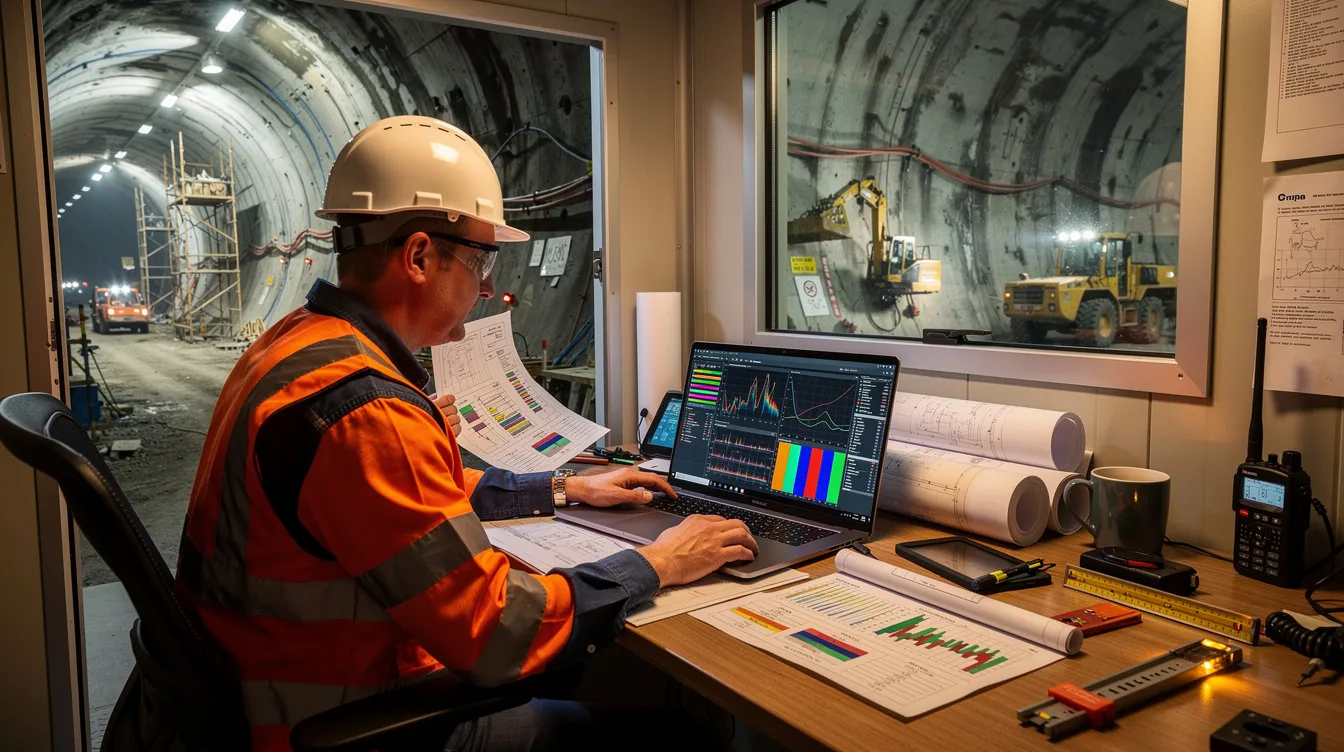
- Ensuring continuous monitoring data flows to decision-makers in real time
The monitoring-to-action flow that the RMF ensures is functioning:
- Instrumentation reading taken → settlement marker, inclinometer, or tilt meter data collected
- RMF/WSE review → data compared against trigger limits defined in the RA
- Assessment against triggers → categorise as within normal range, Alert level, or Work Suspension level
- Action → continue operations / reduce TBM advance rate / stop work and investigate / escalate to PE and client
Falls from height account for over one third of workplace deaths in Singapore’s construction industry. The WSH (Work at Heights) Regulations were amended in 2024, and workers must complete 16.5 hours of Work at Height training – relevant for shaft construction, portal works, and TBM assembly areas where work at height risks intersect with tunnelling operations. The RMF must capture these risks in the broader RA framework.
Emergency Response and Rescue Planning in Tunnels
A tunnelling RMF must help develop emergency response plans tailored to the unique challenges of underground works:
- TBM entrapment or loss of power: Evacuation routes, backup power systems, communication protocols, and rescue team positioning
- Sudden water ingress or face blow-out: Emergency sealing procedures, pre-positioned pumps, site entrances evacuation protocols, and notification chains
- Fire, explosion risk, and toxic gases in confined spaces: Continuous air quality monitoring stations, self-rescuer availability, ventilation backup, and coordination with SCDF
- Worker medical emergencies deep inside the tunnel: Stretcher transport logistics, first-aid stations at intervals, and medical evacuation procedures through potentially kilometres of tunnel
Under WSH (Confined Spaces) and WSH (Construction) Regulations, on-site rescue capability is legally required – contractors cannot rely solely on SCDF response for underground emergencies. Emergency rescue plans are mandatory for confined space work, and the RMF ensures these plans are documented, drilled, reviewed after each exercise, and updated based on lessons learned.
Qualified RMFs participate in emergency drills, review outcomes in training sessions, and update risk assessments and emergency procedures accordingly. This active involvement in continuous improvement is what separates a genuinely effective RMF from a paper appointment.
Common Pitfalls When Deciding Who Can Act as RMF – and How to Avoid Them
Misjudging RMF qualification has contributed to serious incidents and enforcement actions in Singapore’s underground works history. The 2004 Nicoll Highway collapse – a cut-and-cover diaphragm wall failure during MRT construction – reshaped how authorities view risk management oversight. While no specific “RMF” role was codified at that time, subsequent WSH regulations and client specifications have been directly shaped by this incident, raising the bar for competence and accountability.
Pitfall 1 – Treating RMF as a Paper Role Only
Problem: Someone is appointed to satisfy WSH paperwork but has minimal site presence, does not lead RA updates, and never verifies that risk control measures are actually implemented on the ground.
Solution: Insist on minimum site-hours per week for the RMF, include RA leadership KPIs in the appointment, and require attendance at key construction milestones. The RMF’s role includes ensuring effective risk control measures are implemented – not just listed in documents.
Pitfall 2 – Appointing a Generic Safety Officer with No Tunnelling Background
Problem: A general construction safety officer, even if MOM-registered as WSHO, may not understand face stability, slurry management, trench boxes used in shaft construction, or building response to settlement. Generic safety protocols cannot address tunnelling’s specific hazards.
Solution: Pair a WSHO with a tunnelling-experienced engineer, or engage a consultancy like AEC Technical Advisory as RMF to close the knowledge gap. The RMF needs domain expertise to conduct risk assessments that reflect actual tunnelling conditions rather than generic templates.
Pitfall 3 – No Clear Separation Between RMF and Production Pressure
Problem: Appointing a production-driven construction manager as sole RMF creates a conflict of interest. When schedule pressure mounts, risk decisions may be compromised – monitoring alerts downplayed, PTW conditions relaxed, or safety submissions rushed.
Solution: The RMF should report to the Project Director or WSH Committee with documented authority to impose stop-work based on trigger exceedance. This authority must be specified in the appointment letter, and the RMF should not carry production KPIs that conflict with safety management responsibilities.
Pitfall 4 – Outdated Qualifications and Risk Assessment Methods
Problem: The RMF relies on old RA templates that pre-date current MOM circulars, updated LTA specifications, or lessons from recent local incidents – including recent parliamentary scrutiny over tunnel deformation (“tunnel squatting”) near existing road tunnels.
Solution: Commit to refresher RM courses every few years and periodic external reviews of RA quality. Shoring techniques must be adapted to specific soil conditions encountered – not copied from previous projects. Periodic reviews by a fresh pair of specialist eyes ensure the risk management process reflects current standards, regulations, and project-specific conditions.
Avoiding these pitfalls ensures the RMF is not only “qualified on paper” but effective in practice – which is ultimately what public safety and legal compliance demand.
Conclusion and Next Steps
A qualified tunnelling RMF in Singapore is a legally competent person under the WSH (Risk Management) Regulations who also brings tunnelling-specific technical experience and proven facilitation and implementation skills. There is no standalone “RMF licence” – qualification is demonstrated through a combination of accredited WSQ training, DfS Professional certification, relevant engineering degree, 5–10 years of tunnelling experience, and the ability to lead multidisciplinary risk assessment workshops that produce actionable controls.
Appointment is a strategic decision that directly affects safety, regulatory compliance, and project viability – especially on MRT, DTSS, and deep tunnel infrastructure projects where the consequences of inadequate risk management can be severe. The RMF ensures compliance with the WSH (Risk Management) Regulations throughout the project lifecycle, from design-stage hazard identification through construction completion.
Immediate next steps:
- Review your current or upcoming tunnelling project’s risk profile and client requirements – particularly LTA and PUB safety submission obligations
- Benchmark your existing candidate(s) against the qualification checklist below
- Close any gaps through additional WSQ training, mentoring by experienced tunnelling professionals, or engagement of a specialist RMF consultancy
- Formalise the RMF appointment with a clear letter defining scope, authority, reporting lines, and minimum time allocation
- Integrate the RMF role into RA, PTW, monitoring, and emergency planning processes from day one
Related topics worth exploring include DfS for infrastructure projects, deep excavation monitoring methods, and ERSS design for MRT construction. AEC Technical Advisory provides integrated tunnelling RMF, DfS Professional, PE endorsement, and geotechnical advisory services – supporting contractors from tender through construction completion.
Additional Resources and Practical Checklists
Key Singapore References:
- WSH (Risk Management) Regulations and MOM’s Code of Practice on Risk Management (3rd Revision, 2021)
- WSH (Construction) Regulations and WSH (Confined Spaces) Regulations – directly applicable to tunnelling works
- LTA SHE General and Particular Specifications for underground works – including Appendix B requirements for RMF/DfS Professional qualifications
- PUB and BCA underground works and deep excavation guidelines as they relate to risk management and safety management systems
Tunnelling RMF Qualification Checklist:
- ✅ WSQ Risk Management training completed (accredited provider, certificate current)
- ✅ DfS for Professional course passed (or equivalent accepted by client authority)
- ✅ Engineering degree in civil engineering or related discipline recognised by PEB / Board of Architects / SISV
- ✅ Minimum 5–8 years tunnelling/underground construction experience verified through CV and references
- ✅ Understanding of local WSH regulations and client specifications demonstrated
- ✅ Ability to interpret geotechnical and monitoring data confirmed (inclinometers, settlement markers, trigger levels)
- ✅ Experience preparing safety submissions (CDSS, CNSS, PSR) documented
- ✅ Leadership of RA workshops and stakeholder management capability evidenced
- ✅ Authority, time allocation, and reporting lines clearly defined in appointment letter
- ✅ No conflicting production responsibilities that could compromise risk management independence